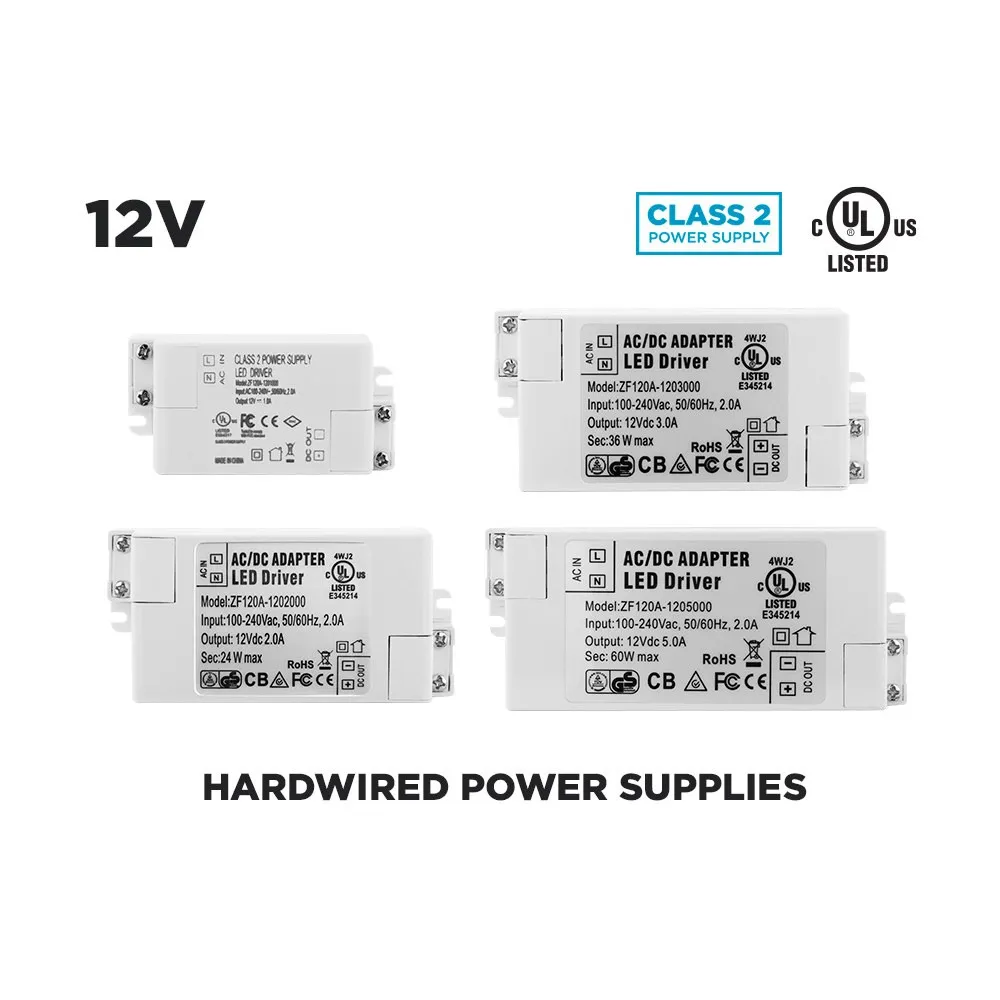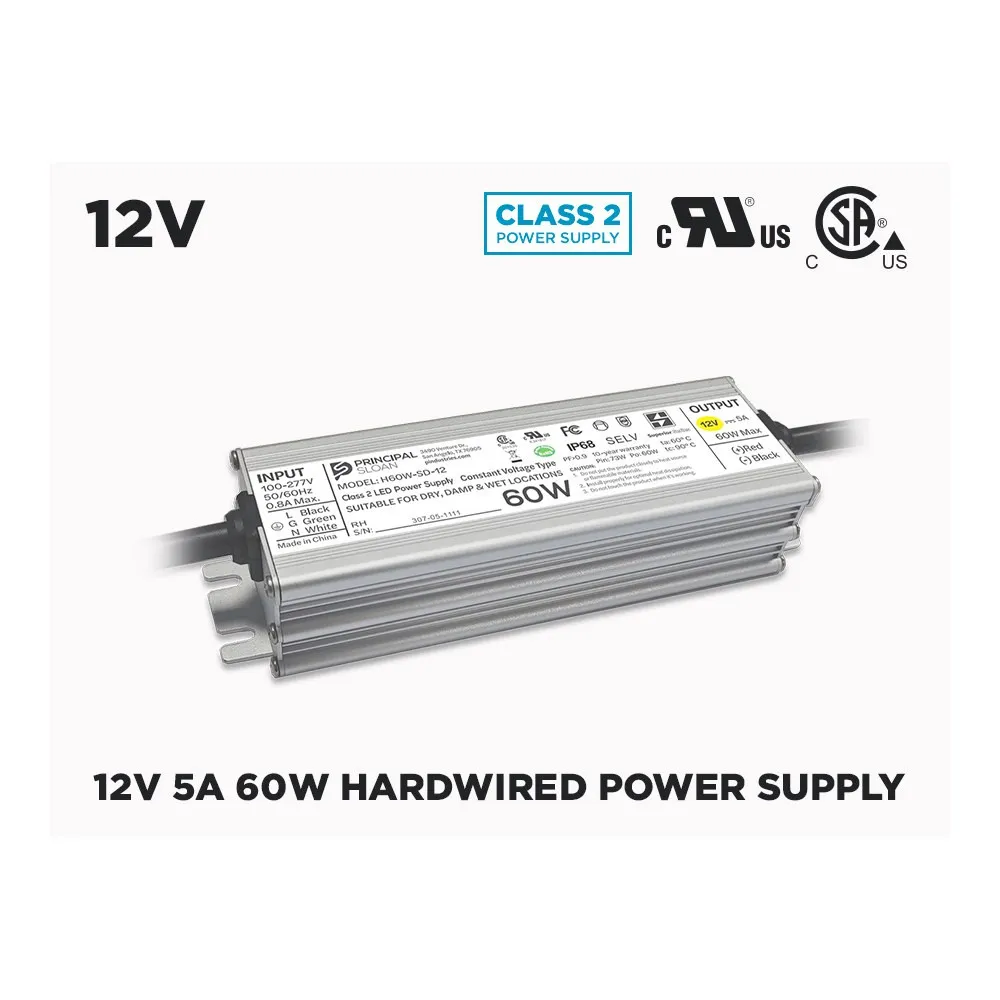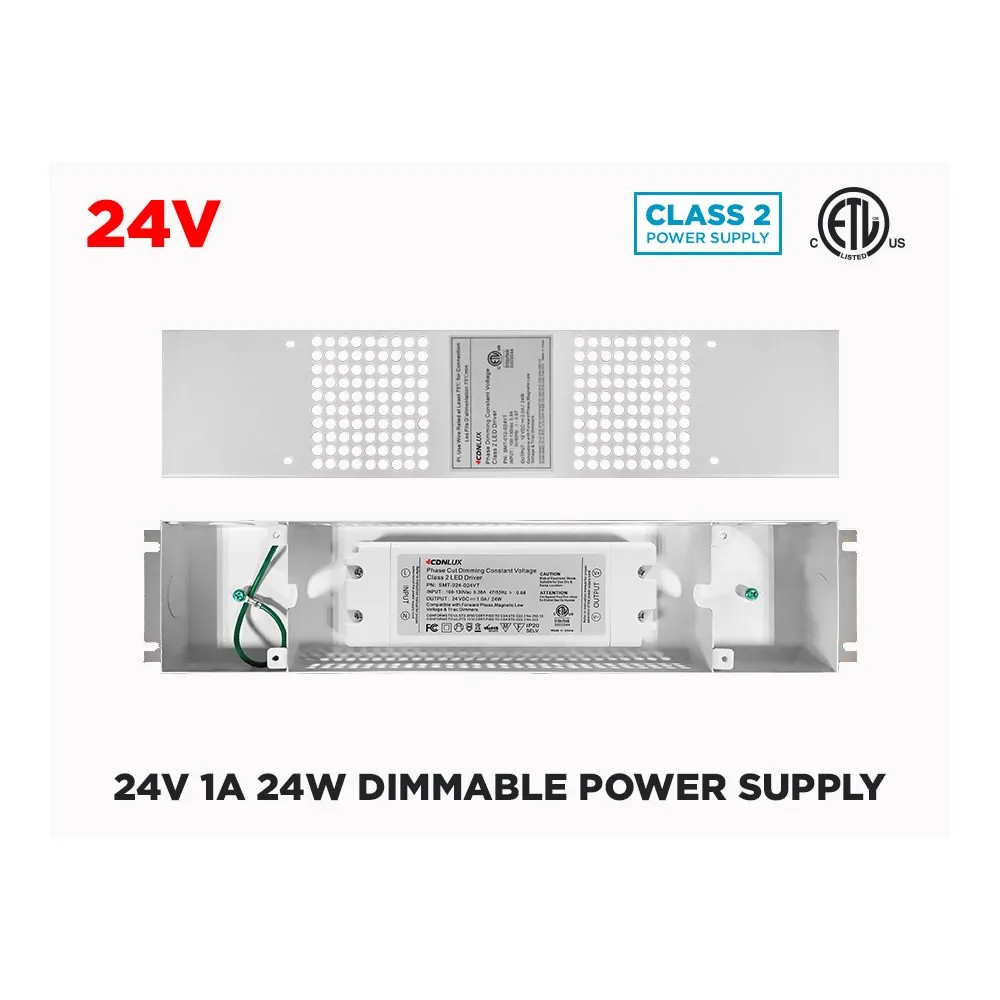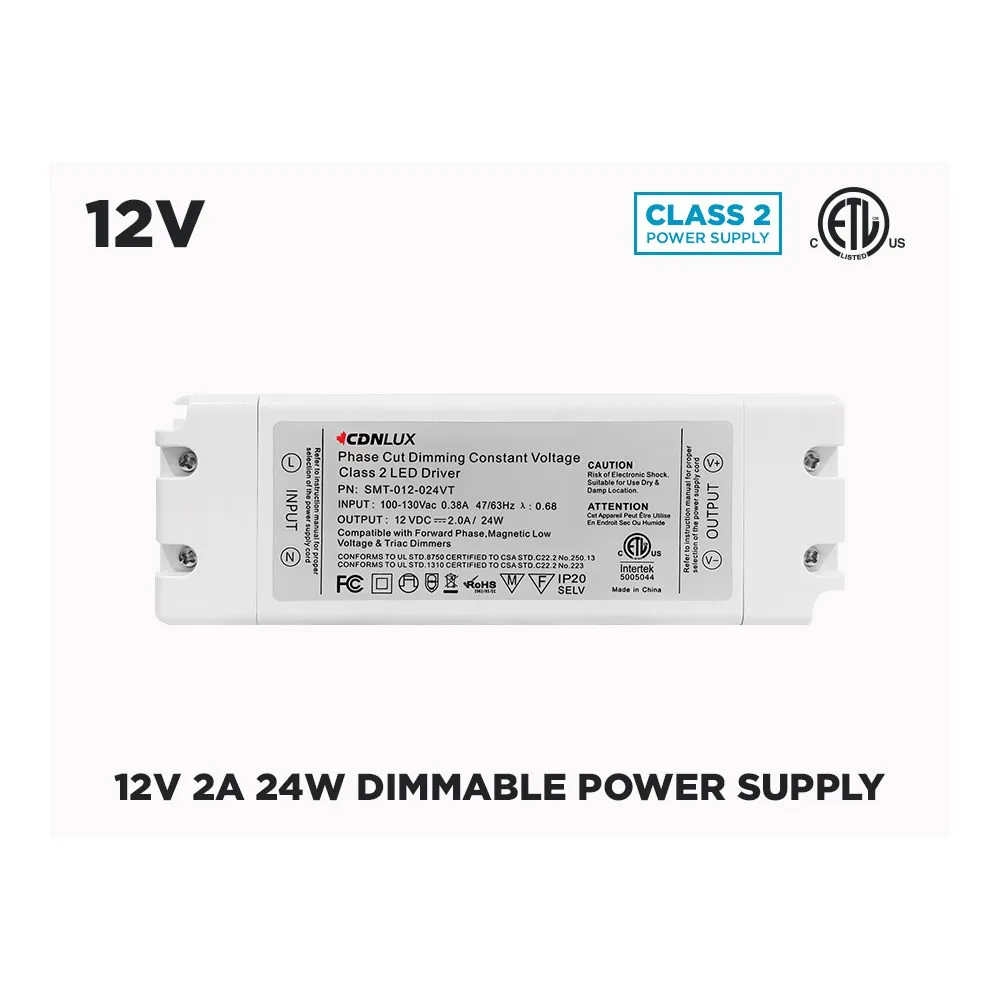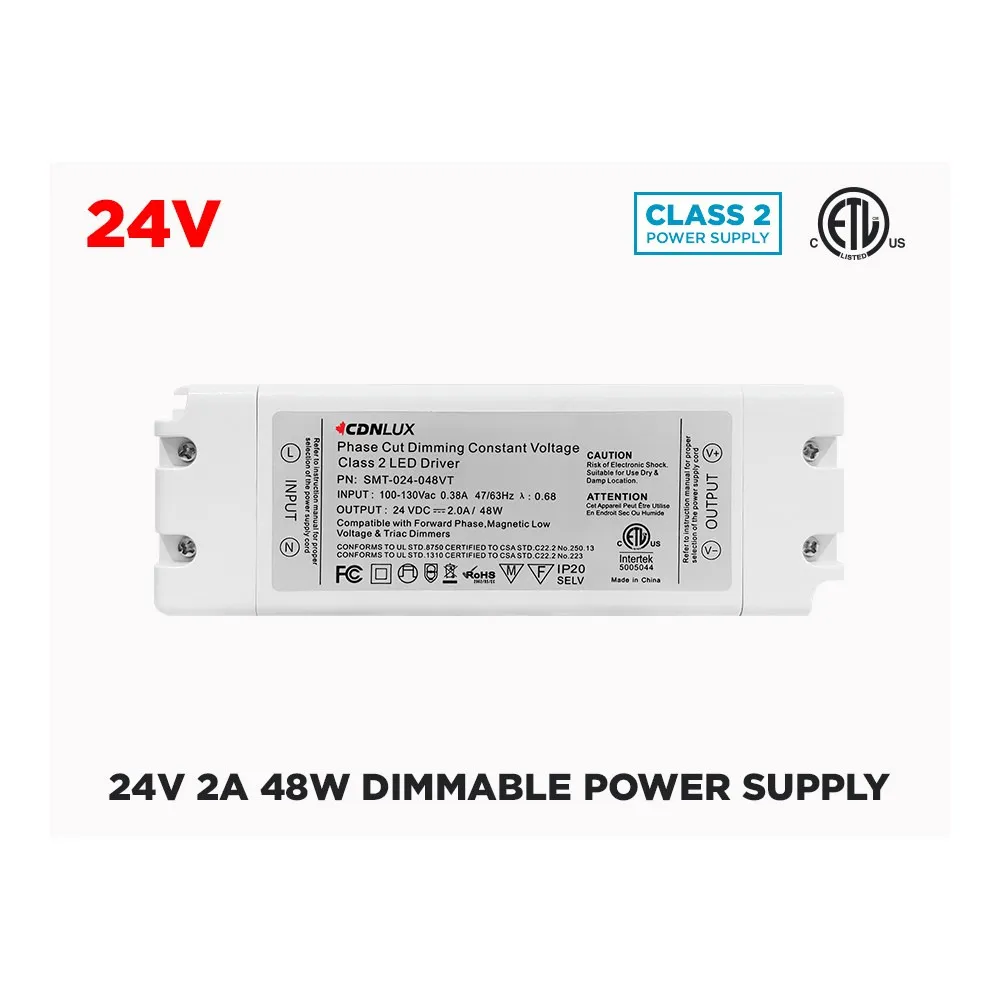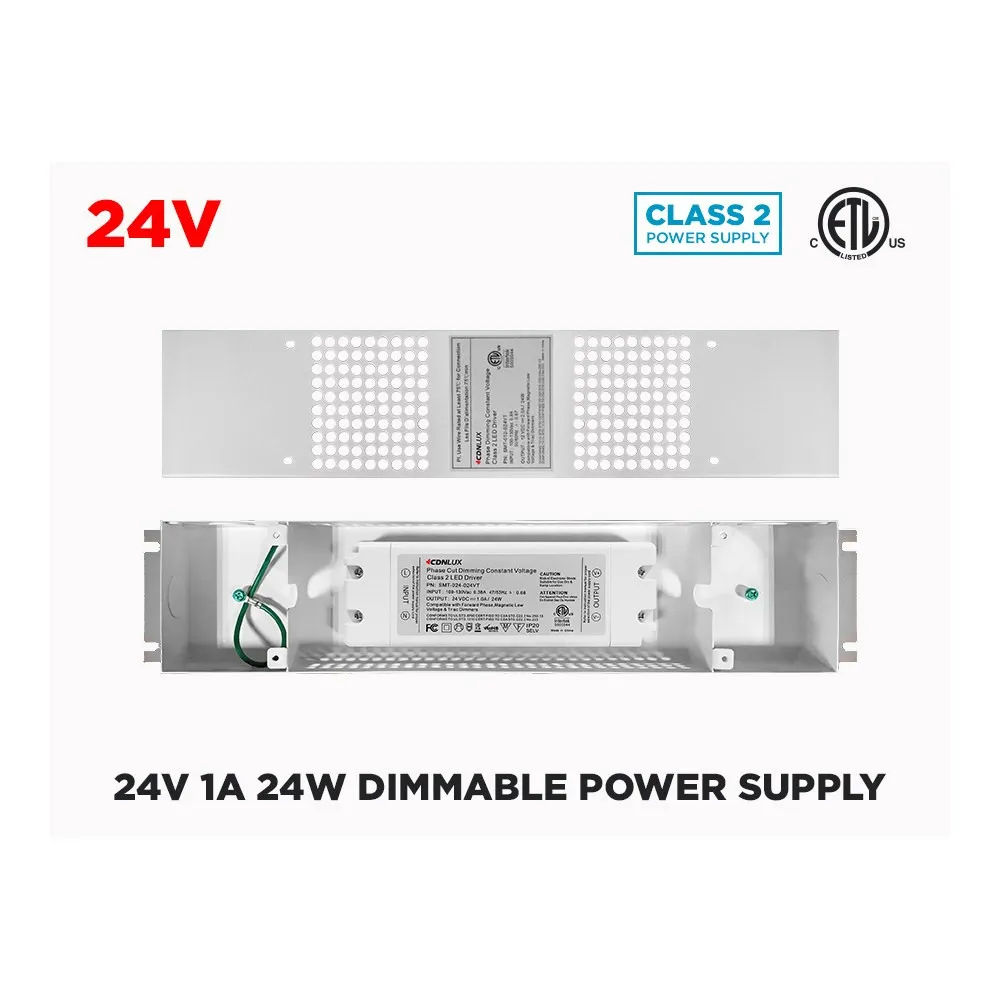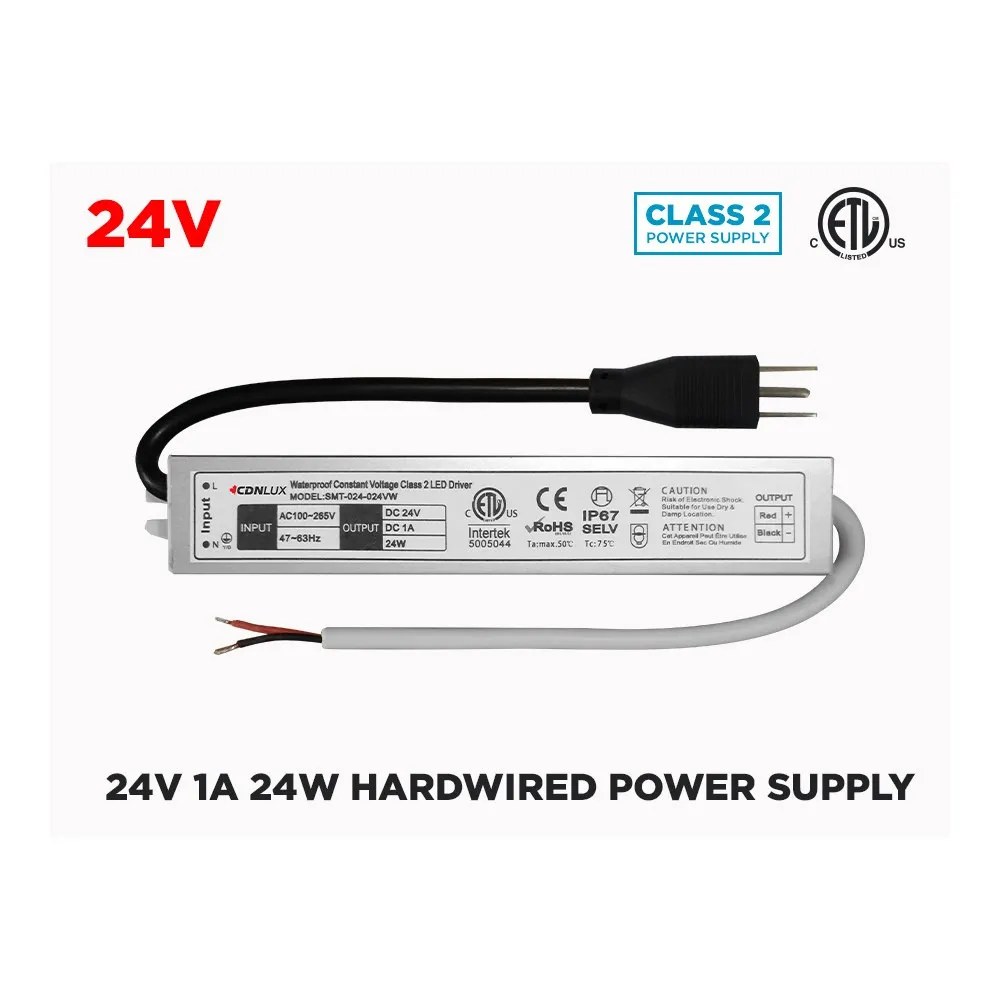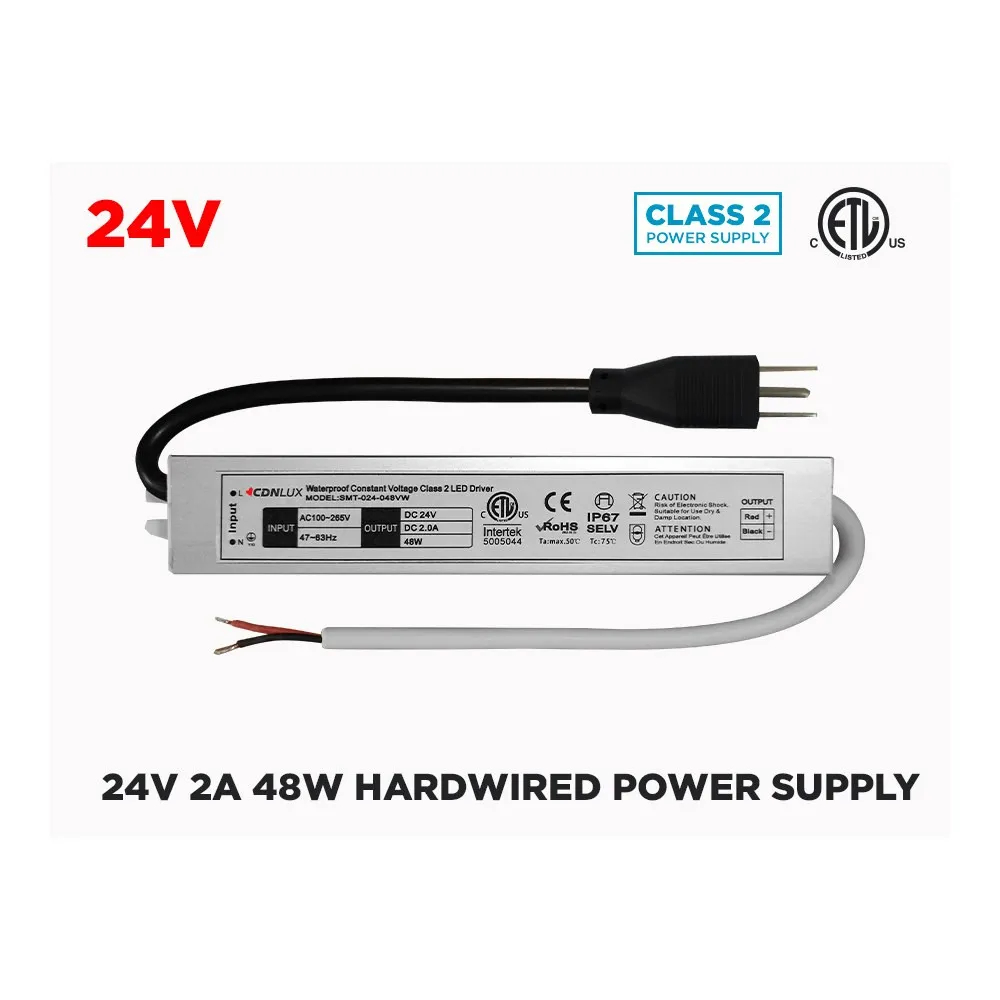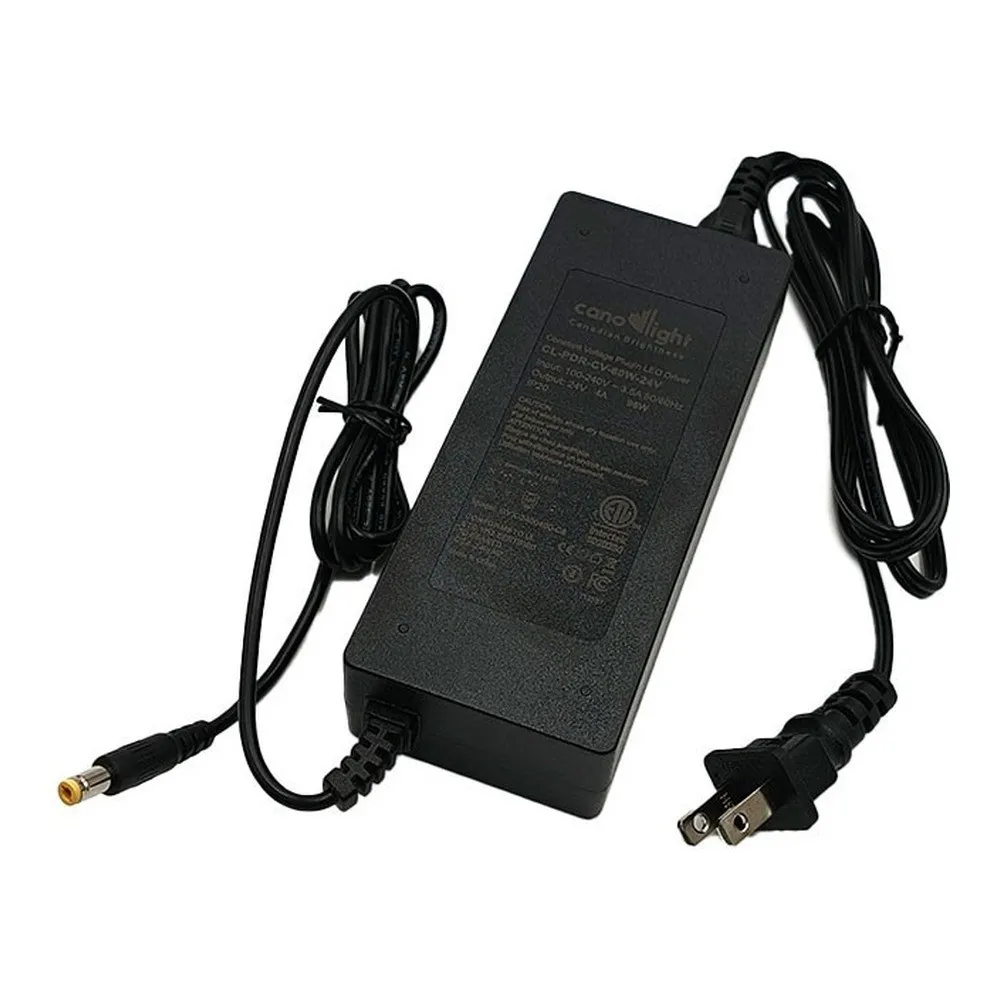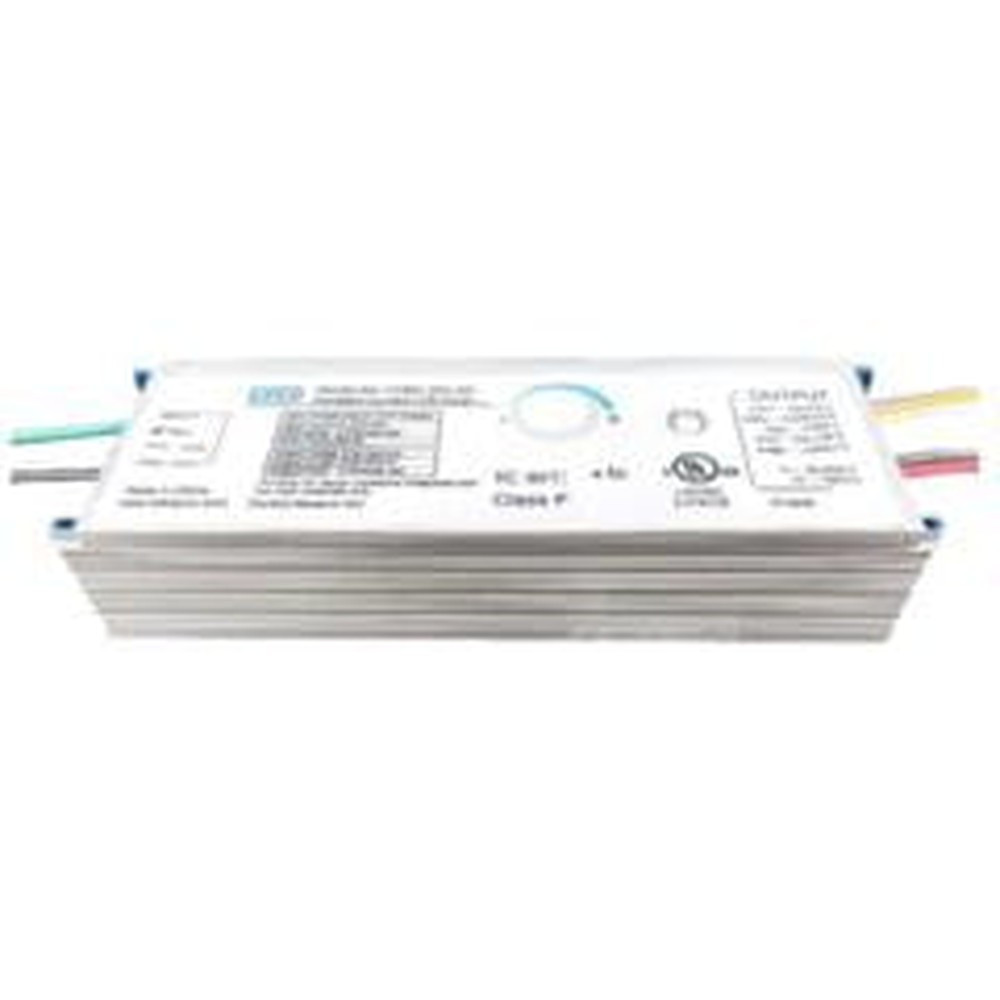
An LED driver is the electronic heart of any low-voltage or commercial LED installation. It converts line voltage into a regulated output, protects the LEDs from surges and decides how smoothly the light dims. This category brings together 78 LED drivers: 12 V and 24 V constant-voltage drivers for strips and modules, universal dimmable drivers in junction boxes, outdoor IP67 and IP68 units, 0-10 V drivers that accept up to 347 V, emergency LED drivers and landscape drivers.
It is meant for electricians replacing a failed driver, contractors specifying a commercial fit-out and homeowners finishing a strip lighting project. Below you will find the driver families, the specifications to compare, how to match a driver to a dimmer and answers to common questions. For plug-in and outdoor strip power supplies, see the companion category LED power supplies, or the full power supplies and drivers family.
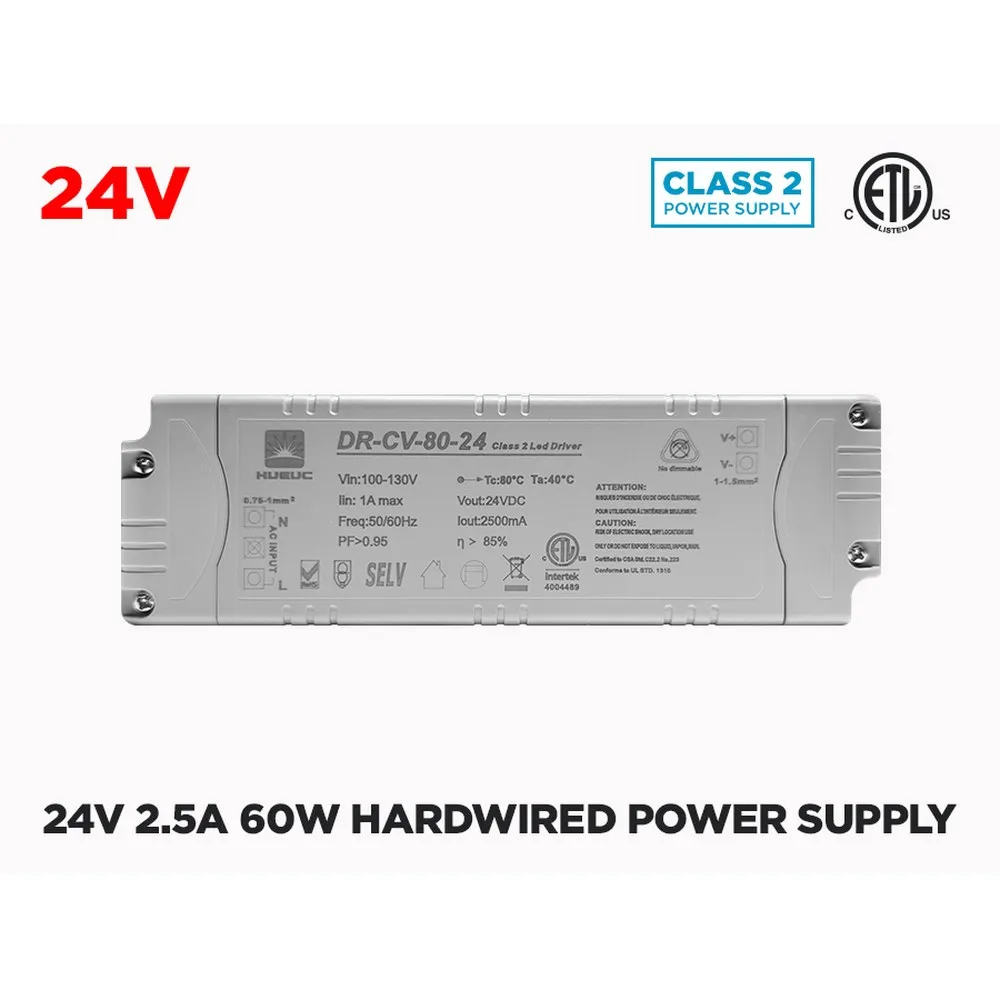
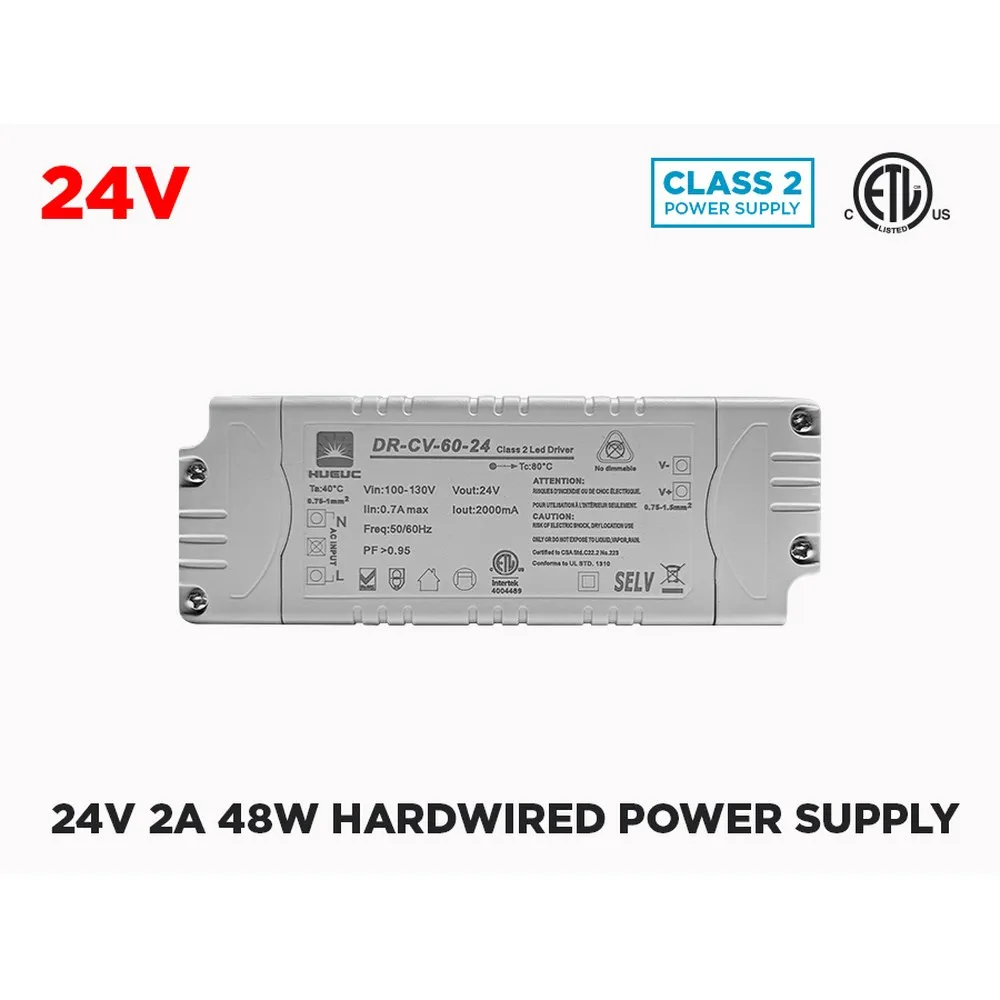
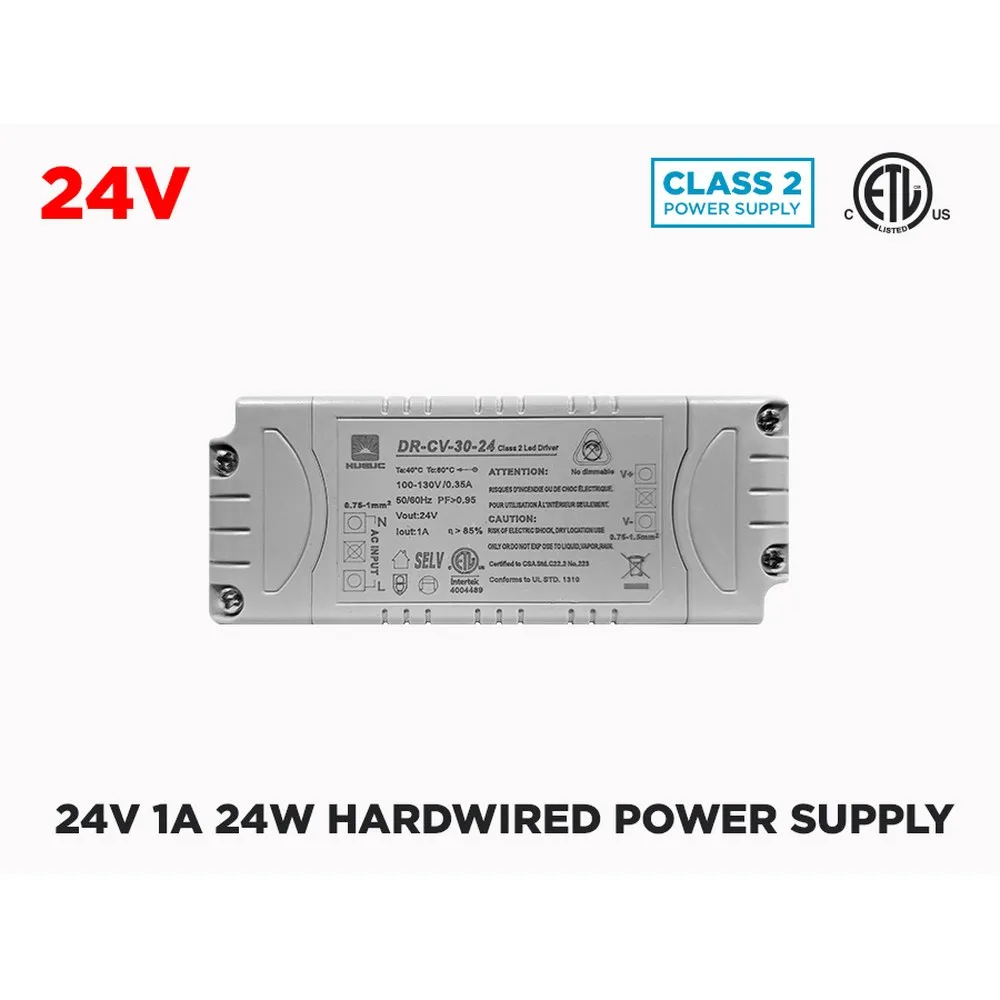
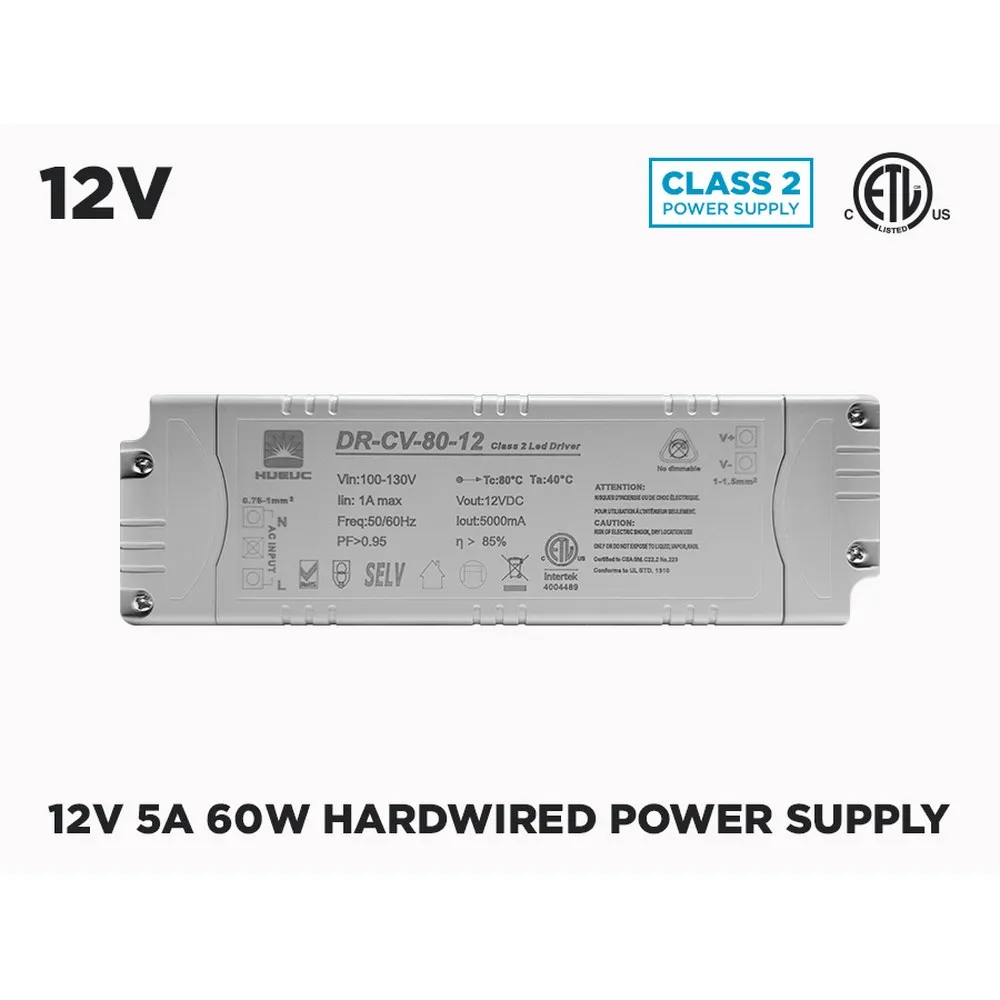
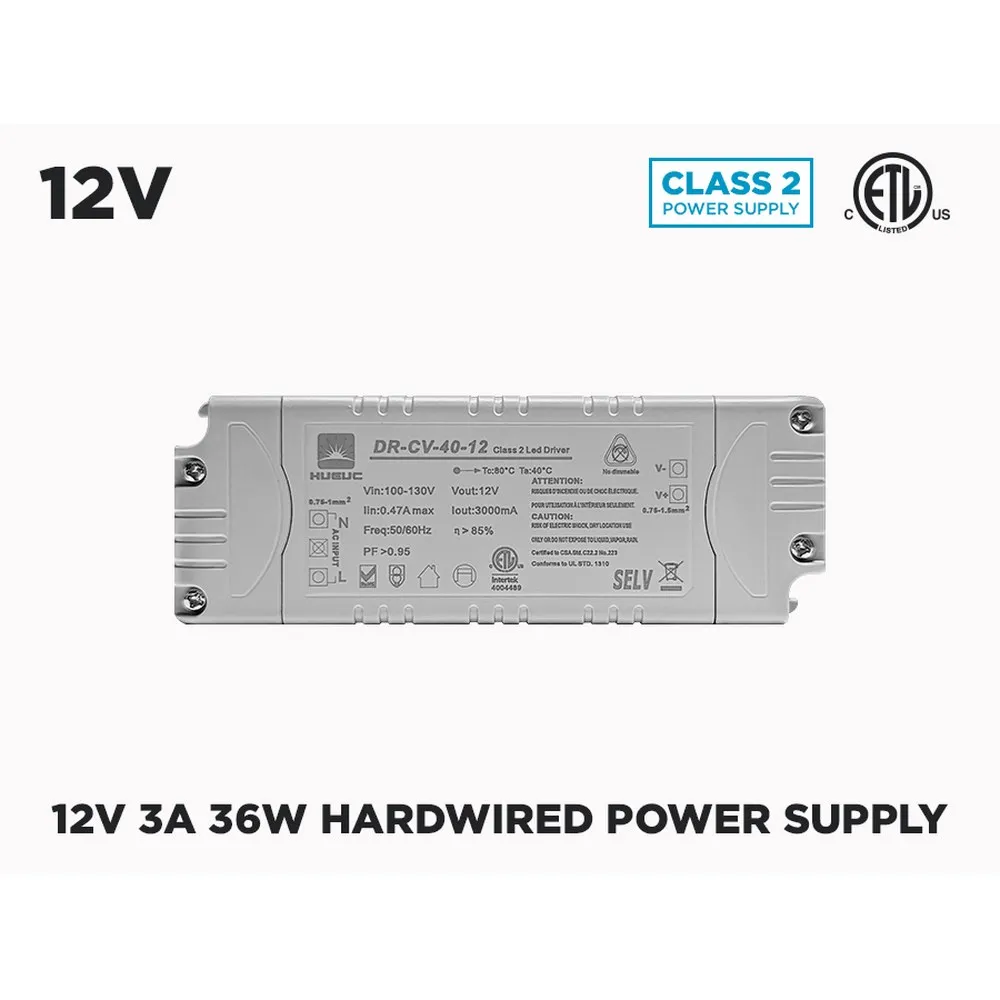
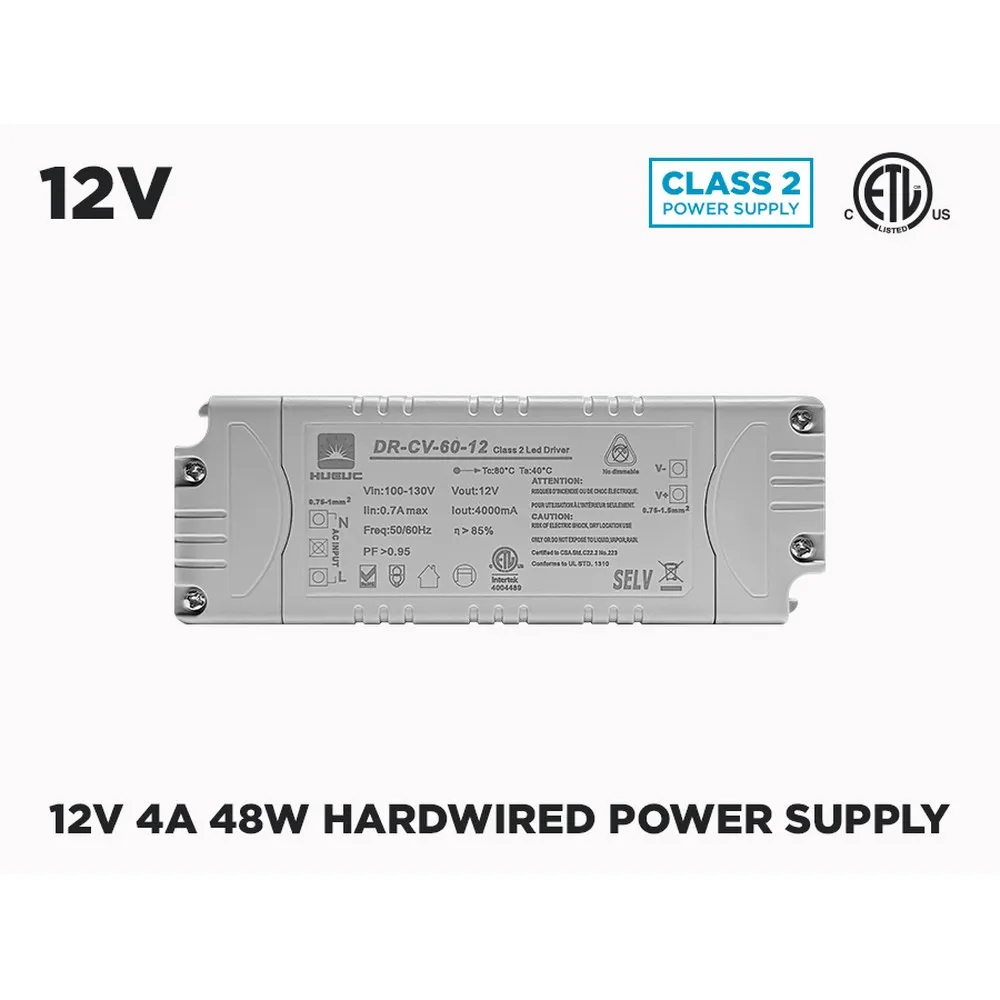
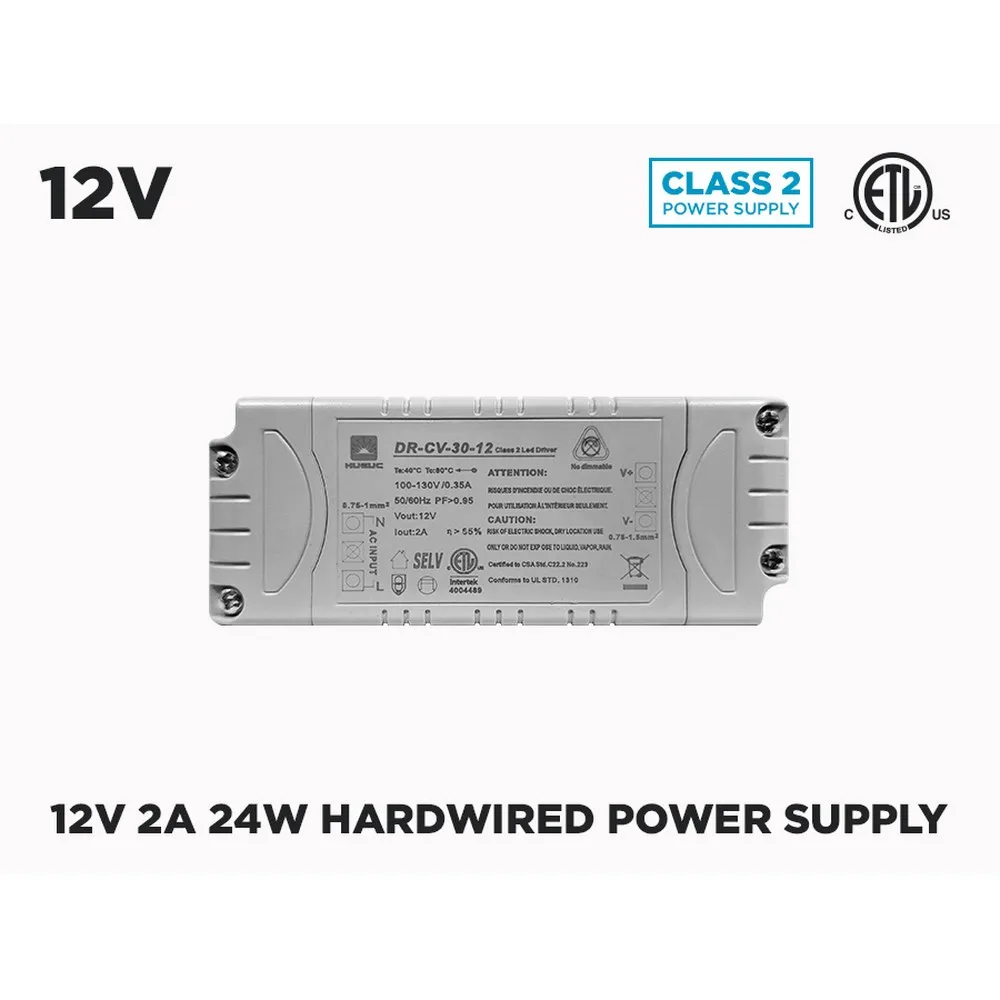
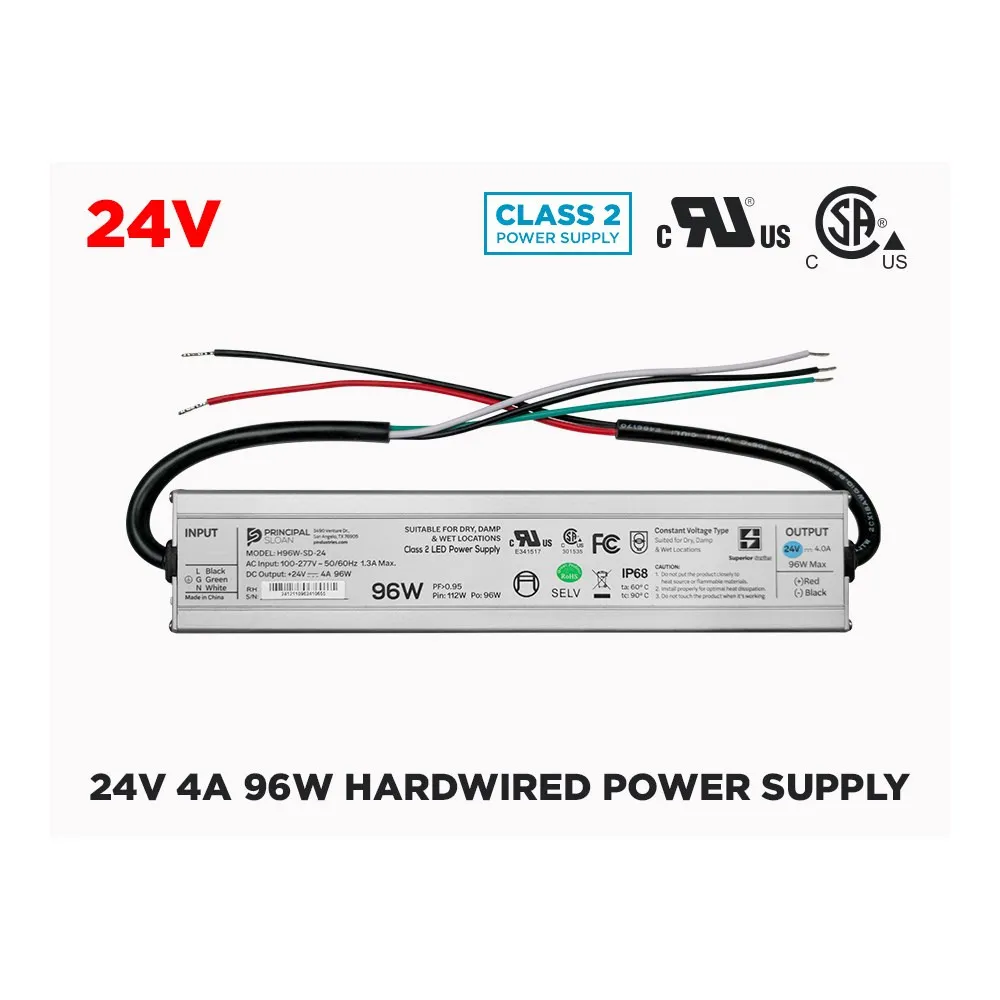
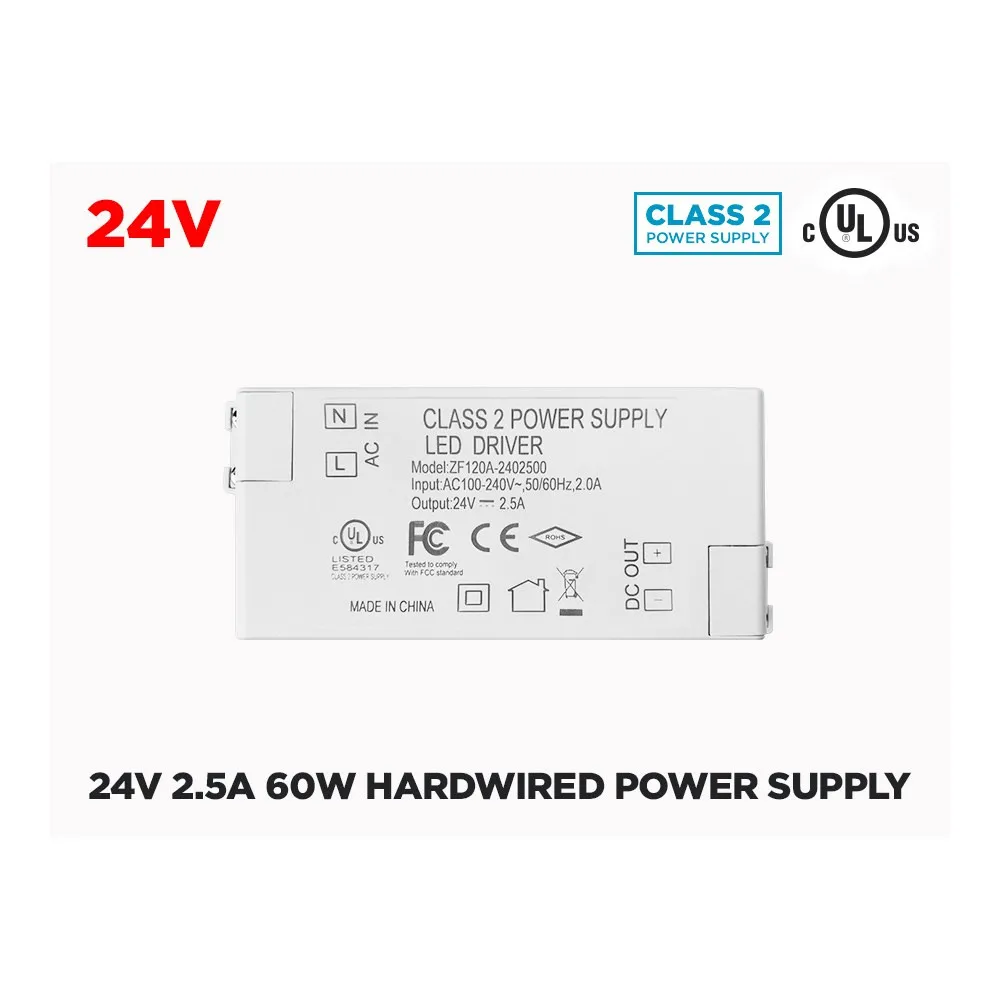
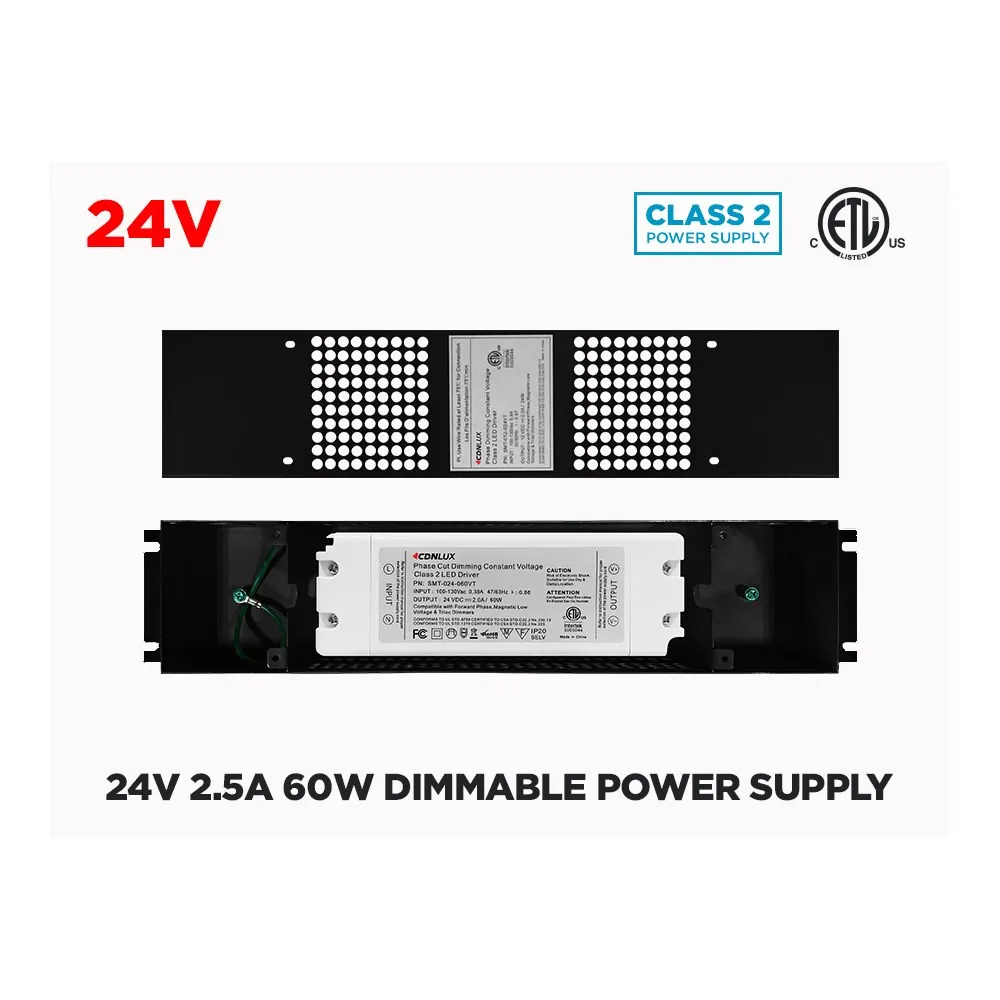
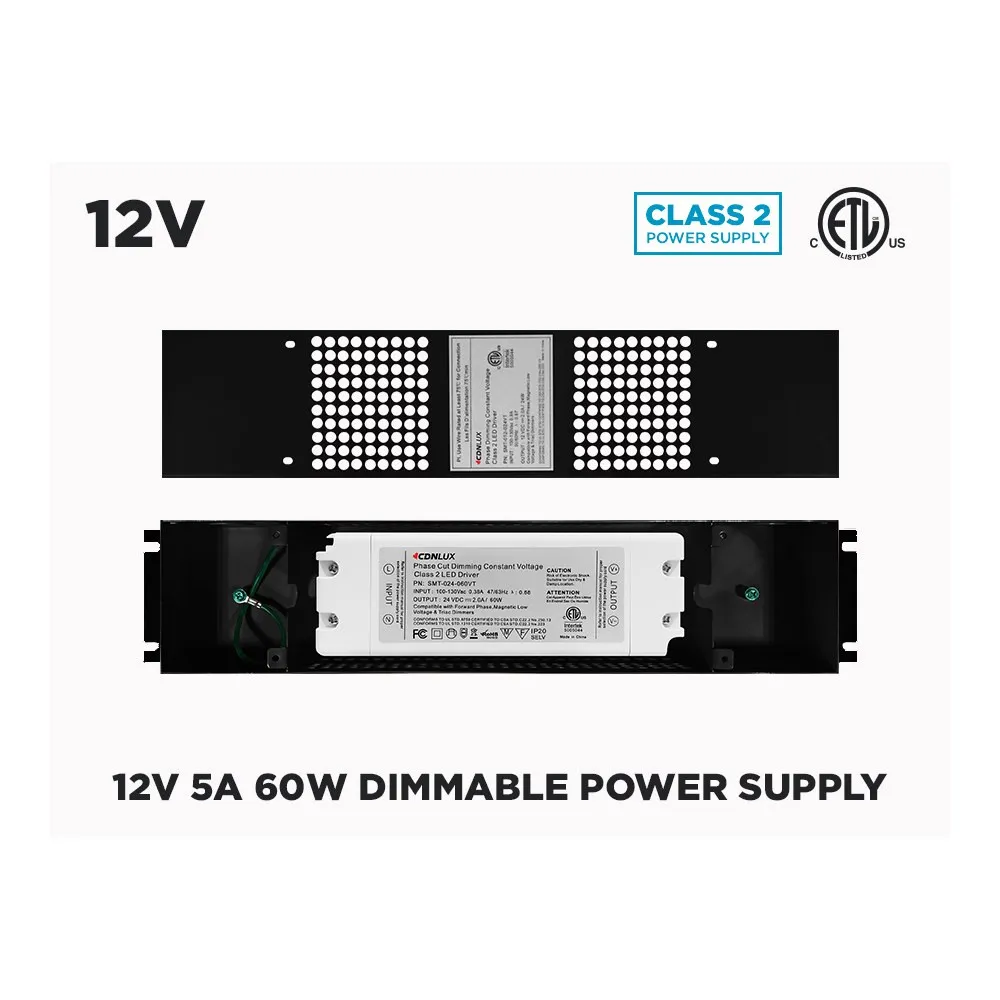
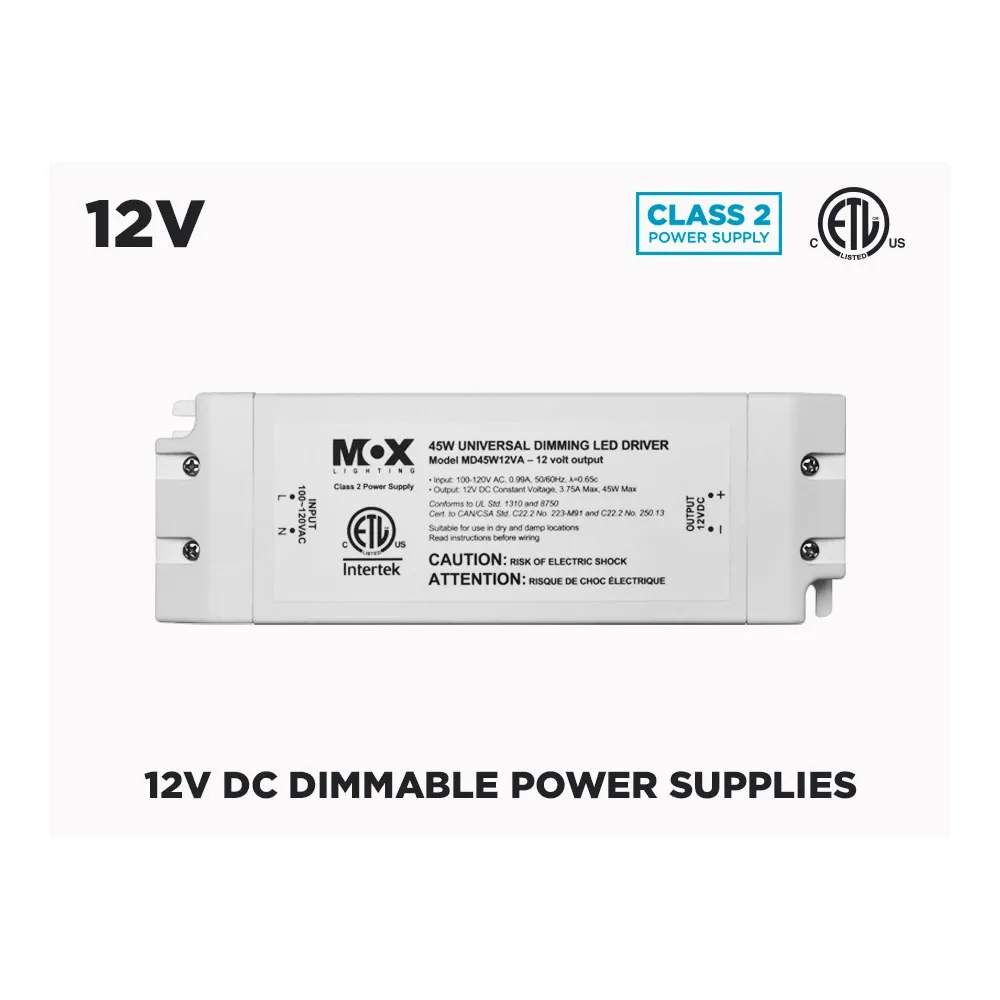
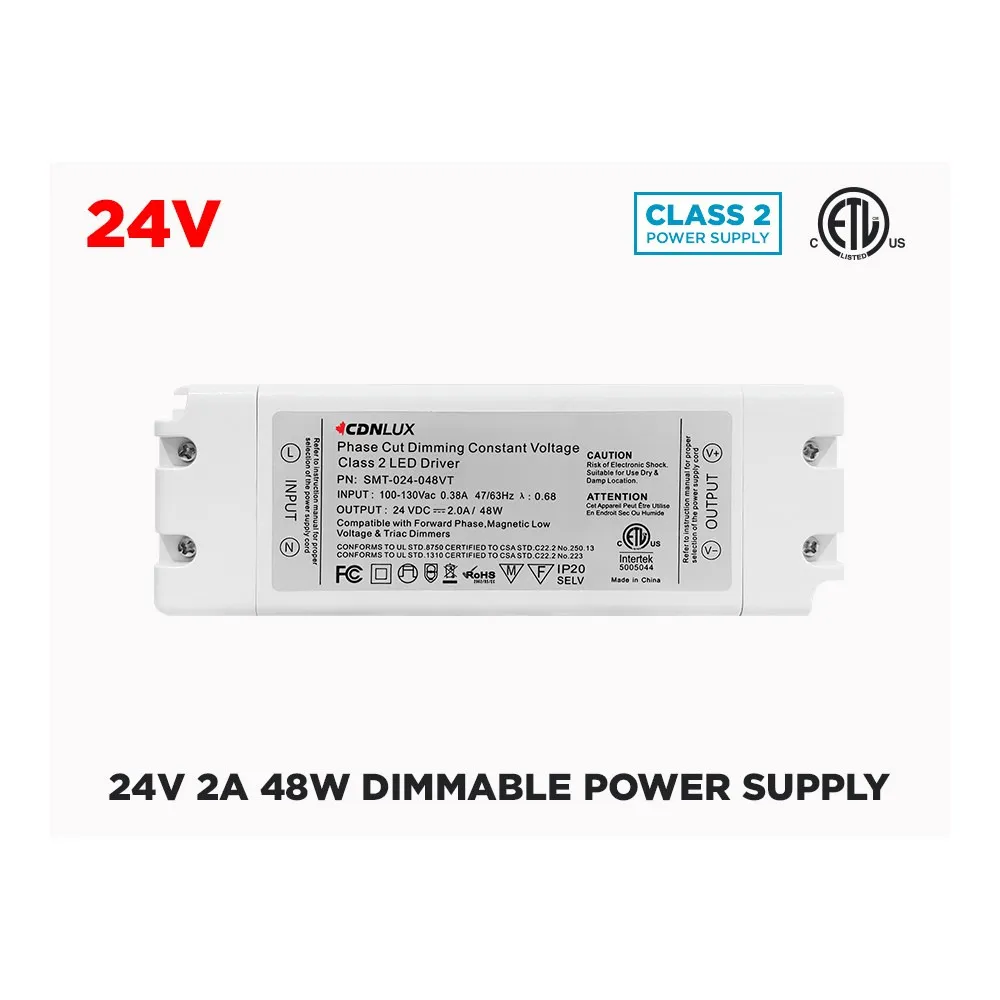
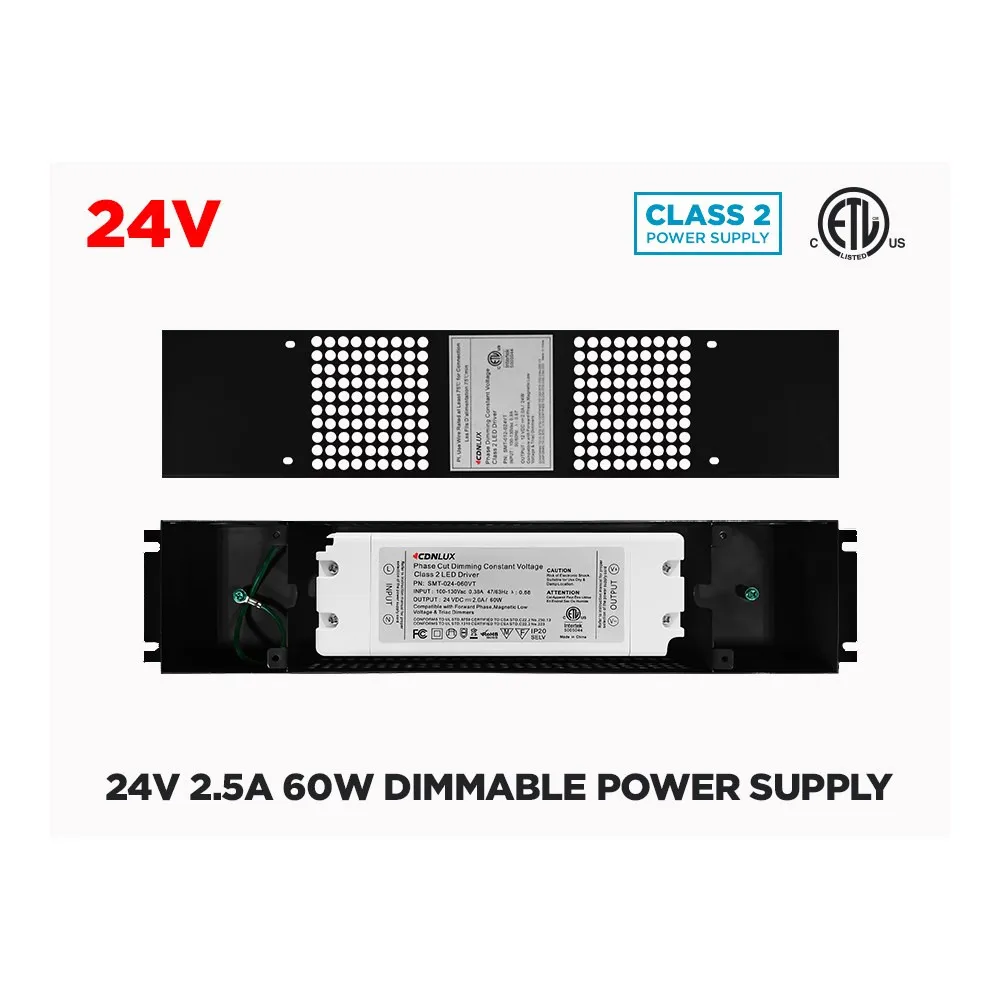
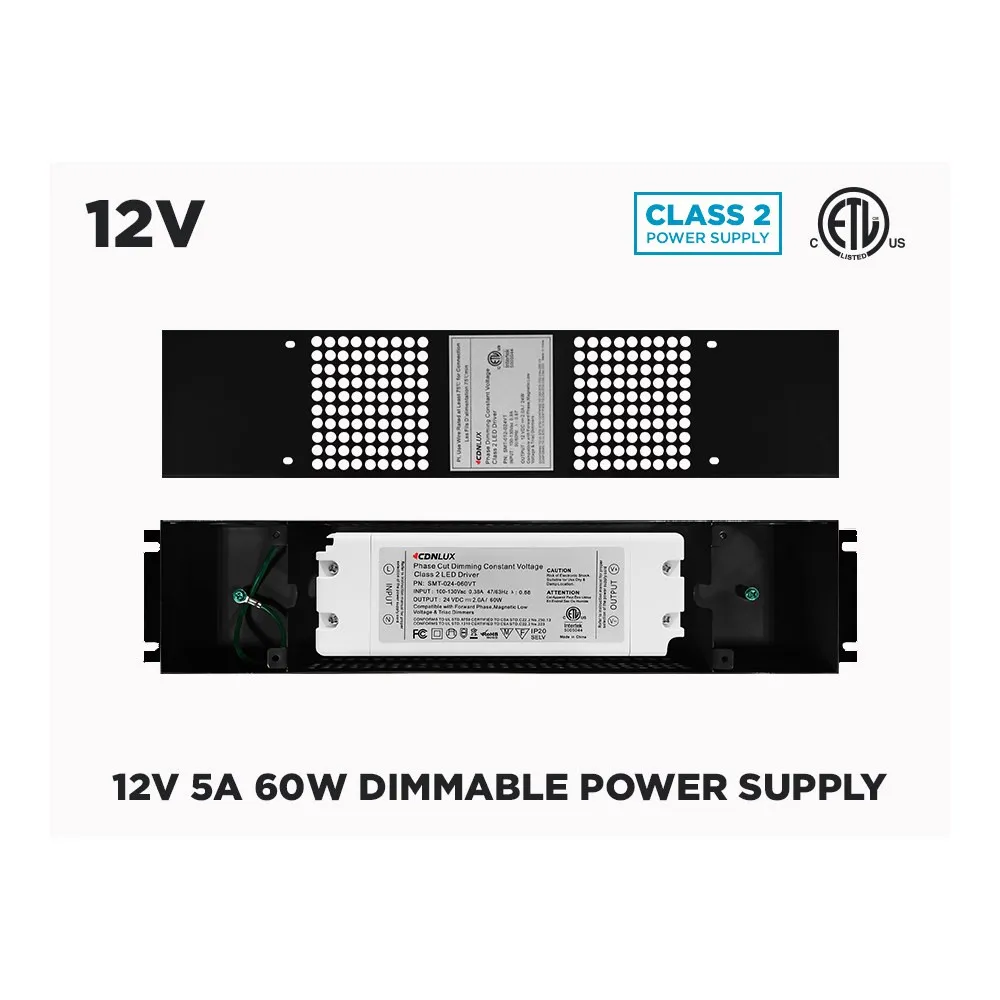
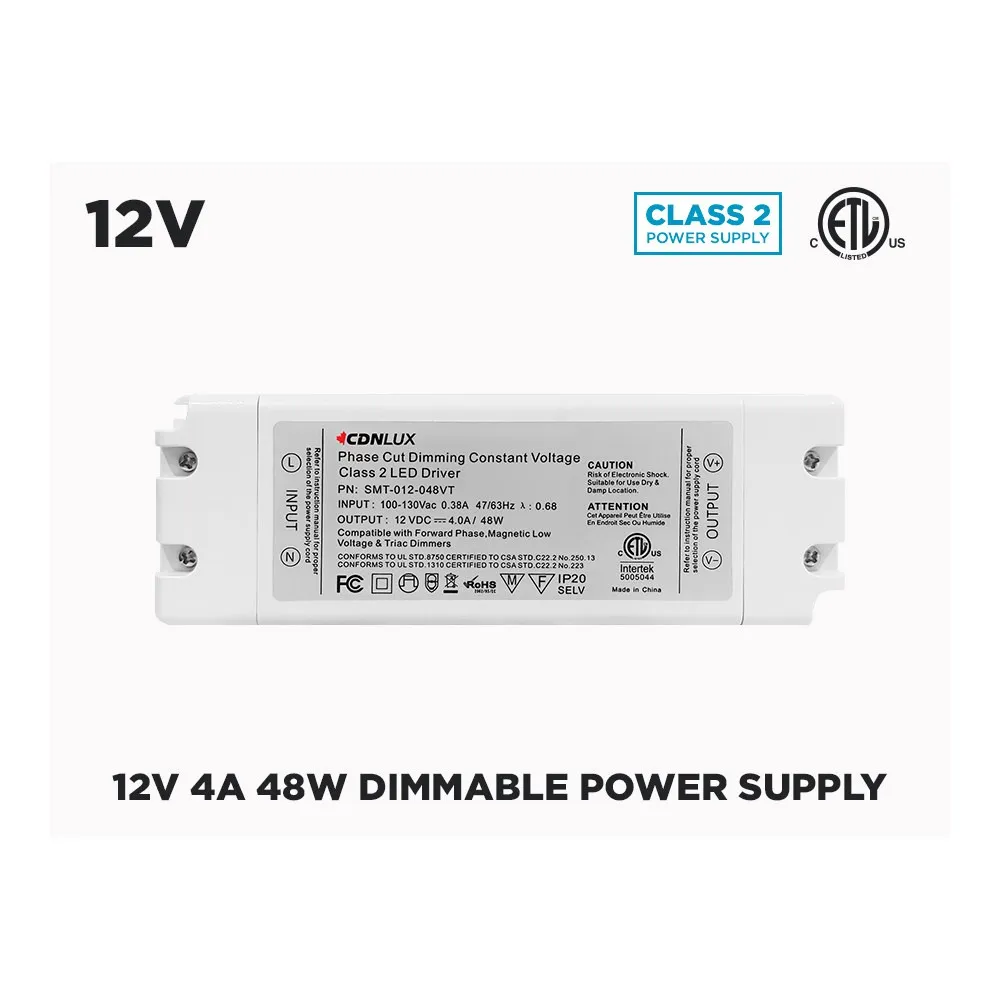
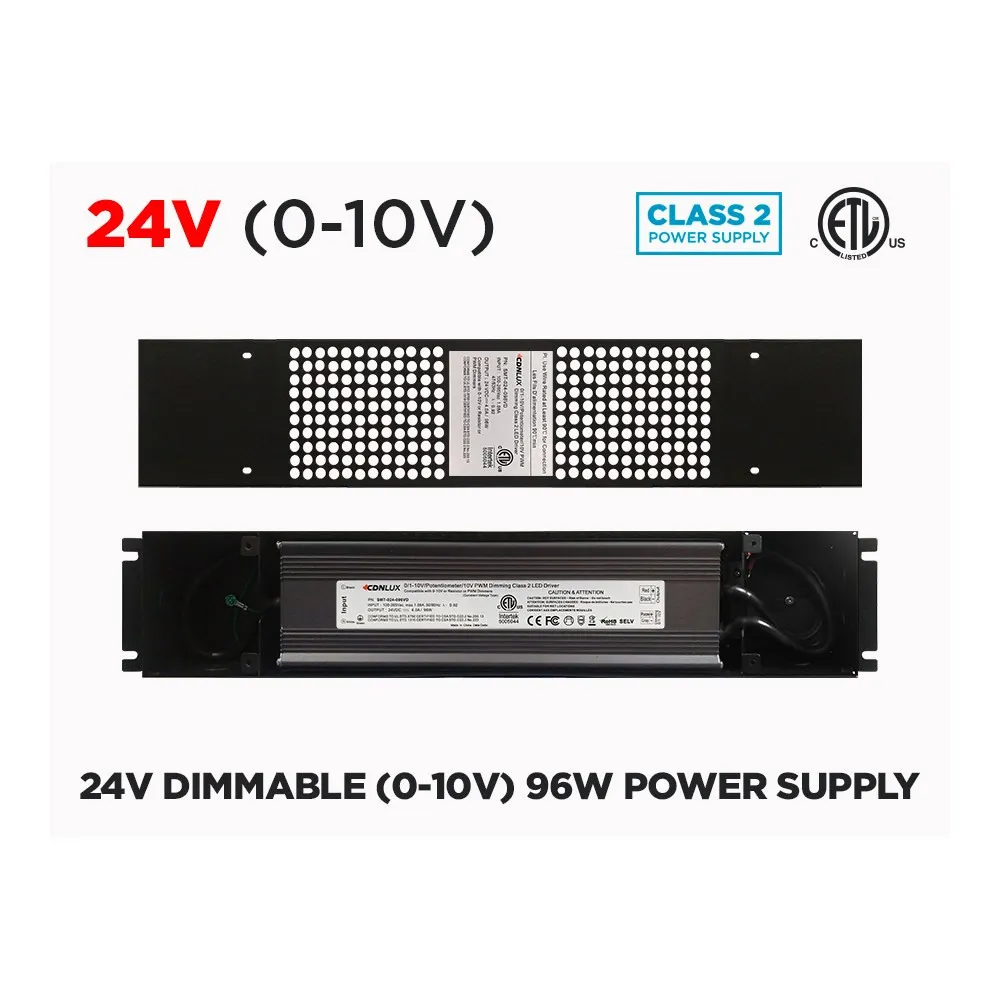
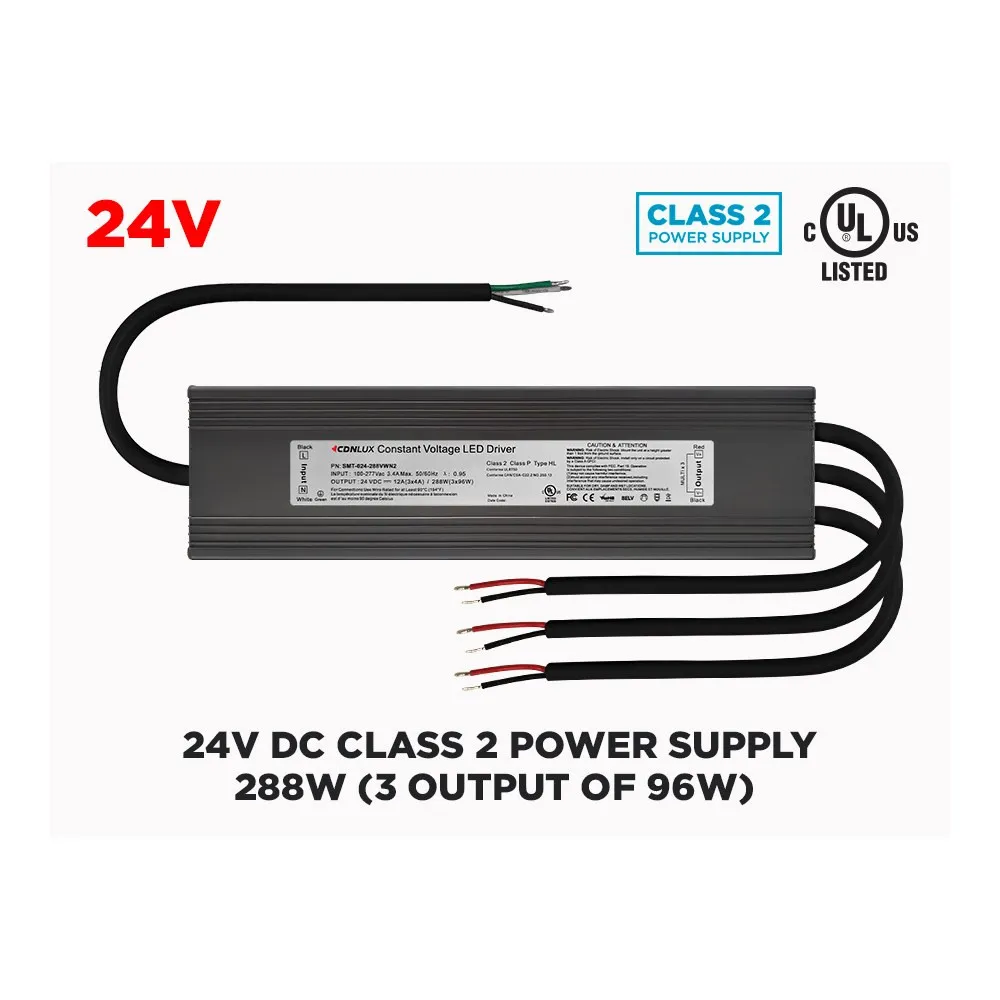
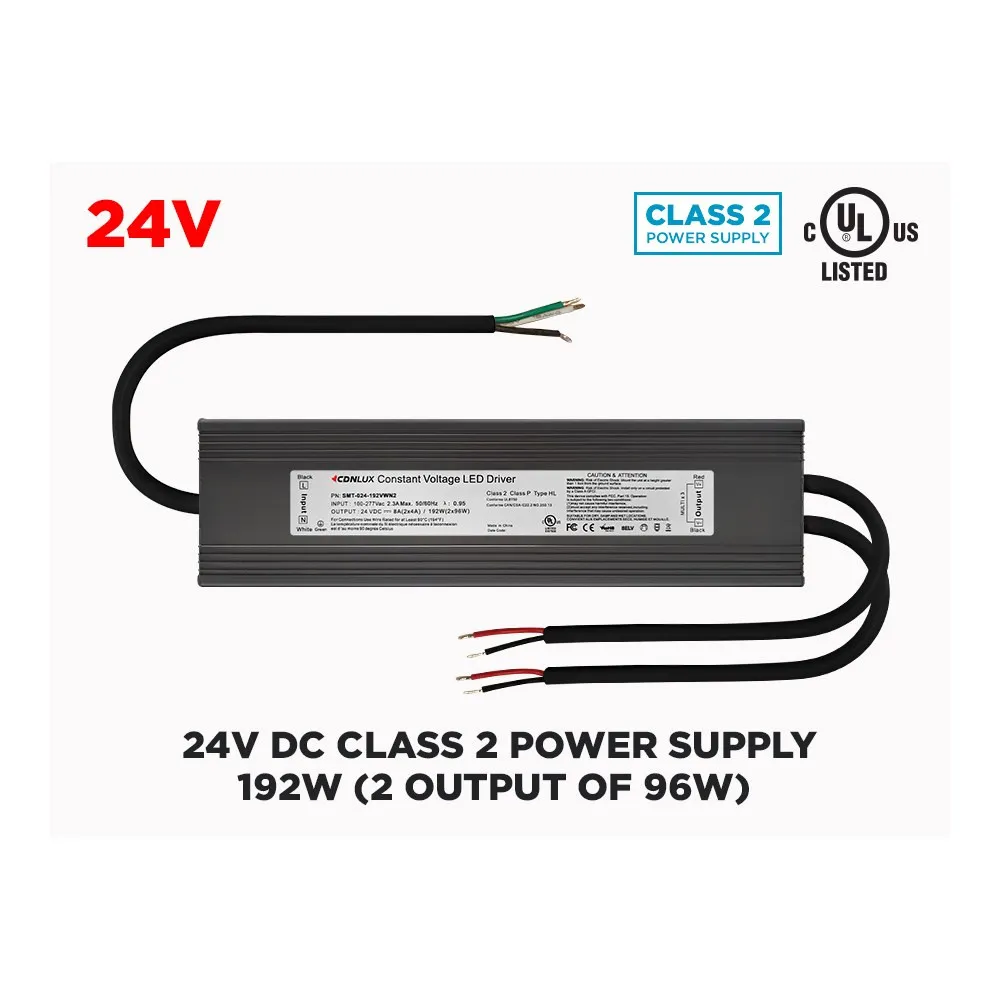
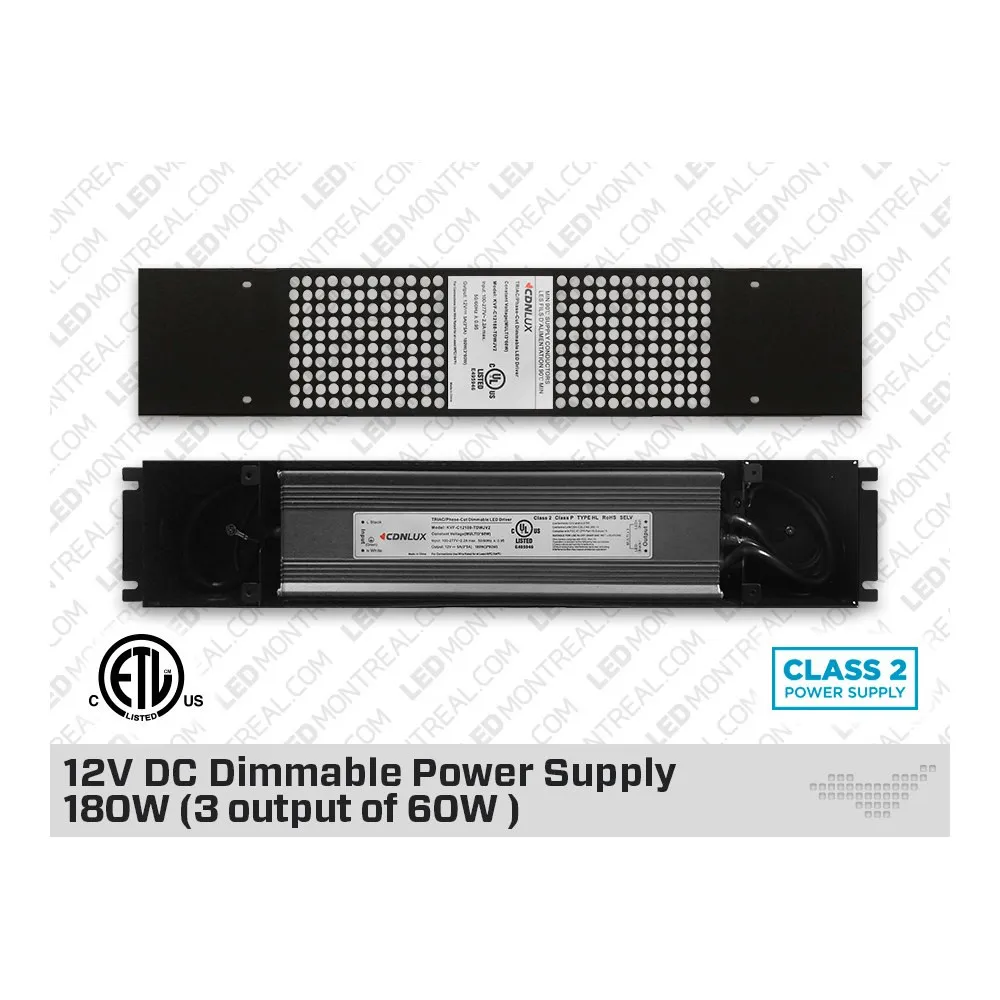
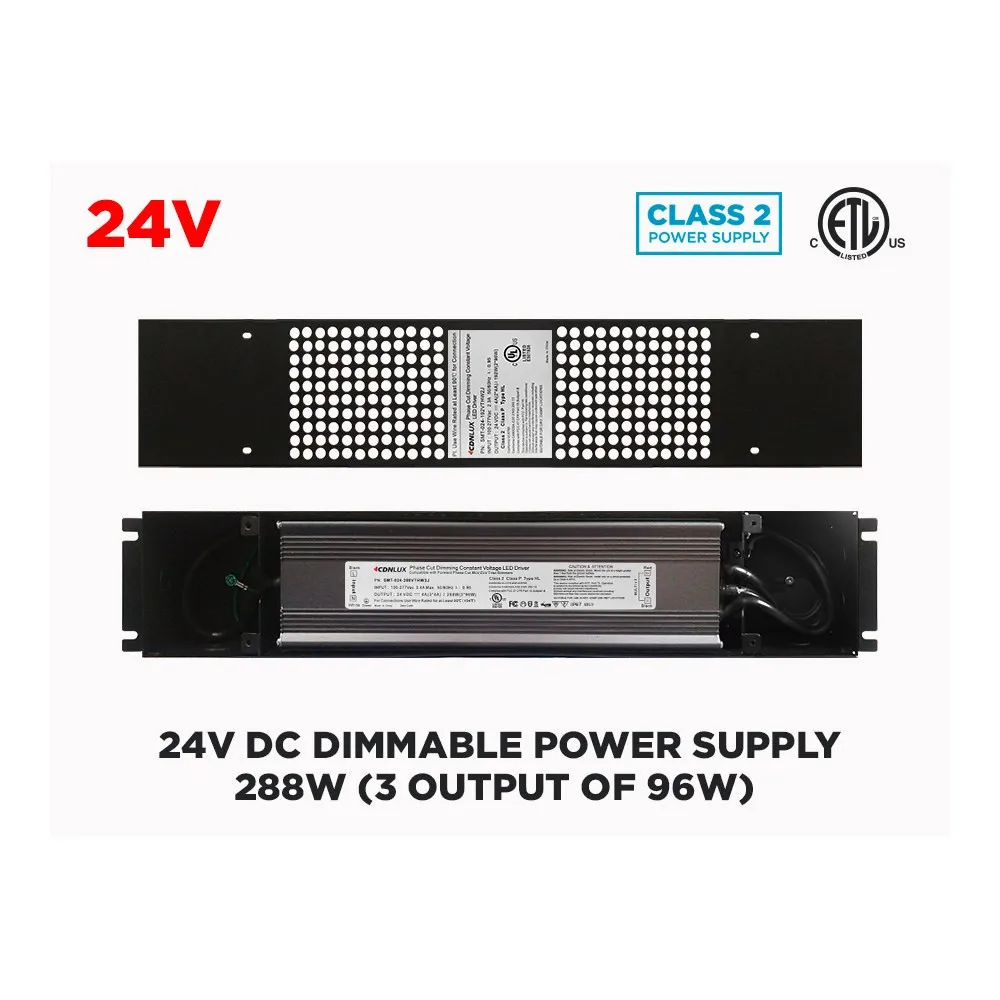
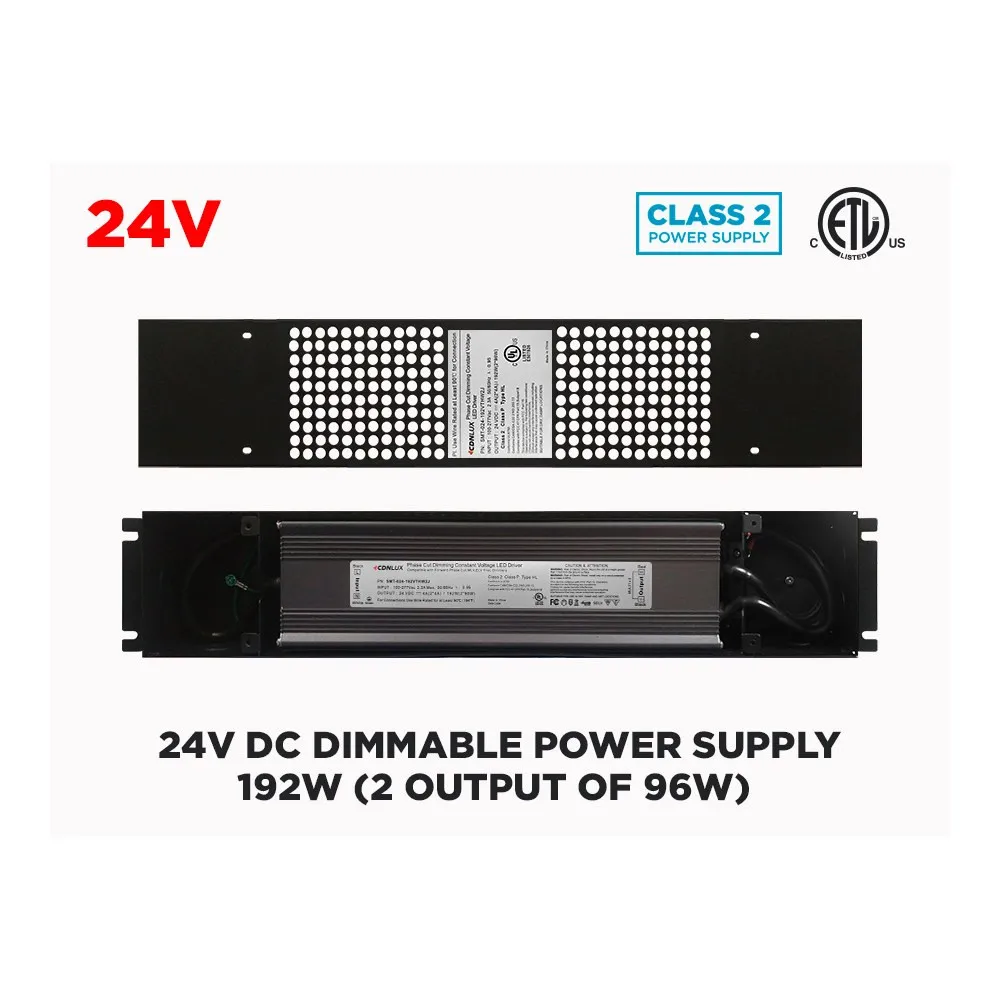
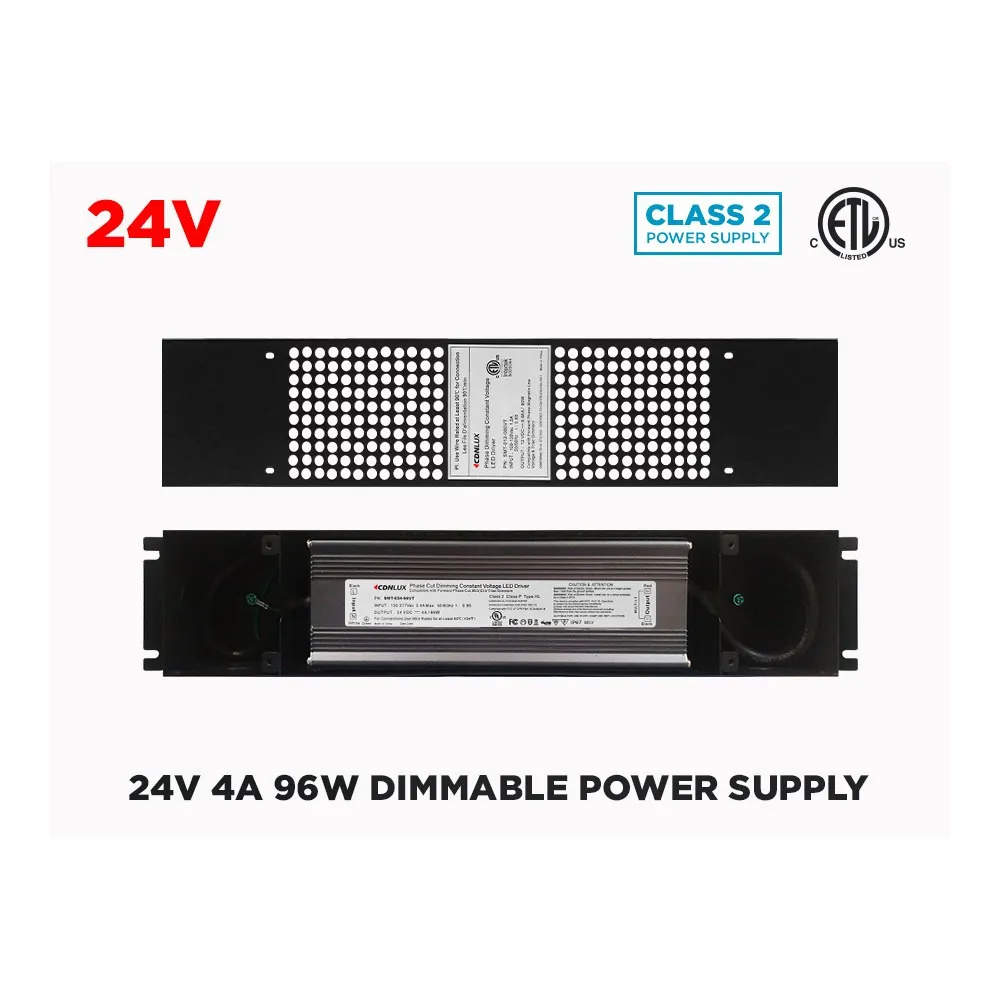
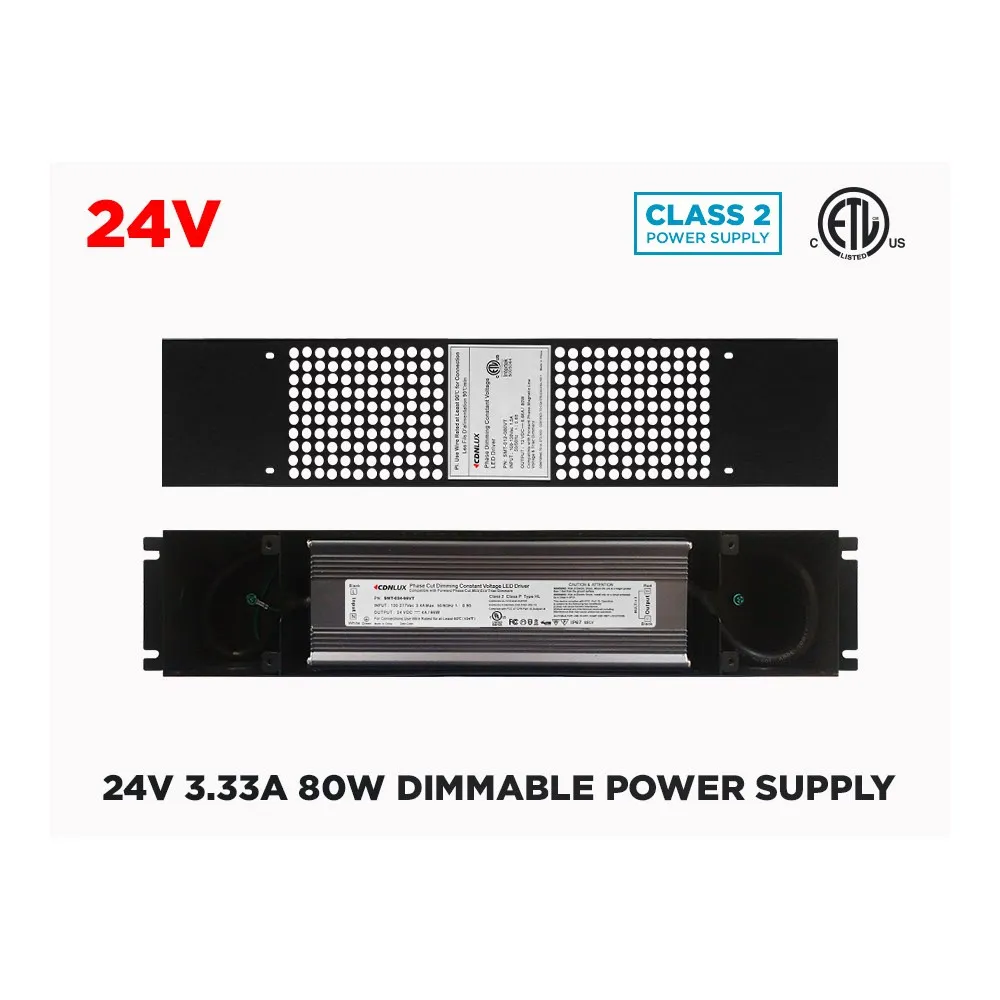
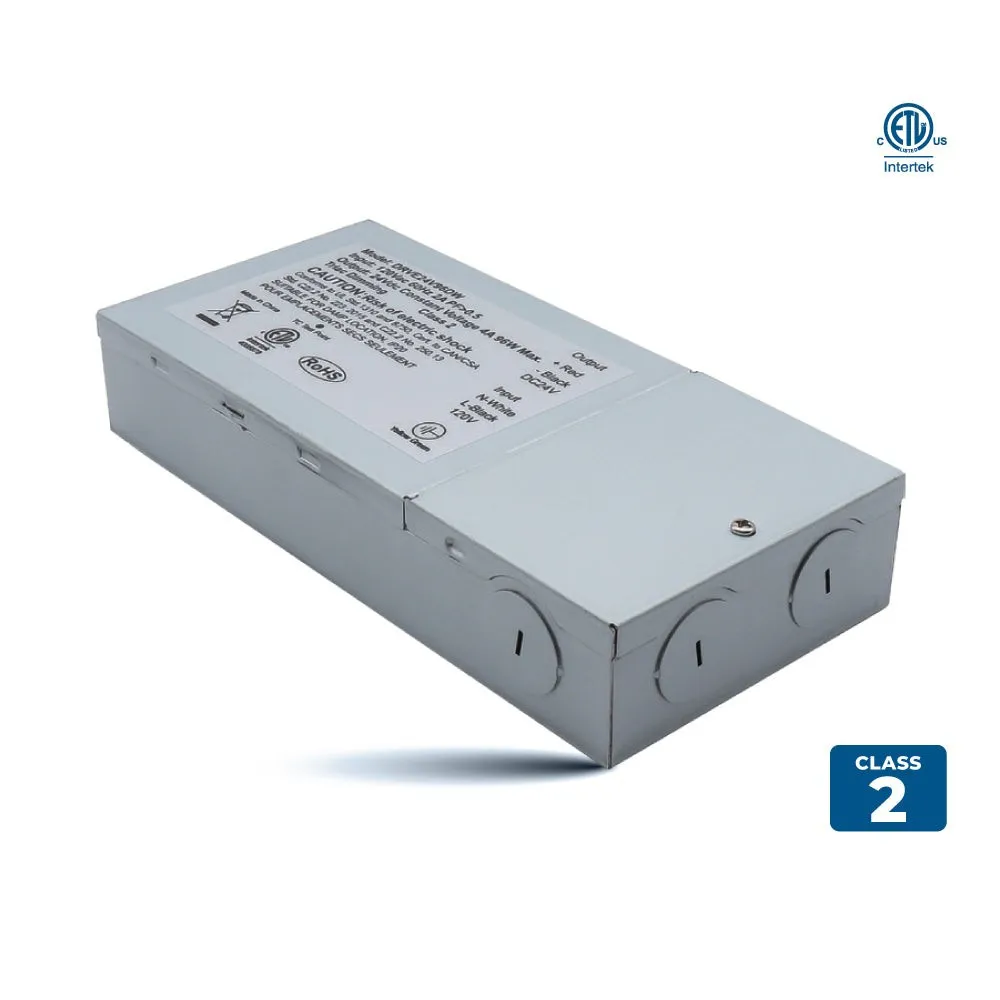
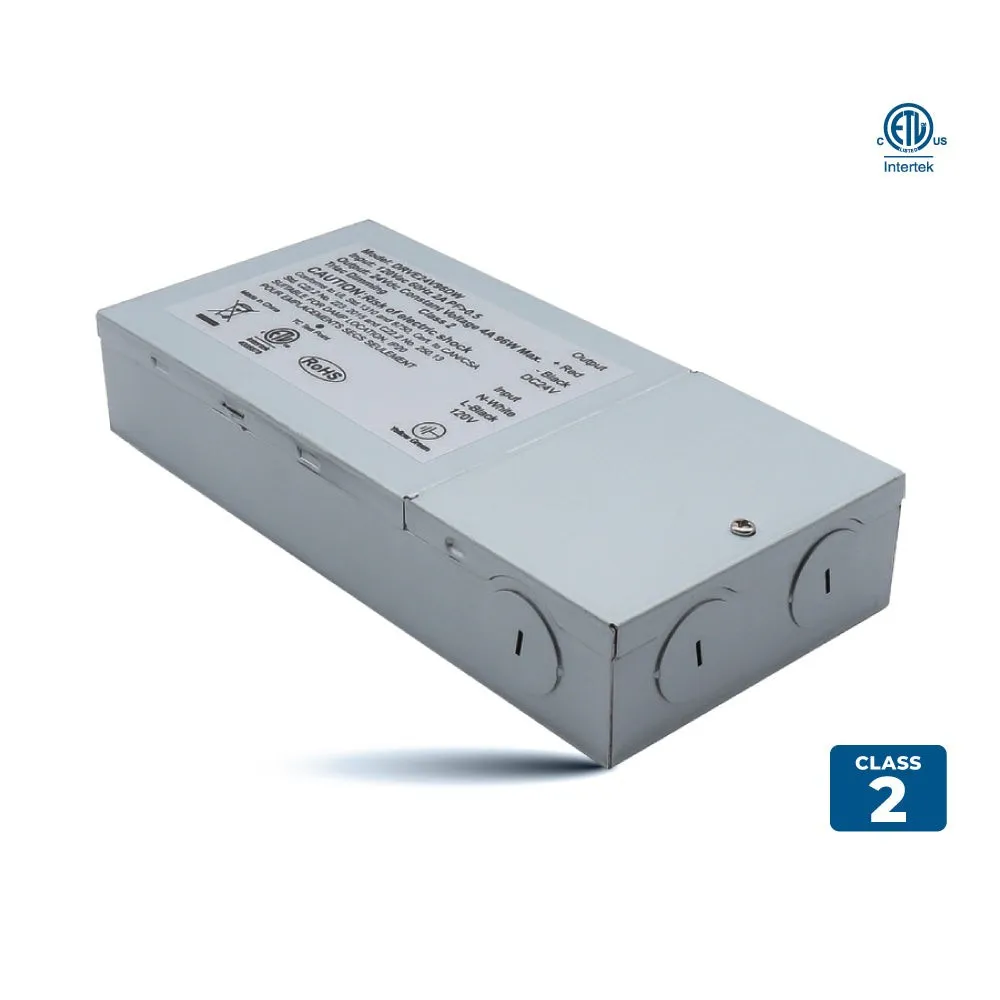
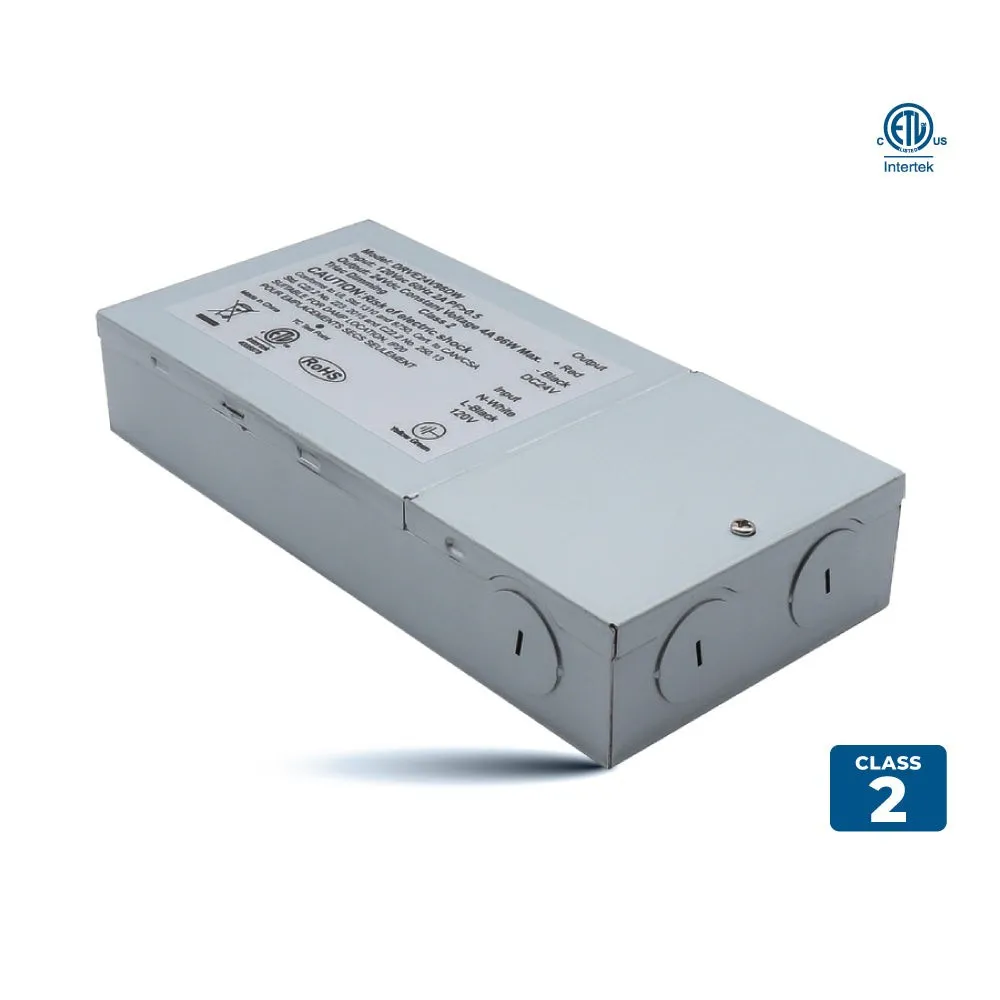
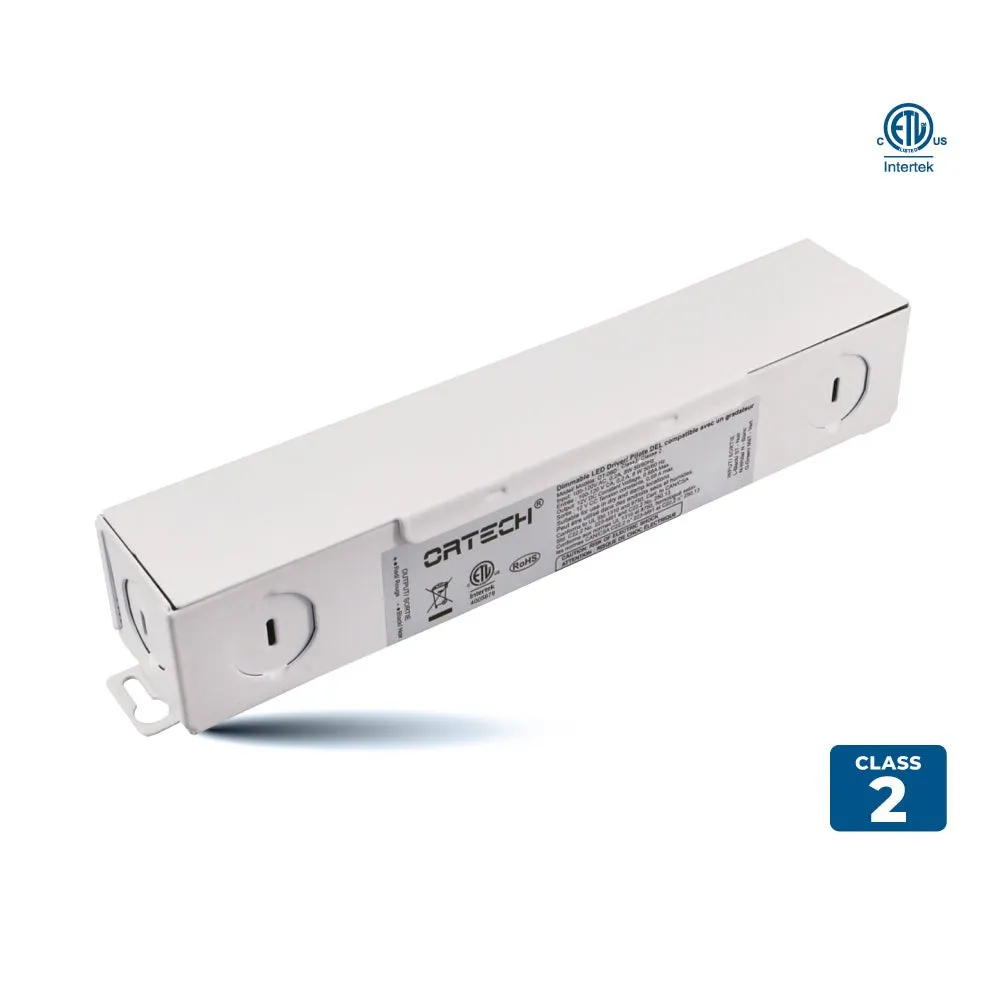
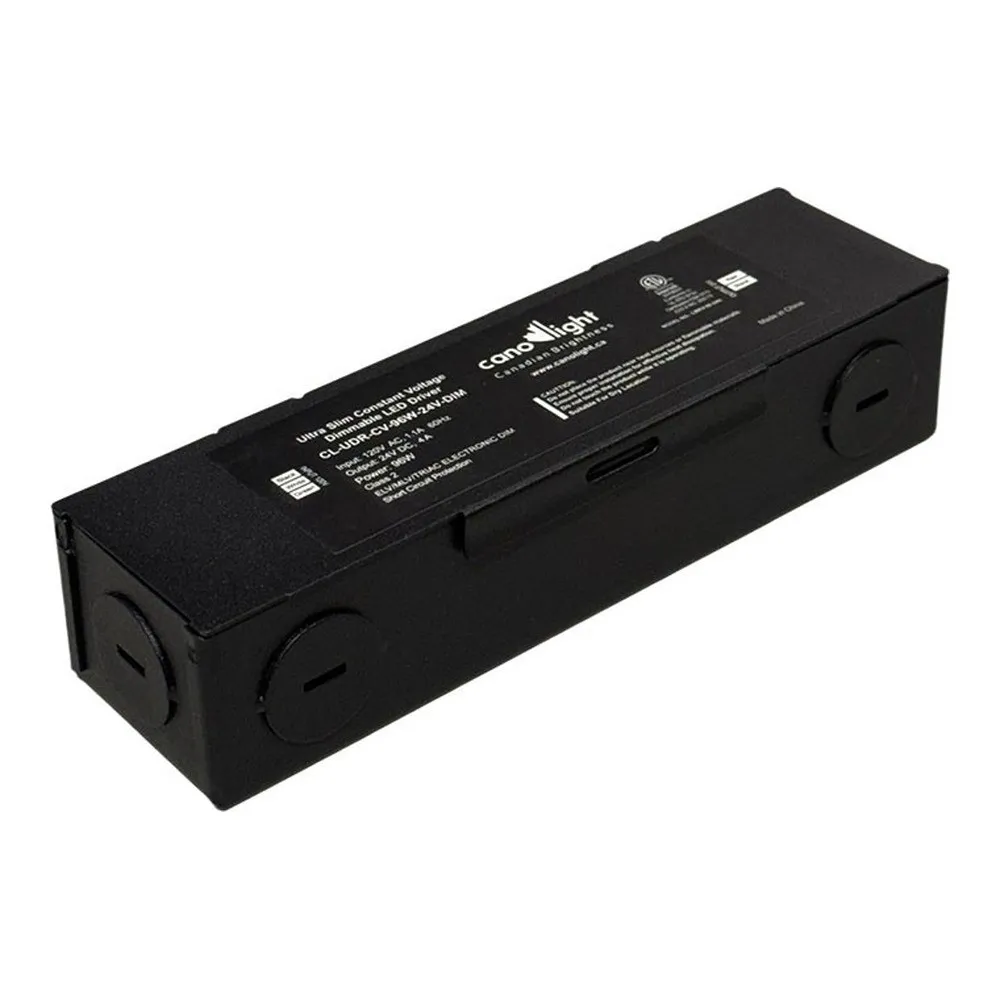
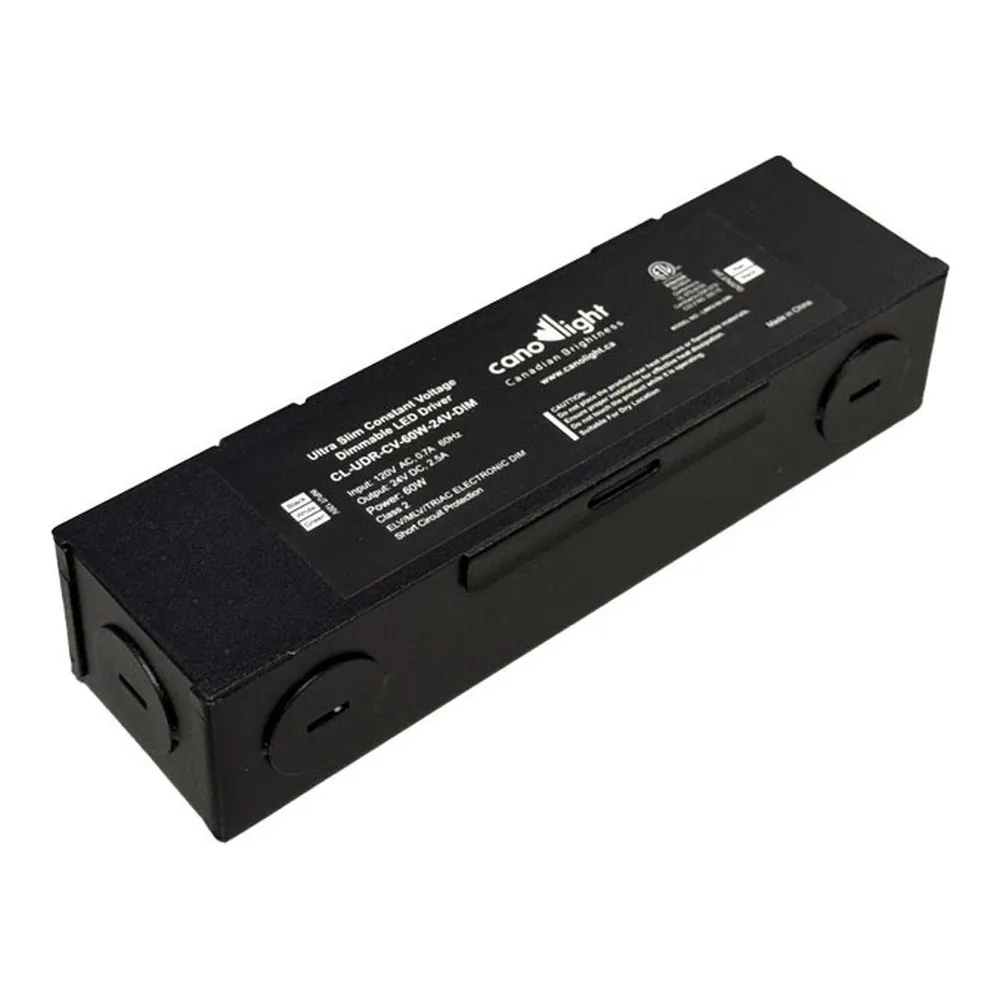
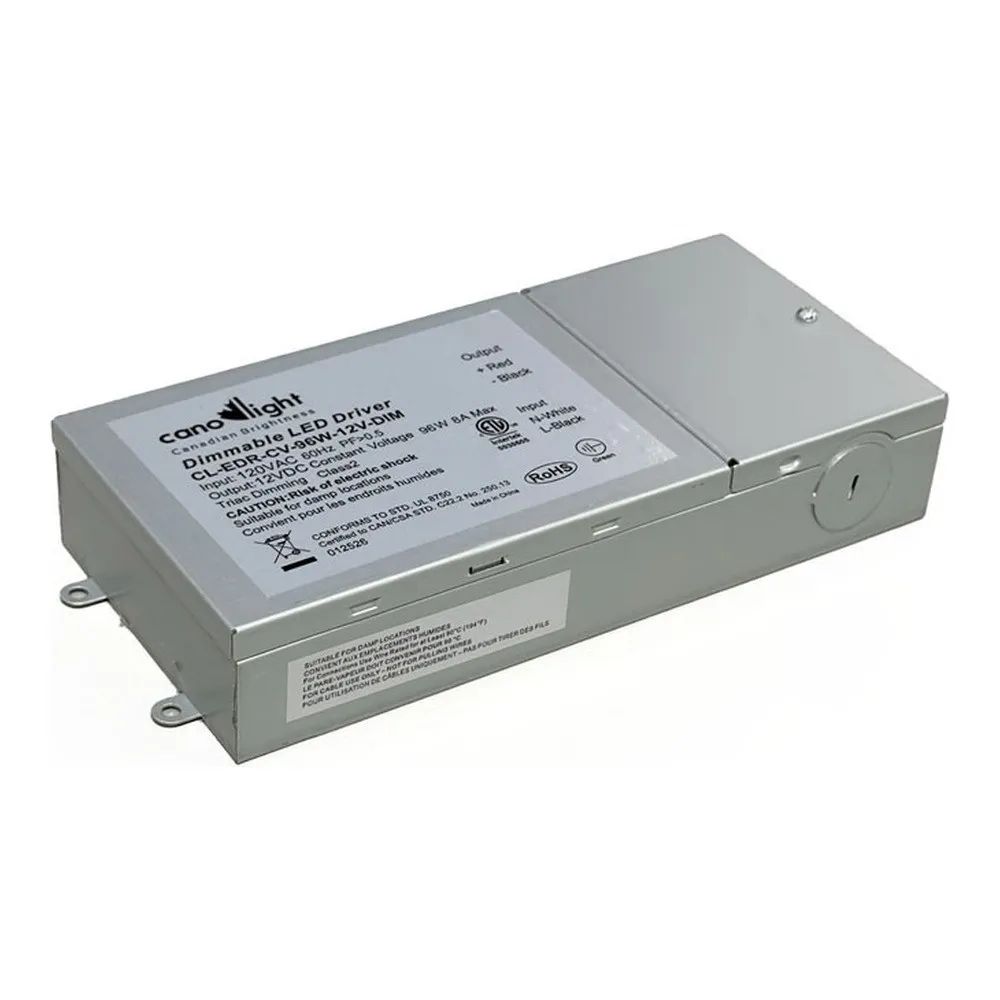
These drivers combine the power stage and a wiring compartment in one housing, so they can be installed without a separate electrical box. They work with most TRIAC and ELV wall dimmers, which makes them the go-to solution for dimmable strip lighting in homes. You will find Class 2 versions from 24 W to 96 W in 12 V and 24 V, and multi-output units such as 180 W (3 x 60 W), 192 W (2 x 96 W) and 288 W (3 x 96 W) that feed several strip runs from one location. ORTECH offers the same idea in 24 W, 48 W, 60 W and 96 W at 24 V.
For long runs and commercial coves, the ORTECH TDWJ series delivers 150 W, 200 W and 300 W in 12 V or 24 V, with a 100-277 V AC input and an aluminium housing for dry and damp locations. The ORTECH 200 W 24 V dimmable driver is a typical choice for a large kitchen, a restaurant bar or a retail display wall. CANOLIGHT adds a 5-in-1 dimmable driver of three channels on a 120-277 V AC input.
When space is tight, the CANOLIGHT ultra slim TRIAC drivers measure 160 × 44 × 34 mm in 60 W and 96 W, and a round disc driver of 79 x 31 mm fits behind a fixture or inside a ceiling opening. These units are Class 2, flicker free and suitable for damp locations.
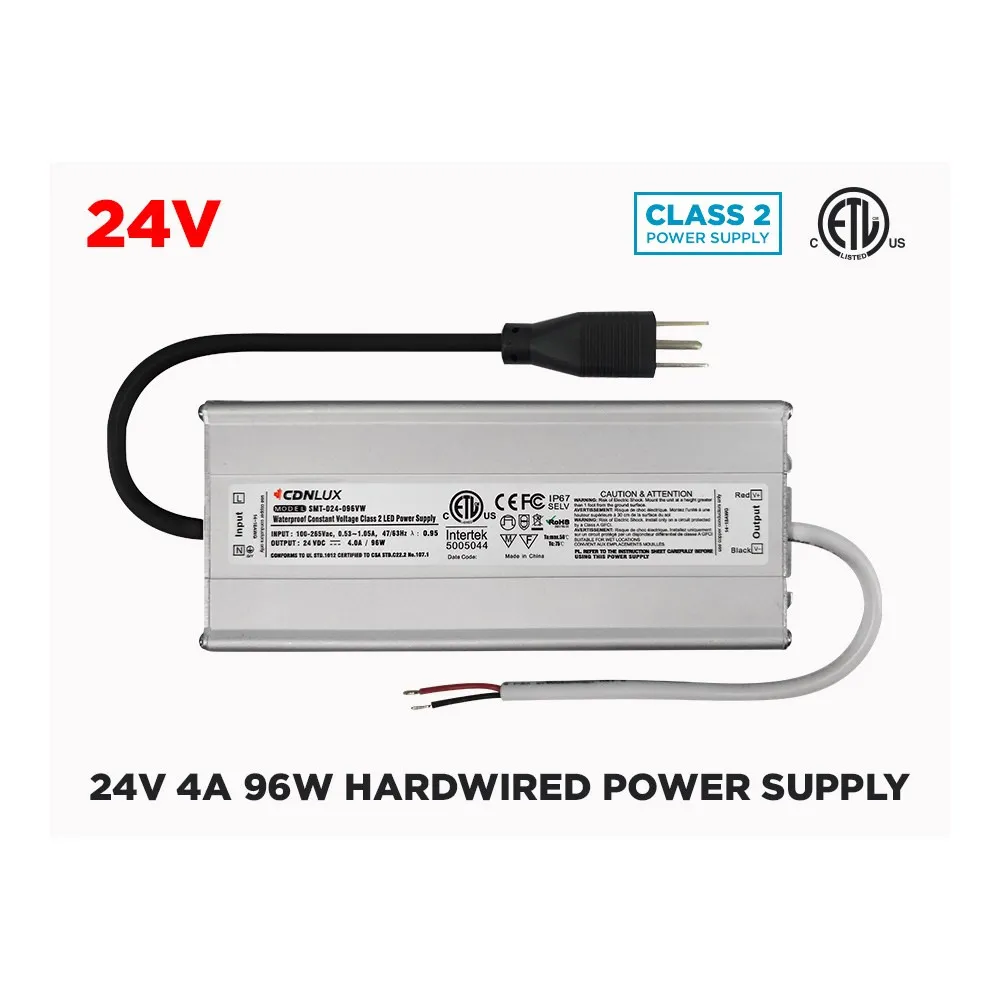
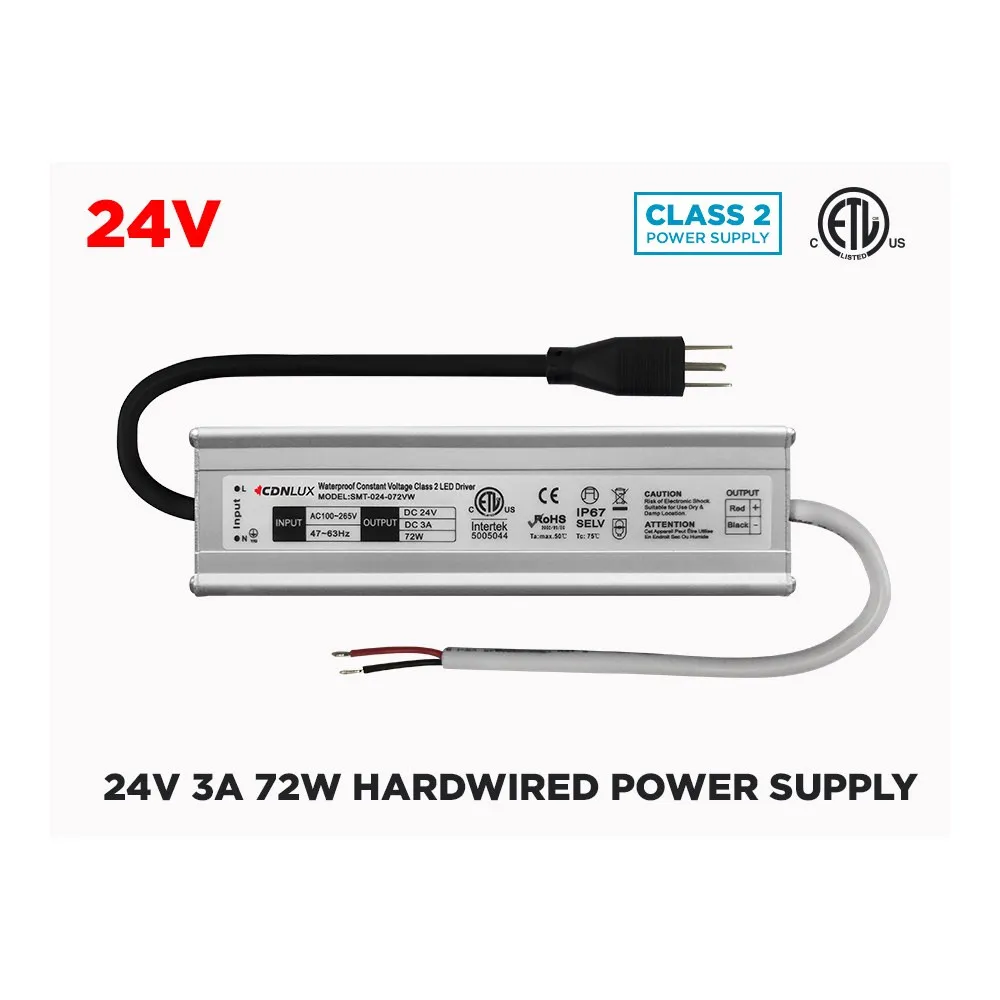
Outdoor drivers are sealed to IP67 or IP68. The CANOLIGHT outdoor 96 W 5-in-1 dimmable driver takes a 100-277 V AC input and delivers 24 V DC with a power factor of 0.95+, and a 192 W two-channel version is also offered. For garden systems, NEXLEDS landscape drivers of 120 W and 300 W are rated IP65 and come with a 1 metre cord; pair them with LED landscape lighting.
An emergency driver keeps a fixture lit when the power fails. The SPECLITE units accept 100-347 V, provide 90 minutes of backup and are cUL listed, in 8 W, 15 W, 40 W and 60 W. The 40 W emergency LED driver is sized for linear fixtures and panels. Exit signs and battery units are in LED emergency lighting.
The ORTECH 0-10 V dimming drivers accept up to 347 V and are matched to specific 5CCT fixtures, which is useful in commercial buildings. The category also includes TUROLIGHT electronic ballasts for 4 ft T8 fluorescent tubes, 32 W x 2 or x 4 lamps, in 120-277 V or 347 V, for fixtures you are not converting yet. To convert, see LED T8 tubes and our T8 ballast bypass guide.
| Specification | Values in this category | Why it matters |
|---|---|---|
| Output voltage | 12 V, 24 V DC | Must match the strip or module |
| Input voltage | 120 V, 100-277 V, 120-277 V, up to 347 V | Residential or commercial building power |
| Wattage | 8 W to 300 W, multi-output to 288 W | Total load plus headroom |
| Dimming | TRIAC, ELV, 0-10 V, 5-in-1 | Compatibility with the dimmer or controls |
| Protection | IP20, IP65, IP67, IP68, damp location | Indoor, damp or outdoor installation |
| Power factor | 0.5, 0.9, 0.95+ | Higher is better on commercial circuits |
| Listing | cUL, UL, CSA, cETL | Required for inspection in Canada |
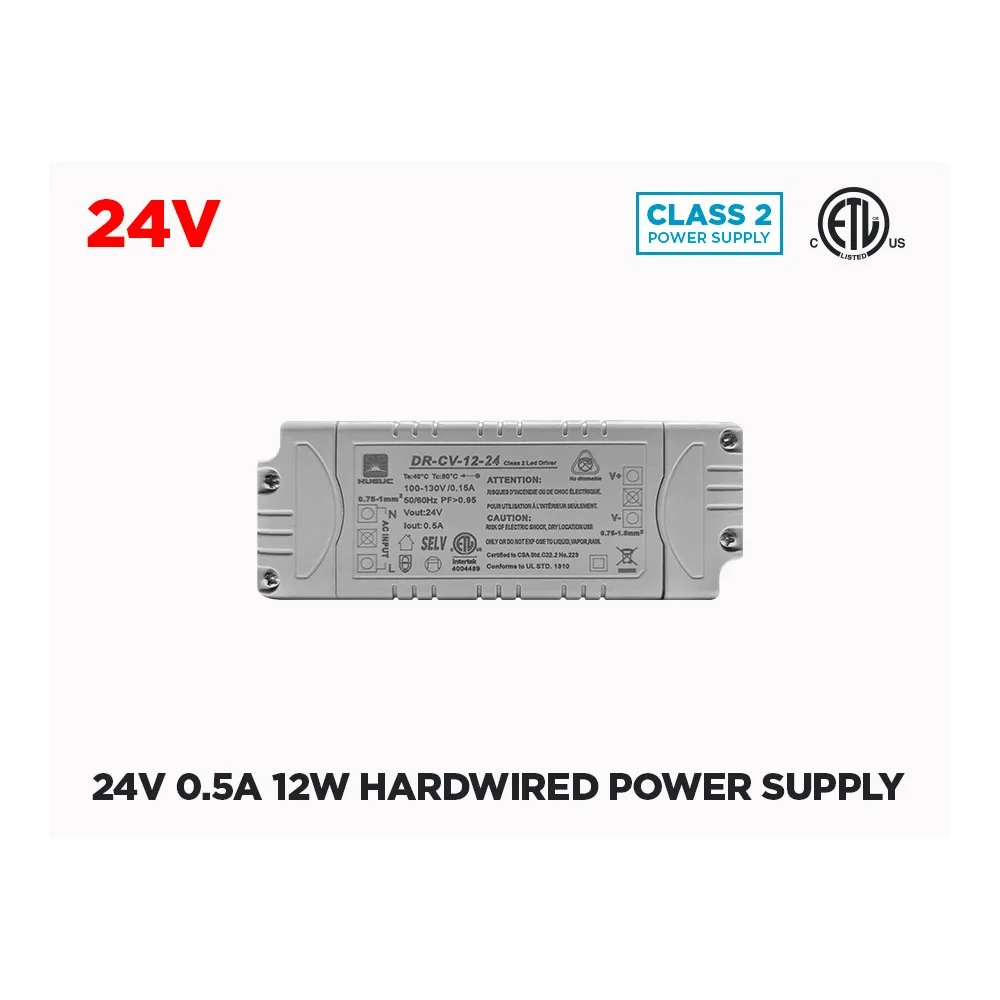
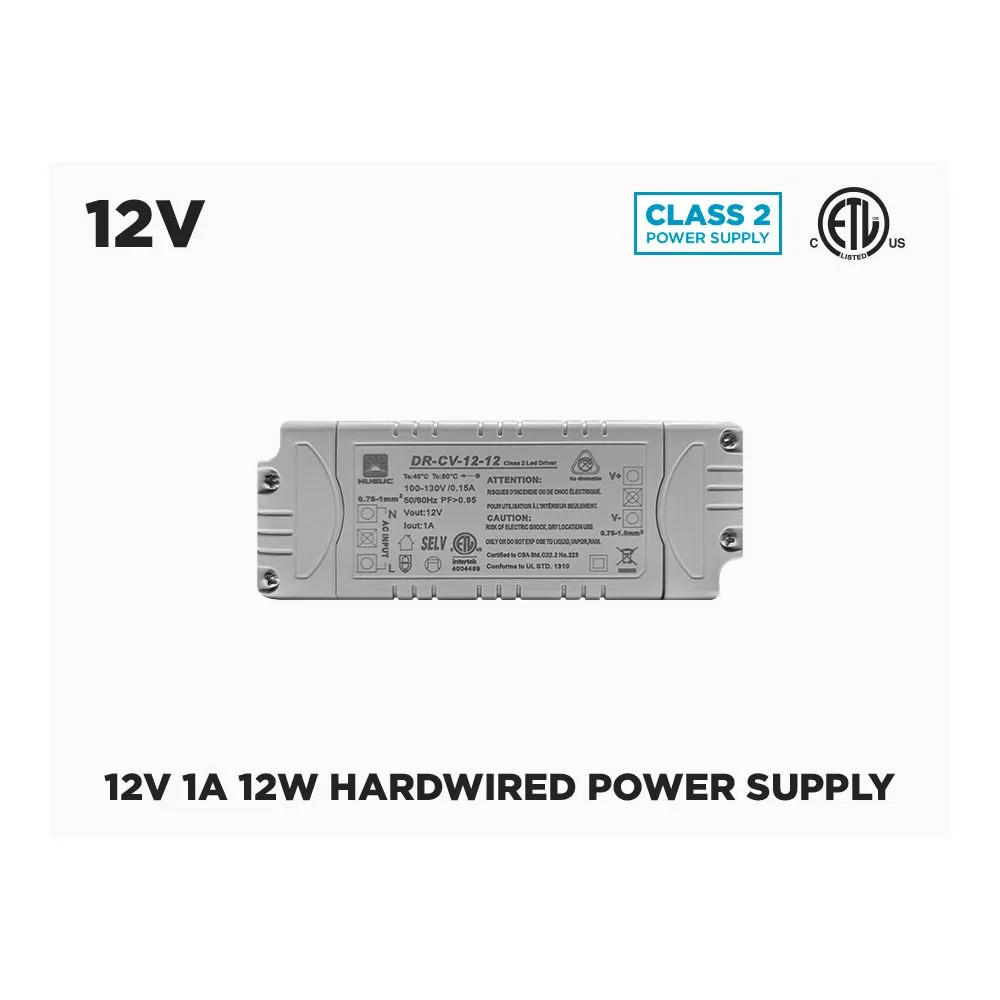
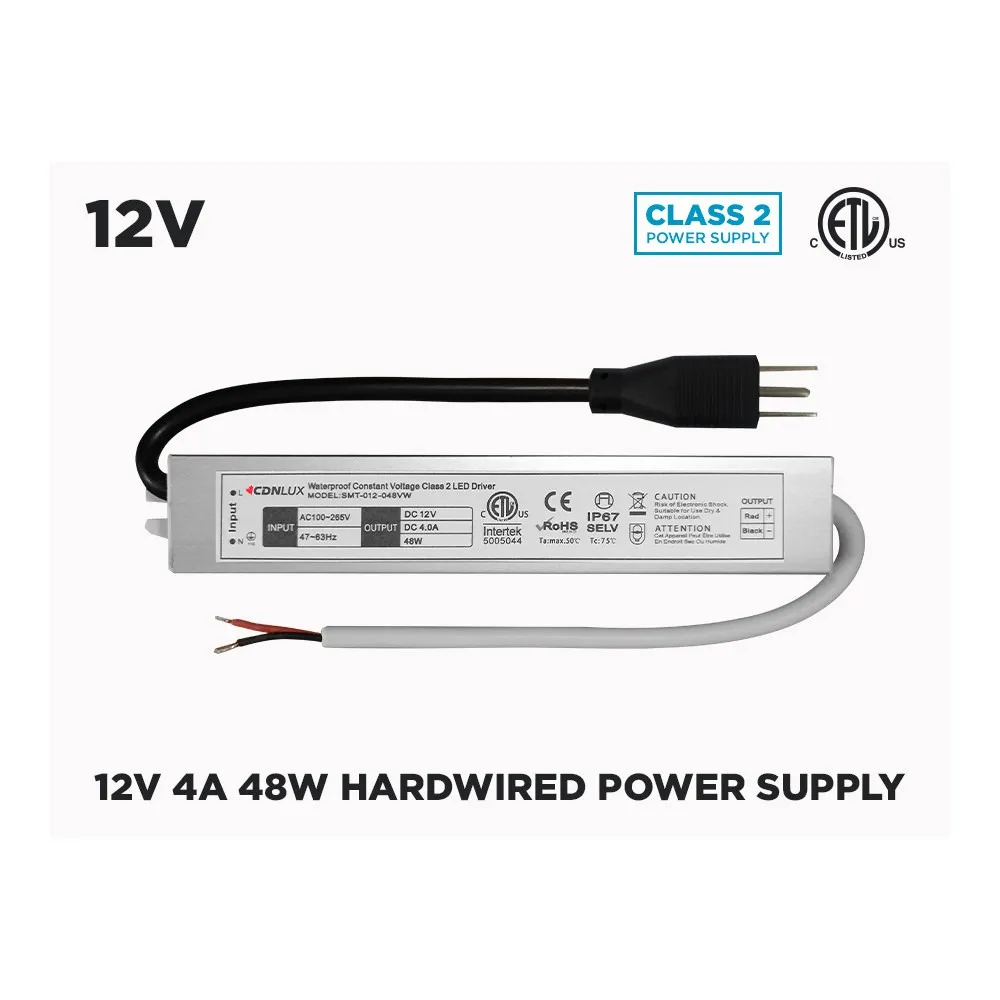
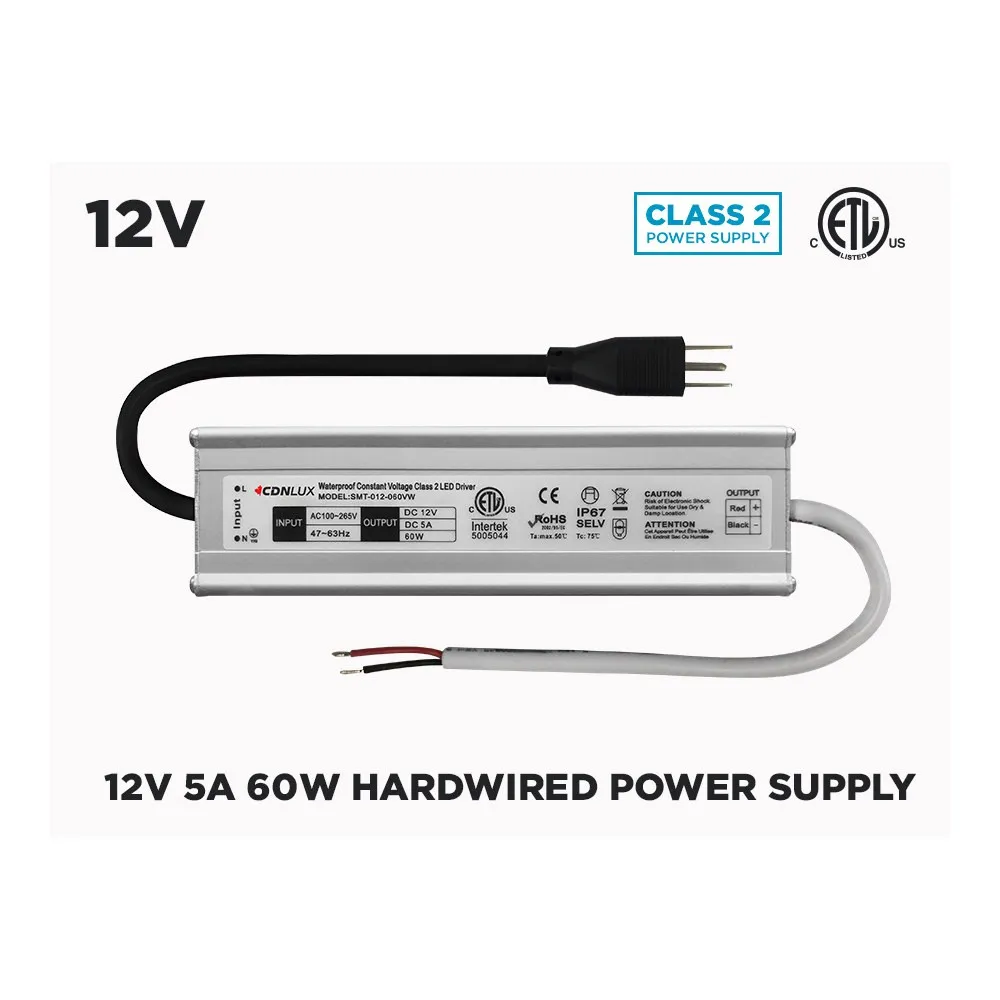
Nearly every driver in this category is constant voltage: it holds 12 V or 24 V and the LEDs draw the current they need. This is how LED strips, puck lights and most sign modules are powered. Never connect a 12 V strip to a 24 V driver: the voltage must match exactly.
Many Canadian commercial buildings run lighting at 347 V. A driver with a 100-277 V input will not survive on that circuit. Look for the units that state 347 V or 100-347 V, or read our 347 V lighting guide before ordering.
Dimming is where most problems come from. A driver and a dimmer must speak the same language, and the dimmer must be rated for the total LED load. Our LED dimmer switch guide explains TRIAC, ELV and 0-10 V, and the LED dimmers category lists compatible controls.
In a home, a 24 V universal dimmable driver of 60 W or 96 W in a junction box handles most kitchens, coves and stair lighting, with a standard wall dimmer. Install it in an accessible, ventilated spot: heat is the main enemy of any driver.
In commercial projects, the priorities are a 100-277 V or 347 V input, 0-10 V dimming tied to the building controls, a high power factor and emergency backup where the code calls for it. Offices, shops and warehouses often combine several of these drivers in one fit-out; see our ideas for office lighting.
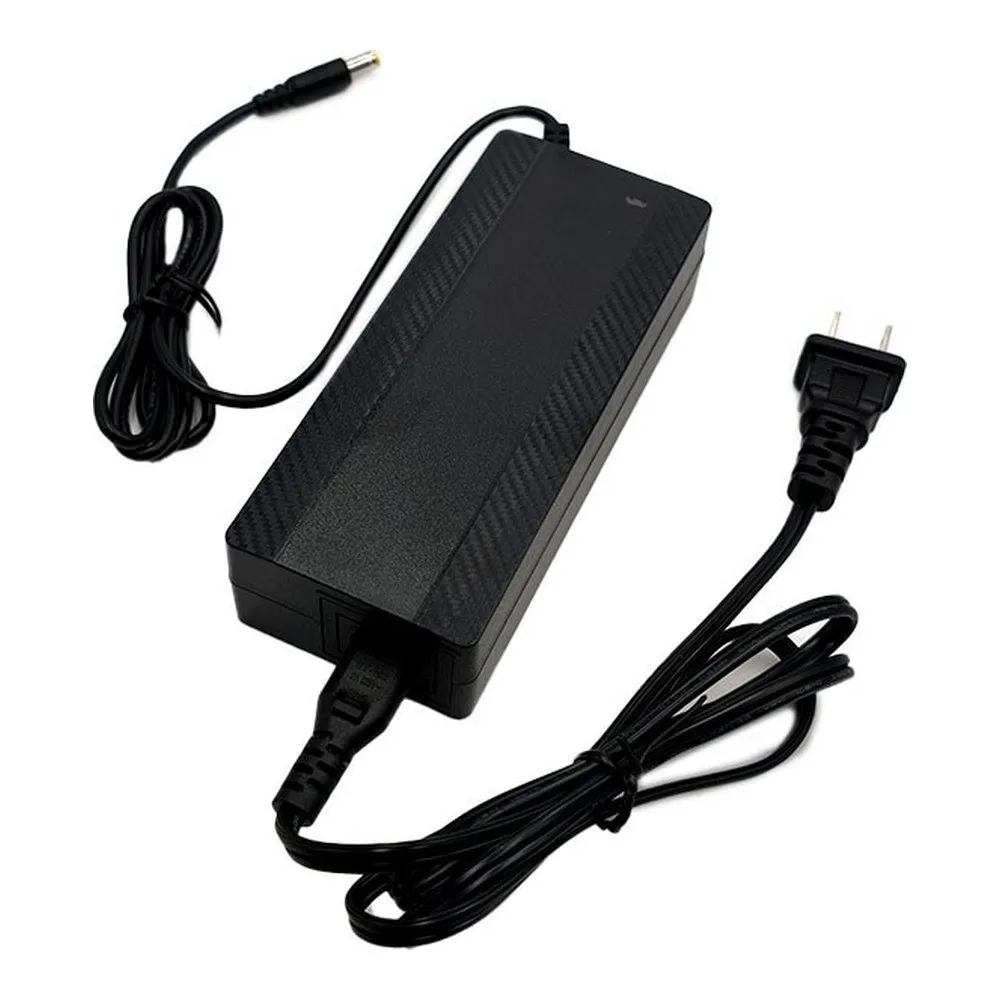
The terms overlap. Both convert line voltage to low-voltage DC. "Driver" is often used for dimmable or fixture-specific units, "power supply" for plug-in and general strip units. For strips, what matters is constant voltage at the right 12 V or 24 V output.
The driver is usually not compatible with the dimmer, or the dimmer is loaded too lightly. Use a TRIAC or ELV dimmable driver with a dimmer rated for LED loads, and check the minimum load on the dimmer.
Add the wattage of everything connected, then choose a driver with spare capacity. A 48 W load, for example, fits a 60 W or 96 W driver.
No. Use a driver that lists 347 V in its input range, or a step-down transformer. Connecting a 100-277 V driver to 347 V will destroy it.
Class 2 limits the output to a level considered safe, which simplifies the wiring on the low-voltage side. It is common on strip lighting drivers.
The SPECLITE emergency drivers in this category are rated for 90 minutes of backup, in 8 W to 60 W versions.
Compare all LED drivers by voltage, wattage and dimming method, and pair them with the strips, fixtures and dimmers of your project.