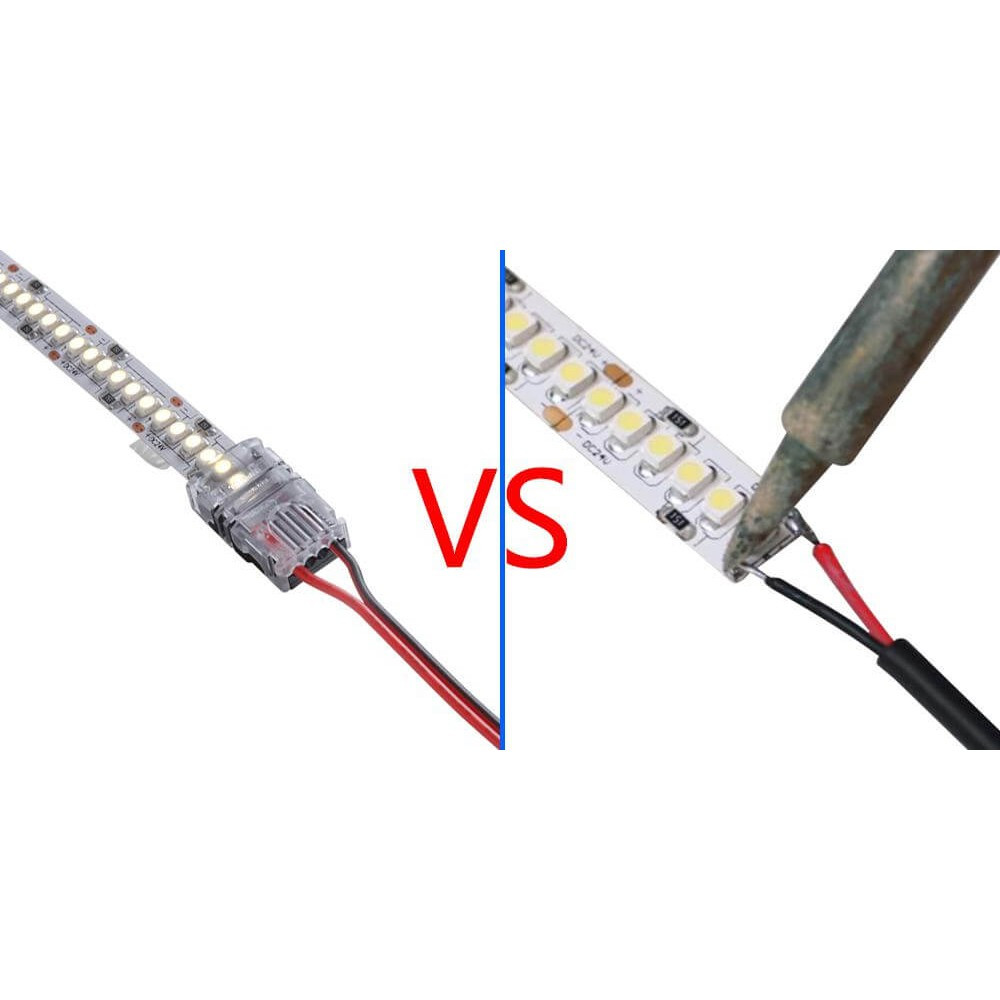
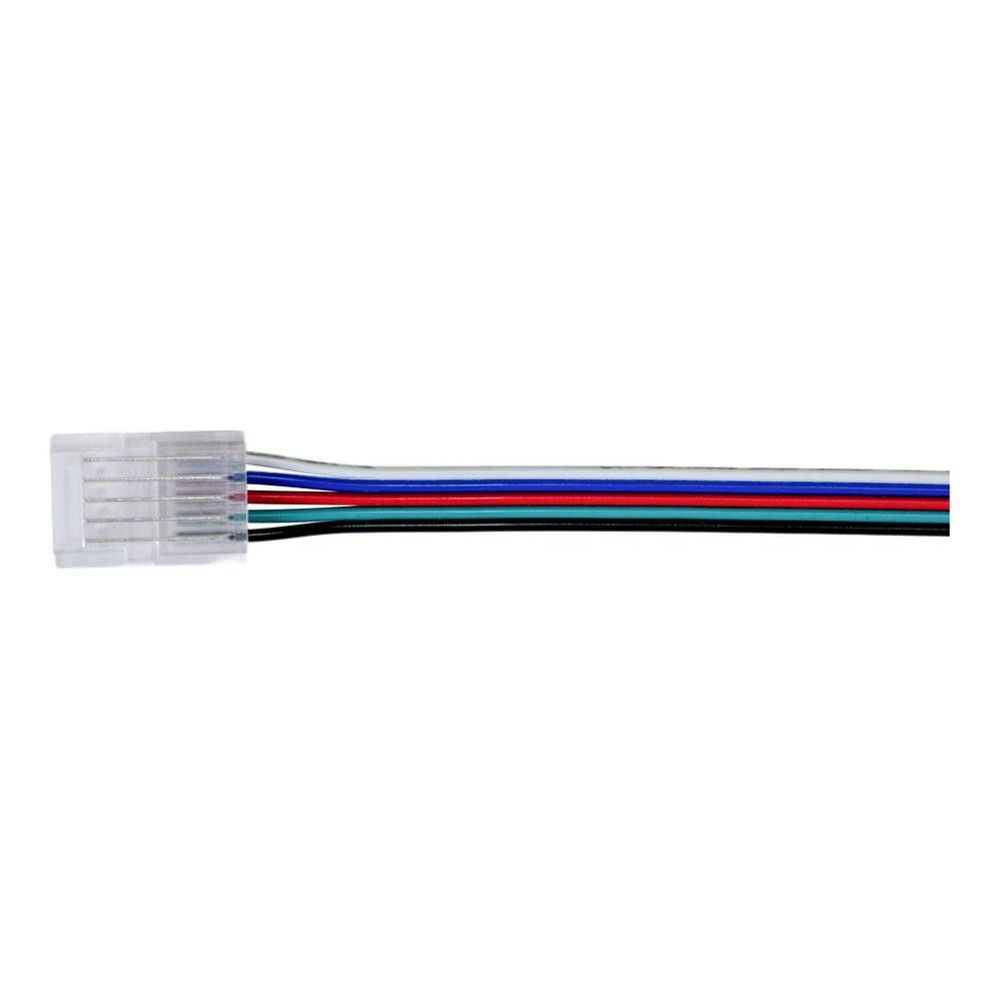
LED strip connectors are essential accessories that let you join, extend, turn, and power your LED strip lights without the need for soldering. Whether you're installing under-cabinet lighting, cove lighting, or accent runs around corners, the right connector makes installation faster, cleaner, and fully reversible. They are designed to work with a wide range of strip types, including single-color, RGB, RGBW, and COB strips.
Types of LED Strip Connectors
Strip-to-strip connectors join two pieces of strip in a straight line for seamless extensions. Strip-to-wire connectors let you add a lead wire to power a strip or bridge a gap. L-corner and T connectors route the strip around 90° corners or branch into multiple directions. Solderless clip connectors (like SC4 designs) snap directly onto the PCB, while PCB-to-PCB connectors create gapless joints for COB and high-density strips. Rounding out the category are end caps, mounting brackets, and complete accessory kits tailored to specific strip series like 3528 and COB.
Where They're Used
In residential spaces, connectors enable clean installations in kitchens, closets, staircases, and entertainment areas. In commercial and architectural settings, they support cove lighting, retail displays, signage, and continuous runs in offices and hospitality venues where a polished finish matters.
How to Choose
First, match the connector to your strip width (such as 8mm, 10mm, or 12mm) and PCB type. Next, confirm the number of contacts: 2-pin for single-color, 4-pin for RGB, and 5-pin for RGBW or tunable strips. Consider the connection style you need — straight, corner, T-junction, or strip-to-wire — based on your layout. For damp or outdoor areas, choose connectors rated for the appropriate IP protection, and verify they support your strip's voltage (typically 12V or 24V).
FAQ
Do I need to solder these connectors? No. Most options in this category are solderless and clip or click directly onto the strip, though soldered joints remain the most durable choice for permanent installs.
How do I know which connector fits my strip? Measure the strip width and count the copper contact points. The number of contacts tells you whether you need a 2-, 4-, or 5-wire connector.
Can I use connectors to turn a corner? Yes. L-corner connectors handle 90° turns, and T-connectors let you branch a run in multiple directions without cutting awkward angles.