LED panel lights give a ceiling bright, even and glare-free light from a fixture barely thicker than a ceiling tile. They replace old fluorescent troffers in offices, schools, stores and clinics, and they are the simplest upgrade for a basement or workshop with a drop ceiling. This category gathers every common format for Canadian ceilings: 2x2, 1x4 and 2x4 LED ceiling panels, LED troffers and slim round panels, along with the frames and kits that let you install them on any type of ceiling.
Contractors, electricians and property managers will find commercial flat panel LED lights rated 120-347 V, with wattage and colour temperature selectable on site, 0-10 V dimming and cUL, CSA or DLC listings. Homeowners will find drop-in panels for a finished basement, plus round panels for kitchens, hallways and bedrooms. Start with the size that fits your ceiling, then compare the specs that matter for your project.
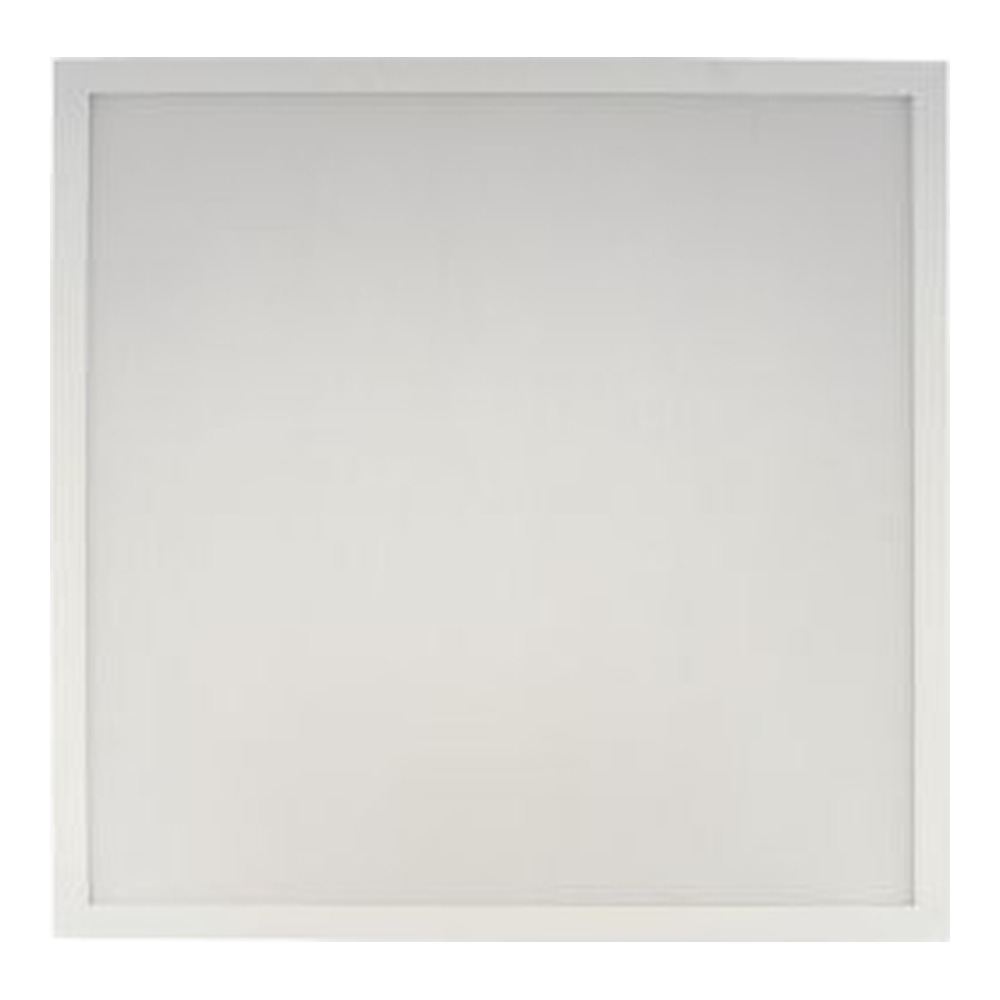
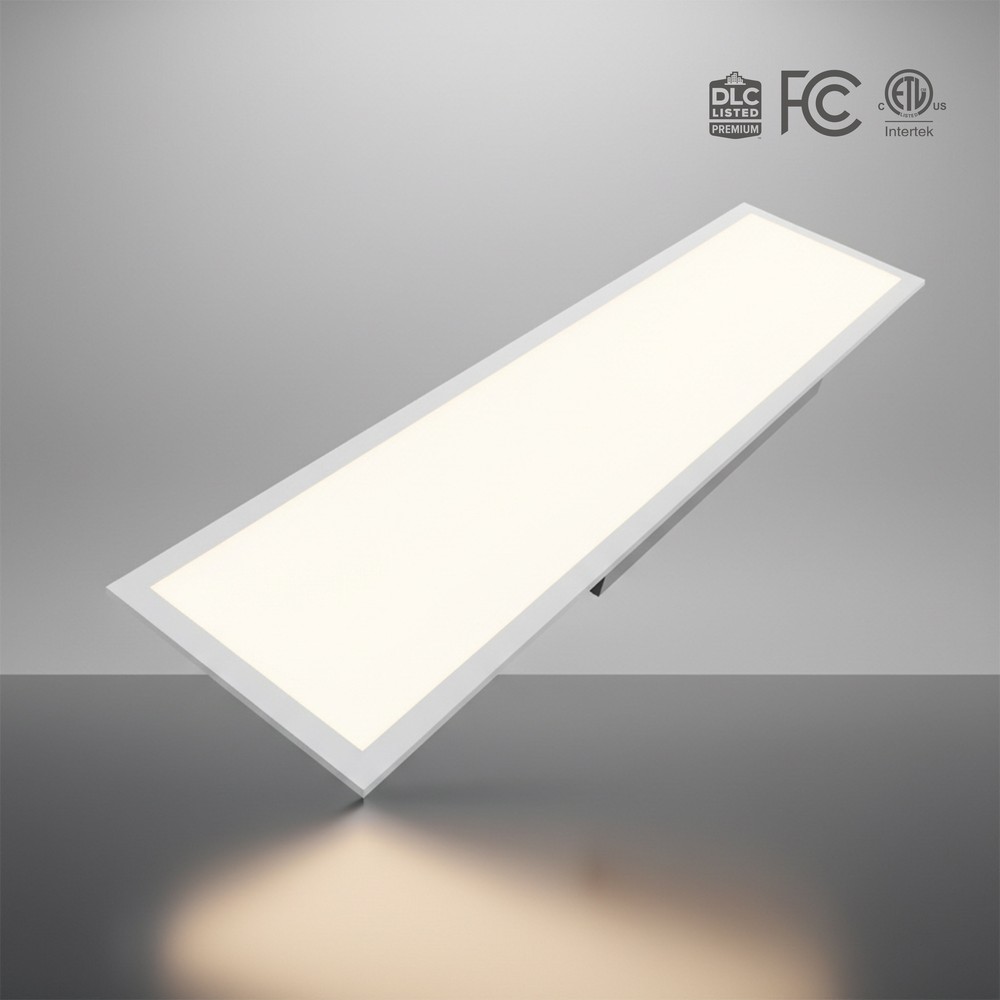
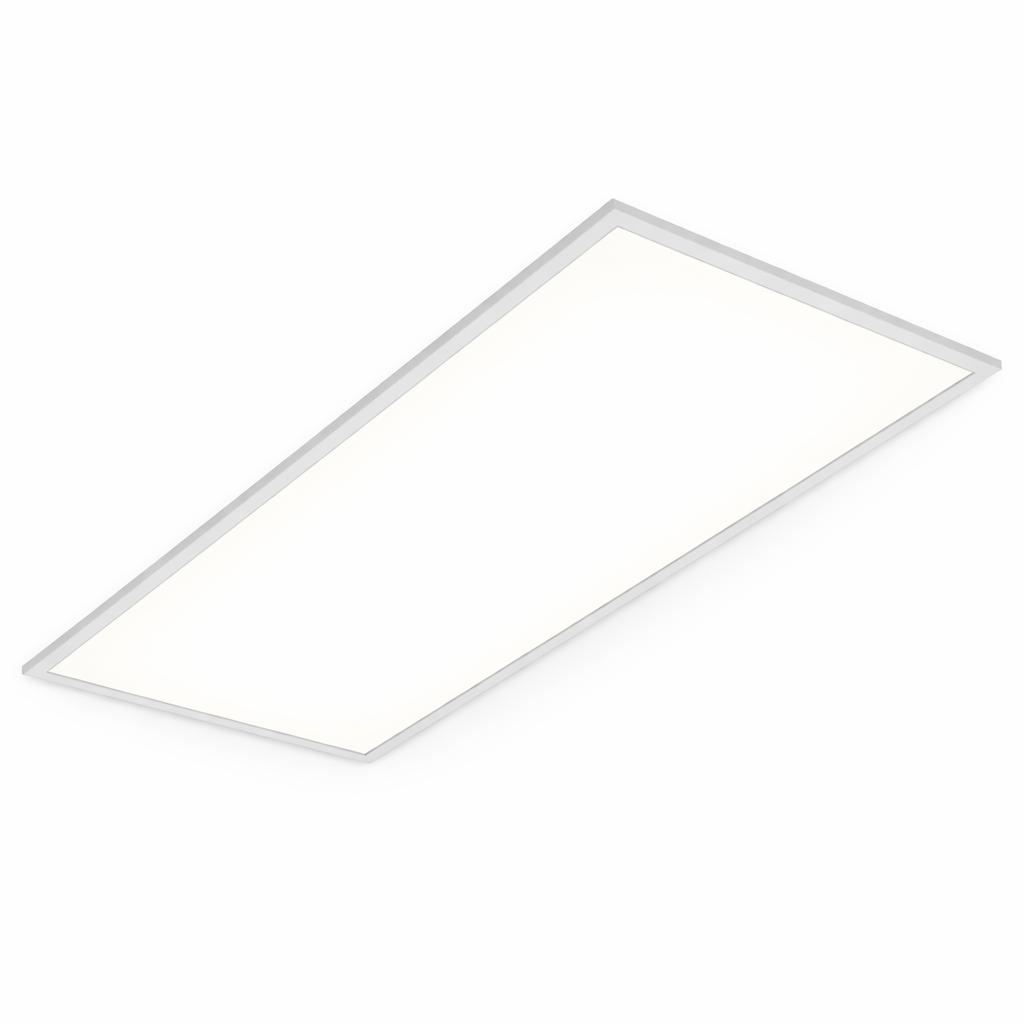
Panels are named after their nominal size in feet: a 2x2 fills a 2 ft x 2 ft opening in a suspended ceiling grid, a 1x4 fills a 1 ft x 4 ft opening and a 2x4 fills a 2 ft x 4 ft opening. Each size exists as a thin flat panel, edge-lit or backlit, and as a deeper troffer.
| Format | Nominal size | Wattage range in this category | Example output | Typical spaces |
|---|---|---|---|---|
| 2x2 | 2 ft x 2 ft | 15 to 40 W | 5000 lm at 40 W (Turolight RGD-BLP6) | Offices, classrooms, basements |
| 1x4 | 1 ft x 4 ft | 15 to 40 W | 4500 lm at 36 W (Turolight RGD-BLP6) | Corridors, aisles, storage rooms |
| 2x4 | 2 ft x 4 ft | 20 to 72 W | 5625 lm at 45 W (Turolight RGD-BLP6) | Open offices, stores, schools |
Square 2x2 LED panels are the most versatile choice for offices, waiting rooms, classrooms and basements, and many models offer three wattage settings. Arani also makes a 2x2 panel with emergency battery backup (25-30-35 W, 4550 lumens), a practical way to keep corridors and exits lit during a power failure.
Long and narrow, 1x4 LED panels suit corridors, aisles, storage rooms and continuous rows above a work surface. Their output is often close to that of a 2x2 from the same series: Arani rates both its 1x4 and its 2x2 at 4550 lumens, so you can choose for the ceiling layout rather than for brightness. In low-traffic areas, the Turolight RGD-BLP6 1x4 with motion sensor turns on only when someone is there.
The largest format, 2x4 LED panels, is the direct replacement for the classic fluorescent troffer in open offices, stores and schools. Wattage settings go up to 72 W on a Speclite 2x4, and an Arani 2 ft x 4 ft panel is rated up to 6500 lumens. Because each fixture covers more floor, a large room needs fewer of them.
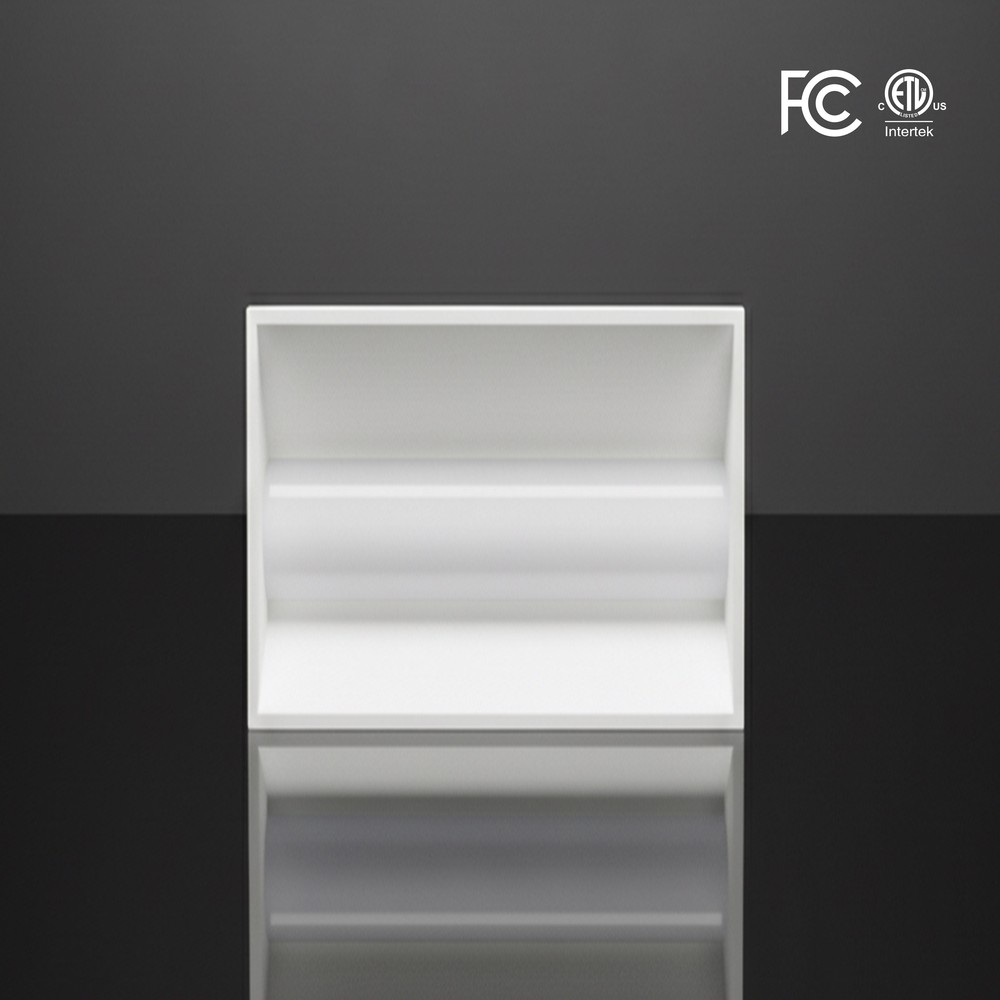
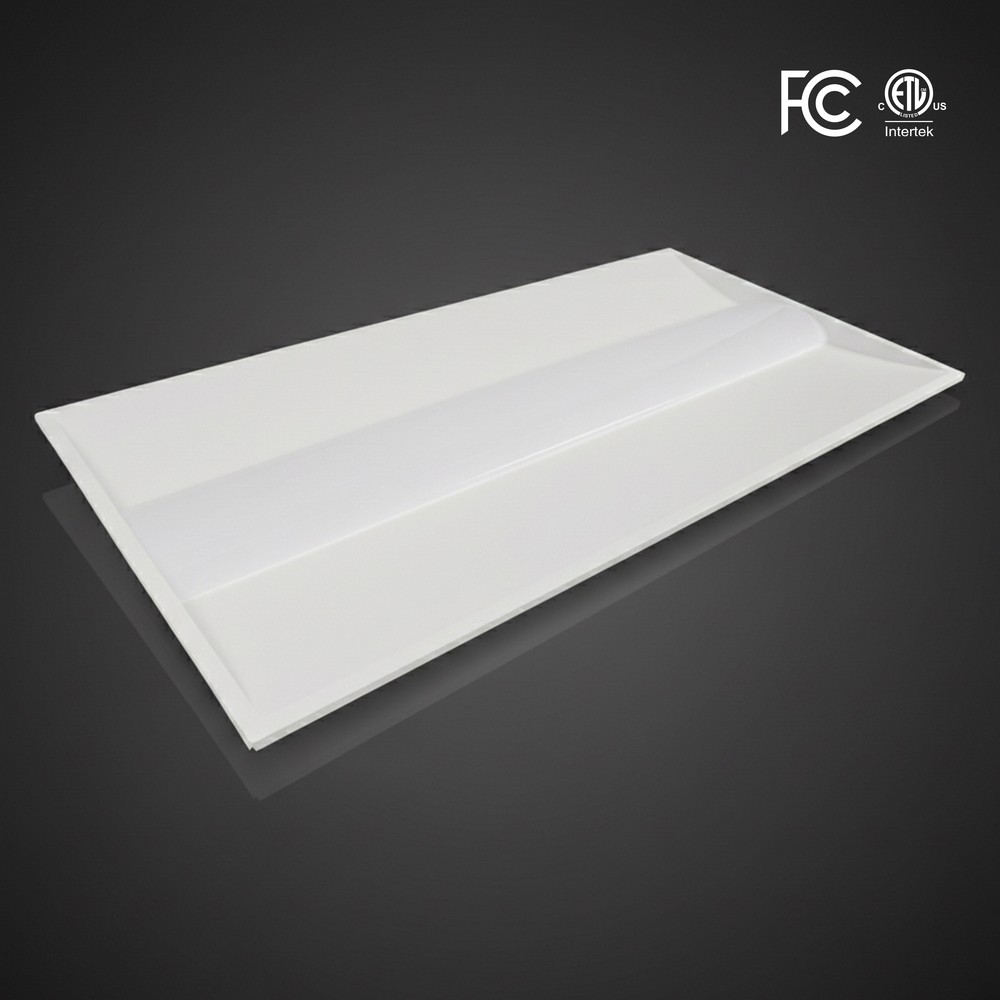
LED troffers are deeper fixtures built for T-bar ceilings. Volumetric models, such as the CSC LED VOL series or Light Efficient Design volumetric troffers, send light down and toward the walls, which reduces the dark, cave-like look of older recessed fixtures. Light Efficient Design also offers Sensor Ready versions, built to accept an add-on sensor.
For homes, round panels give the same soft light in a smaller shape. Lumenstarled 4 in and 6 in thin ceiling panels (9 W and 14 W, 120 V, 3000, 4000 or 5000 K, dimmable, IC rated) are a very low-profile alternative to a classic pot light. Nexleds die-cast panels from 9 in to 13 in mount flush to the ceiling, and the 13 in die-cast flush mount panel offers CRI 90 for true colours in a kitchen or closet.
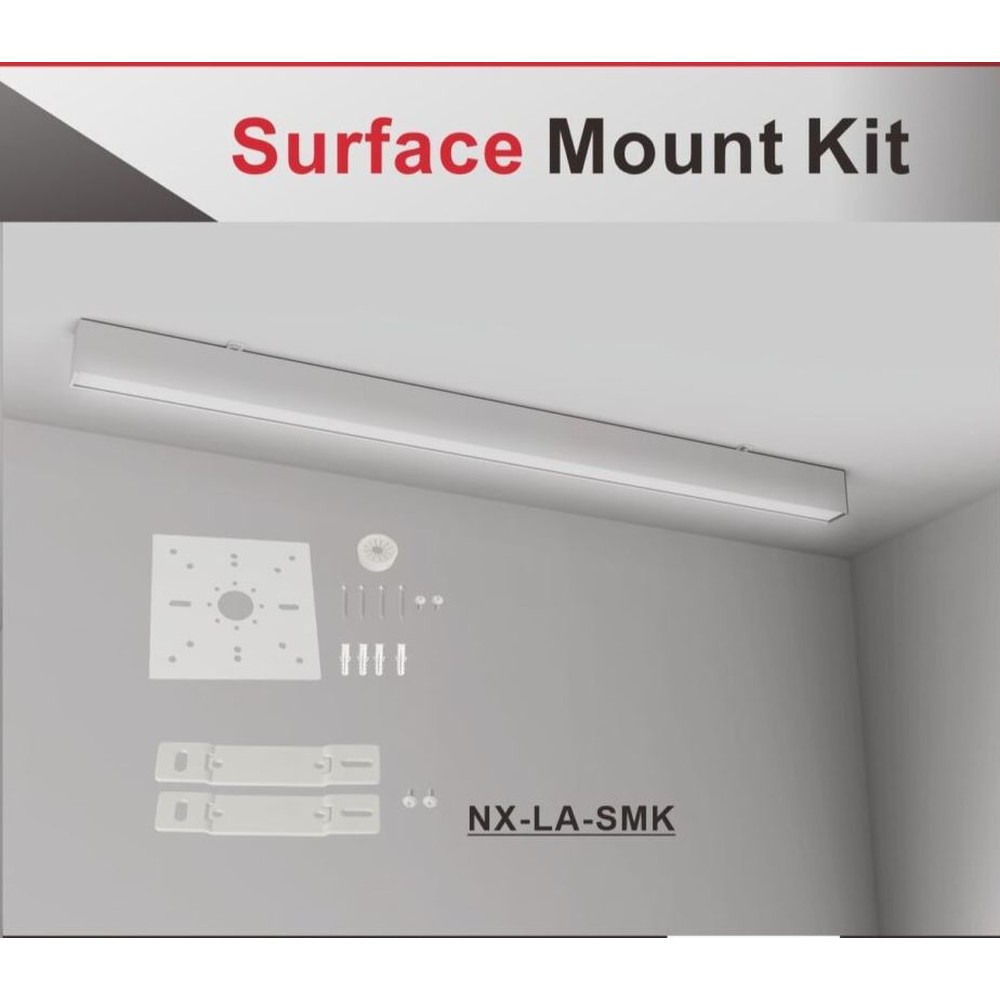
No grid? A panel surface mount frame turns a flat panel into a ceiling fixture on drywall or concrete, while recessed frame kits set it flush in a drywall ceiling. Always pick the accessory made for your panel's size and series: CSC LED kits, for example, are designed for the PLS and PLP families.
Many panels let you select the wattage at installation, with no extra wiring, so one model fits a busy warehouse office or a quiet meeting room. Compare lumens rather than watts: Ortech backlit panels, for example, are rated at 125 lumens per watt. To size a room, use the lumens per room guide.
4000 K is the most common choice in this category: a neutral white for offices, stores and workshops. 3000 K or 3500 K feels warmer in homes and reception areas, while 5000 K, 5700 K and 6500 K give a crisp daylight look in garages, warehouses and inspection areas. With 3CCT or 5CCT panels, you choose among three or five settings on site.
Check the circuit before ordering. Most commercial panels here accept 120-347 V, which covers 120 V circuits as well as the 347 V circuits common in Canadian commercial buildings. Light Efficient Design panels are rated 120-277 V: they work on 120 V or 277 V, never on 347 V. The 4 in, 8 W thin panel from Lumenstarled runs on 12 V DC and needs a matching power supply.
Panels marked 0-10 V dim through a separate low-voltage control circuit, and some Turolight models dim from 100 % down to 1 %. Make sure your dimmer or control system is 0-10 V compatible. Integrated microwave motion sensors and factory-installed emergency drivers, such as the 8 W driver on the Turolight RGD-BLP6 2x4 EM, save separate devices in corridors and stairwells.
Look for cUL, CSA or cETL marks for installation in Canada, and for DLC or DLC Premium listings on commercial projects. Energy Star appears on several models. Where colour accuracy matters (kitchens, retail displays, artwork), choose CRI 90. Most panels are made for dry indoor ceilings, with IP20 or IP40 ratings on the models that state one.
The ceiling decides the installation method, not the panel. Four options cover almost every project:
Before ordering, measure the grid openings and the ceiling height, and keep one colour temperature per room so the light looks uniform. Plan the wiring for 0-10 V dimming or sensors at the same time as the power feed: it is much easier before the ceiling is closed.
In commercial buildings, 2x4 and 2x2 panels are the standard for offices, schools, clinics and retail. For ideas by type of space, see LED office lighting, and to plan a full floor, read the commercial LED lighting guide for Quebec. At home, an LED panel is the easiest upgrade for a basement with a drop ceiling, a laundry room, a garage or a workshop, while round panels suit kitchens, hallways and bedrooms.
Measure the openings in your T-bar grid. A 2 ft x 2 ft opening takes a 2x2 panel, a 2 ft x 4 ft opening takes a 2x4 and a 1 ft x 4 ft opening takes a 1x4. The panel lays in the grid like a ceiling tile, with no frame required.
Yes. Use a surface mount frame on drywall or concrete, a recessed frame kit for a flush look, or a suspension kit under an open ceiling, always made for your panel's size and series.
A flat panel is thin and lights a diffuser from the edge (edge-lit) or from behind (backlit). A troffer is a deeper housing, often volumetric, that sends more light toward the walls. Both fit the same grid sizes, so the choice comes down to look and how the light spreads.
Panels marked 0-10 V are dimmable with a compatible 0-10 V control, and round panels marked dimmable work with a compatible dimmer. Check the product page first: a panel that is not marked dimmable should never be connected to a dimmer.
Many do. Most commercial panels in this category are rated 120-347 V and carry cUL or CSA approval. Light Efficient Design panels are 120-277 V, so keep them on 120 V or 277 V circuits.
Ready to choose? Compare 2x4 LED panels for large rooms and 2x2 LED panels for smaller spaces, then add the frame or kit your ceiling needs.