LED Emergency Lighting in Canada: Battery Units, Remote Heads and Exit Combos
Emergency lighting is the part of a building that has to work on the worst day. When the power fails, the emergency lighting unit switches to its battery and lights the corridors, stairwells and exits so that people can get out. It is required by building codes and fire-prevention codes in commercial buildings, multi-residential buildings, schools, warehouses and shops across Canada. This category brings together 119 LED emergency light products for Canada: two-head battery units, remote head emergency lights, exit and emergency combo units, weatherproof models, battery packs and replacement batteries, from ARANI, CSC LED, TUROLIGHT and ORTECH.
Electrical contractor, property manager or shop owner who just received a fire-inspection notice: you will find the unit, the heads and the parts to finish the job in one order.
The Types of Emergency Lighting Units
Looking for the signs alone? See our LED exit signs.
How to Choose Your Emergency Lighting
Count the heads first. Walk the egress path: every corridor segment, stair landing, change of direction and exit door should be lit. Count how many heads you need and where. A battery unit covers the spot where it hangs; remote heads cover everything else.
Then add up the watts. Each remote head has a wattage (2 W, 4 W, 7 W, and so on). The sum of all heads connected to one pack must stay under the pack's rated output. A 36 W pack with its own 2 × 2 W heads leaves room for several extra 2 W or 4 W remote heads; a 275 W or 320 W pack is built for long corridors and many heads.
Check the supply voltage. Most units here accept 120 V or 347 V, which covers both standard commercial circuits and the 347 V lighting circuits common in larger Canadian buildings. Some compact models are 120/277 V. On the head side, match the DC range of the remote head (3.6-24 V, 5-24 V or 6-24 V) with the output of the battery unit.
Look at the stated runtime. Runtime is the time the unit keeps lighting on battery. The products in this category list runtimes of 30, 90, 120 or 180 minutes, printed in the product title. Pick the runtime that your local code and your inspector ask for.
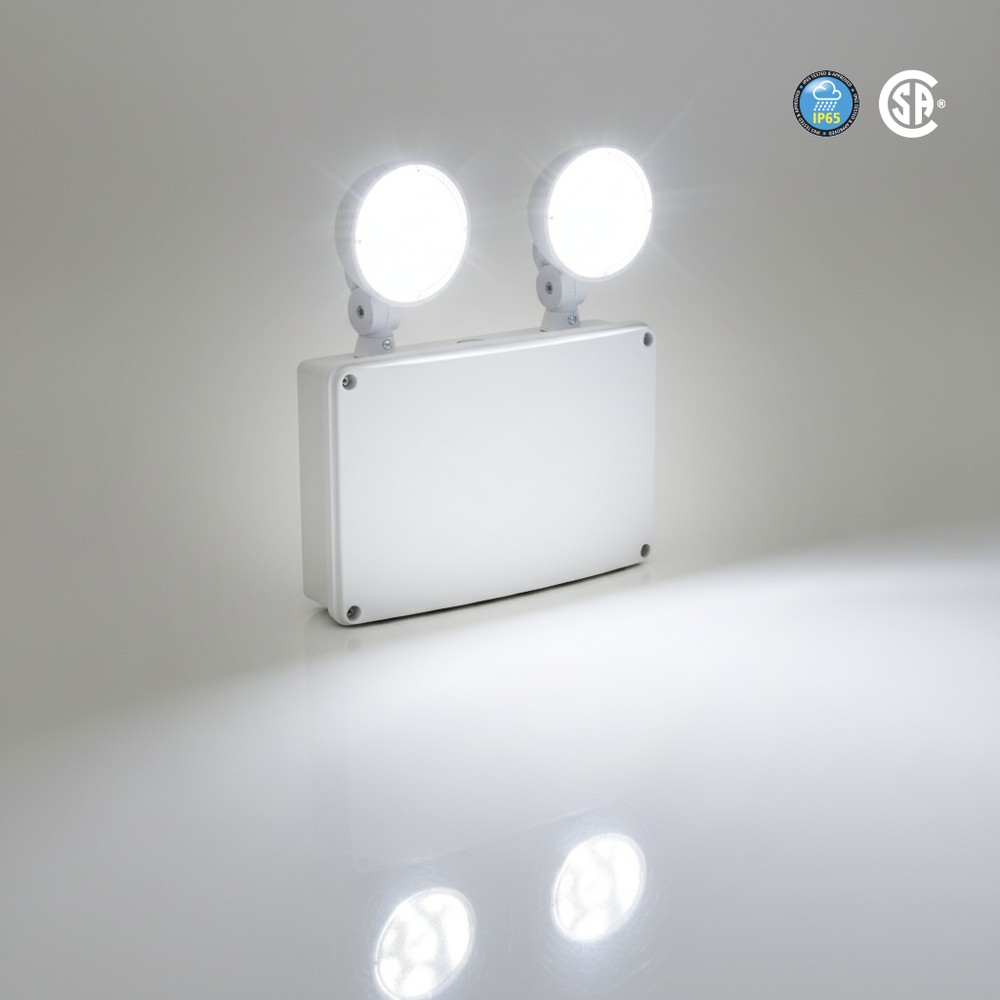
Match the location. Indoor, dry, heated space: a standard thermoplastic unit does the job. Parking garage, exterior stairwell, cold storage or washdown area: choose a weatherproof or wet-location model.
Mind the mounting height. Adjustable heads let you aim light down the corridor from a high wall position, but a unit installed high up is harder to test by hand. Keep the test button within reach. Units here use Ni-Cd or sealed lead-acid cells; the replacement batteries listed match the pack they are made for.
Installation, Testing and Maintenance
Emergency lighting units connect to the normal lighting circuit of the area they protect, ahead of any switch, so that the unit senses the loss of power in that area. Remote heads are wired with low-voltage cable back to the battery unit.
Every unit carries a test button. Pressing it simulates a power failure: the heads should light at full output. Fire-prevention codes call for periodic testing and record-keeping; the usual practice is a short monthly test of each unit and a longer annual test for the full rated duration, with the results written in a maintenance log kept on site. A unit whose heads dim quickly or do not light during the test needs a new battery or a new unit.
Brands Carried
ARANI offers a wide line of emergency lighting units, remote heads, combos and weatherproof models, with 120/347 V units and 6-24 V DC heads. CSC LED supplies the EML series: steel and thermoplastic running-man signs, combo units with 36 W battery, 72 W battery units and remote heads from 1 × 2 W to 2 × 7 W. TUROLIGHT provides the TL-RMES family of running-man signs and combos, including edge-lit models. ORTECH rounds out the category with its panels and high bays equipped with an emergency battery backup, plus battery kits and emergency drivers.
Order Your Emergency Lighting Today
Browse the full LED emergency lighting selection, filter by brand or by wattage, and add the battery unit, the remote heads and the replacement batteries you need to the same cart. Pair them with LED exit signs for a complete, code-ready egress package shipped anywhere in Canada.
FAQ
How often should emergency lights be tested?
Canadian fire-prevention codes require periodic testing with written records. The common routine is a short monthly test using the test button and a longer annual test for the full rated duration of the battery. Your local fire department or inspector sets the exact schedule for your building.
What is a remote head emergency light?
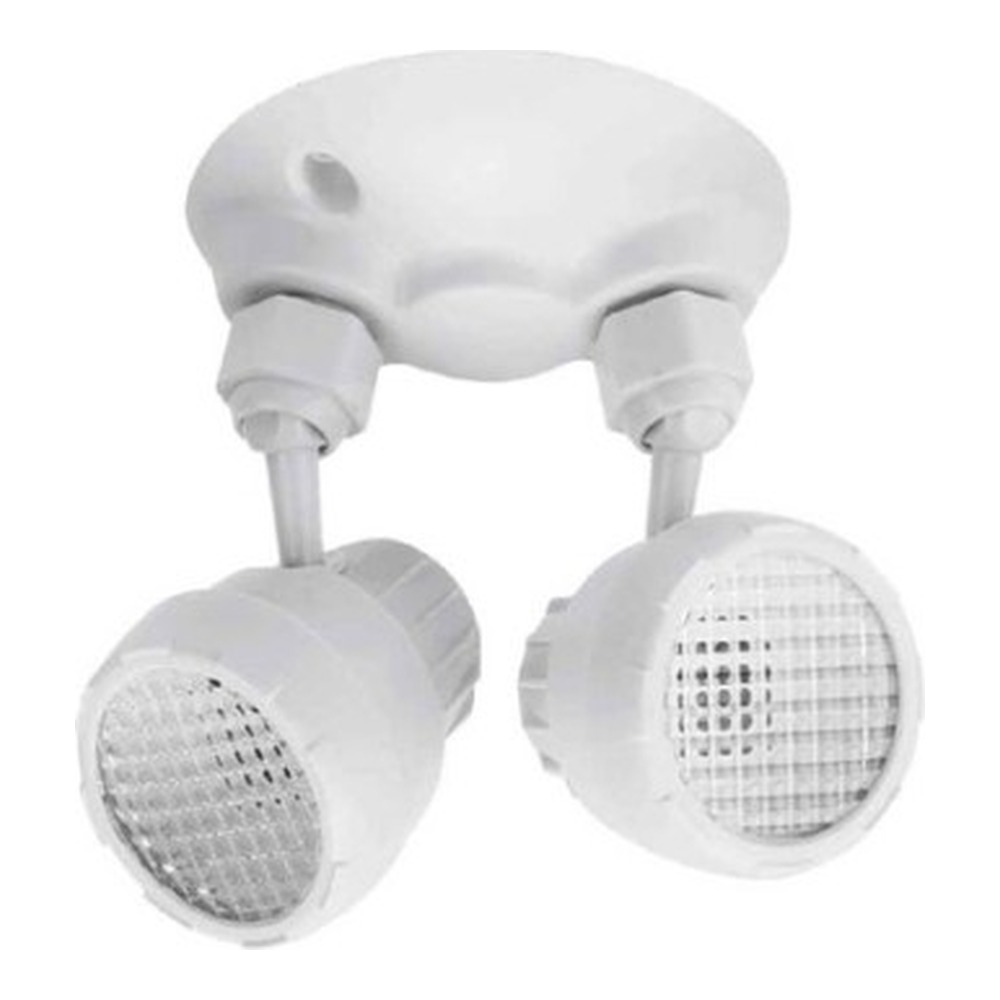
A remote head is a low-voltage LED head with no battery of its own. It is wired to a battery unit (or a battery pack) and lights when that unit switches to emergency mode. Remote heads in this category run on 3.6-24 V DC, 5-24 V DC or 6-24 V DC and draw between 1 W and 7 W each.
Should I choose a 120 V or 347 V emergency lighting unit?
Match the unit to the lighting circuit it will be connected to. Most units in this category accept both 120 V and 347 V, so one model covers standard circuits and the 347 V lighting circuits found in many Canadian commercial buildings. A few compact models are 120/277 V.
How many heads can one battery pack power?
Add the wattage of every head connected to the pack, including the two heads on the unit itself. The total must stay under the pack's rated output (36 W, 72 W, 140 W, 150 W, 275 W or 320 W in this category). The higher the pack rating, the more remote heads it can feed.
What is an exit and emergency combo?
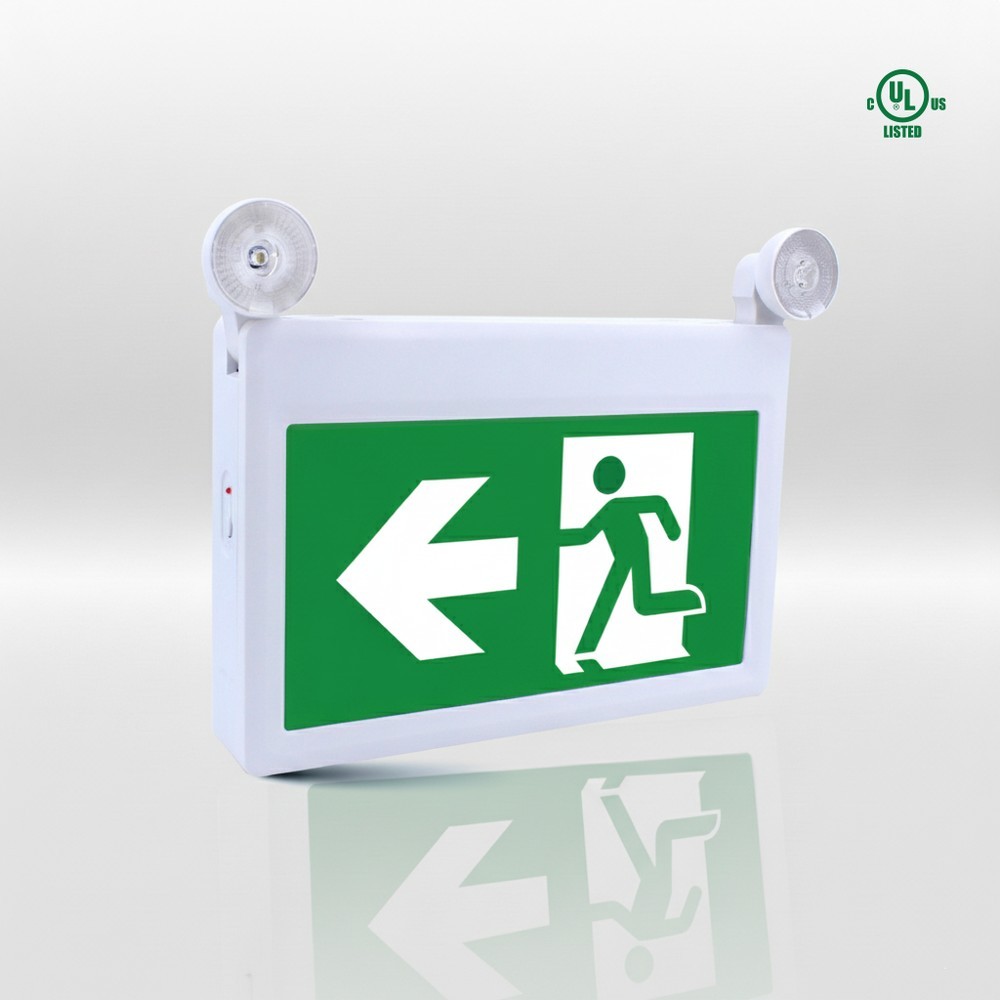
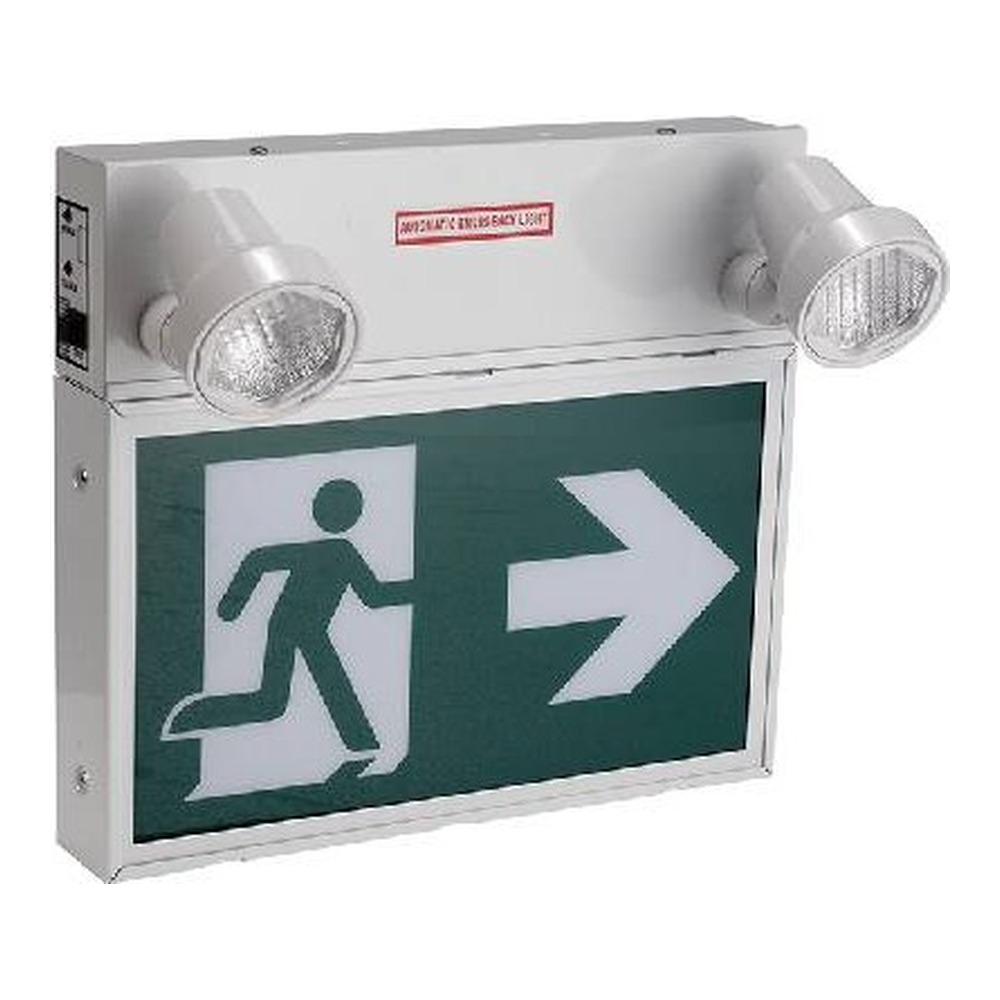
A combo unit puts a running-man exit sign and two emergency heads in a single housing, with one battery. It is the fastest way to equip an exit door: one mounting point and one connection instead of two separate devices.
Can I replace just the battery in an old emergency light?
Yes, if the unit itself still works and the replacement battery matches the original voltage and capacity. This category lists 6 V 6 Ah, 12 V 7 Ah and 12 V 12 Ah replacement batteries for the corresponding battery units. If the housing, the charger or the heads are failing, replace the whole unit.