LED Strip Lights for Every Room and Every Project
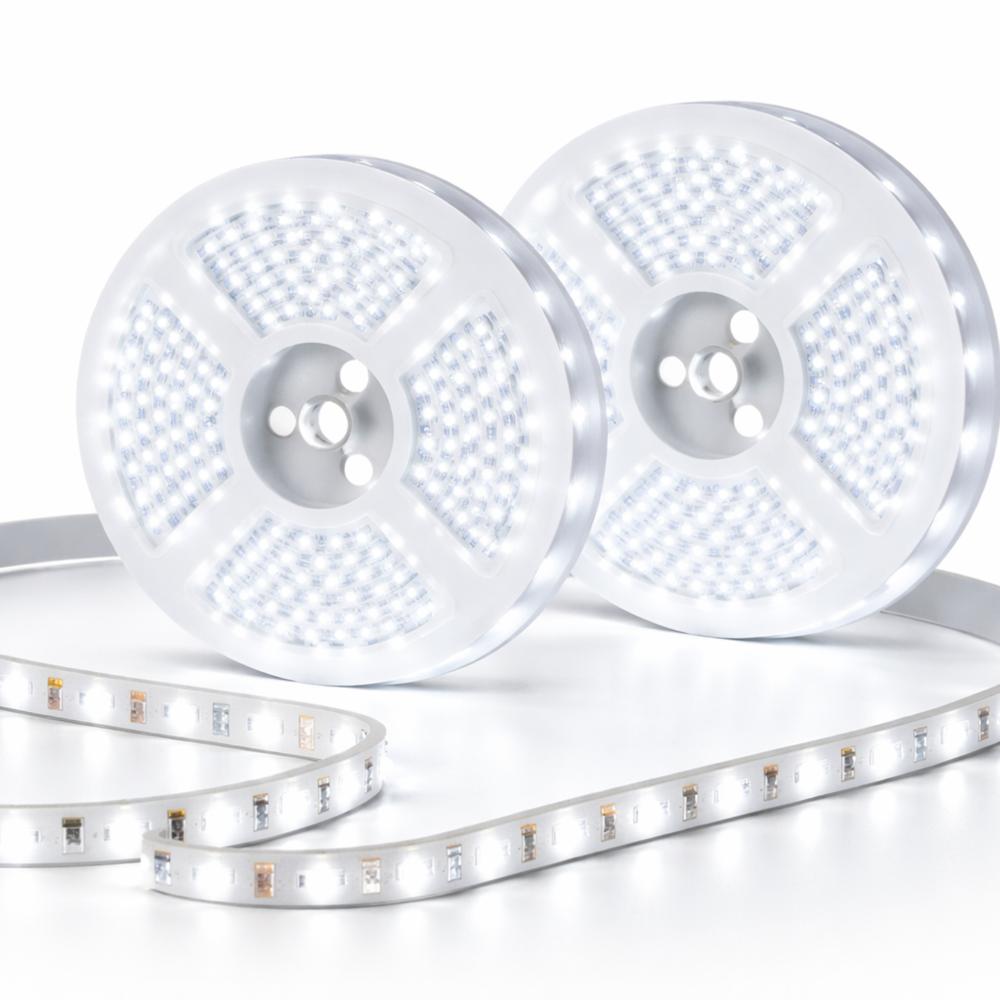
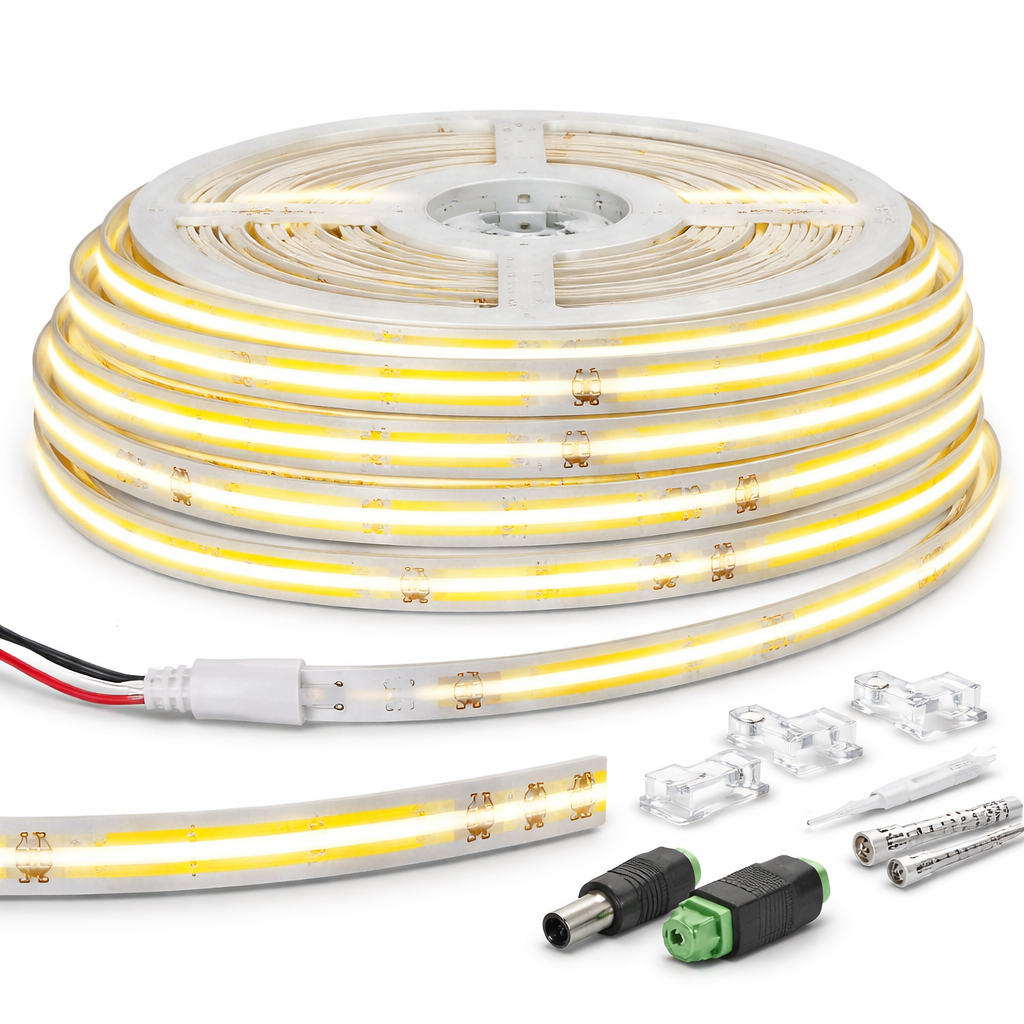
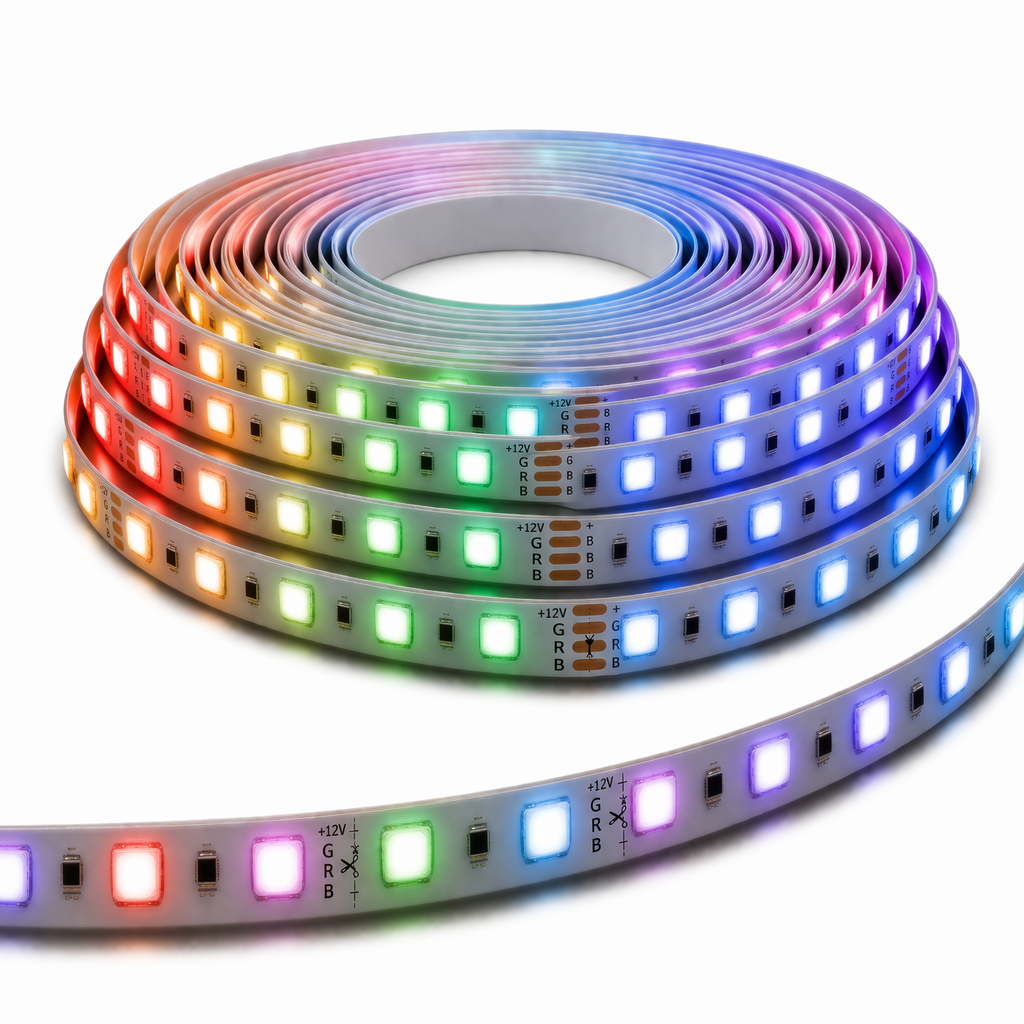
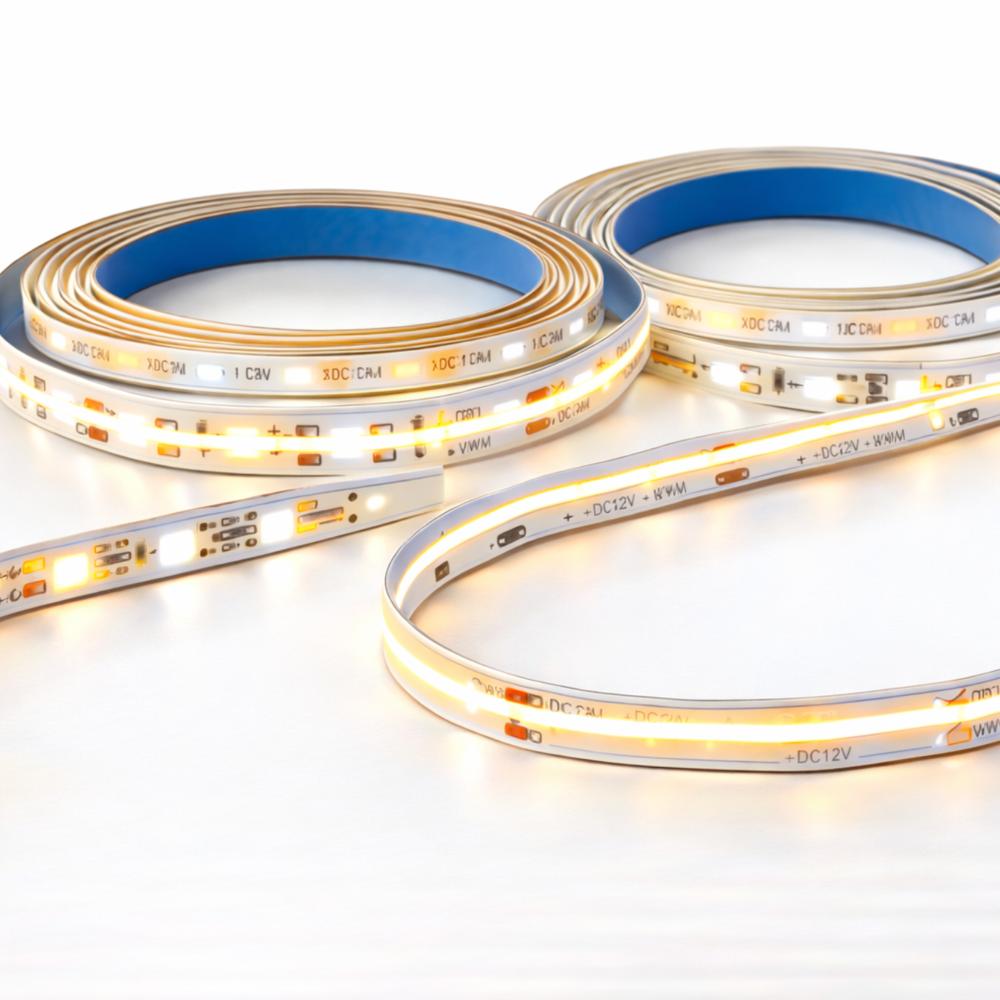
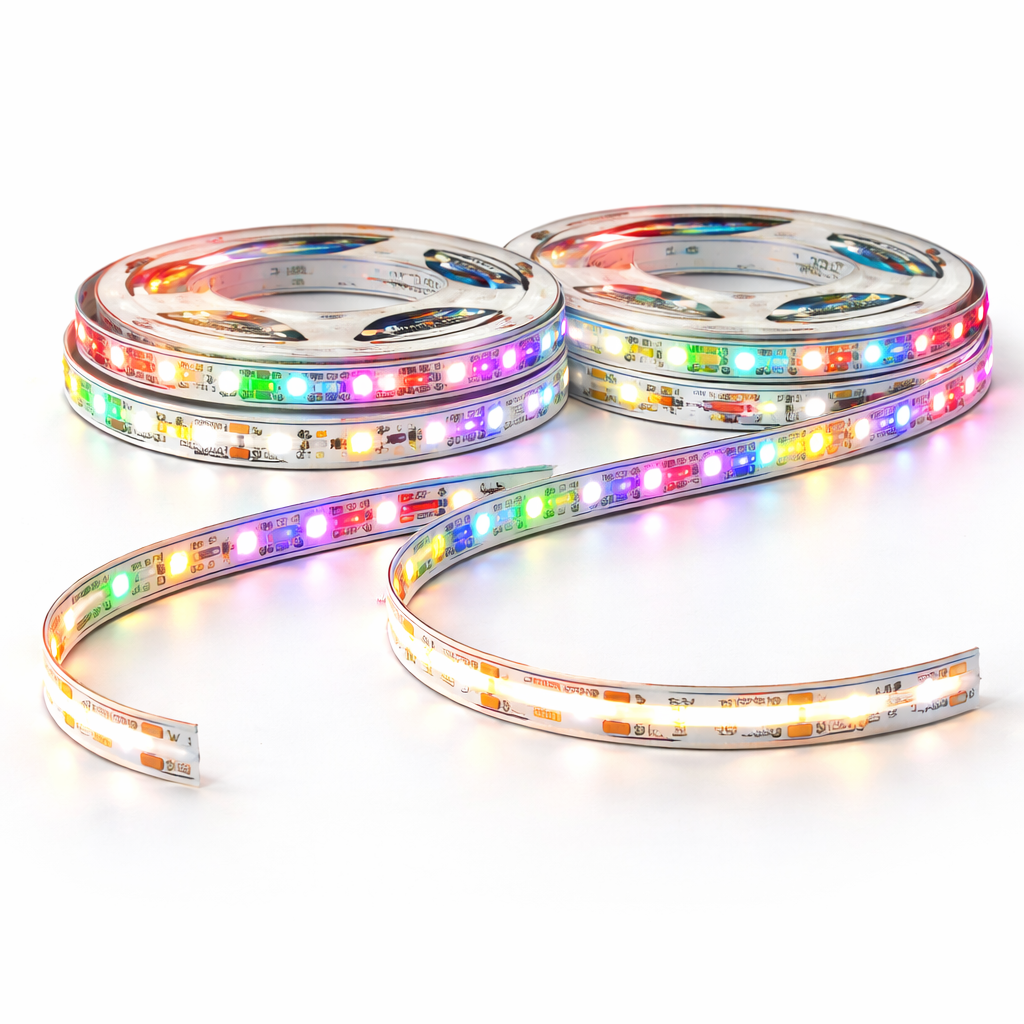
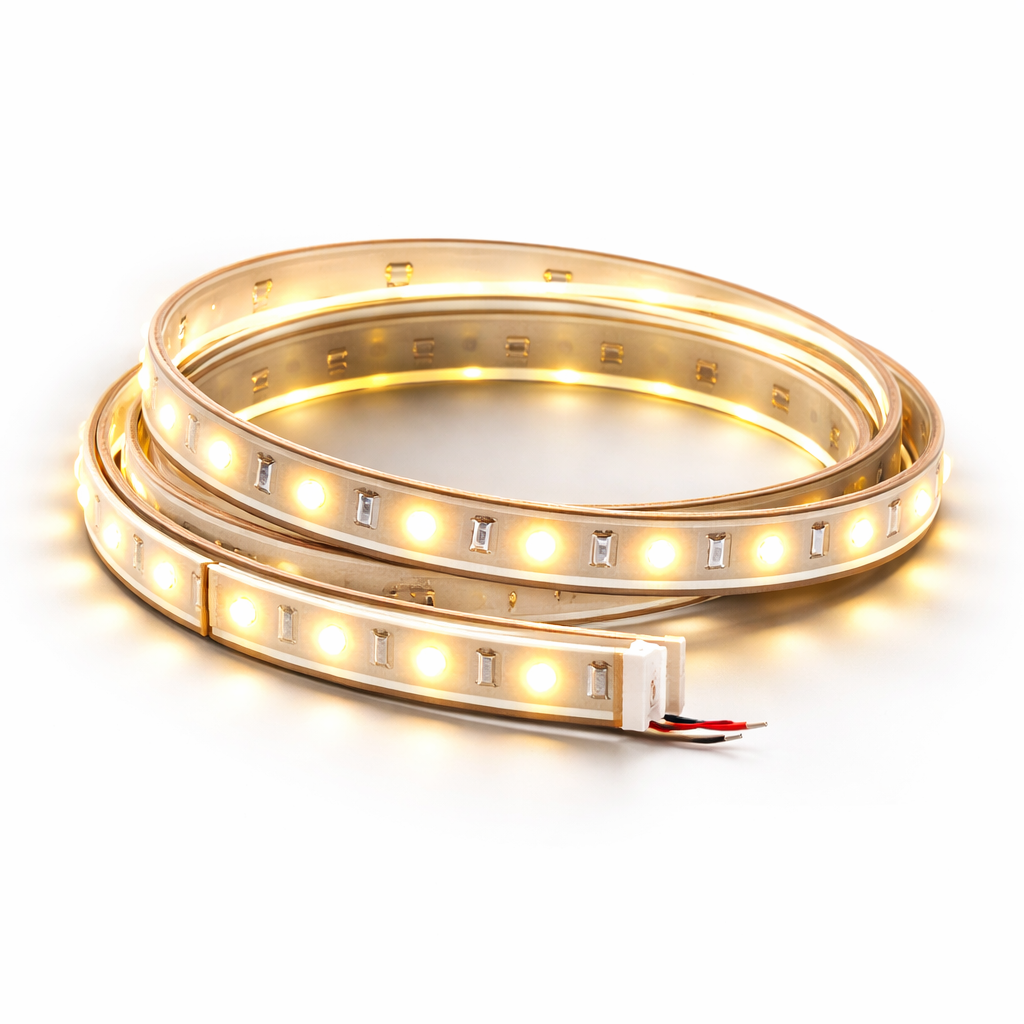
Indoor LED strips put light exactly where a fixture cannot go: under a kitchen cabinet, inside a cove, along a staircase, behind a mirror, inside a display case or along the shelves of a store. A thin, self-adhesive LED tape light bends around corners, cuts to length and disappears inside an aluminum profile, so all you see is the glow. Whether you are looking for LED strip lights in Canada for one kitchen or specifying hundreds of metres for a restaurant, a condo lobby or a retail fit-out, this category gathers every white, CCT, RGB, COB and pixel LED strip we carry, plus the accessories to install them.
Types of Indoor LED Strips
12V or 24V LED Strip?
Both need a driver; the difference is run length. For the same wattage, a 24V LED strip draws half the current of a 12V one, so voltage drop along the copper traces is much smaller: the far end stays as bright as the end next to the driver, and one power point feeds a longer run. Long-run 10 m tapes are therefore 24V; 12V suits short accents and places where a 12V supply already exists. Reels here come in 1 m, 5 m (16.4'), 10 m (33') and 25 m (82'); beyond a single 5 m reel, 24V is the easier choice.
LED Density and Lumens per Metre
Two numbers describe how much light a strip gives: LEDs per metre and watts per metre, from 30 LEDs/m, 4.8W/m accent tapes to 240 LEDs/m, 21.6W/m strips rated 2592 lm/m. More LEDs per metre also means a more even line behind a diffuser. As a general guideline, not a product spec: 4 to 5W/m for a soft accent glow, 8 to 10W/m for under-cabinet and cove lighting, 14W/m and above when the strip must light a work surface on its own.
IP Rating: Which One for Which Room
The IP code is an international standard for resistance to dust and water. IP20 strips are open PCB for dry interiors (living rooms, bedrooms, shelving). IP22 adds protection against dripping water and suits a kitchen under-cabinet run. For a bathroom vanity, a shower niche, a backsplash or a basement, step up to IP65 (silicone-coated) or IP67 (fully sealed) strips with matching sealed connectors and end caps.
How to Size the Power Supply
Every LED tape light needs a constant-voltage driver at the strip's voltage (12V or 24V). The math is simple:
Once you know your total wattage, browse our LED power supplies and drivers.
Aluminum Profiles: Heat, Diffusion, Finish
An aluminum channel pulls heat away from the LEDs (longer life, stable colour) and its diffuser spreads the light into a clean, even line instead of a row of dots. Choose surface-mounted, recessed, corner (toe-kick and cove) or deep channels for COB and high-density strips, and match the inner width to the PCB: 5 mm and 8 mm (mini COB) to 10 mm and 12 mm (RGBW, high-output). See our LED aluminum profiles and bars.
Connectors, Controllers and Dimmers
Solderless clip connectors (straight, L-corner, strip-to-wire) make cut-and-join quick on 8 mm, 10 mm and 12 mm tapes: 2-pin for single colour, 4-pin for RGB, 5- or 6-pin for RGBW and RGB+CCT. Controls: a PWM dimmer for white strips, an RF or Wi-Fi remote for CCT and RGB, a wall touch panel for a room, and DMX or SPI controllers for pixel strips. Find them in LED strip connectors.
Room by Room
The Brands We Carry
LUMENSTARLED: indoor 12V and 24V LED tape, UL approved, CRI 90, dimmable, in 5 m, 10 m long-run and 25 m reels, plus 480 LEDs/m COB tapes. LED MONTREAL: 12V and 24V white, RGB, RGB+W CCT, side-emitting, UV black-light and COB strips in IP20, IP65+ and IP67. CANOLIGHT: COB and SOB strips on 8 mm to 12 mm PCB, high-lumen SMD strips up to 240 LEDs/m and long-run COB RGB. Also here: ARANI 12V and 24V tape light kits and NEXLEDS COB RGB tape at 840 chips per metre.
Ready to Light It?
Start with the sub-category that matches your project, filter by voltage and colour temperature, then add the profile, driver and connectors from the same brand so everything fits. Need help sizing a run? Send us your lengths.
FAQ
Can LED strips be cut?
Yes. Cut with scissors at the printed cut marks between groups of LEDs; the rest of the reel keeps working. Reconnect the piece with a solderless connector or by soldering.
Do I need a driver for LED strip lights?
Yes. LED strips run on 12V or 24V DC, never directly on 120V. Choose a constant-voltage driver of the same voltage, sized to the total wattage plus about 20 % headroom.
12V or 24V: which one should I buy?
24V for runs longer than one 5 m reel, for COB or high-output strips and for most residential and commercial jobs; 12V for short accents and places where a 12V supply already exists.
Which colour temperature for a kitchen?
3000K for a warm look that matches wood and pendants, 4000K for a neutral, brighter work surface; a CCT strip gives you both.
Why do I see dots through the diffuser?
The strip is too close to the diffuser or too sparse. Use a deeper profile, a frosted diffuser, a denser strip (120 LEDs/m or more) or a COB LED strip, which is dot-free by design.
Can I use indoor LED strips in a bathroom?
Yes, away from direct water contact, with an IP65 or IP67 strip, sealed connectors and the driver placed outside the damp zone, per the Canadian Electrical Code.