Nov 06, 2026 / By the Lumibox team / in LED Guides
Do you need a 347V to 120V transformer to light a commercial building in Canada? In most cases, no: the simpler answer is a fixture whose driver is rated for 347 V, or a multi-volt fixture marked 120-347V, wired straight to the 347 V lighting circuit. A step-down transformer only makes sense when you must keep a 120 V-only device on a 347 V circuit, or when you need 120 V receptacles where only 347 V is available.
This guide explains where 347 V comes from, how to read the voltage on a fixture, a driver or a photocell, when a 347V to 120V step down transformer is the right tool, and which LED fixtures are built for 347 V. It is written for electricians, contractors, property managers and building owners who are replacing old fluorescent or HID lighting.
Most Canadian commercial, institutional and industrial buildings are fed by a three-phase 600 V service. Measured between one phase and the neutral, that system gives 347 V. Designers like it for lighting: a higher voltage means less current for the same wattage, so longer circuits, smaller conductors and fewer circuits in the panel.
Houses and small shops are different. They run on 120/240 V, and many smaller commercial buildings use 120/208 V. That is why the same lighting question comes up so often: a fixture bought for a house or for the US market will not necessarily work in a warehouse, a school or a parking garage wired at 347 V.
In the United States, the equivalent lighting voltage is 277 V, taken from a 480 V service. Many fixtures sold across North America are marked 120-277V. That range stops below 347 V. A 120-277V driver connected to a 347 V circuit is overvoltaged: it can fail on the spot, or fail early. Always look for 347 in the rated input, not only "high voltage" or "commercial".
A 347V to 120V transformer (often called a step down transformer) is a dry-type transformer that lowers the voltage of a 347 V circuit so that 120 V equipment can run on it. It is a legitimate tool, but it adds a device to buy, mount, protect and maintain, and it takes up space in an electrical room or above a ceiling.
Here are the situations where a transformer is the sensible choice:
And here are the cases where it is usually better to skip the transformer:
If you do need one, the transformer is chosen by its primary voltage (347 V), its secondary voltage (120 V) and its capacity in VA or kVA. The usual reflex is to add up the wattage of everything it will feed, then leave a comfortable margin for inrush current and future additions. Overcurrent protection, grounding, ventilation and location must follow the electrical code. That part is not a do-it-yourself job: have it designed and installed by a master electrician, and confirm the requirements with your municipality or your inspector.
The rated input voltage is printed on the label, in the specification sheet and very often in the product code itself. A few examples from our catalogue:
The table below sums up what each marking means in practice.
| Marking | Works on 120 V | Works on 347 V | Typical use |
|---|---|---|---|
| 120 V | Yes | No | Homes, small shops |
| 120-277V | Yes | No | US commercial, 120/208 V buildings |
| 120-347V | Yes | Yes | Canadian commercial, mixed buildings |
| 220-347V | No | Yes | Industrial retrofits on 347 V circuits |
| 347-480V | No | Yes | Industrial, check the label for the exact range |
A multi-volt 120-347V fixture is the most flexible choice: the same model can go in a 120 V garage and in a 347 V warehouse, which simplifies stock and replacements for a contractor or a property manager.
Almost every commercial family now has a 347 V version. The main ones:
LED linear fixtures are the usual replacement for fluorescent strips in offices, corridors, storerooms and parking garages. The CSC LED AL2-D-20W-3CCT-UD architectural linear, for example, is rated 120-347V with three selectable colour temperatures (3000K/3500K/4000K). Check the input range on each model: in the same family, some lengths or wattages may be 120-277V only.
Warehouses, gyms and factories with tall ceilings are often wired at 347 V. Our UFO LED high bays include multi-volt and high-voltage models. To keep an existing HID housing, an enclosed rated retrofit lamp in 220-347V such as the one above is another route.
Exterior lighting on a commercial building is frequently on the same 347 V service. LED wall packs and mini floods such as the TUROLIGHT SSL-MFL2 in 120-347V cover doors, loading docks and parking lots. The 100 W version of the SSL-MFL2 (100-80-70 W selectable, 13200 lm) is also rated 120-347V.
Many fluorescent fixtures in Canadian buildings run at 347 V. With T8 LED tubes, read the rated input of the tube itself: a ballast bypass tube receives line voltage directly, so it must be rated for 347 V if the circuit is 347 V. Our guide on T8 LED tubes, ballast bypass and plug and play explains the wiring options.
Battery backups must also match the circuit voltage. The NEXLEDS steel 120-347V battery backup with 120 min of runtime (NX-EMRMS) accepts both 120 V and 347 V. See also our emergency battery packs.
The fixture is only half of the circuit. Every component connected to line voltage must accept 347 V.
For a wider view of commercial projects in the province, read our commercial LED lighting guide for Quebec.
Yes, a 347V to 120V step down transformer lets 120 V fixtures run on a 347 V circuit. It must be sized for the total load with a margin and installed by a master electrician. When you are replacing the fixtures anyway, a 120-347V model connected directly is usually simpler.
No. A 120-277V range stops below 347 V. The driver would be overvoltaged and could fail immediately or prematurely. Choose a fixture whose rated input includes 347 V.
Only if it is multi-volt and its range starts at 120 V, such as 120-347V. A fixture rated 220-347V or 347-480V will not work properly on a 120 V circuit.
It is a driver whose input accepts 347 V. It converts the line voltage into the current or voltage the LED board needs. When you replace one, match the input range first, then the output and the wattage of the board.
If the wall pack is on a 347 V circuit, yes: the photocell must be rated for 347 V, or be multi-volt including 347 V. A 120 V photocell cannot handle that voltage.
Because they are fed by a three-phase 600 V service, and 347 V is the voltage between one phase and the neutral. For lighting, the higher voltage reduces current, which allows longer circuits and fewer circuits overall.
Ready to equip a 347 V building? Compare our LED linear fixtures, UFO high bays, wall packs and T8 LED tubes, and look for 120-347V or 347 V in each product name before you order.
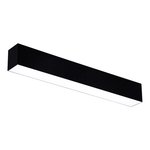 AL ARCHITECTURAL LINEAR, STRIP LIGHTS, 20W, 3000K/3500K/4000K, 120-347V, BLACK - AL2-D-20W...
 VT VAPOUR TIGHT, VAPOUR PROOFS, 150W, 3500K/4000K/5000K, 120-347V, WHITE/GREY, DLC PREMIUM...
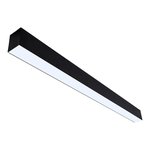 AL ARCHITECTURAL LINEAR, STRIP LIGHTS, 40W, 3000K/3500K/4000K, 120-347V, BLACK - AL4-D-40W...
 WR WRAP FIXTURE, LINEAR, 20W/28W/35W, 3500K/4000K/5000K, 120-347V, WHITE
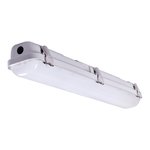 VT VAPOUR TIGHT, VAPOUR PROOFS, 25W/20W/15W, 3500K/4000K/5000K, 120-347V, WHITE, DLC PREMI...
 WR WRAP FIXTURE, LINEAR, 24W/27W/30W/35W, 3500K/4000K/5000K, 120-347V, WHITE, DLC STANDARD...
 4FT LINEAR STRIP LED LUMINAIRE - 3CCT (3500K,4000K AND 5000K) + 3 WATTAGE SELECTABLE (30W,...
 LED WRAPAROUND LIGHT 40W 4' 120V-347V (30K-35K-40K-50K)