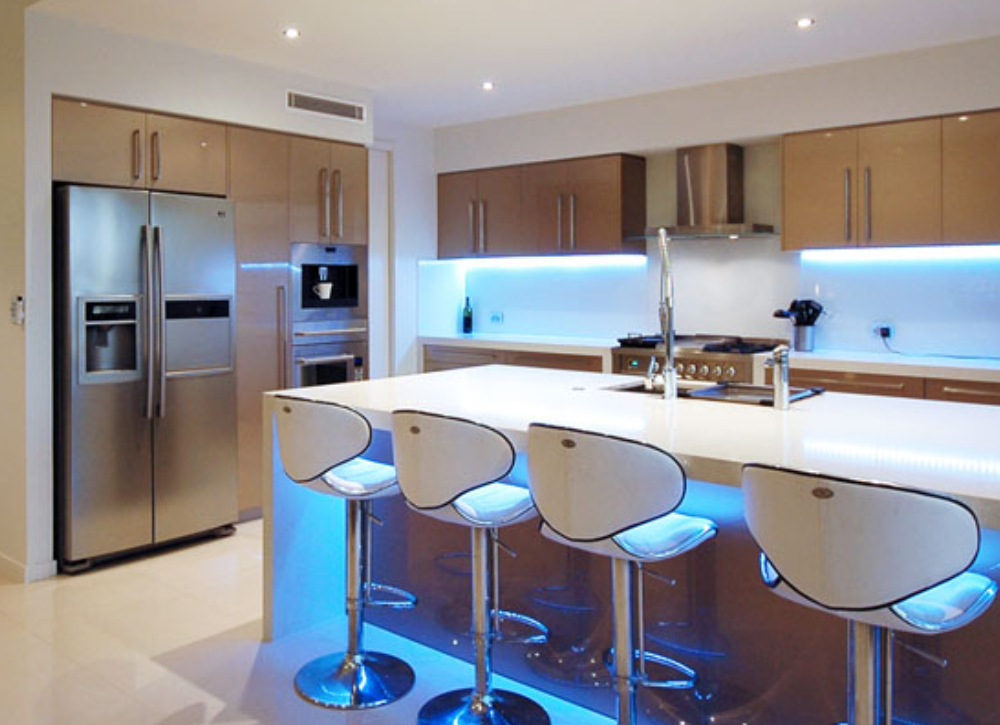
Good LED kitchen lighting does more than brighten a room. It puts clear, shadow-free light on the counter where you chop, shows the true colour of food and finishes, and sets a softer mood once dinner is served. The best kitchens combine a few fixture types: recessed pot lights for general light, under-cabinet lights for the work surface, and pendants or track heads over the island.
This page is for homeowners across Canada planning a renovation, condo owners updating a compact kitchen, and the contractors and electricians who install for them. It also covers restaurants, cafés and staff break rooms, where durability, damp-location ratings and colour quality matter just as much.
A well-lit kitchen relies on three layers: ambient light for the room, task light for the counters and accent light for style. Ideally, each layer gets its own switch or dimmer.
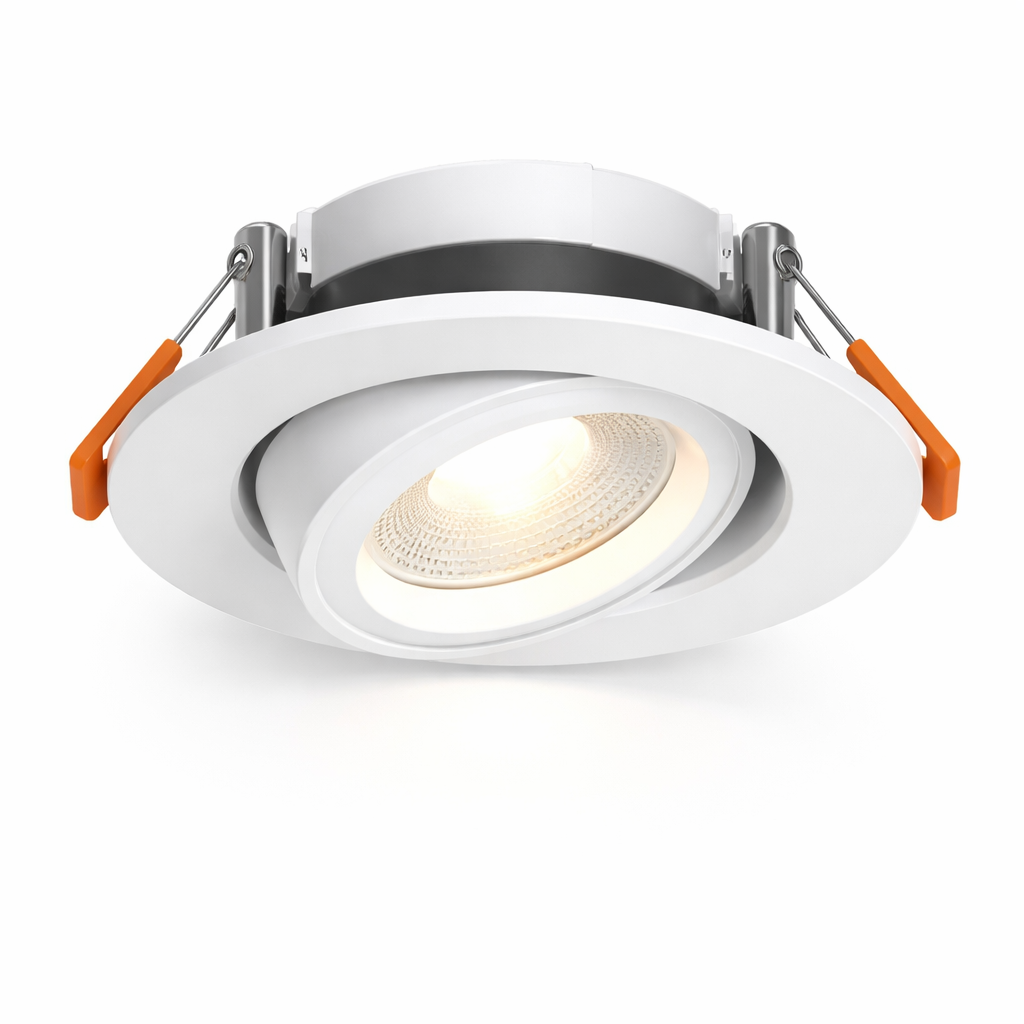
LED recessed lighting is the backbone of most kitchens. Slim pot lights sit flush with the ceiling and spread even light across the room. Compact 3-4 inch downlights suit most residential kitchens, while a linear model such as this 5-head recessed linear blade light (10 W, 600 lm, CRI 90, damp location) lines up neatly above a long counter.
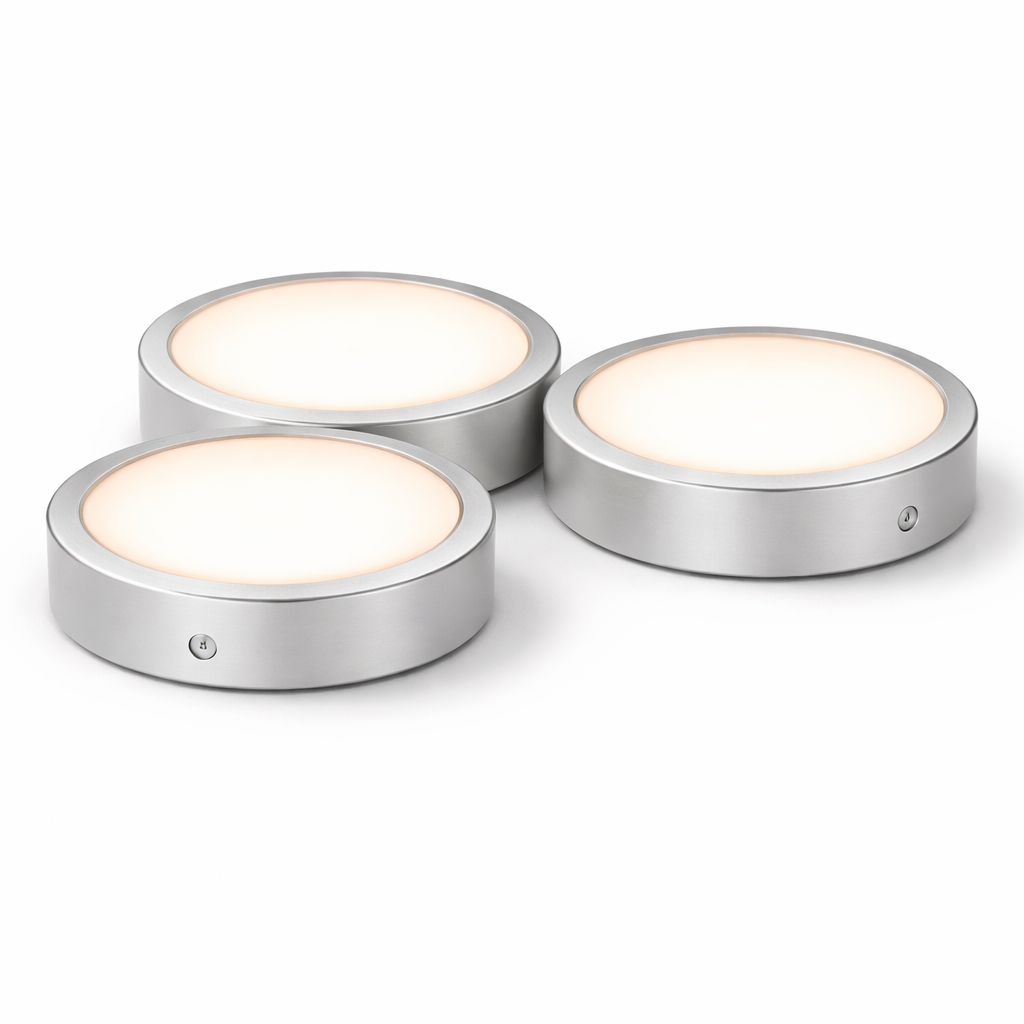
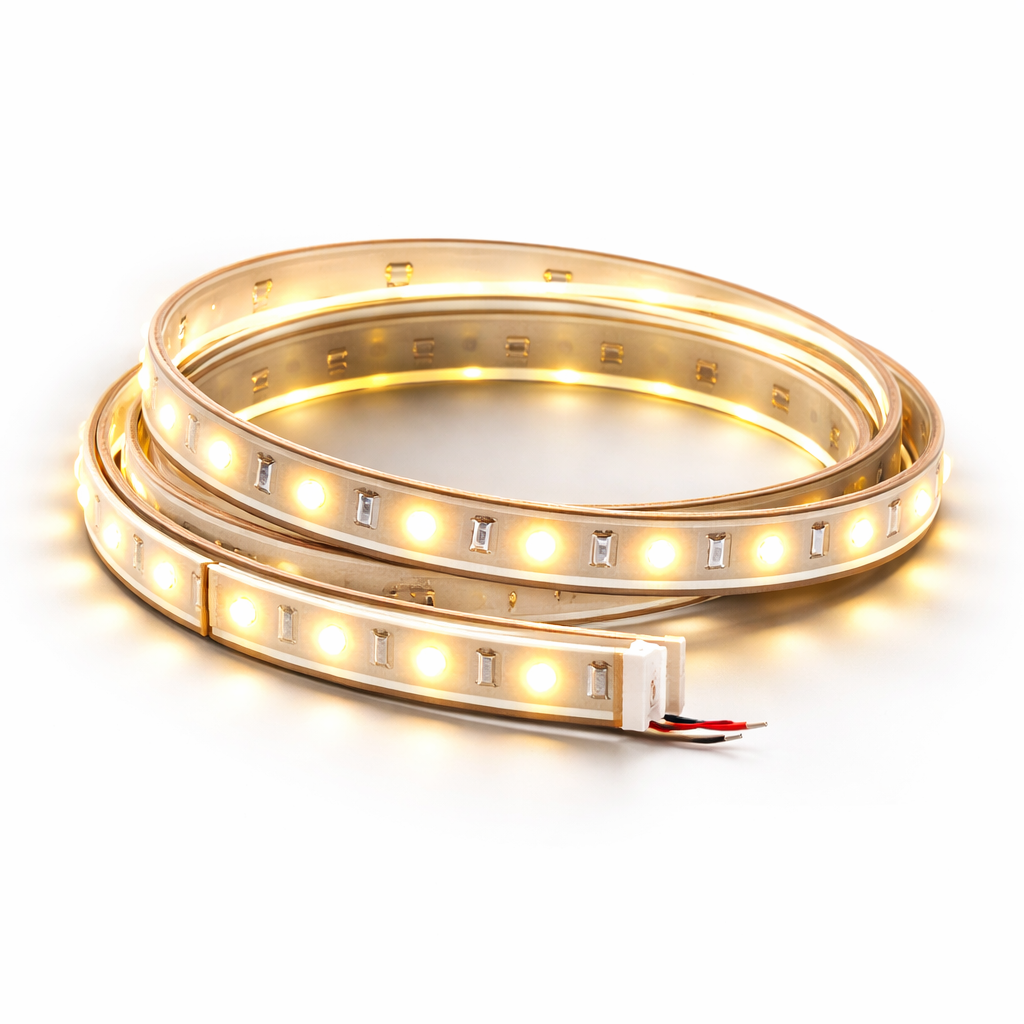
Ceiling lights are behind you when you face the counter, so your body casts a shadow on the cutting board. Under-cabinet lighting fixes that. LED puck lights create soft pools of light and also work inside glass-front cabinets, while under-cabinet bars and white LED strips draw a continuous line of light along the backsplash.
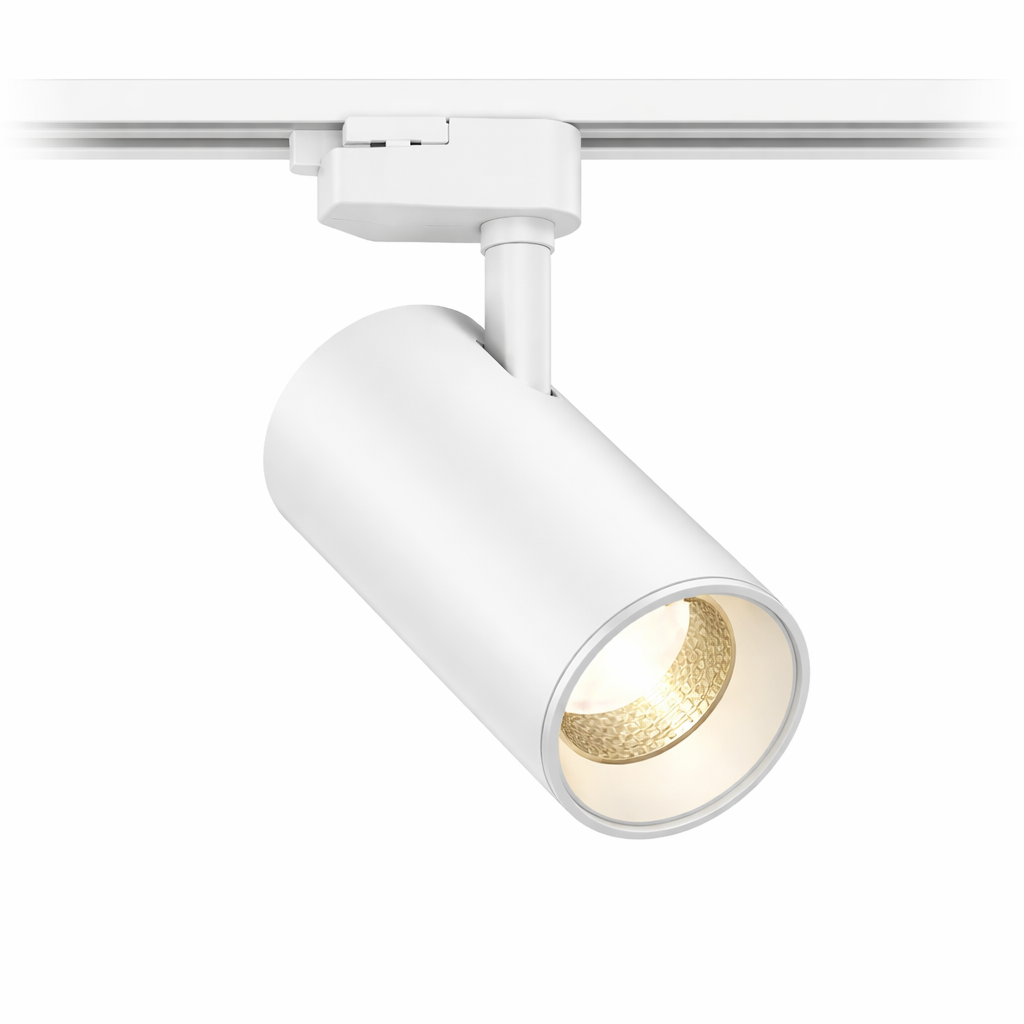
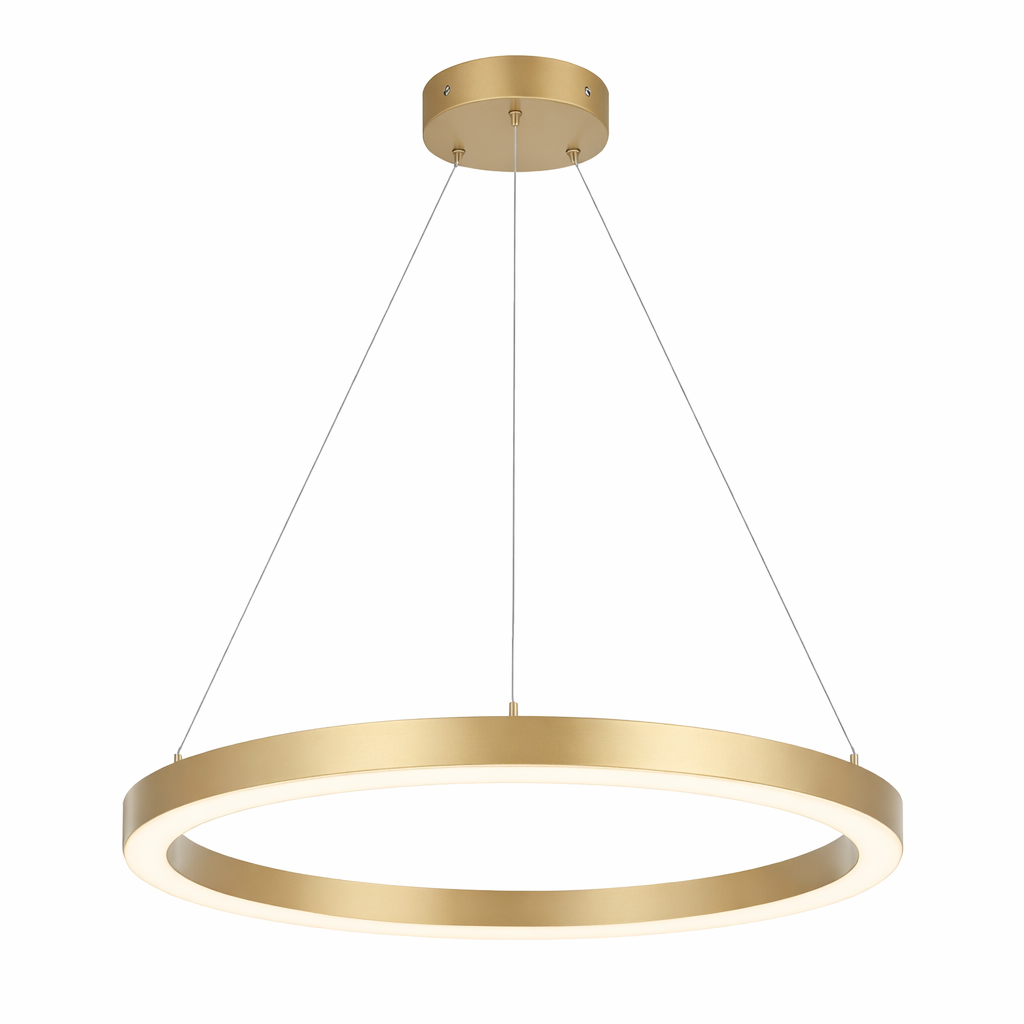
The island is where a kitchen shows its personality. Decorative pendants add a focal point and direct light onto the surface below. An integrated LED pendant light with 1000 lumens and TRIAC dimming needs no bulb, while LUMIFARO cone and dome pendants take the E26 bulb of your choice. In open-concept spaces, LED track heads let you aim each beam exactly where you need it. LUMIFARO track and ceiling fixtures in the 190, 215 and 302 series accept standard GU10 LED bulbs, so you choose the colour temperature bulb by bulb.
Here is how real fixtures from these categories compare:
| Fixture | Power and output | Key features | Best spot |
|---|---|---|---|
| LED puck light 1.5 W | 1.5 W, 120 lumens | CRI 90+, 12 V DC, dimmable, 3CCT | Under upper cabinets |
| LED strip 24 V 2835 | 4.8 W/m, 624 lm/m | IP22, 3000K | Continuous line under cabinets |
| Recessed linear blade light, 5 heads | 10 W, 600 lm | CRI 90, 38° beam, damp location | Above the counter or sink |
| 3-wire LED track light | 10 W, 1000 lm | 5CCT, CRI 90+, 30° beam, TRIAC | Open kitchens, feature walls |
| LED pendant light | 10 W, 1000 lm | CRI 90, 36° beam, TRIAC | Over the island |
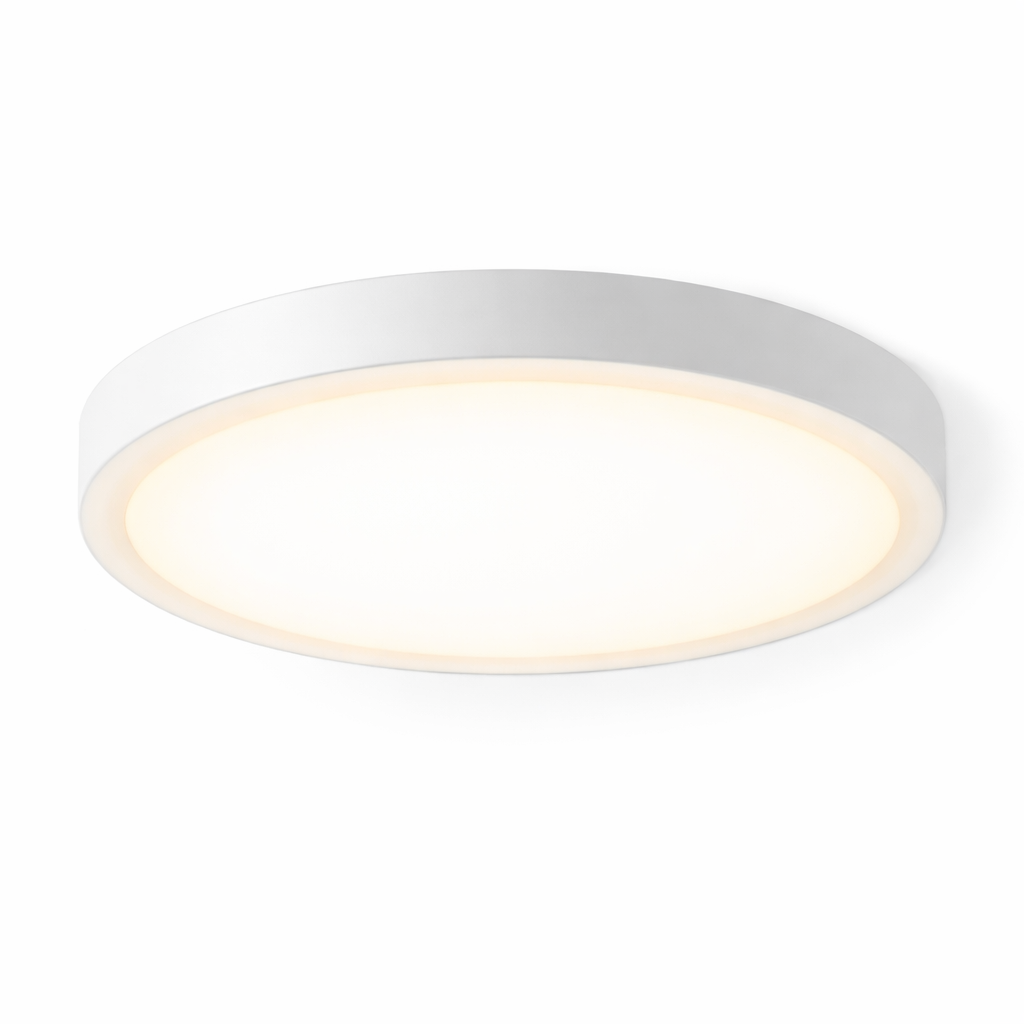
At home, the goal is comfort and style: warm light, high CRI and finishes that match your hardware, from matte black and white to brushed or satin nickel. An open kitchen can flow into the dining room lighting at the same colour temperature for a seamless look. In a condo with a concrete ceiling, where cutting holes for pot lights is not practical, a flush mount fixture on the existing box, such as a 5 inch model with a built-in motion sensor, makes a quick upgrade.
In restaurants, cafés, daycares and office break rooms, priorities shift to durability and easy upkeep. Choose damp-location or IP65 fixtures near prep and wash areas, CRI 90 for appetizing food, and certified products to keep inspections simple.
It depends on the floor area, the ceiling height and how dark the cabinets and floors are. A kitchen needs more light than a living room because of the detailed work at the counter. The guide how many lumens per room gives room-by-room targets per square foot.
For most homes, 3000K is a safe choice: warm enough to feel welcoming, crisp enough for cooking. 2700K feels cozier, while 4000K gives a bright, neutral look that suits white kitchens and commercial spaces. Unsure? A 3CCT or 5CCT fixture lets you decide on site.
The count depends on the room size, the ceiling height and the output of each fixture. Enter your dimensions in the recessed lighting calculator, then place the first fixtures over the counters.
Puck lights suit short cabinets and glass-front displays. For long runs, bars and LED strips give a continuous, even line of light. With low-voltage products, plan a hidden spot for the power supply before the cabinets go in.
Yes, if the fixture is labelled dimmable and the dimmer is compatible. Many 120 V fixtures use TRIAC dimming with standard wall dimmers, and dimmable low-voltage pucks work with a compatible driver.
Look for sealed or damp-location fixtures, high CRI and cUL or CSA certification. Recessed and linear fixtures keep surfaces easy to wipe down, and neutral 4000K light helps staff work accurately.
Ready to light your kitchen from ceiling to counter? Browse puck and under-cabinet lighting, flush mount ceiling lights and the recessed fixtures above to find the right fit for your space.
 SLIM 4 RING/TRIM COPPER - LED
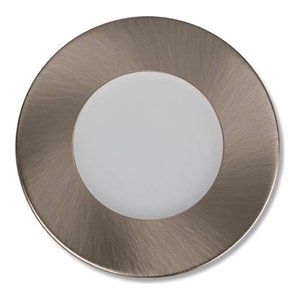 UNDER CABINET PUCK LIGHT | MOUNT + TRIM ONLY | BRUSHED NICKEL | V2
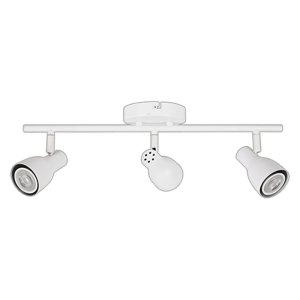 LED TRACK LIGHT FOR GU10 BULBS - SERIES 304 - 3 LIGHTS - WHITE
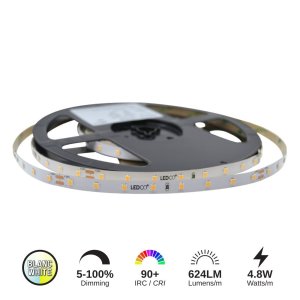 LED STRIP 24V 2835 4.8W/M 624LM/M IP22 (30K) (LCLS24V-24W-30K-IP22)
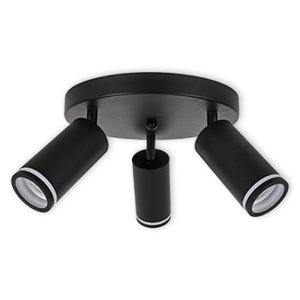 LED CEILING LIGHT FOR GU10 BULBS - SERIES 302 - 3 LIGHTS - BLACK
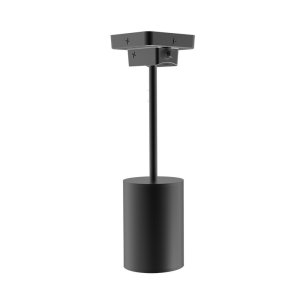 CYLINDER PENDANT LIGHT SSL-ELC BLACK 20W 3CCT
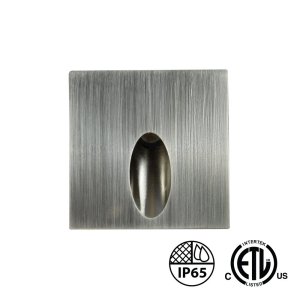 LS-SQ25-1W-SN-3K SATIN NICKEL TRIM
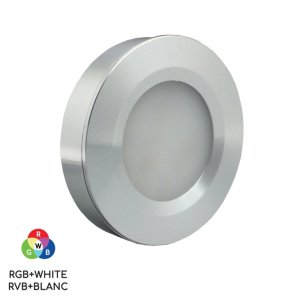 LED PUCK #150R 24V RGBW 40K
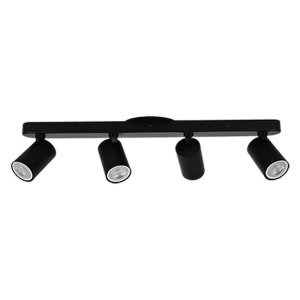 LED TRACK LIGHT FOR GU10 BULBS - SERIES 104 - 4 LIGHTS (TK-22104-4)
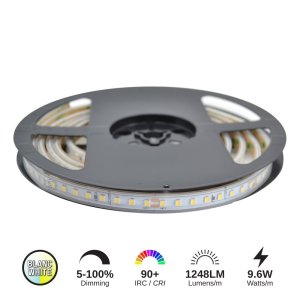 LED STRIP 9.6W/M 24V 48W 30K IP66
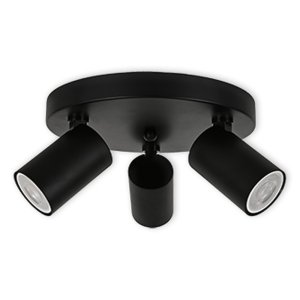 LED CEILING LIGHT FOR GU10 BULBS - SERIES 104 - 3 LIGHTS (CK-22104-3)
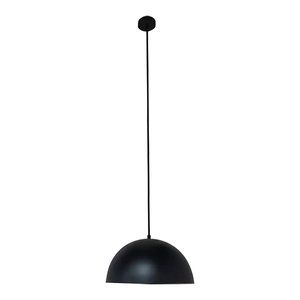 SELECT FIXTURE - DOME - BLACK FINISH - PENDANT - 1*E26 BASE - LAMP NOT INCLUDED. A19 OR ST19 IS RECOMMENDED.