Nov 06, 2026 / By the Lumibox team / in LED Guides
Choosing an LED dimmer switch looks simple until the lights start to flicker, hum or refuse to dim below half. The truth is that a dimmer and an LED fixture have to speak the same language. When they do, you get smooth, quiet control from full brightness down to a soft glow.
This guide is for homeowners, electricians and property managers. It covers TRIAC, ELV and 0-10 V dimming, load ratings and minimum load, and the choice between single pole, 3-way, slide and smart controls. Then compare the options in our LED dimmers collection.
An incandescent bulb is a simple resistor: cut the power and it gets dimmer. An LED is different. Inside every dimmable LED bulb, pot light or fixture, a small electronic driver converts line voltage into the current the LEDs need. The dimmer talks to that driver, not to the LEDs.
That is why the same dimmer can work perfectly with one bulb and badly with another. A fixture marked non-dimmable will not dim on any control, and a dimmer can shorten its life. Before you shop, confirm that every fixture on the circuit is labelled dimmable and note which method it supports.
Almost every LED dimmer falls into one of three families. Know which one your fixtures expect before buying.
This is the classic wall dimmer found in most homes: it chops the front of each AC wave. LED-rated TRIAC dimmers are tuned for low loads and suit residential pot lights, pendants and flush mounts. The LUMENSTARLED 120V Wall Dimmer Switch – Single Pole and the 120V AC universal wall dimmer for LED lights and LED drivers belong to this everyday category. The LED Montreal universal dimmer runs on 120V AC and supports up to 300W of LED bulbs or universal dimmable drivers, and it replaces both standard dimmers and low-voltage magnetic dimmers.
ELV stands for electronic low voltage. Instead of cutting the front of the wave, it cuts the back, which is gentler on electronic drivers. Many LED fixture makers recommend reverse-phase control because it tends to give quieter operation and a smoother low end. It is also the right match for electronic transformers that feed low-voltage lighting. The ORTECH electronic low voltage dimmer switch is built for this job and works with recessed pot lights, ceiling lights, flush mounts and wall sconces that call for an ELV control.
0-10 V is the standard of commercial and architectural lighting. The control does not chop the power at all. The fixture stays on a regular power feed, and two extra low-voltage wires carry a signal that tells the driver how bright to be. The result is stable, stepless dimming across large groups of fixtures. You will see it on LED panels, troffers, linear fixtures, high bays and many commercial downlights.
The 0/10V dimmer in our range runs on 120-277V AC 60Hz with a capacity of 720W, which lets it handle a full office zone on one control. ARANI also offers a 0-10V sliding dimmer rated 1200W with 3-way switching, and SPECLITE has a 0-10VDC slider for single pole or 3-way use at 100-277V, with a separate on/off switch.
| Method | How it works | Typical use | Wiring |
|---|---|---|---|
| TRIAC (forward phase) | Cuts the front of the AC wave | Homes: LED bulbs, pot lights, pendants | Standard switch wiring |
| ELV (reverse phase) | Cuts the back of the AC wave | Homes and shops: electronic drivers, low-voltage lighting | Standard wiring, neutral often required |
| 0-10 V | Separate low-voltage control signal | Offices, stores, warehouses: panels, troffers, linear | Power feed plus two control wires |
Once you know the method, the rest comes down to five checks. Work through them in order.
Look at the spec sheet of each fixture or at the label of the driver. It should say dimmable and name the compatible method: TRIAC, ELV, 0-10 V or a list of tested dimmers. For LED strip projects, the dimming happens at the power supply, so start with a dimmable unit from our LED drivers range.
Every dimmer has a maximum rating, often given separately for LED, for incandescent or halogen, and for magnetic low voltage. Add the wattage of every fixture on the circuit and stay comfortably under the LED rating. For example, one dimmer in our range is rated 150W for dimmable LED or CFL but 600W for incandescent or halogen, while another is rated 450W LED/CFL, 1000W incandescent/halogen and 1000VA magnetic low voltage. Always read the LED number. Several dimmers in one box? Check the derating table in the instructions.
LED fixtures draw so little power that a small circuit can fall below what the dimmer needs to operate correctly. That is when you see flicker at low settings or a faint glow after the switch is off. A minimum load capacitor for 120V circuits installs in parallel with the load at the fixture and gives the dimmer the draw it needs.
Single pole means one control location. A 3-way setup lets you control the same lights from two places, such as the top and bottom of a staircase or both ends of a hallway. Many current LED dimmers handle both: they work alone in single pole, or in 3-way when paired with a 3-way switch or a wireless companion remote. NEXLEDS offers a 3-way smart switch dimmer with or without a remote controller, and ARANI makes 200W sliding dimmers for 3-way switching in black or white.
Slide dimmers keep the level you set. Paddle dimmers with a side slider turn the lights on at your last setting. Smart and wireless dimmers add phone control, scenes and battery-powered remotes that create a virtual 3-way without new wire through finished walls. A starter kit with a dimmer, a portable remote and a bridge is the easiest way to begin.
Most dimming complaints come from a mismatch between the dimmer, the driver and the load.
LED strips run on low voltage DC, so a regular wall dimmer cannot be wired straight to the strip. There are two clean ways to do it. The first is a dimmable power supply on the 120V side, controlled by a compatible wall dimmer: the universal wall dimmer mentioned above is fully compatible with the 12V and 24V universal dimmable LED drivers, for instance. The second is a dimmer on the low-voltage side, between the power supply and the strip.
For the second approach, the LUMENSTARLED mini RF inline dimmer with remote for 12V/24V and its matching RF dimmer remote are compact options that work without line of sight, ideal for under-cabinet lighting and coves. The ORTECH LED/CFL dimmer switch is also designed for 12V/24V systems. You will find colour and RGB options among our LED strip remotes and controllers, and plenty of dimmable strips in indoor LED strips. Our guide on how to choose LED strip lights covers voltage and power supply sizing in detail.
In offices, retail and warehouses, 0-10 V is the norm because it scales. One control can drive a whole row of LED panels or troffers, provided the total load stays within the rating and the control wiring is run correctly. Group fixtures so each zone matches a real use: a front counter, an aisle, a meeting room.
Sometimes the control system and the fixtures do not agree on how the 0-10 V signal is supplied. Some controls source the signal, others expect the driver to provide it. A dimming translator solves this. The SPECLITE dimming translator converts a 0-10VDC source signal to a sink signal and offers automatic and manual modes, which makes it useful when you connect automation or sensors to existing fixtures.
With dimming, a kitchen goes from bright task light to a soft evening glow. When you choose dimmable LED downlights, check that they are marked dimmable, note the method they support, and add up their wattage before you pick the dimmer. If you are still working out the layout, read our guide on how many pot lights you need and how to space them.
Yes, in most cases. An older incandescent dimmer may expect a much heavier load than your LEDs draw, which causes flicker or a poor dimming range. Use a dimmer rated for LED and confirm that its method (TRIAC, ELV or 0-10 V) matches your fixtures or drivers.
No. Many LED pot lights are dimmable, but not all. Look for the word dimmable on the box or spec sheet, and check which type of dimmer the maker recommends. A non-dimmable fixture should stay on a regular switch.
An ELV dimmer uses reverse-phase, or trailing-edge, dimming. It suits electronic drivers and electronic transformers for low-voltage lighting, and it often runs quieter with LED. Use one when the fixture maker specifies ELV or reverse phase.
A 3-way dimmer lets you control the same lights from two locations. In a typical setup, the dimmer sits in one box and a 3-way switch or a compatible companion control sits in the other. Wireless remotes can also act as the second location without new wiring.
It is a small interface that converts one 0-10 V signal type into another, for example from a source signal to a sink signal. It lets a control system or sensor work with drivers that expect the opposite type.
Not directly. Use a dimmable power supply controlled by a compatible wall dimmer, or install a low-voltage inline dimmer between the power supply and the strip. Both give smooth results when the parts are matched.
The right LED dimmer switch turns any room into one you can tune to the moment, at home or at work. Compare wall, slide, 3-way, 0-10 V and smart controls in our dimmers and gradateurs collection, and pair them with dimmable fixtures and drivers for a quiet, flicker-free result.
 SLIDING DIMMER (200W) | 3 WAY | WHITE | V3
 DECORA 0-10VDC DIMMER SINGLE/3-WAY 100-277V 3A-1A WHITE SLIDER WITH ON/OFF SWITCH
 3 WAY SMART SWITCH DIMMER (WITH REMOTE CONTROLLER)
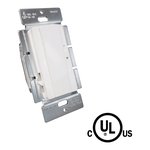 120V WALL DIMMER SWITCH - SINGLE POLE
 ELECTRONIC LOW VOLTAGE DIMMER SWITCH
 3 WAY SMART SWITCH DIMMER
 LED / CFL BULB DIMMER SWITCH 12V/24V
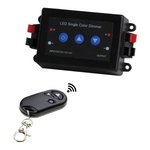 LED DIMMER RF REMOTE - LS-RF-DIM-RM