RGB LED strip lights turn a ceiling cove, a headboard, a bar front or a store display into a line of colour you control from a remote, a wall controller or a phone app. Each RGB chip mixes red, green and blue to reach almost any shade, and RGBW strips add a dedicated white diode for real white light. This category brings together 88 colour-changing strips and kits: slim 12 V tape, 24 V rolls for long runs, dot-free COB strips and moisture-resistant IP65 to IP67 versions.
It serves homeowners who want mood lighting in a bedroom, a living room or a basement theatre, and designers, contractors and electricians who light restaurants, bars, shops and signs. Here is how to pick the right strip, controller and power supply.
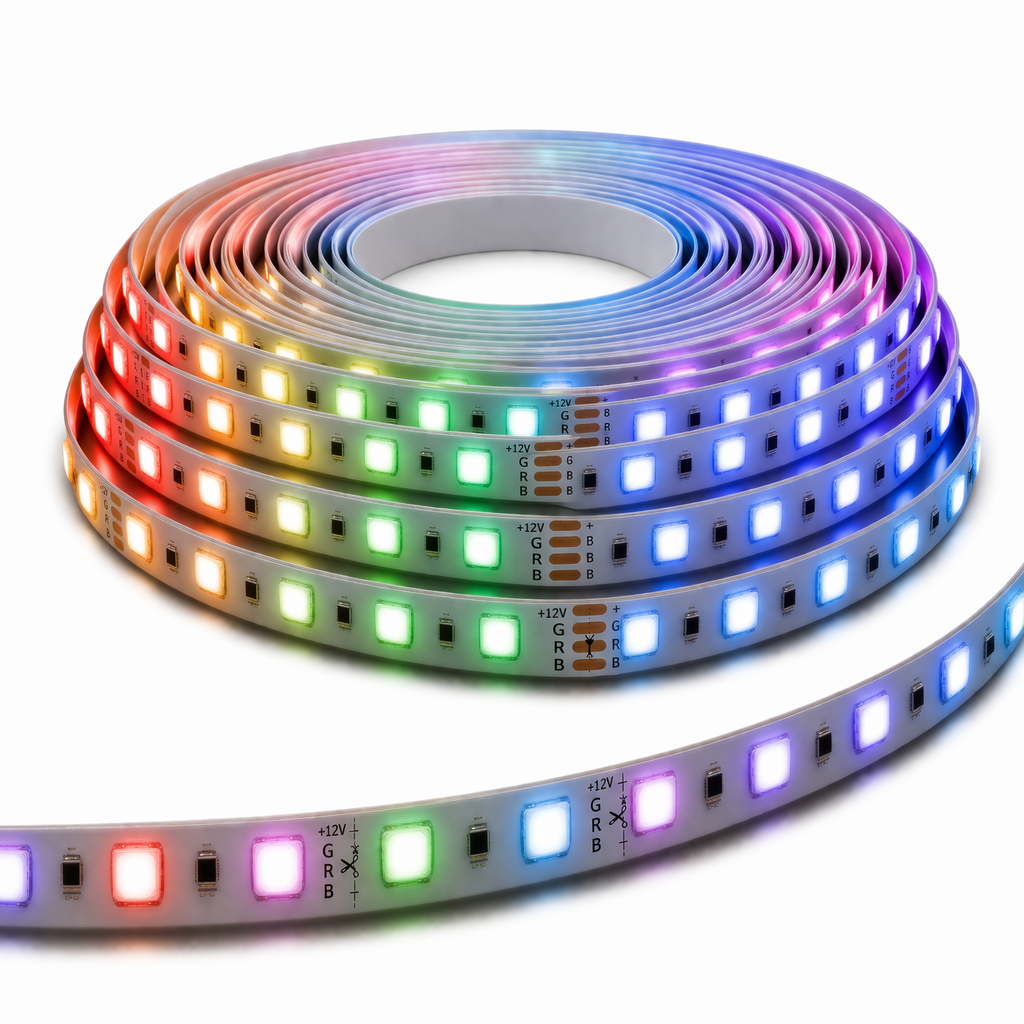
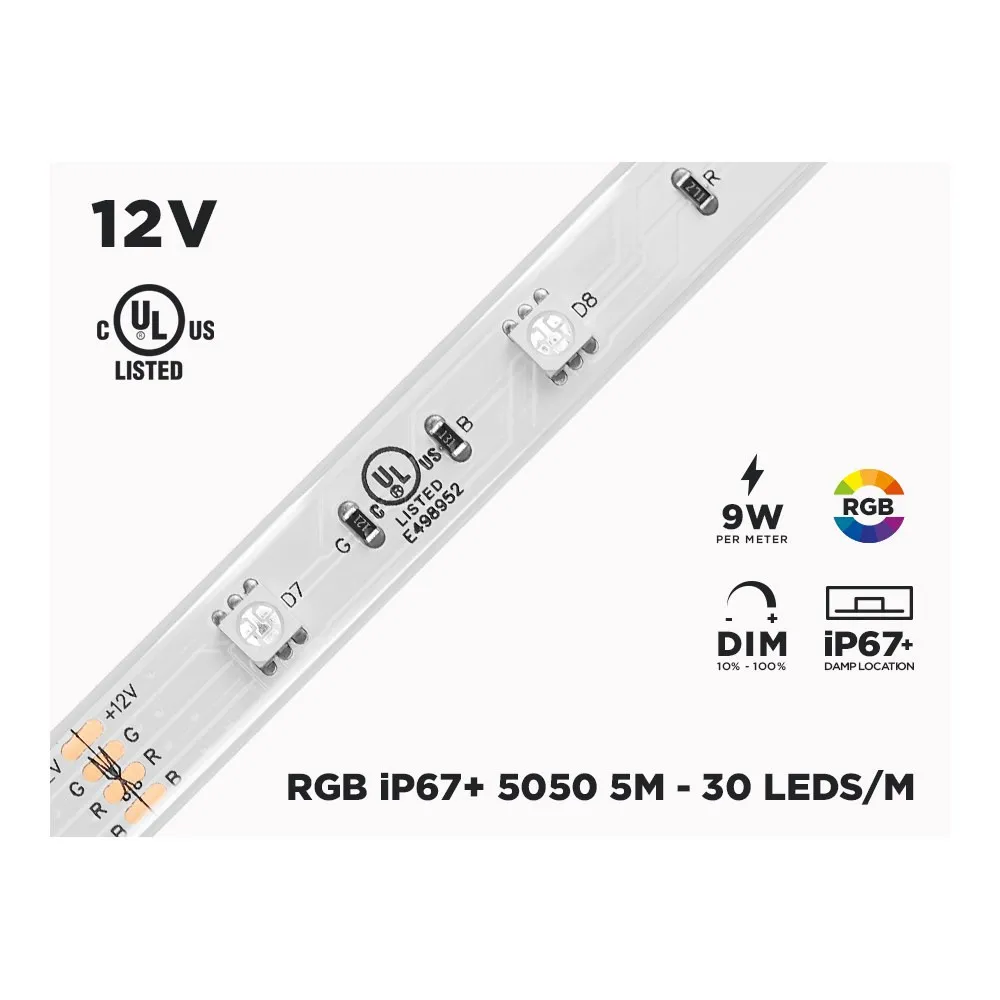
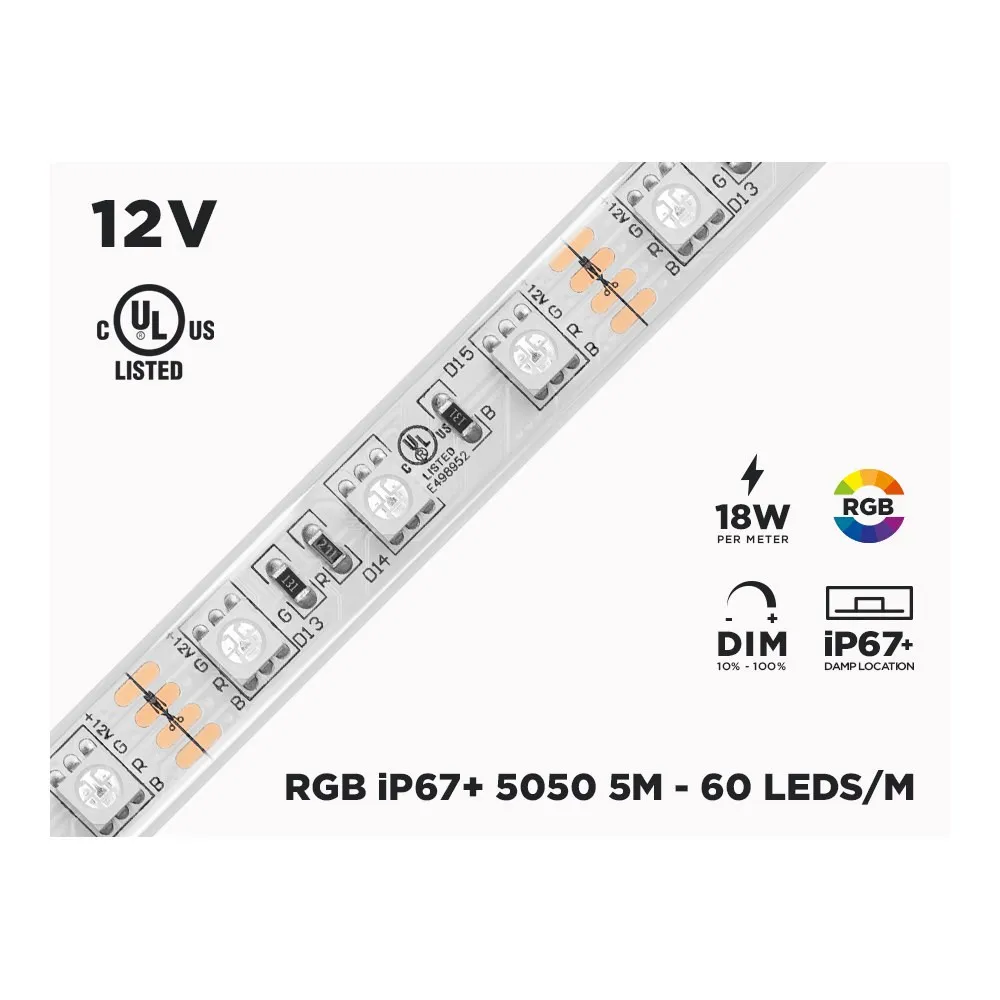
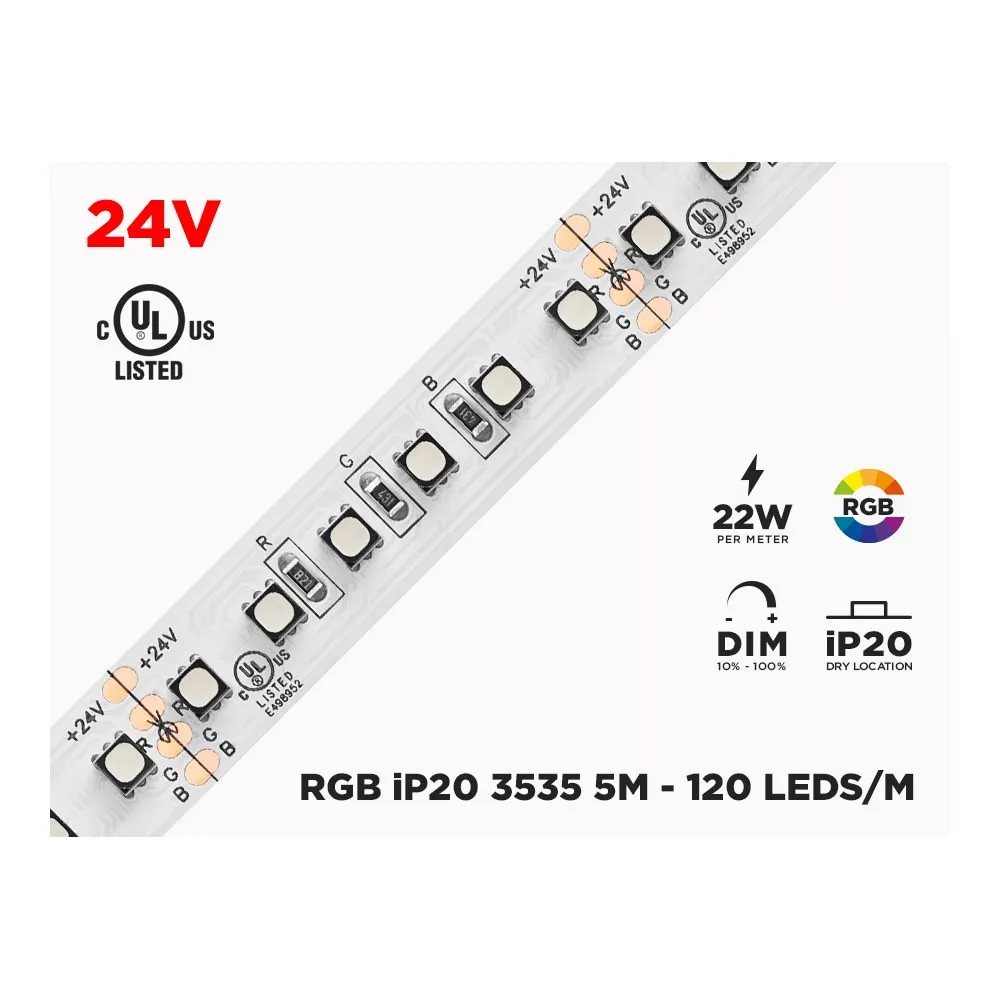
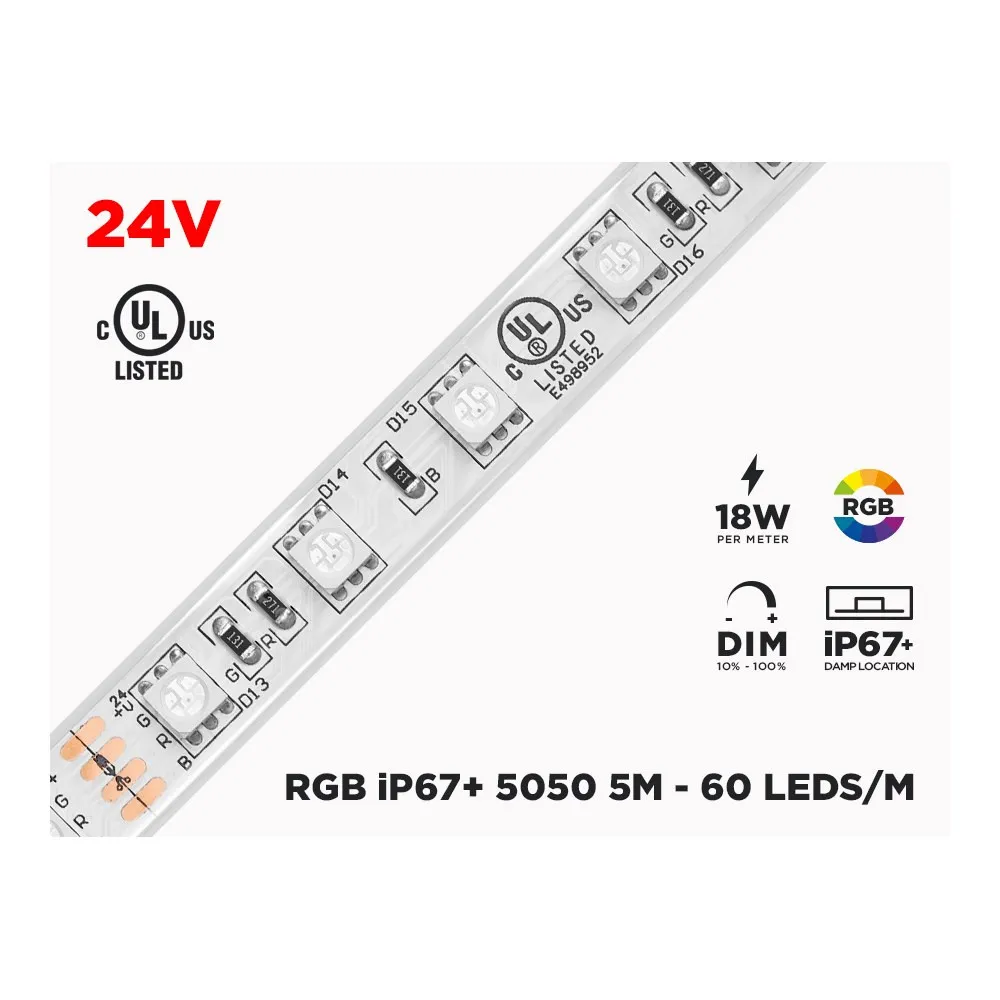
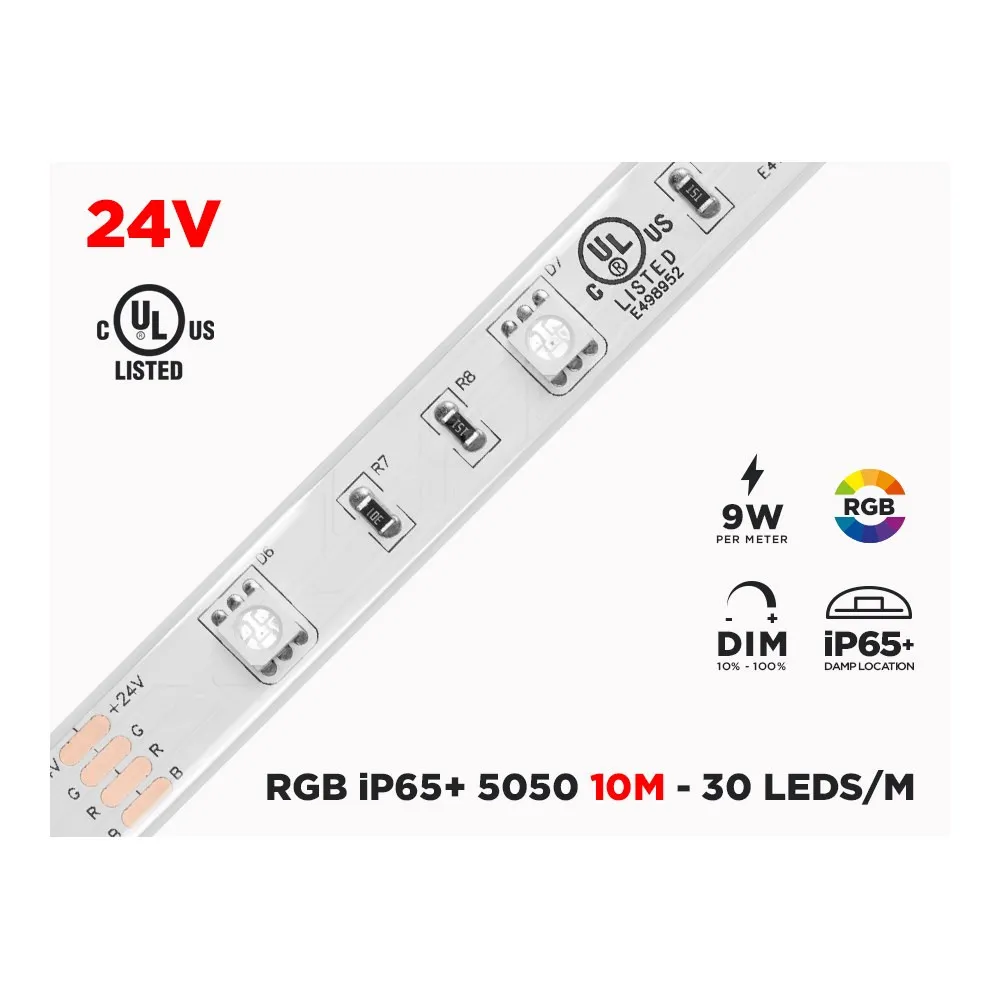
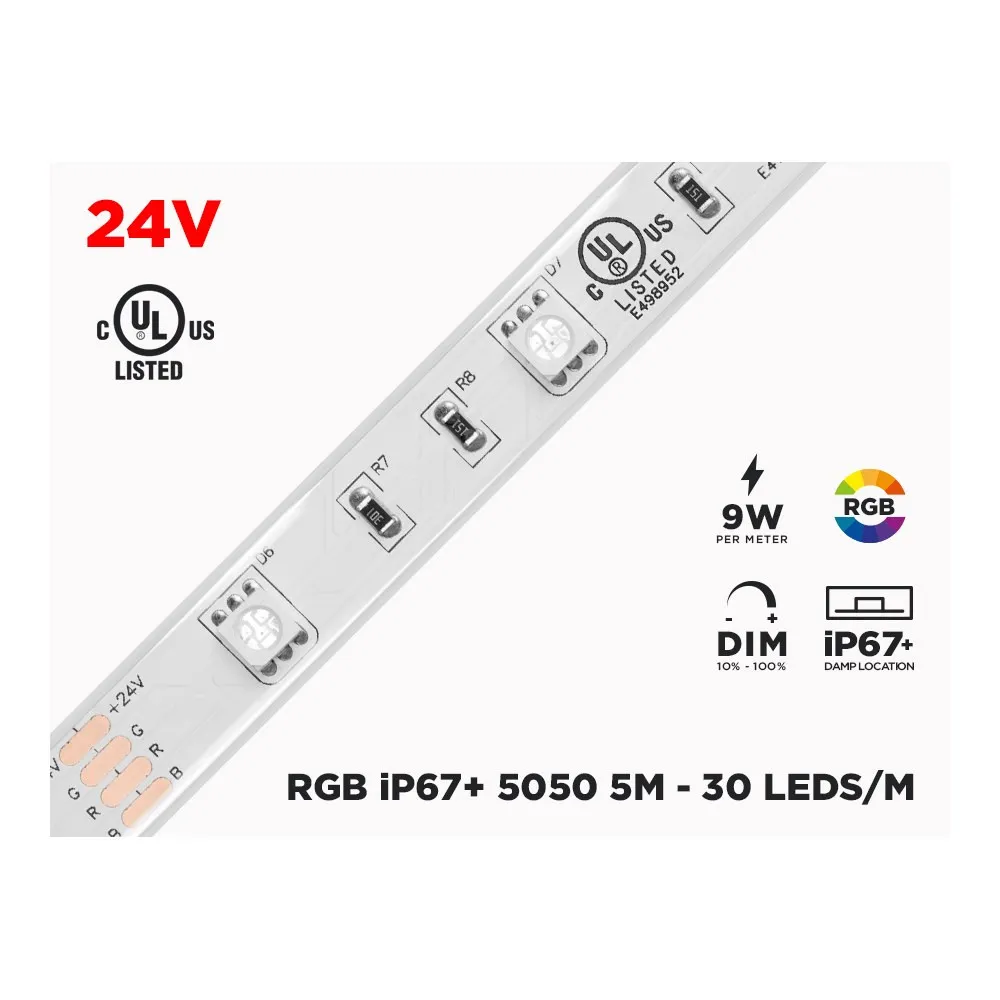
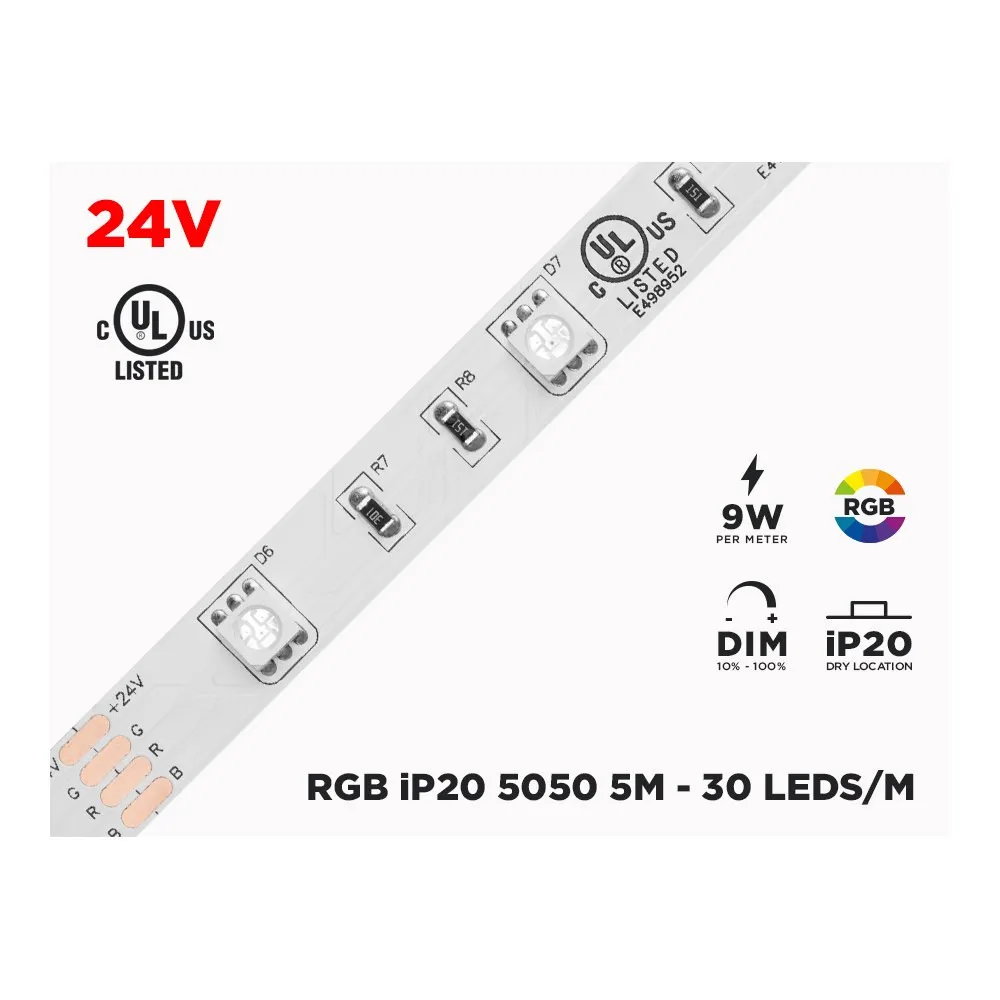
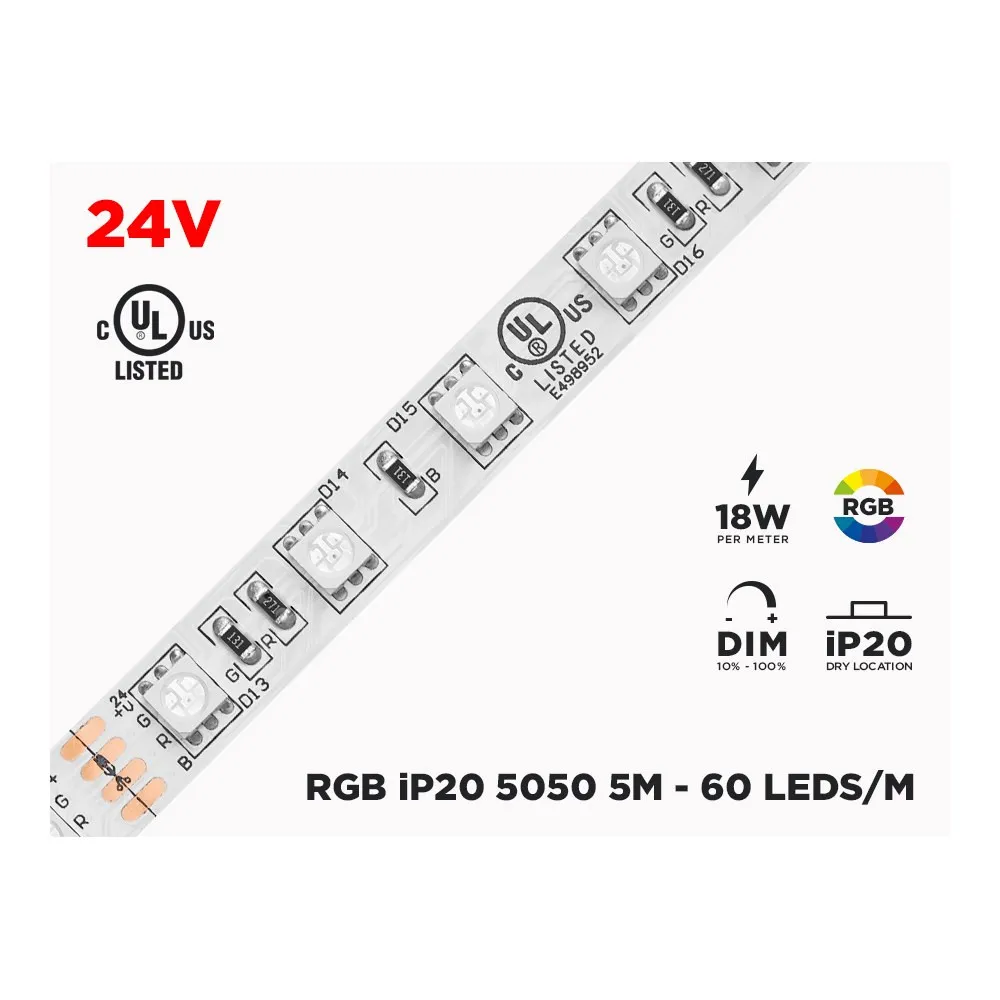
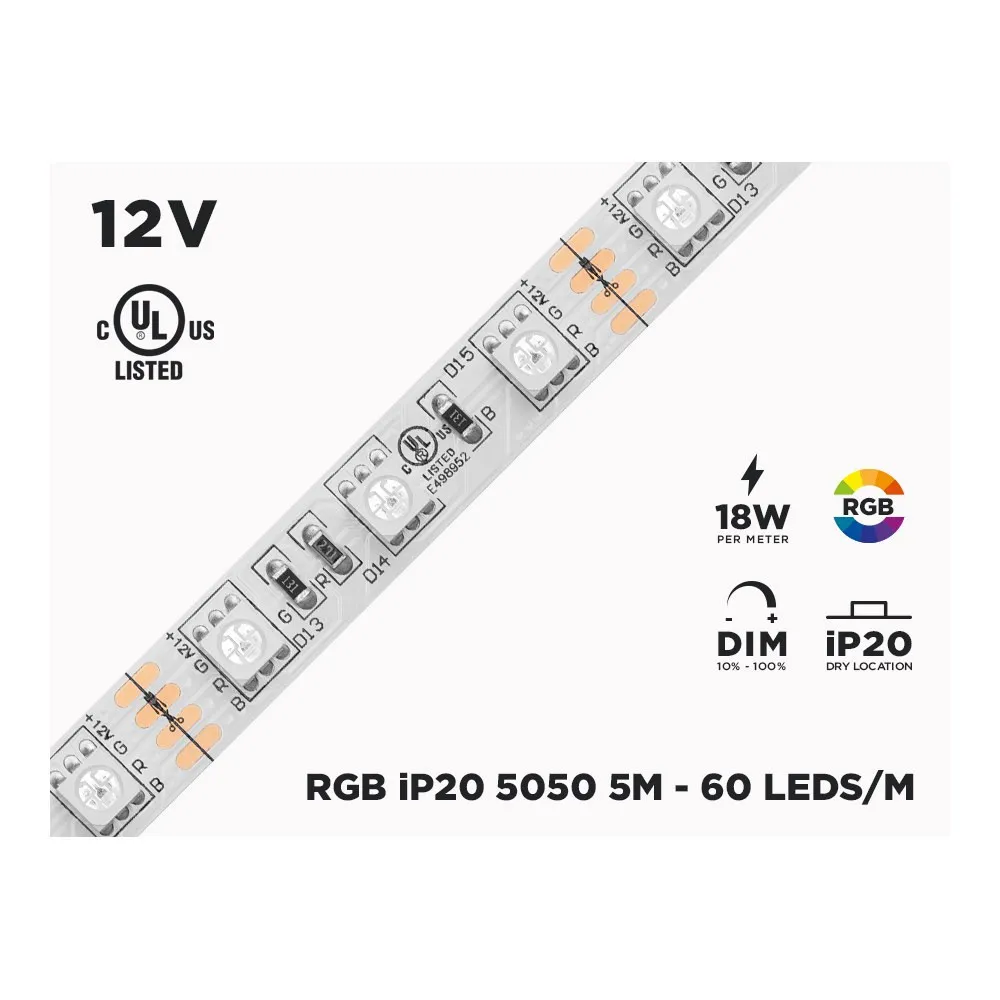
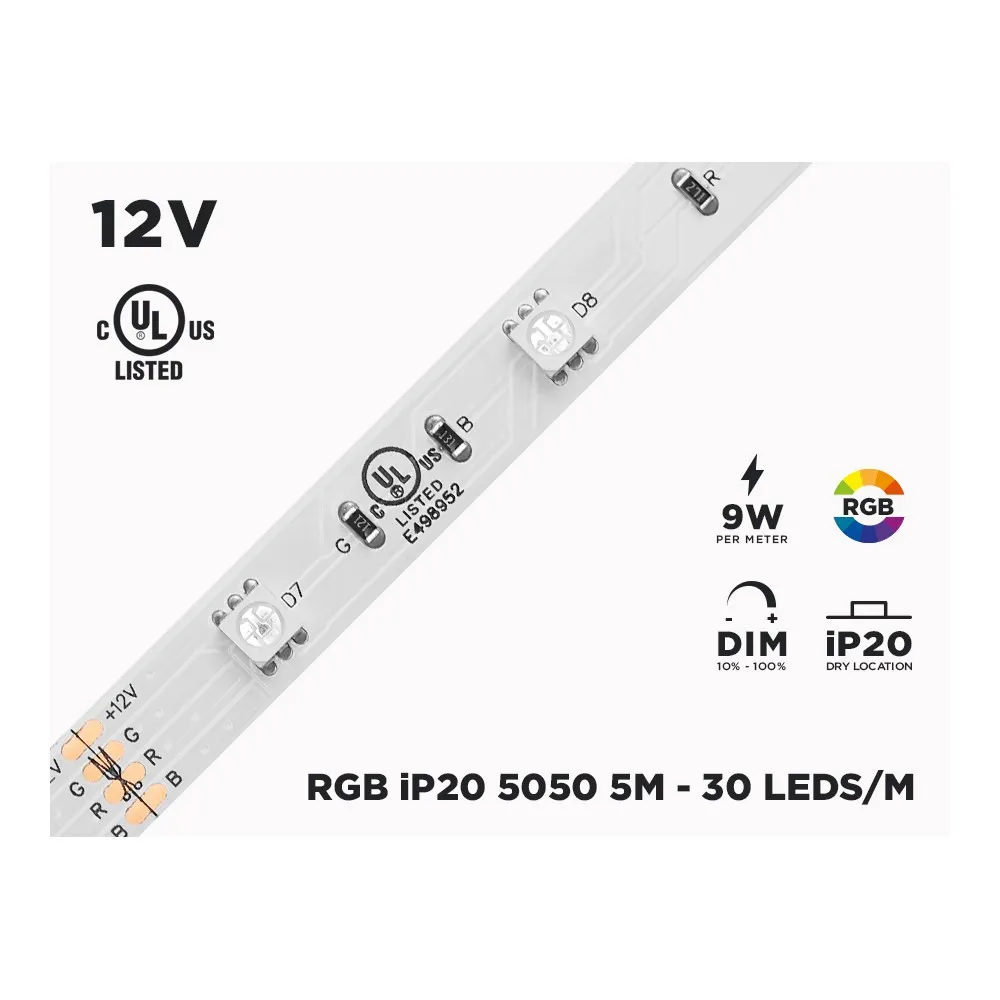
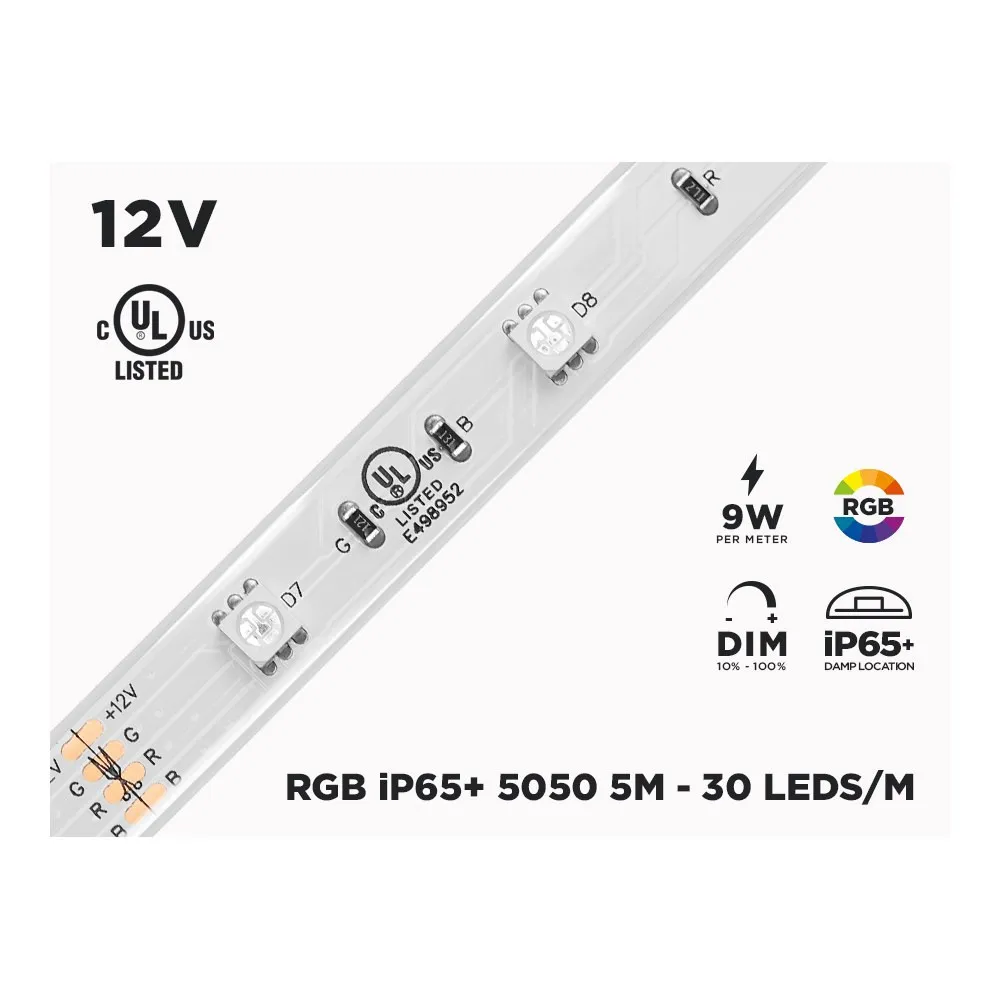
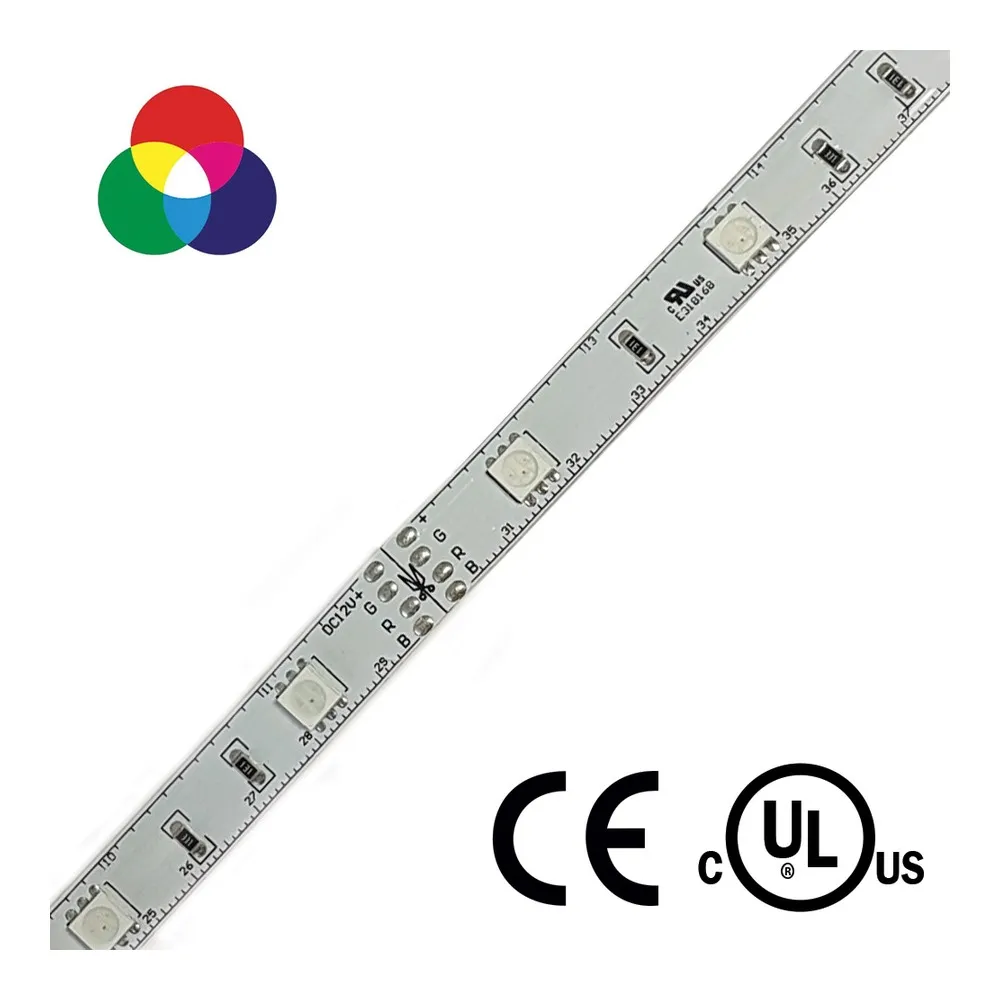
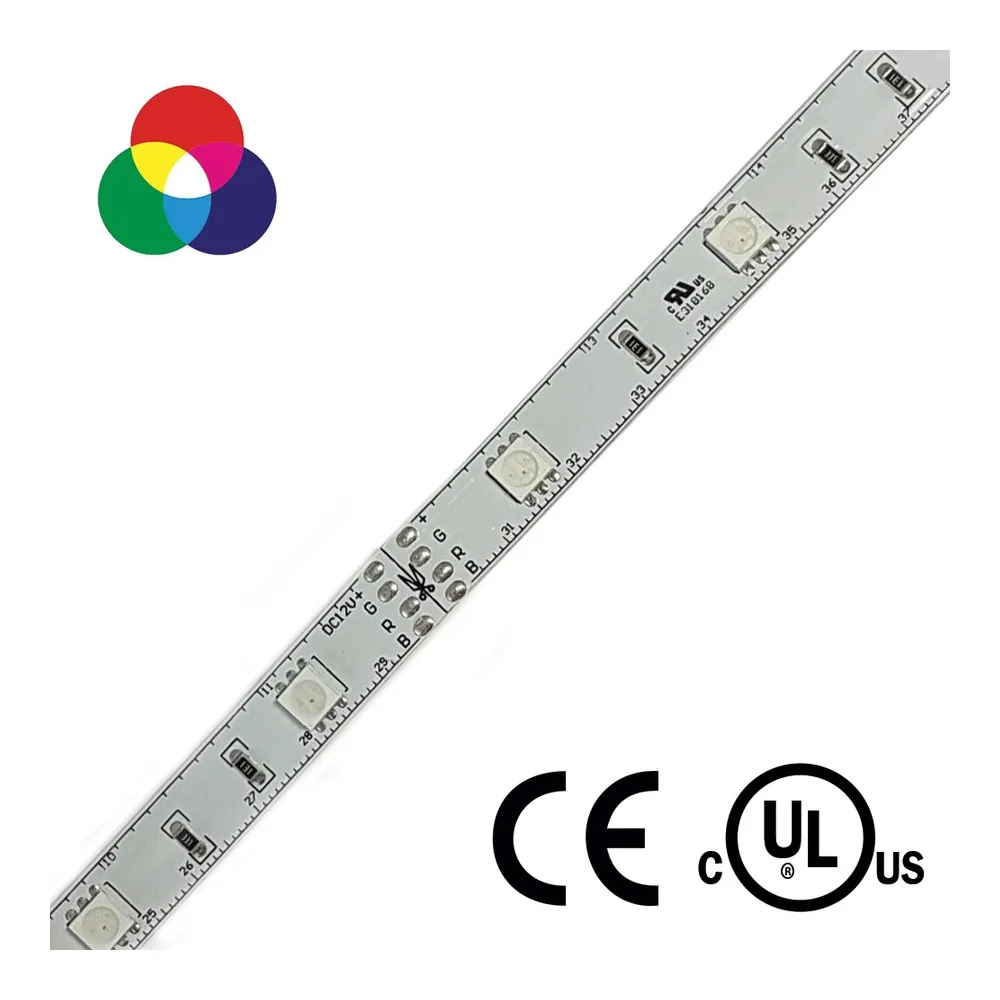
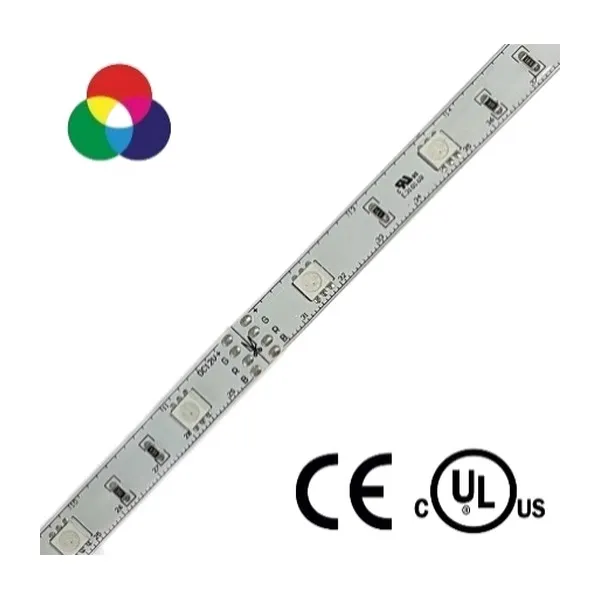
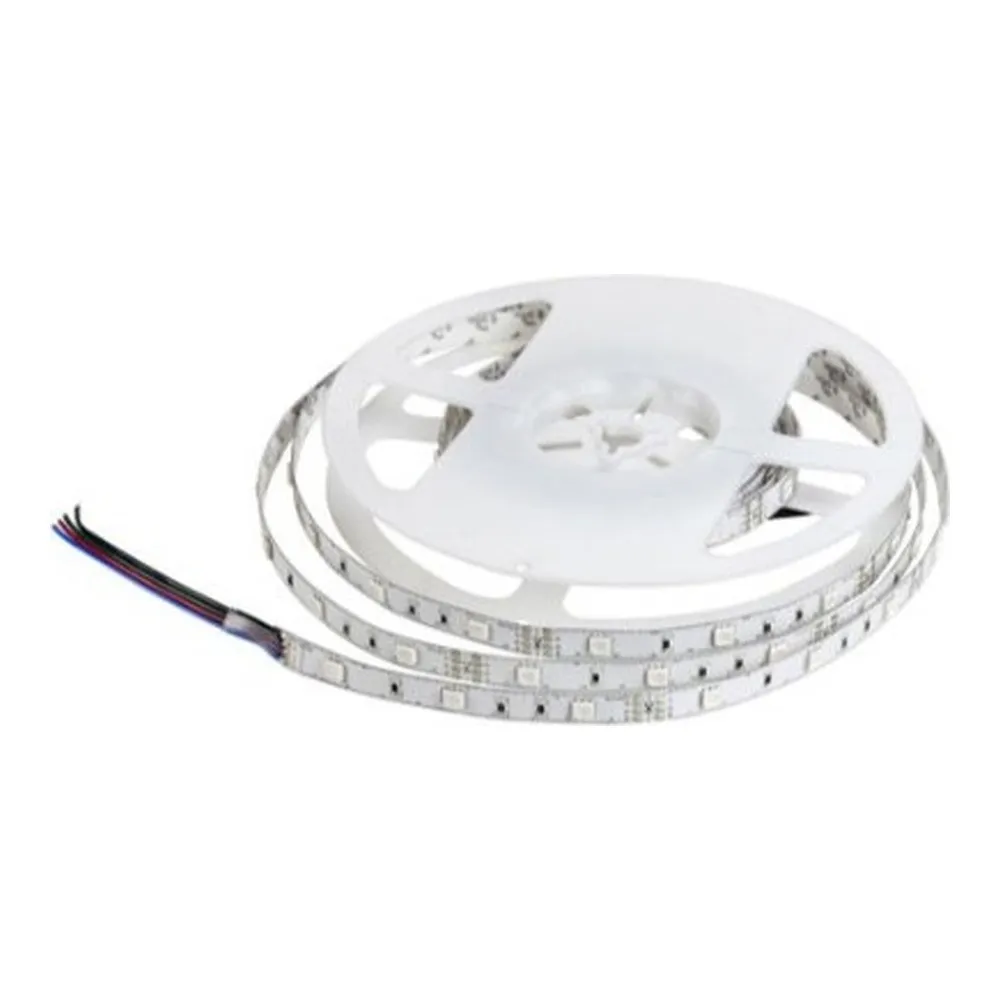
A classic RGB strip uses 5050 SMD chips, each housing a red, a green and a blue diode that the controller mixes into the colour you pick. Density matters: at 60 LEDs per metre the points blend much sooner than at 30, which helps when the strip lights a wall or hides in a cove.
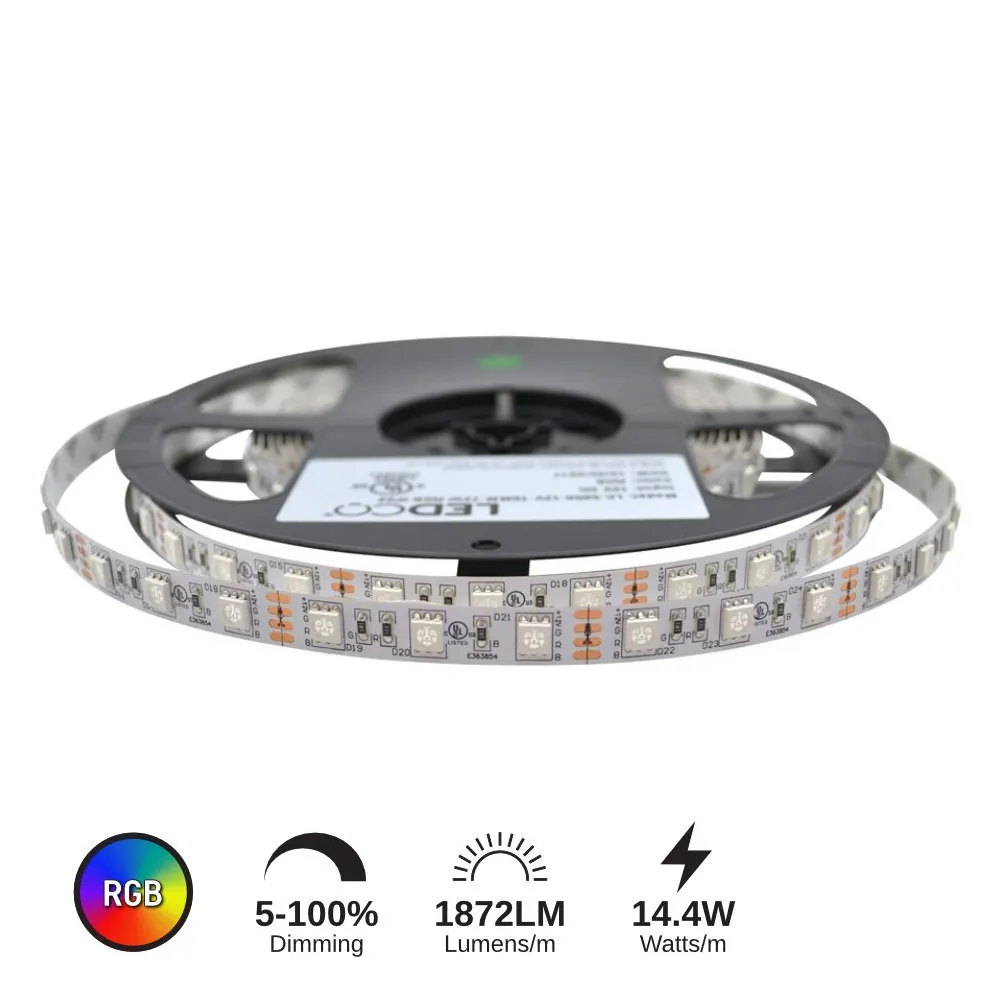
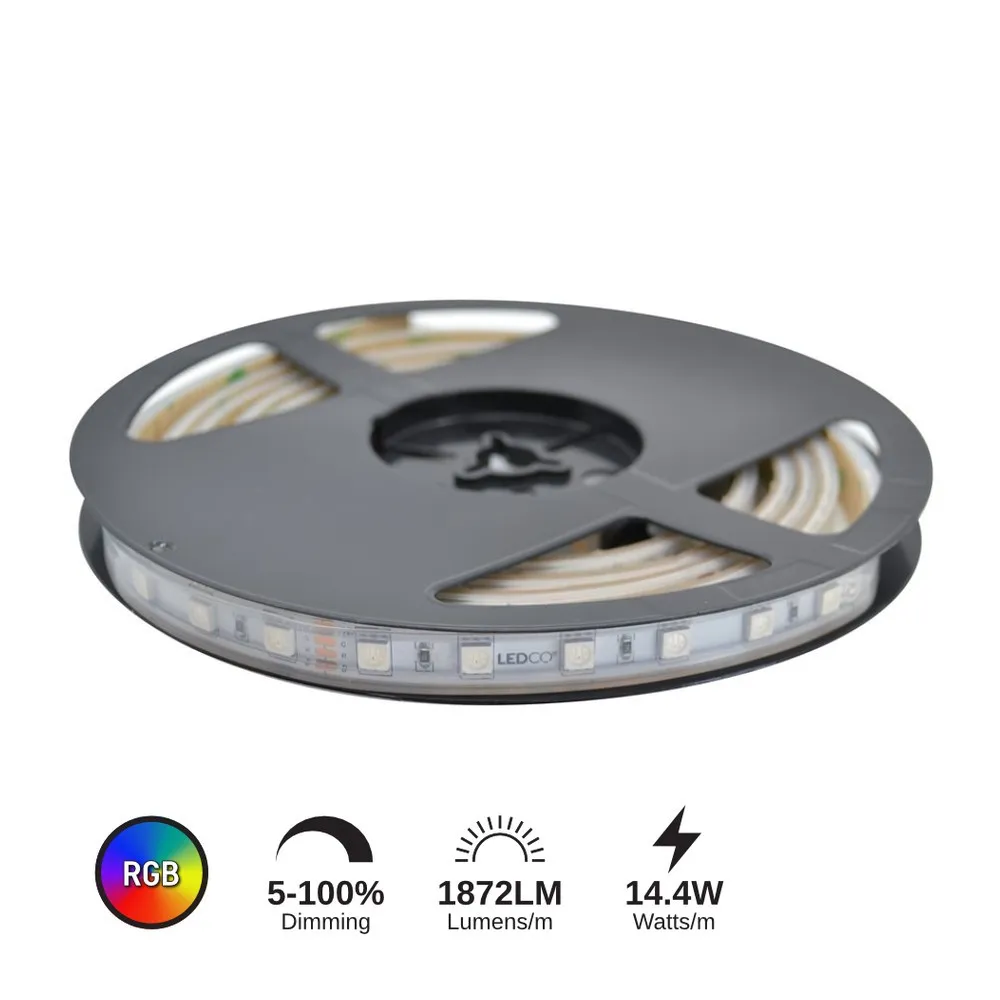
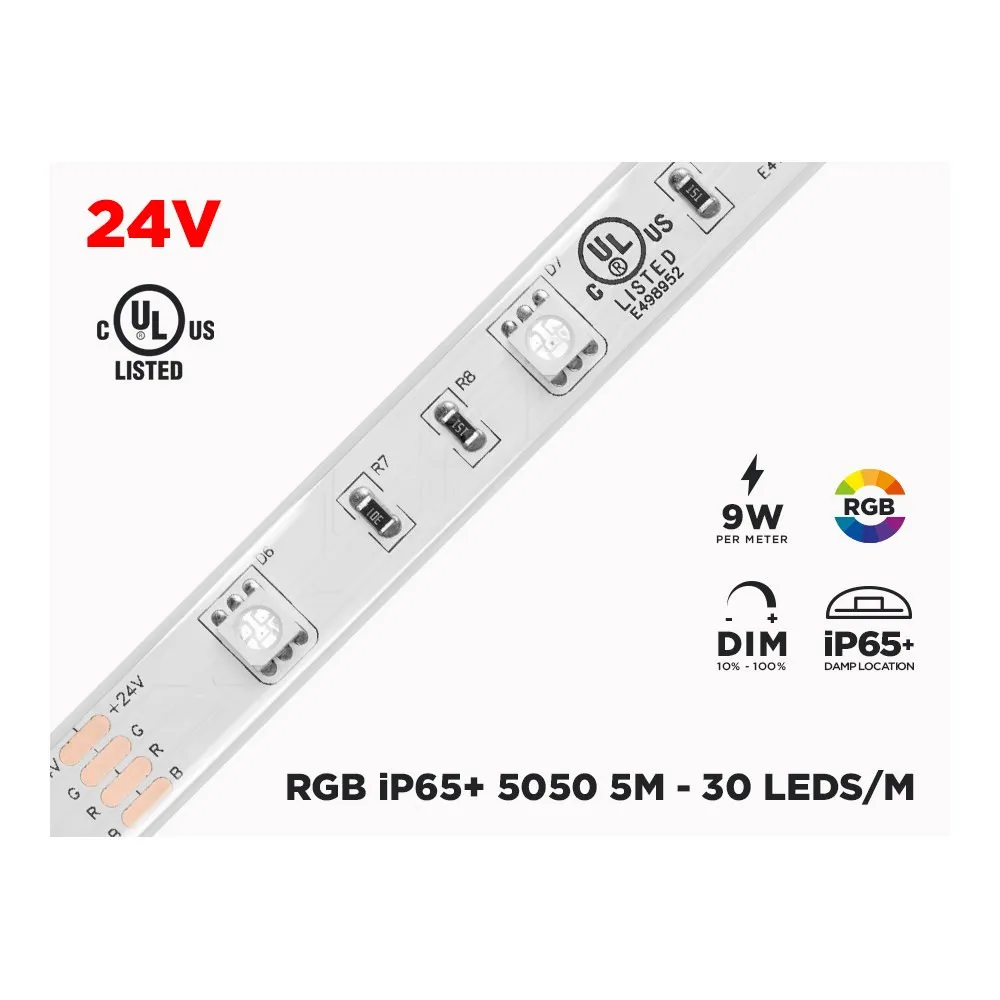
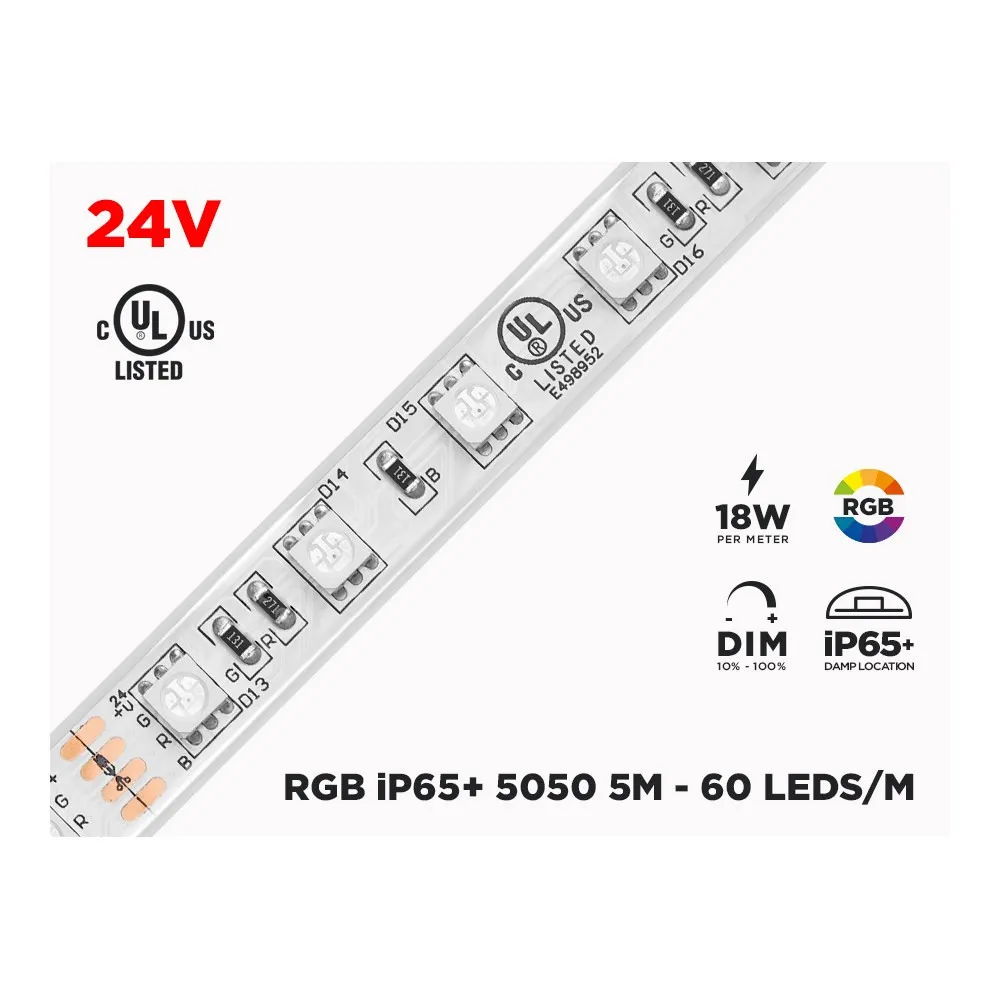
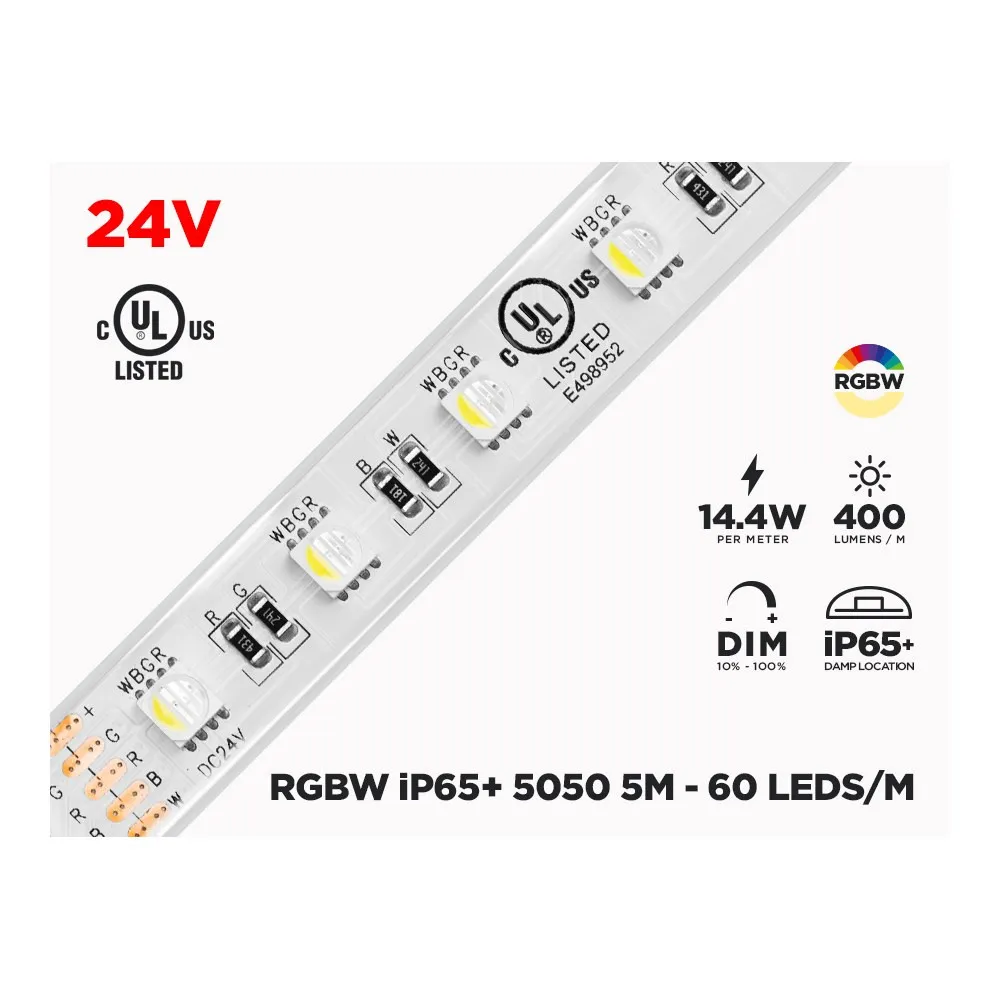
The 24 V indoor RGB tape with 60 LEDs per metre draws 14.4 W/m (4.4 W/ft) on a 5 m (16.4 ft) roll, a solid pick for coves, cabinets and stairs. For subtle accents, UL-approved RGB tape at 7.2 W/m (2.2 W/ft) comes in 12 V or 24 V, including 25 m (82 ft) reels; the 24 V version is rated at 410 lumens per metre.
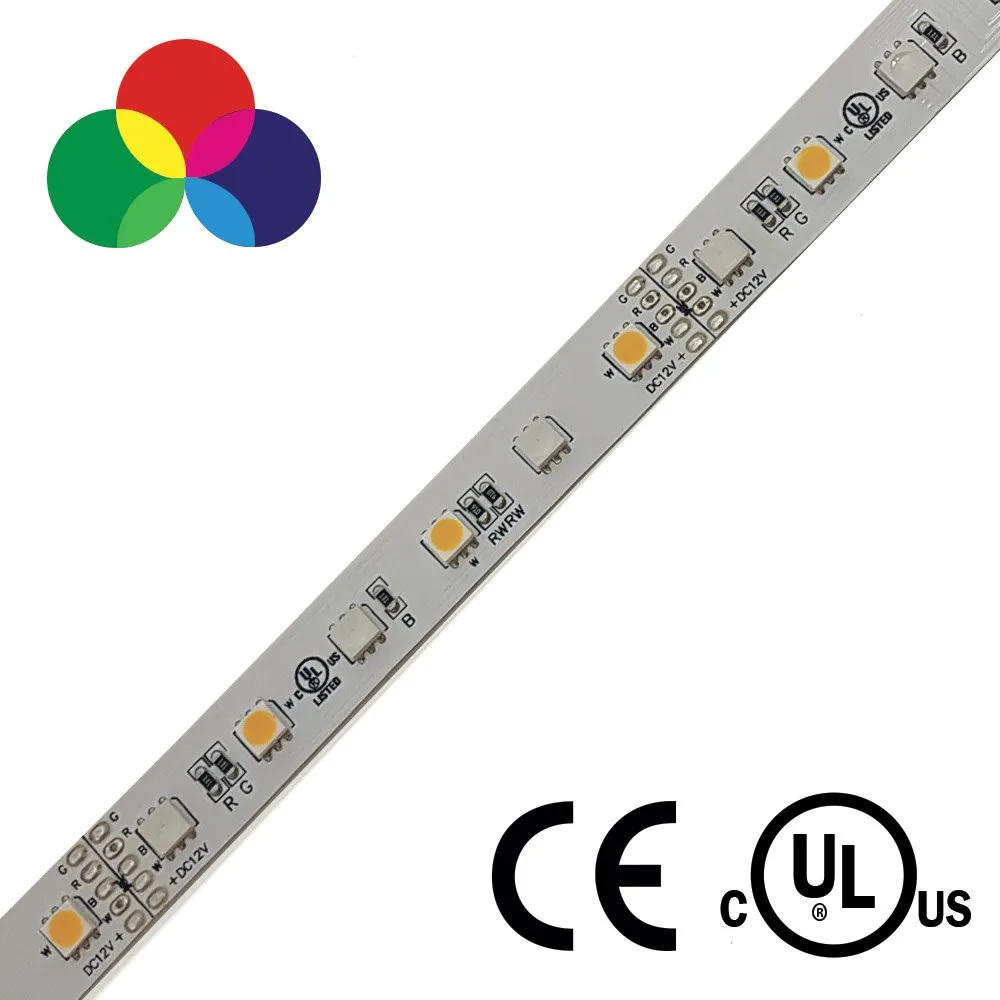
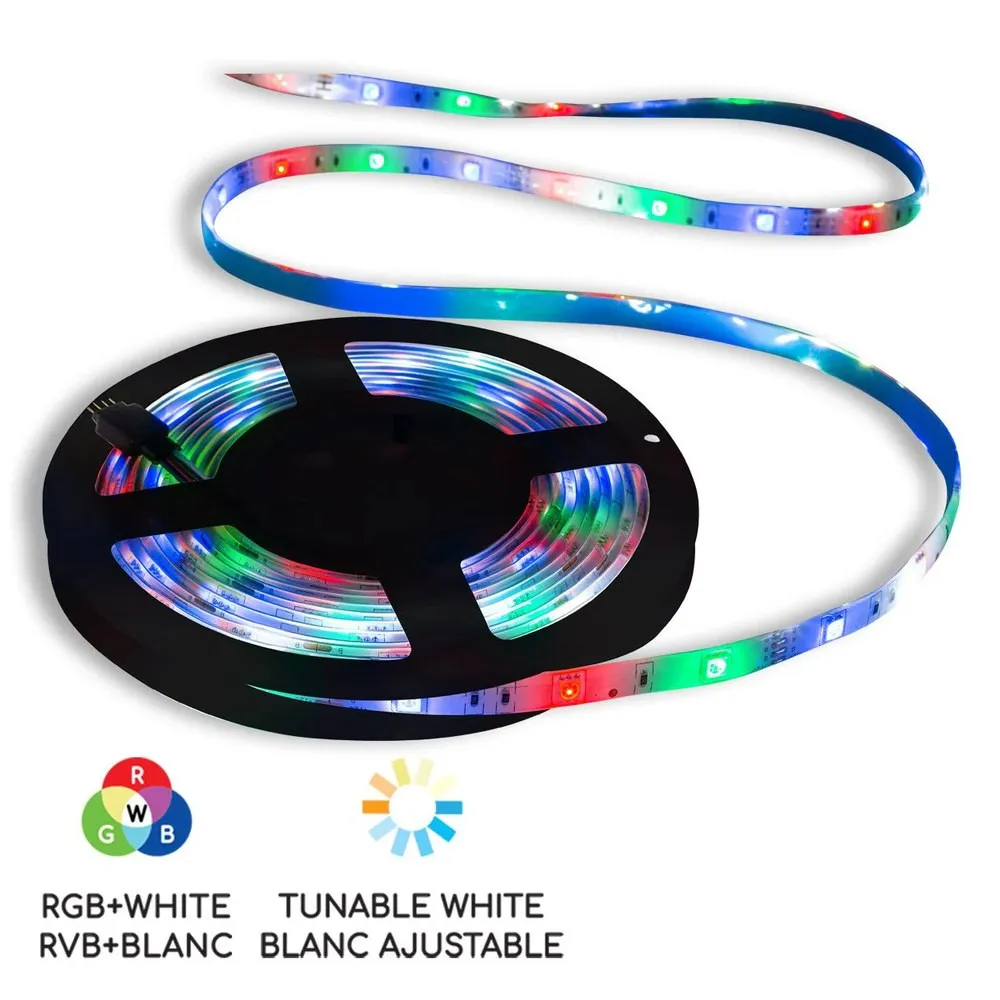
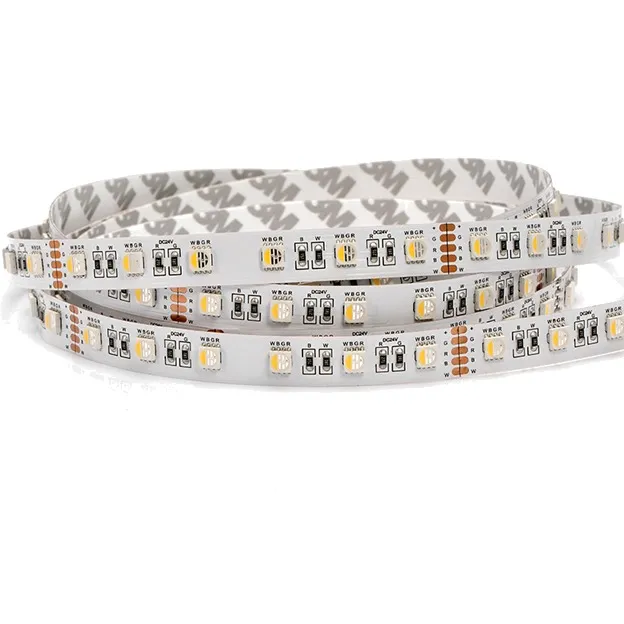
White mixed from red, green and blue tends to look bluish or purple. An RGBW strip adds a fourth, dedicated white diode: use it alone for ambient light, the RGB channels for colour scenes, or both for pastels. The white has one fixed shade: 2700 K or 3000 K for warm living spaces, 3500 K or 4000 K for a neutral look, 5000 K for a crisp white.
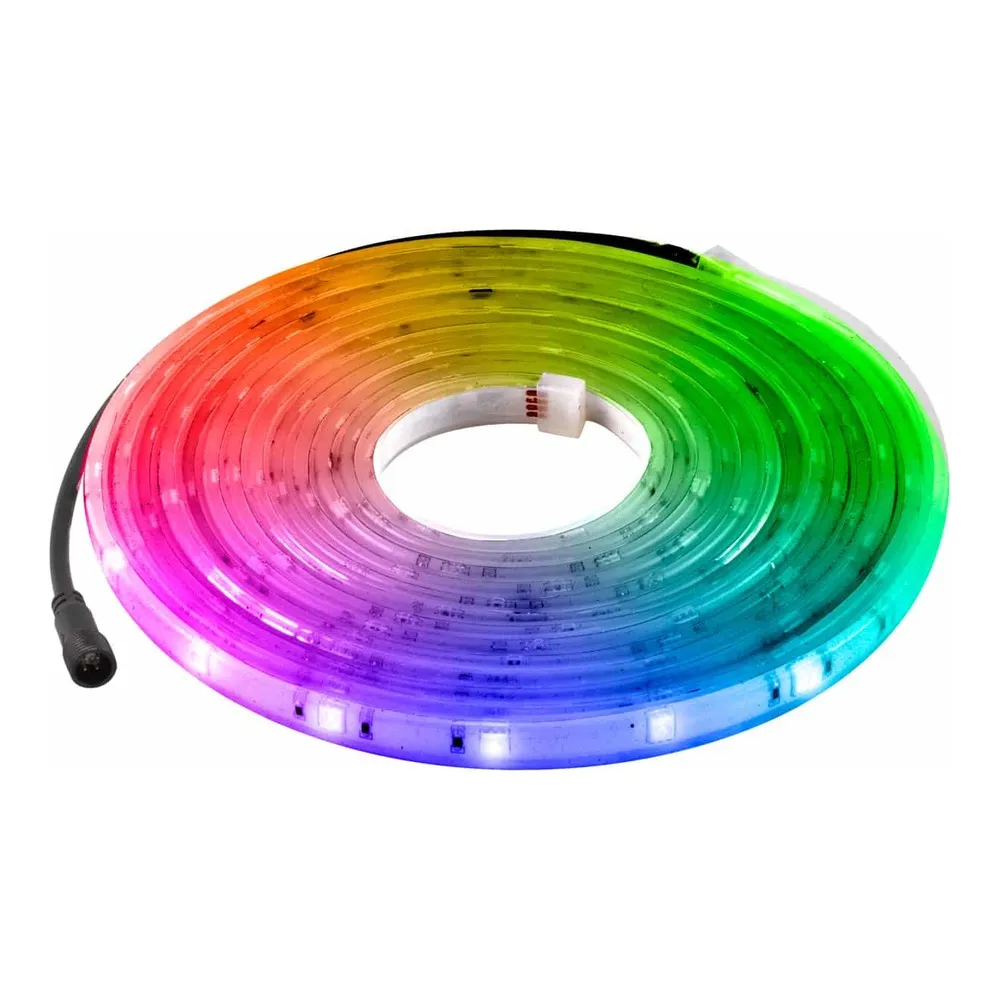
The 19.2 W/m RGBW strip in 2700 K, rated IP66 runs on 24 V and also comes in IP22, in 3000 K, 3500 K and 4000 K, and in 30 m rolls. Other options include LumenstarLED tape with a CRI of 85 on its white channel, 23 W/m RGBW strips and a BAZZ smart Wi-Fi RGBW strip of 10 ft (21 W).
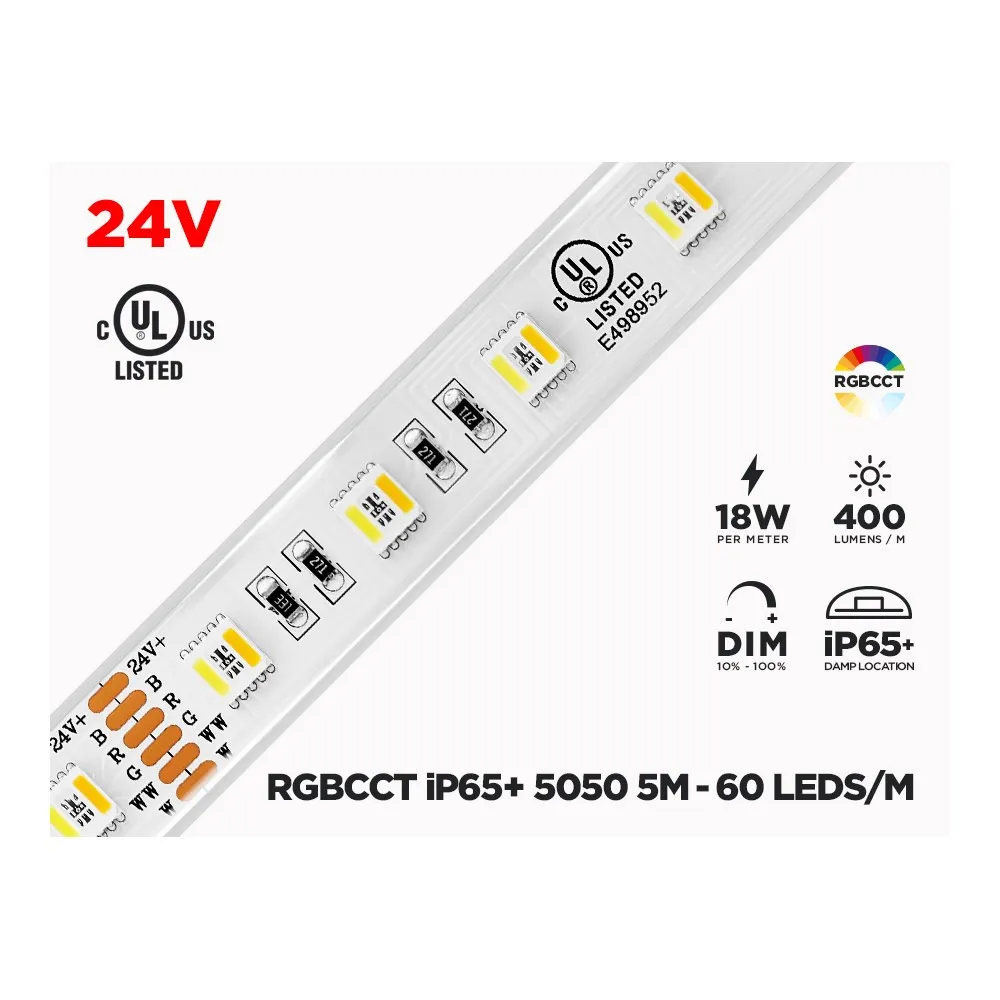
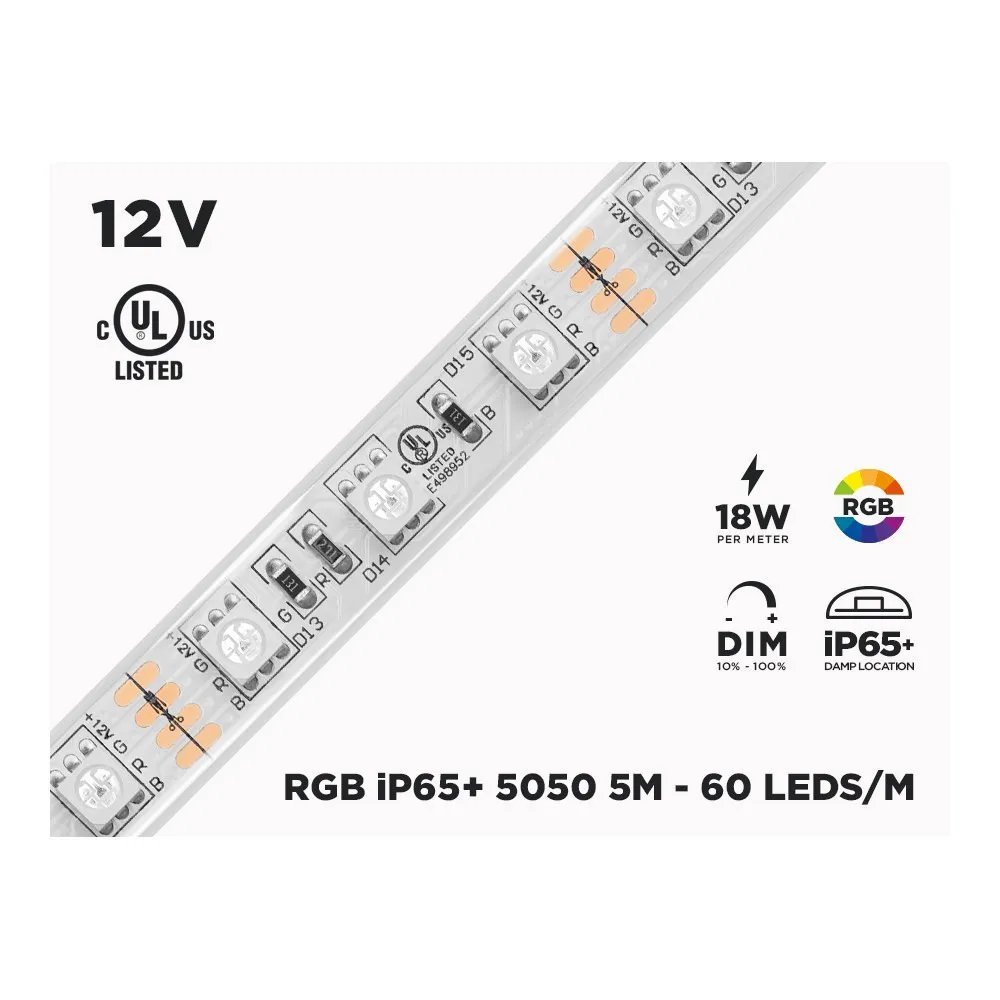
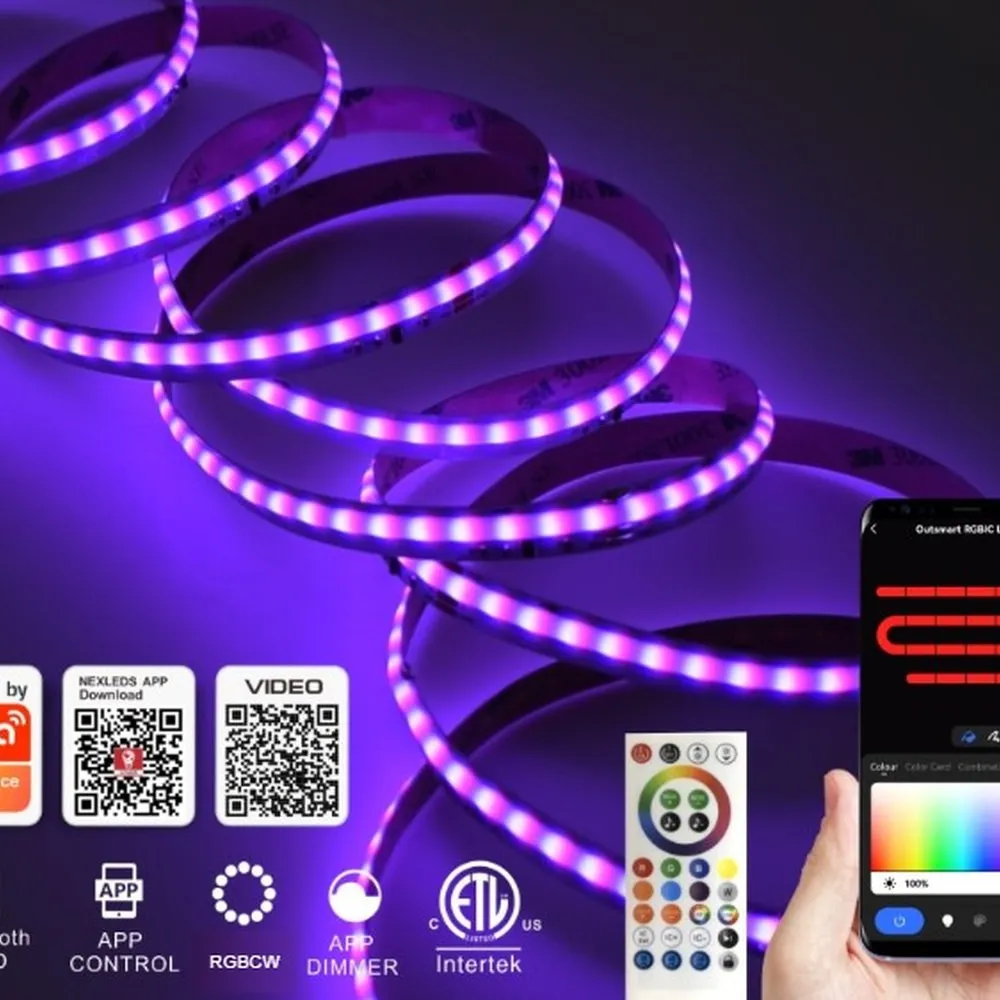
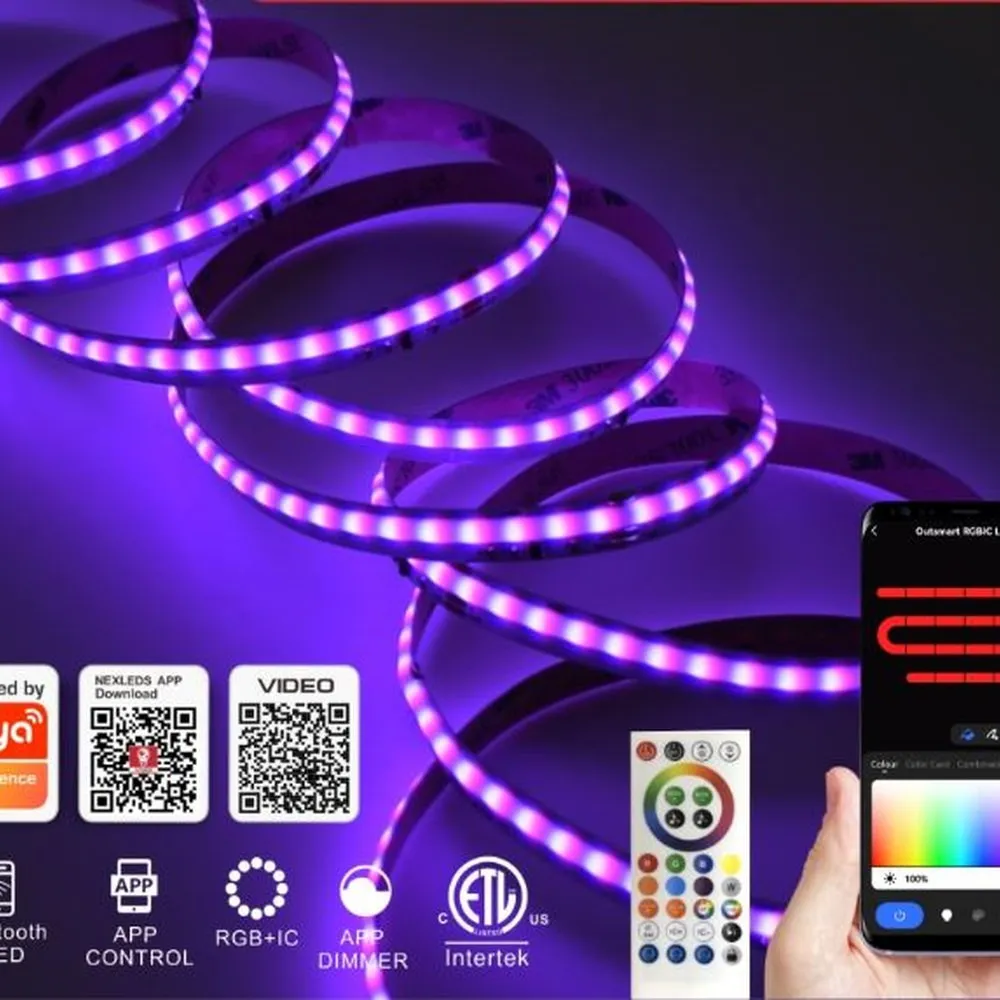
RGB+CCT strips, also written RGBCW, add warm white and cool white diodes to red, green and blue, for rooms that need colour and a white that shifts from warm to cool. Choices include 24 V 5050 strips in IP20 or IP65+ and a smart 12 mm COB RGBCW tape from NEXLEDS. For tunable white without colour, the CCT LED strips are simpler to wire.
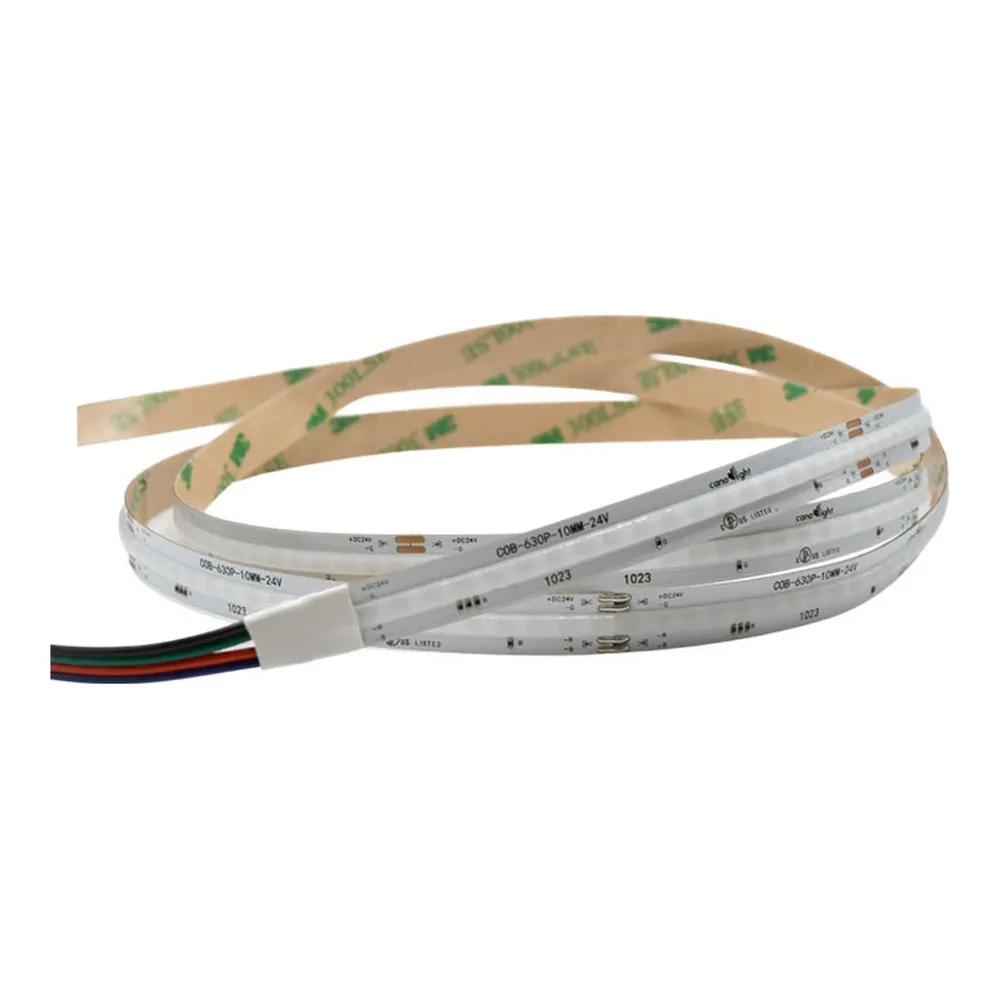
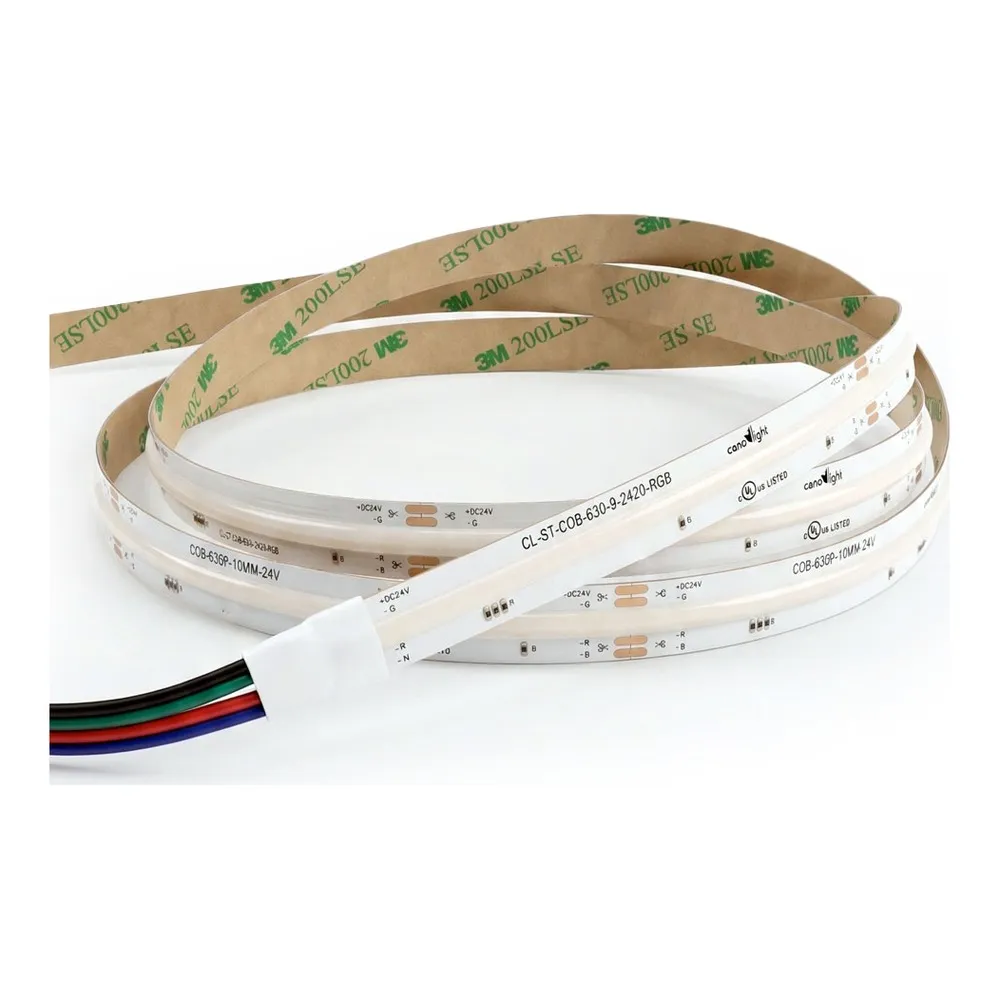
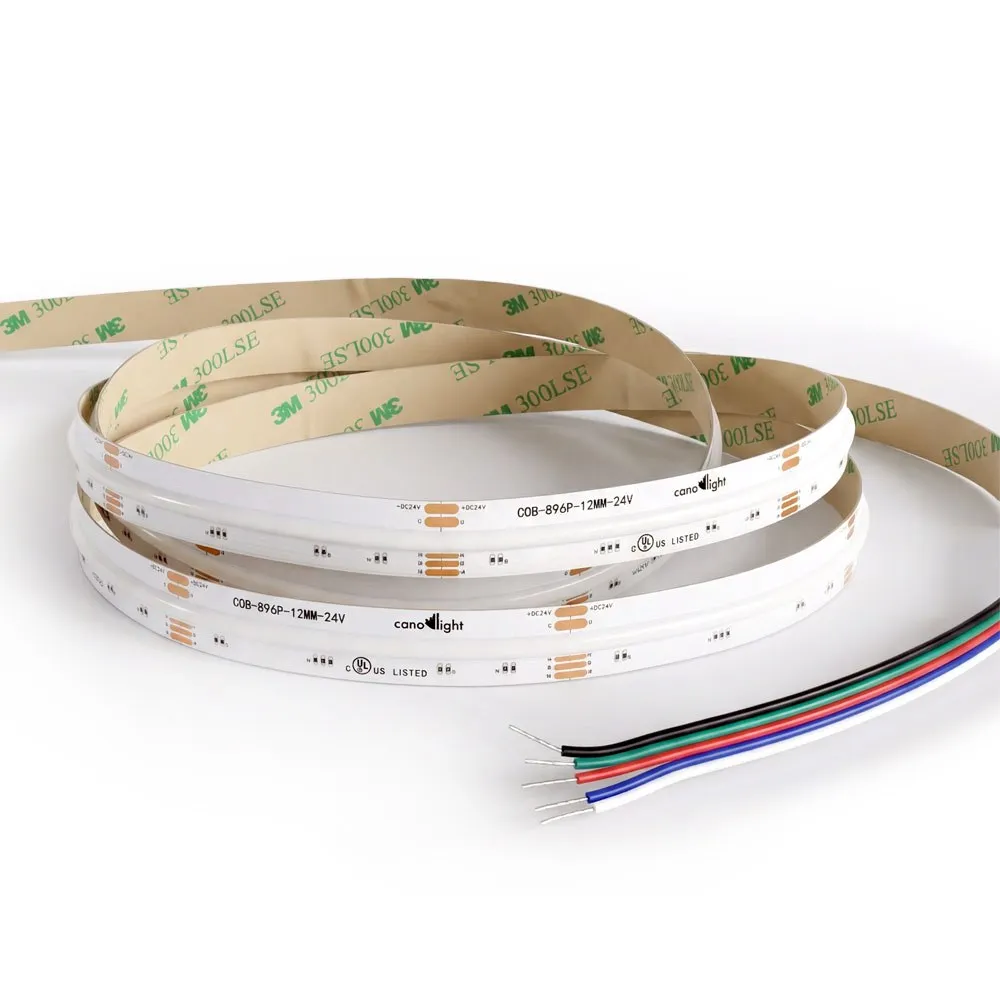
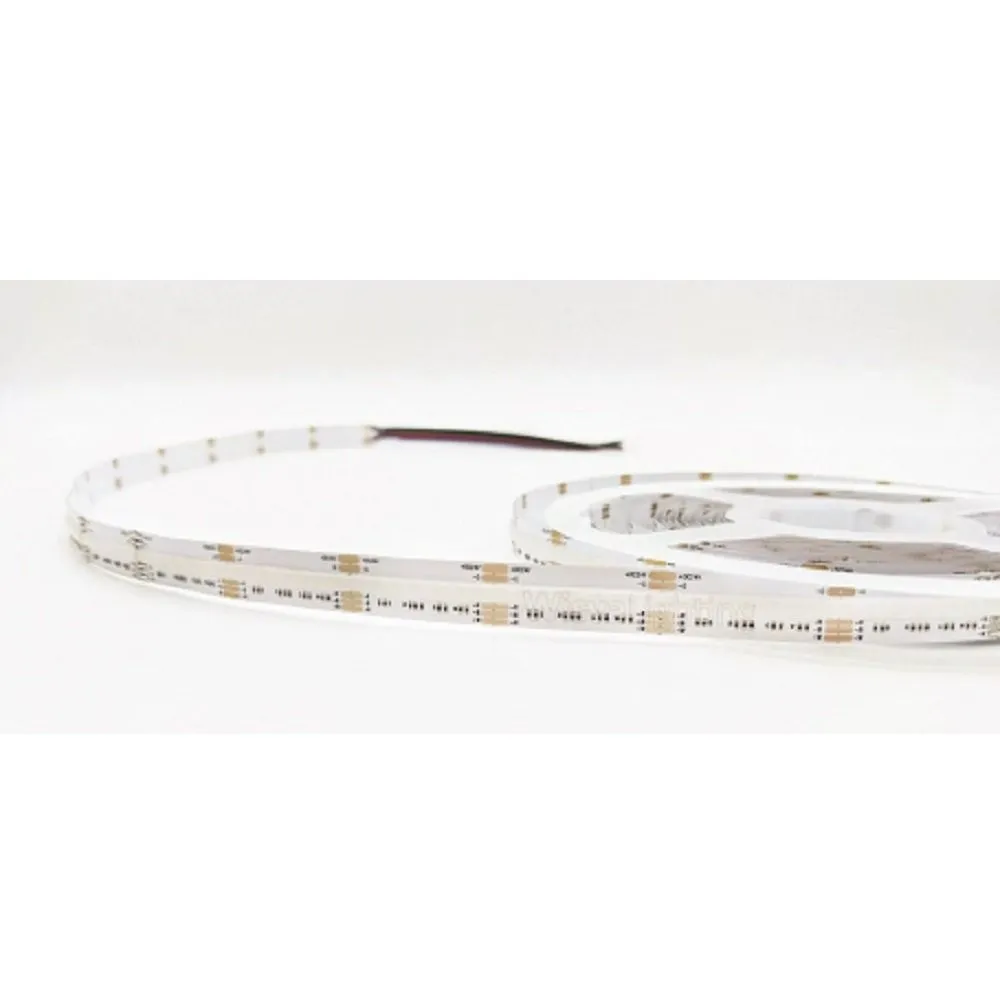
Chip-on-board (COB) strips pack hundreds of tiny chips per metre under a continuous coating, so colour reads as one smooth line with no visible dots. Canolight RGB COB strips carry 630 LEDs per metre at 9 W/m, and RGBW versions reach 896 LEDs per metre at 16 W/m. LumenstarLED 24 V COB tape with 900 LEDs per metre has a CRI of 90, in RGB or RGBW. Compare all COB LED strips, white versions included.
For chases and rainbow effects, an addressable strip with an integrated IC lets each segment show a different colour at the same time. These digital strips sit with the pixel LED strips.
| Criterion | 12 V RGB strips | 24 V RGB strips |
|---|---|---|
| Best for | Short runs, cabinets, shelves, small signs | Long runs, coves, ceilings, commercial jobs |
| Formats | 30 cm and 1 m pieces, 5 m and 25 m reels | 5 m to 30 m rolls, 10 m long-run COB |
| Long runs | Voltage drop shows sooner | Less voltage drop, steadier colour |
An RGB strip needs a constant-voltage power supply of the same voltage, a controller with the right number of channels and a way to send commands. A standard RGB strip is a 4-wire system (red, green, blue and a common positive); RGBW and RGB+CCT strips need a controller built for their extra white channels.
Match your strip with the LED strip controllers and remotes, or see the Wi-Fi and smart controllers.
Multiply the wattage per metre by the length: a 5 m run at 14.4 W/m draws 72 W, at 19.2 W/m it draws 96 W. Choose a power supply of the same voltage rated above that total. On long runs, feed power at more than one point so the far end keeps the same colour.
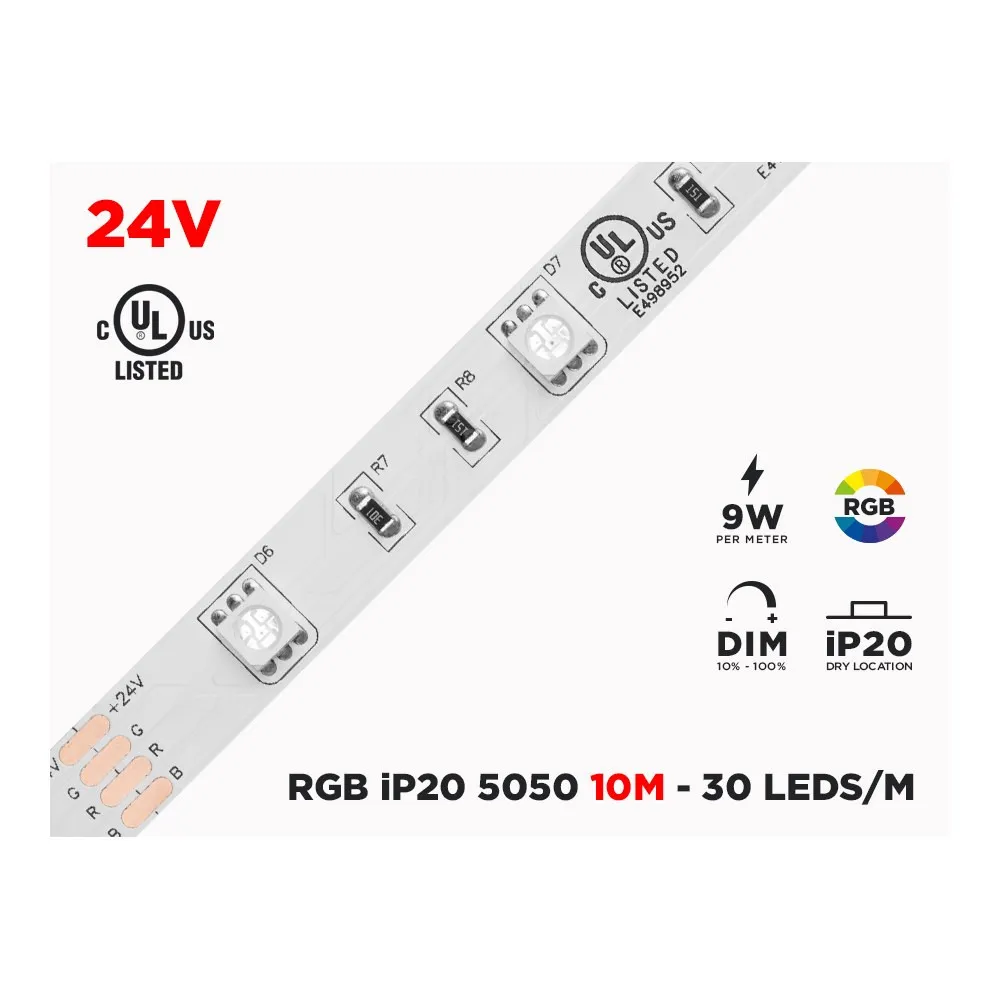
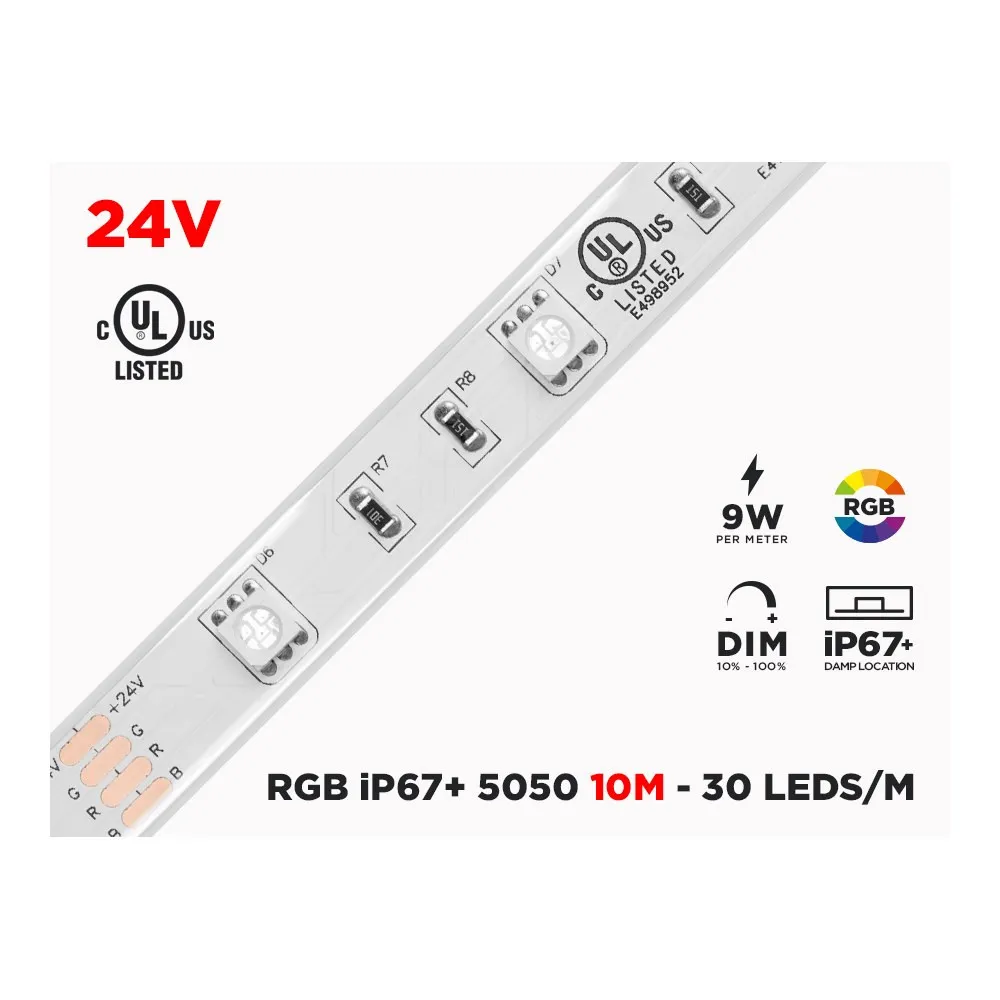
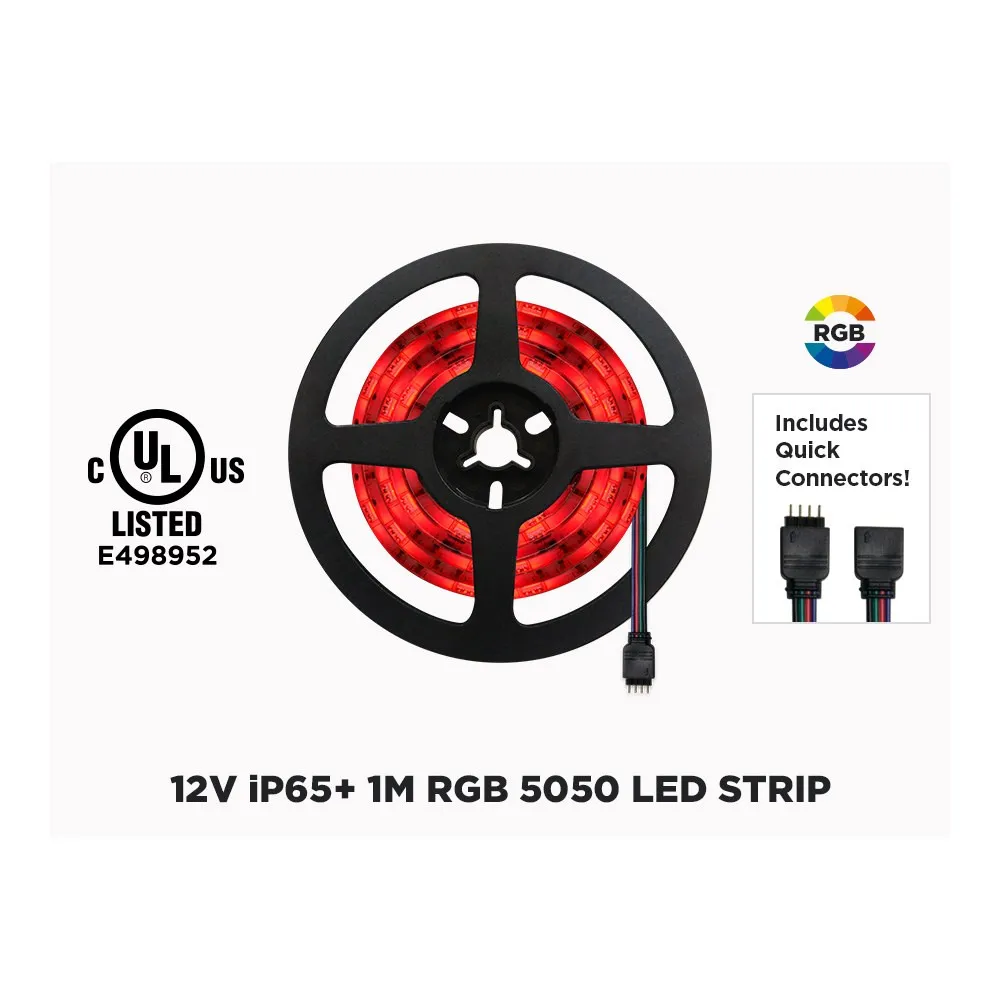
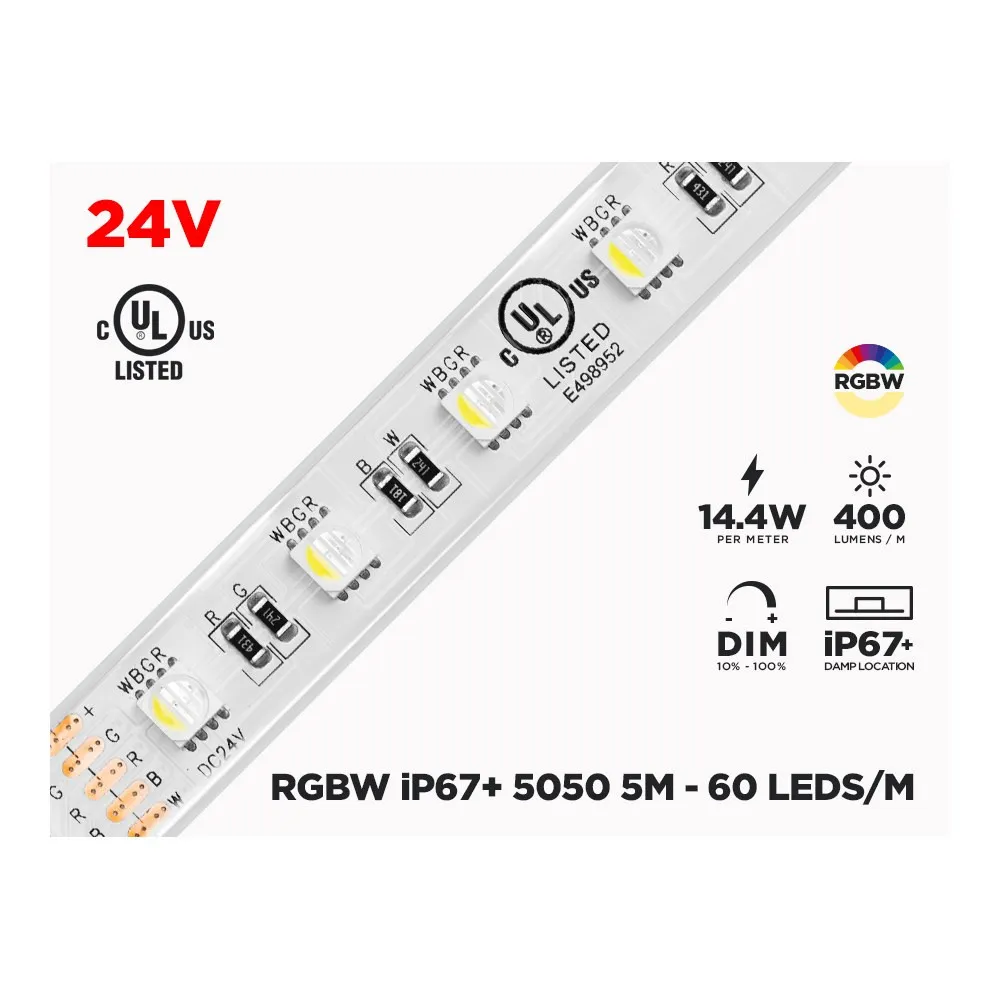
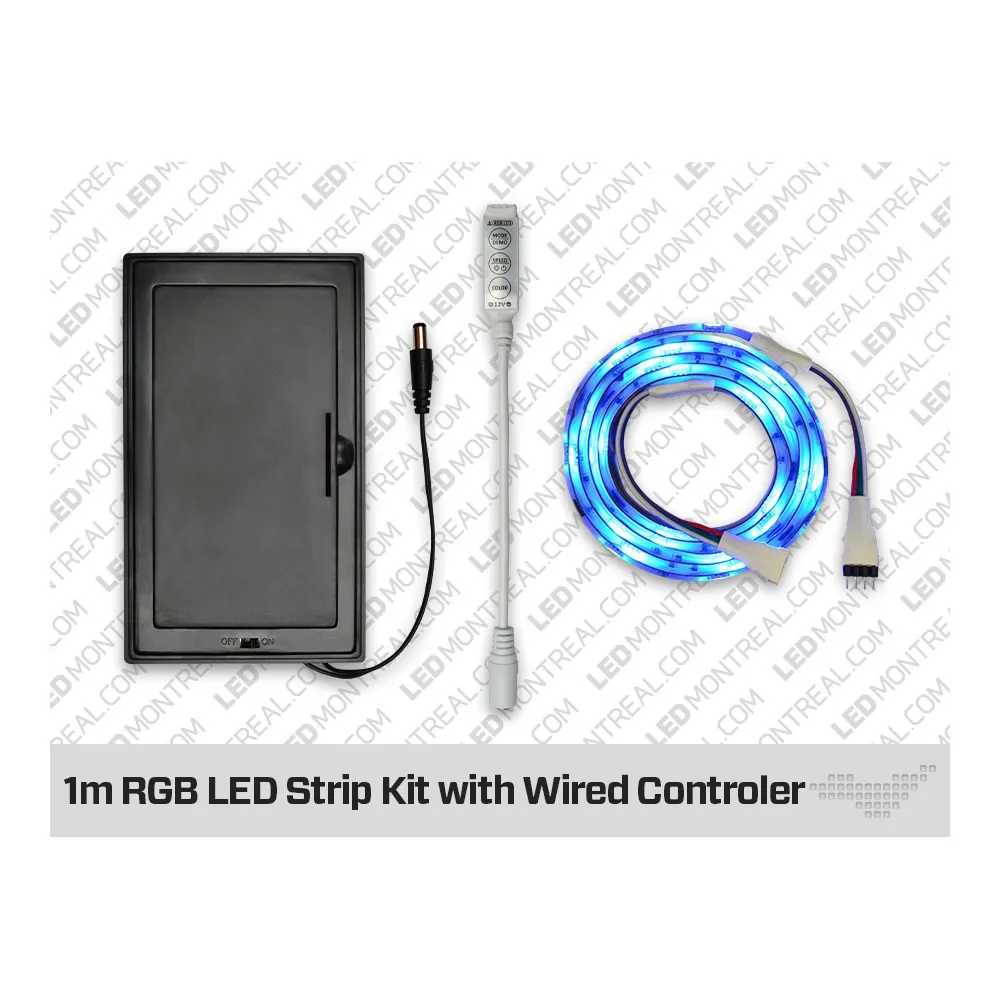
A kit pairs the strip with a matching power supply, controller and remote. The 5 m RGBW starter kit with a 3000 K white also comes in 10, 15 and 20 m, and RGB 5050 kits exist in IP20, IP65+ and IP67.
For a step-by-step method, read how to install LED strip lights, and compare COB, SMD, 12 V and 24 V in how to choose LED strip lights.
At home, colour strips shine behind a headboard, along a ceiling cove, behind a TV or a gaming desk, and under kitchen cabinets. Bedroom kits from 5 m to 20 m, with RF, IR or Wi-Fi control, make a full room perimeter easy; see more ideas for LED bedroom lighting. Pick RGBW when the strip must also light the room, plain RGB when it is purely decorative.
In commercial spaces, RGB and RGBW strips set the mood in bars and restaurants, highlight retail displays and outline signs and storefronts. Multi-zone kits let staff change each area separately.
An RGB strip mixes red, green and blue, and its white is only an approximation. An RGBW strip adds a dedicated white diode, so it gives true white light as well as colour.
Yes. Brightness is set through the RGB controller, with its remote or app, rather than a standard wall dimmer.
Yes, at the printed cut marks only. Join pieces or turn corners with connectors made for the strip's width and pin count. For small projects, 30 cm and 1 m RGB pieces avoid cutting a full roll.
From 7.2 W per metre for accent tape up to 19.2 or 23 W per metre for high-output RGBW strips. Multiply by the length and pick a power supply rated above the total.
Yes, with the right rating: IP65 resists splashes and humidity, IP67 suits exposed, weatherproof runs. Keep the controller and power supply dry and sheltered, and seal every cut end.
Compare the RGB and RGBW LED strips in this category by voltage, IP rating and length, then add a controller and a power supply. For white light only, see all indoor LED strips.








![LED 10MM COB TAPE LIGHT RGB 840 CHIPS/M IP20 [5 METER REEL]](https://www.lumibox.ca/storage/products/nx-10cob840-15w-rgb-ip20.jpg.webp)