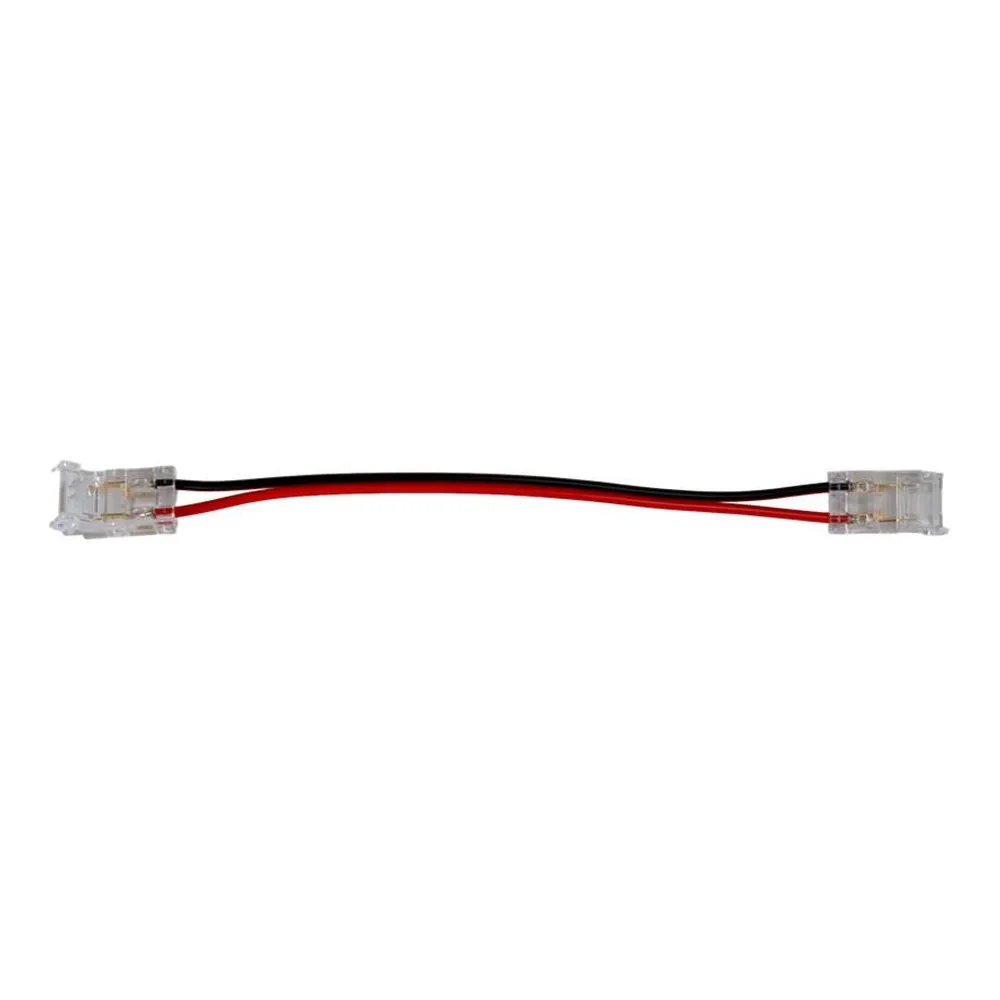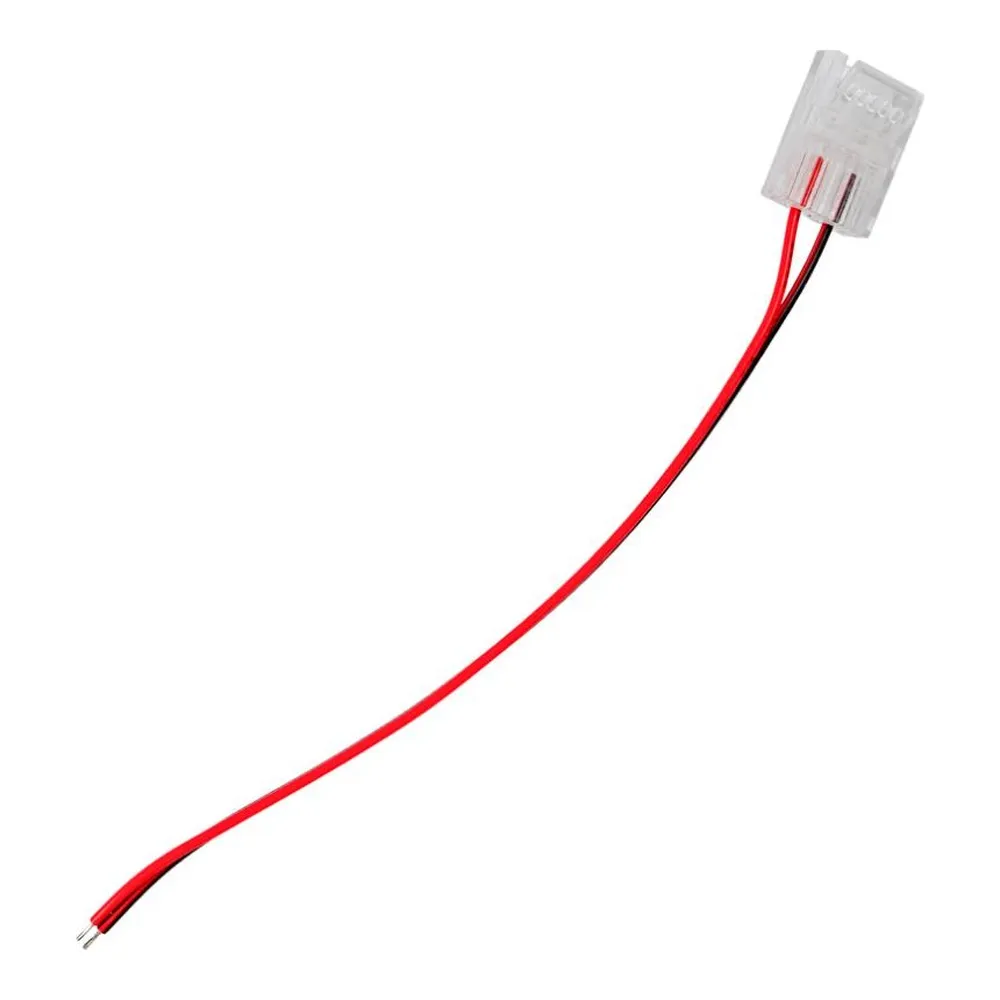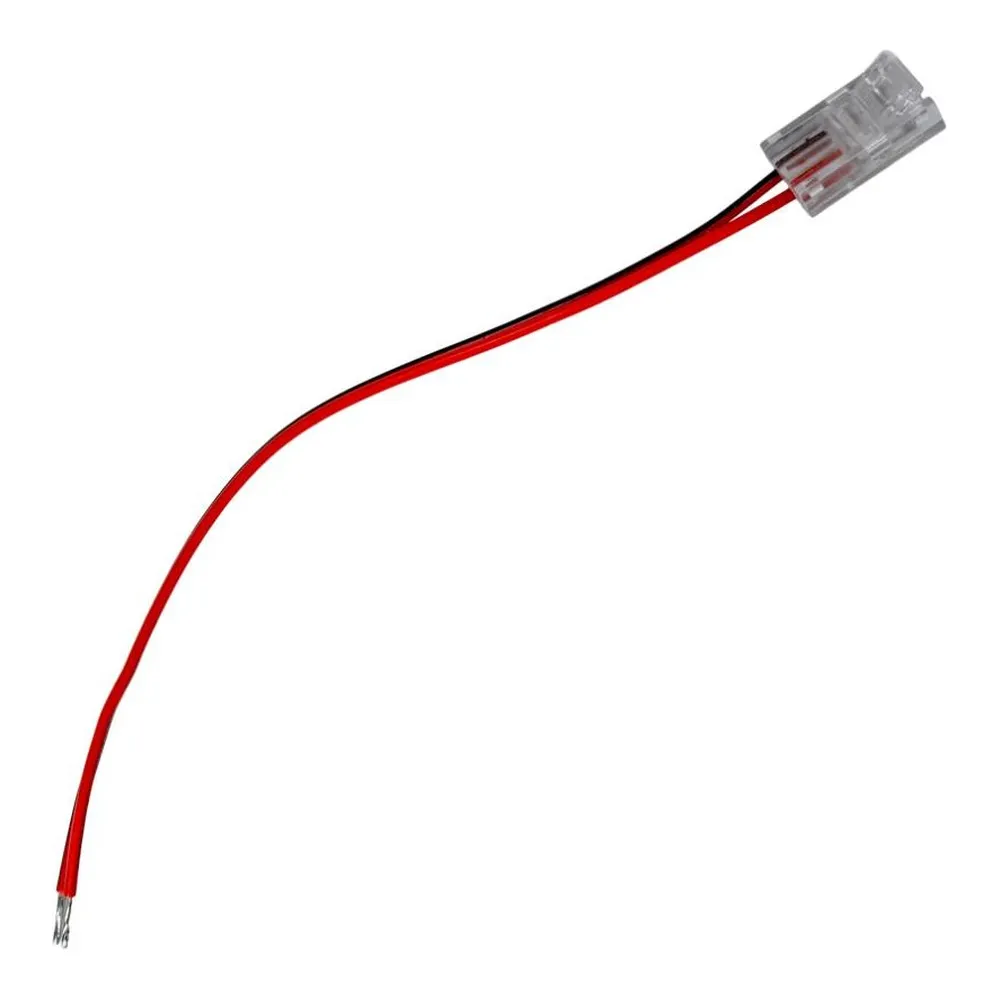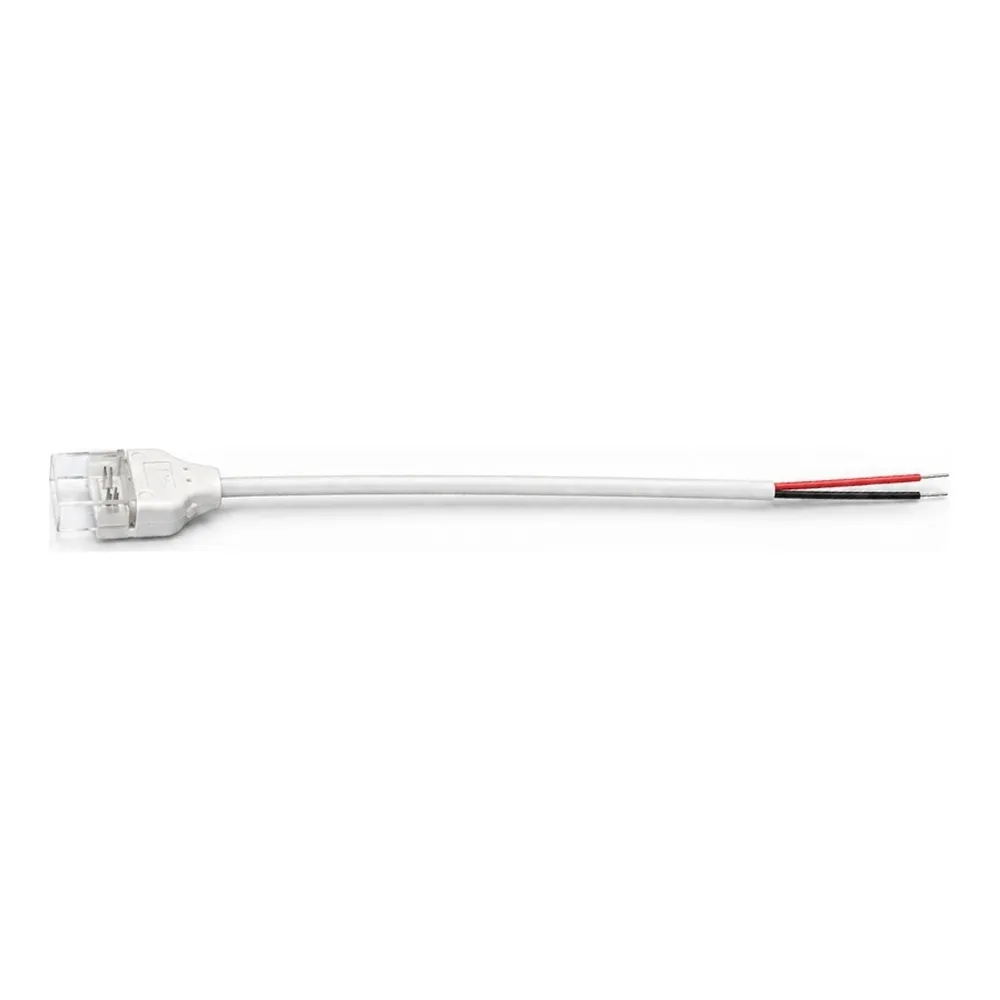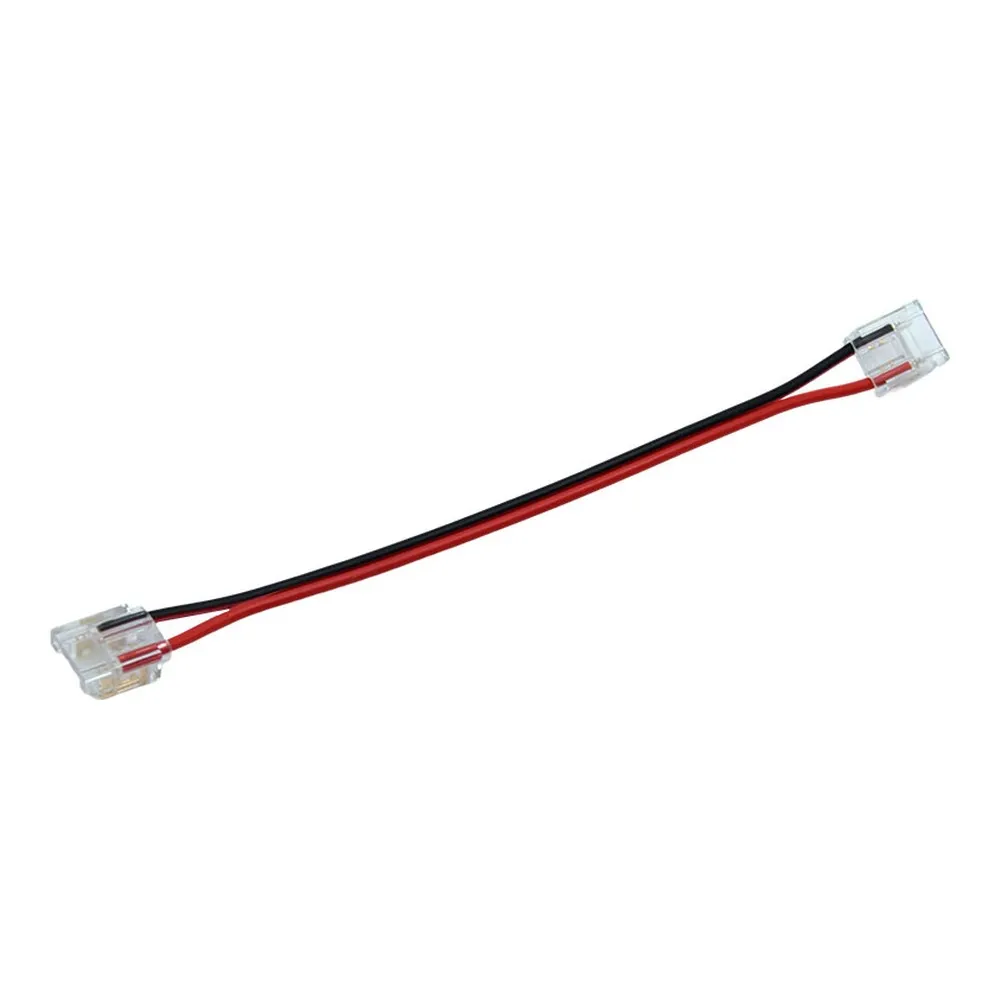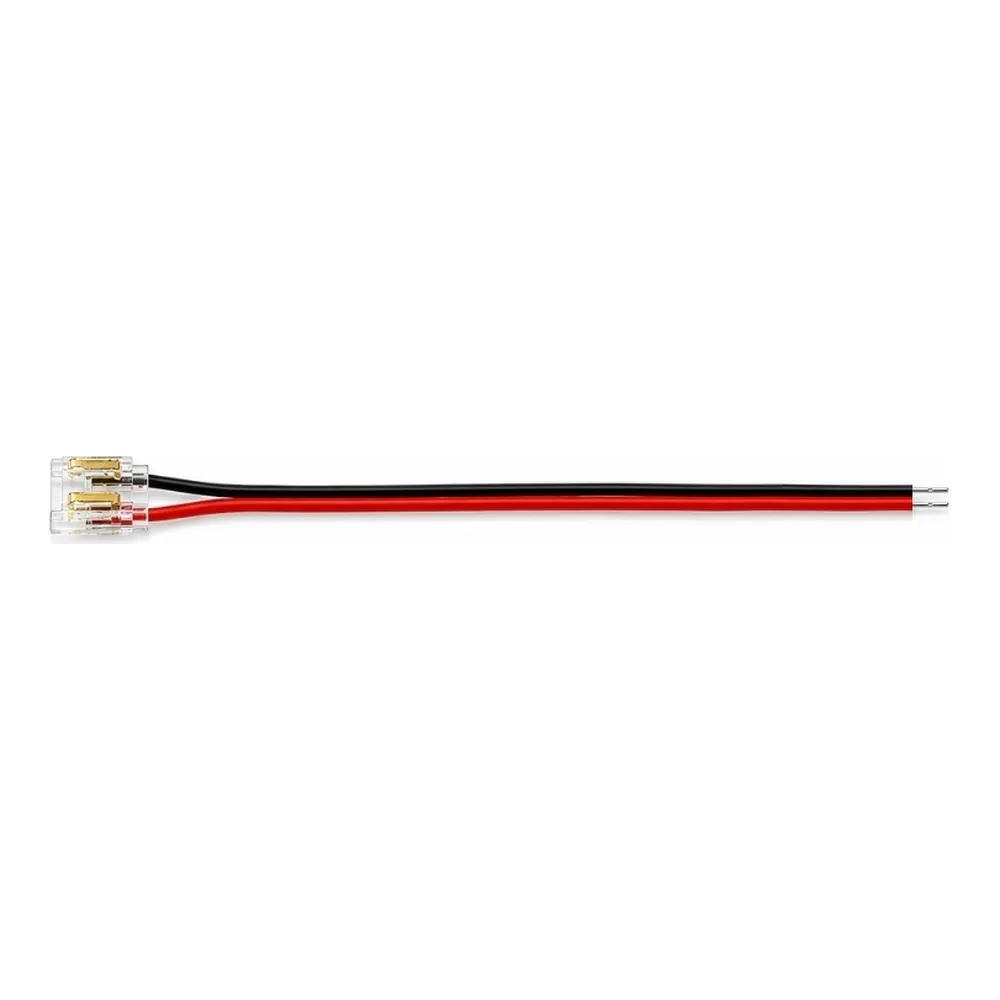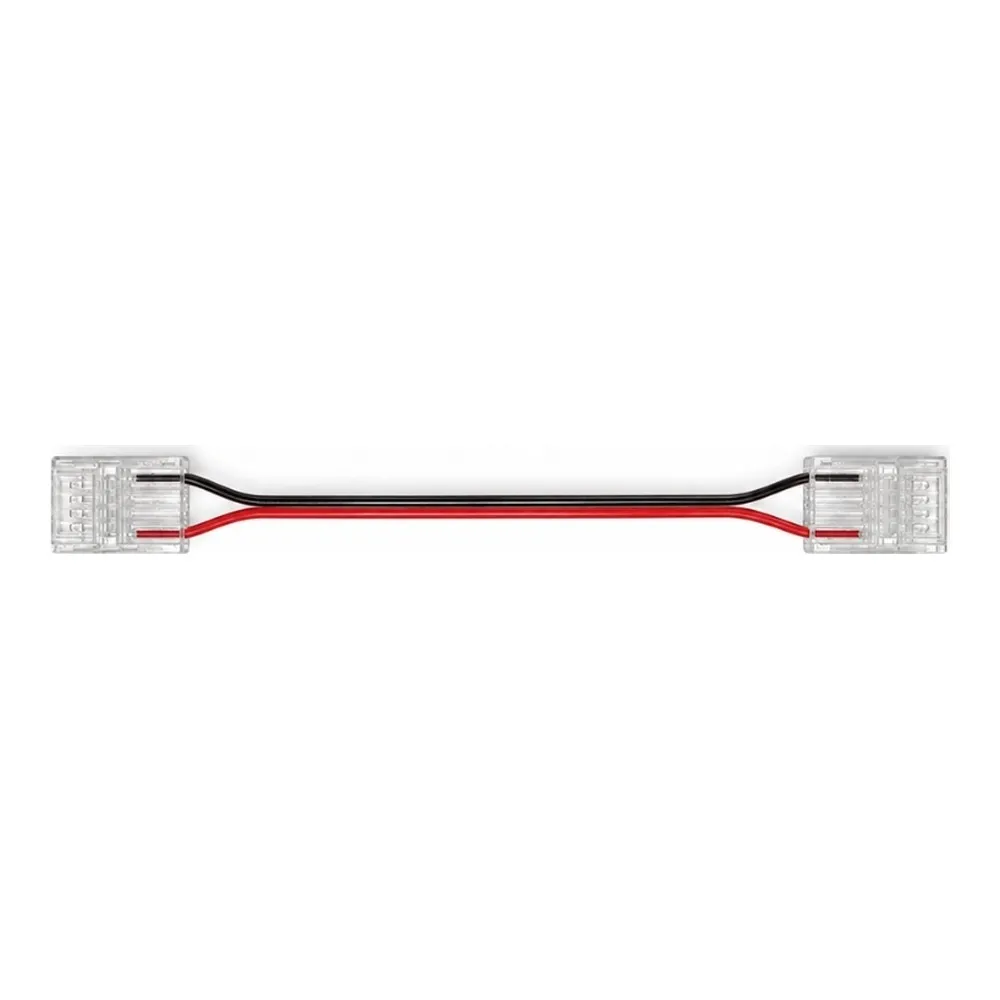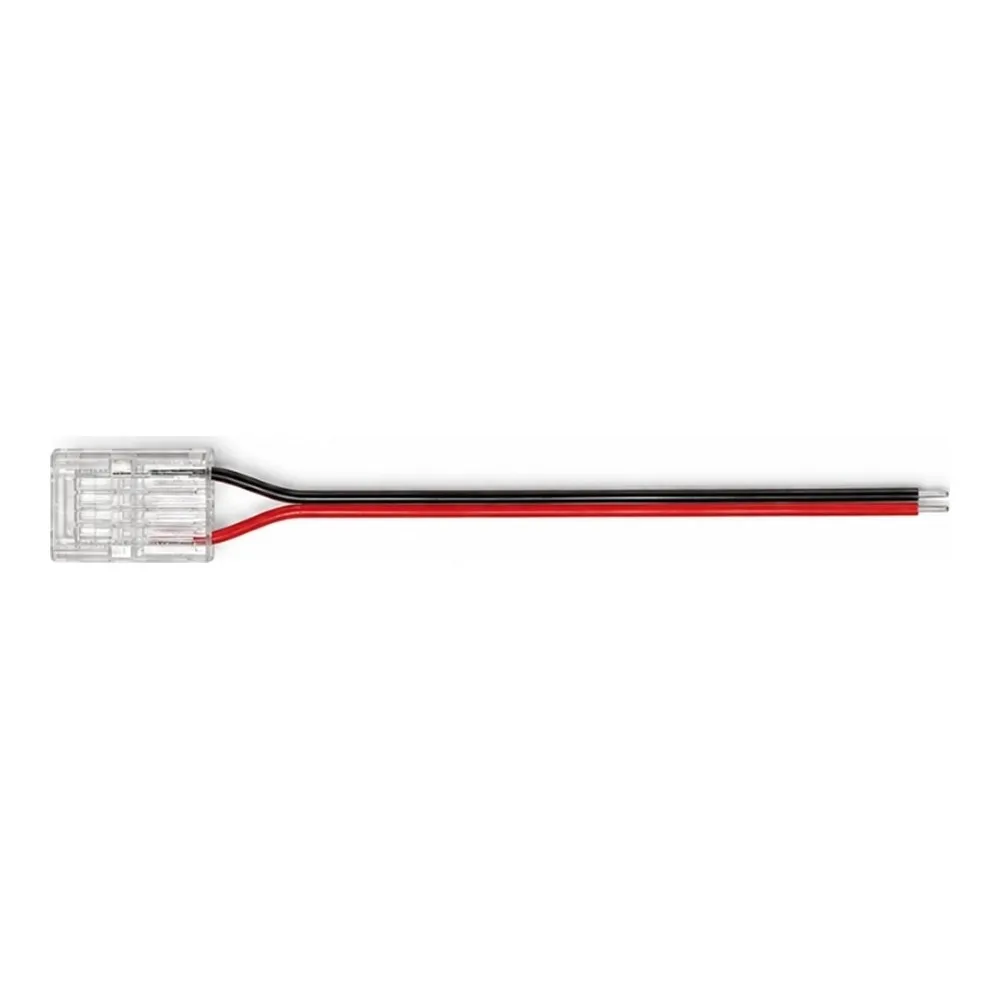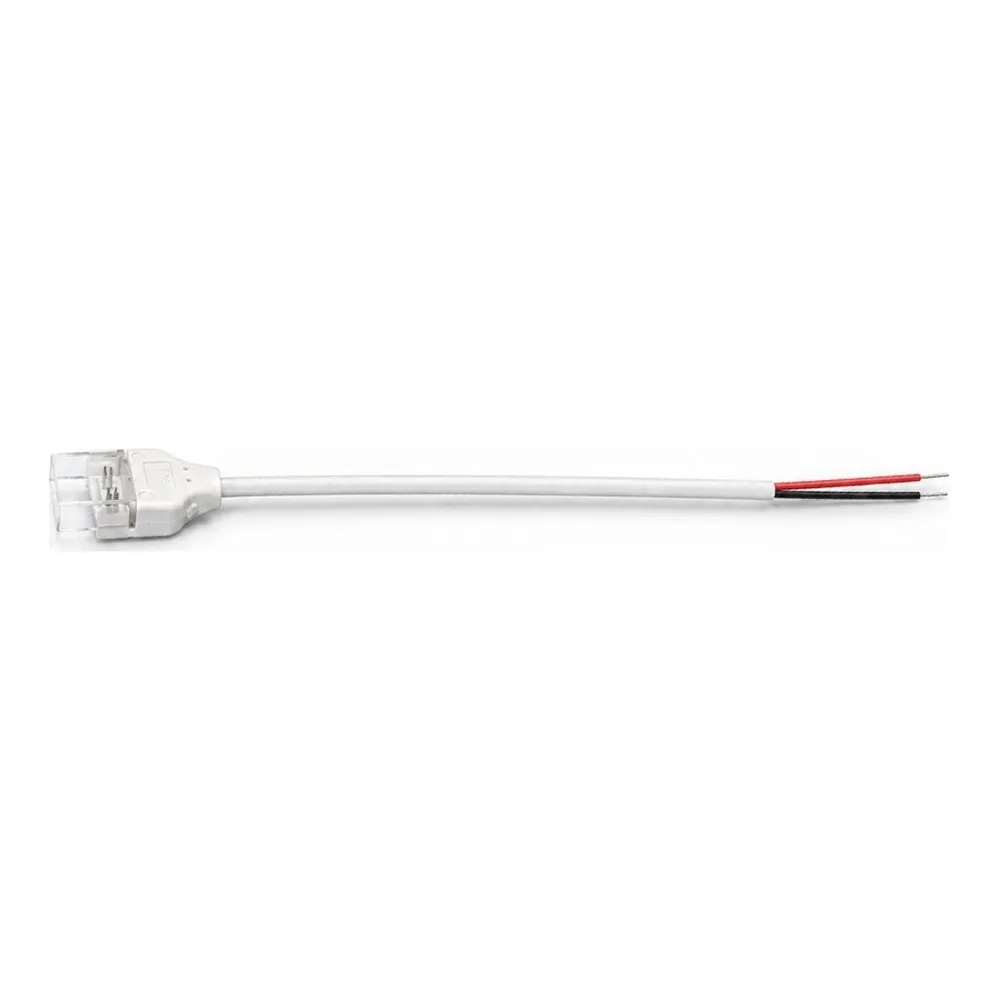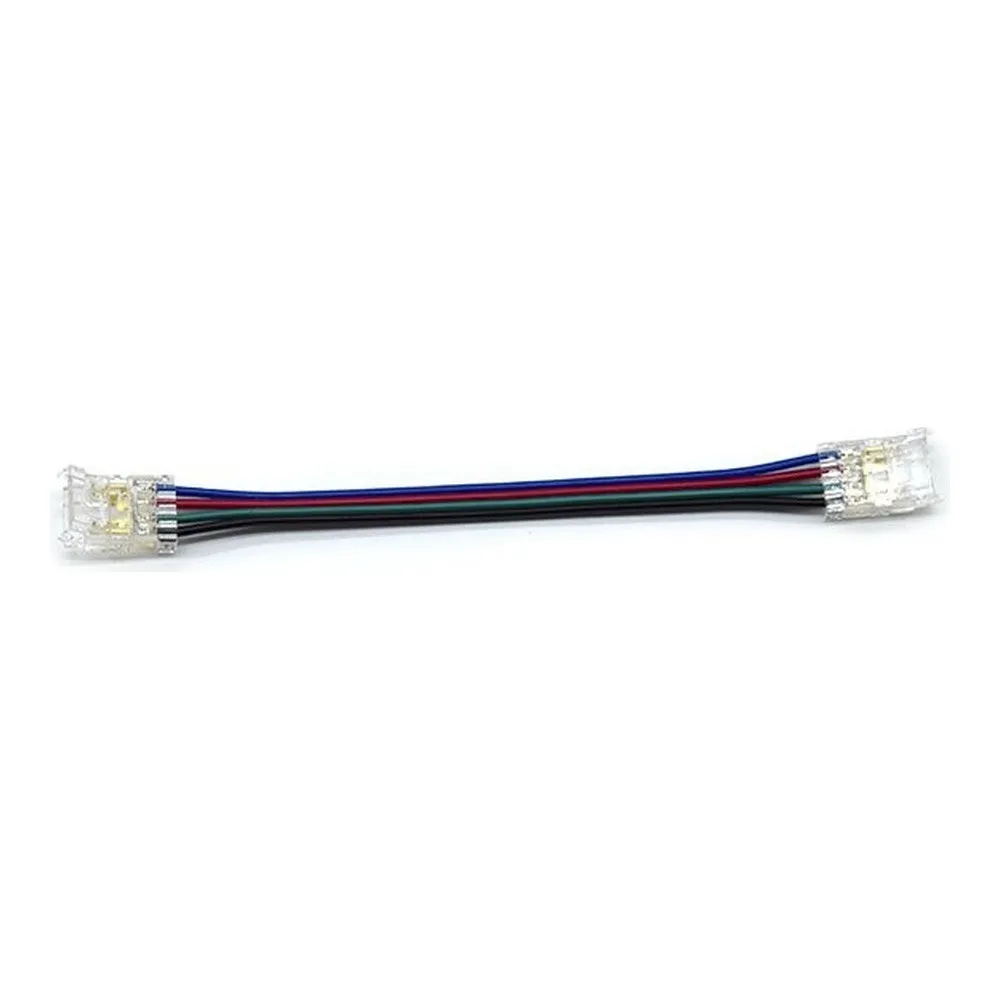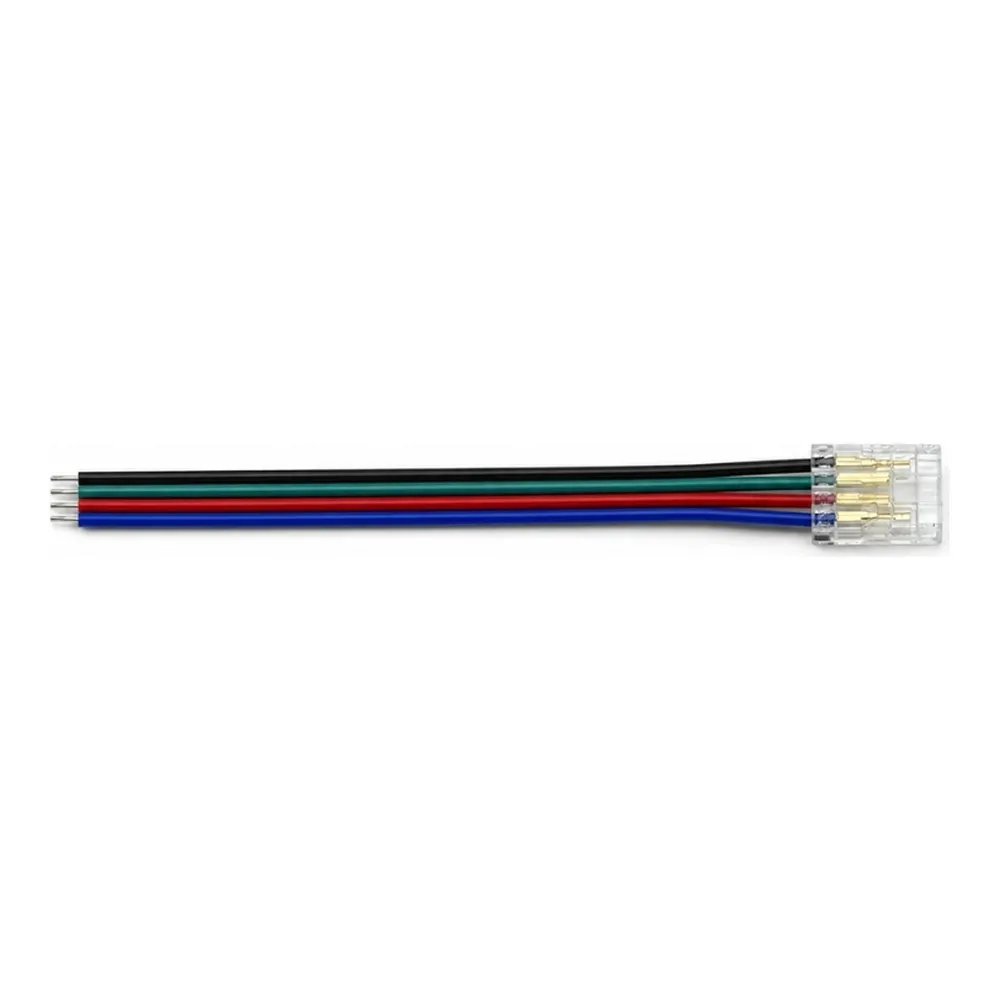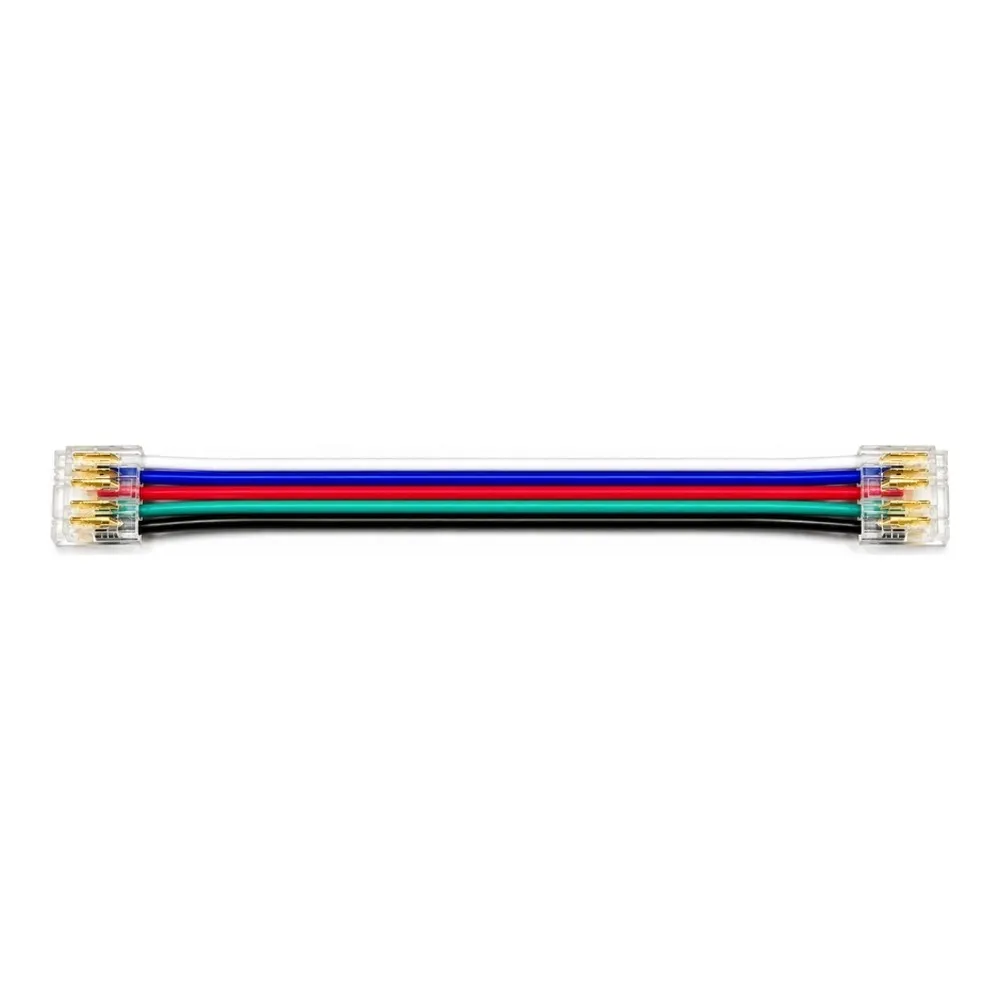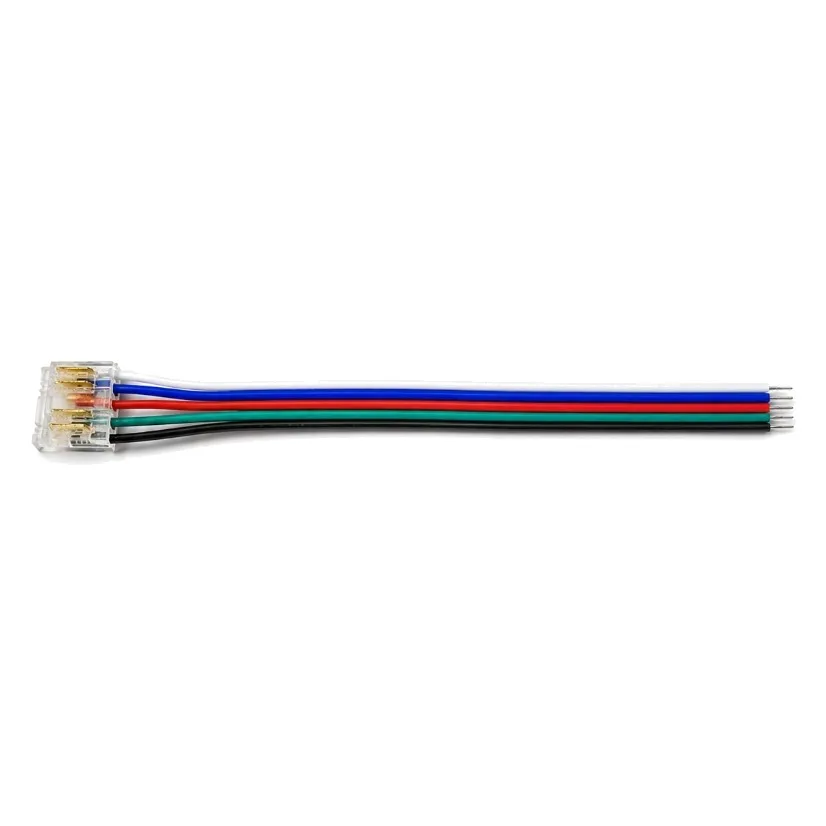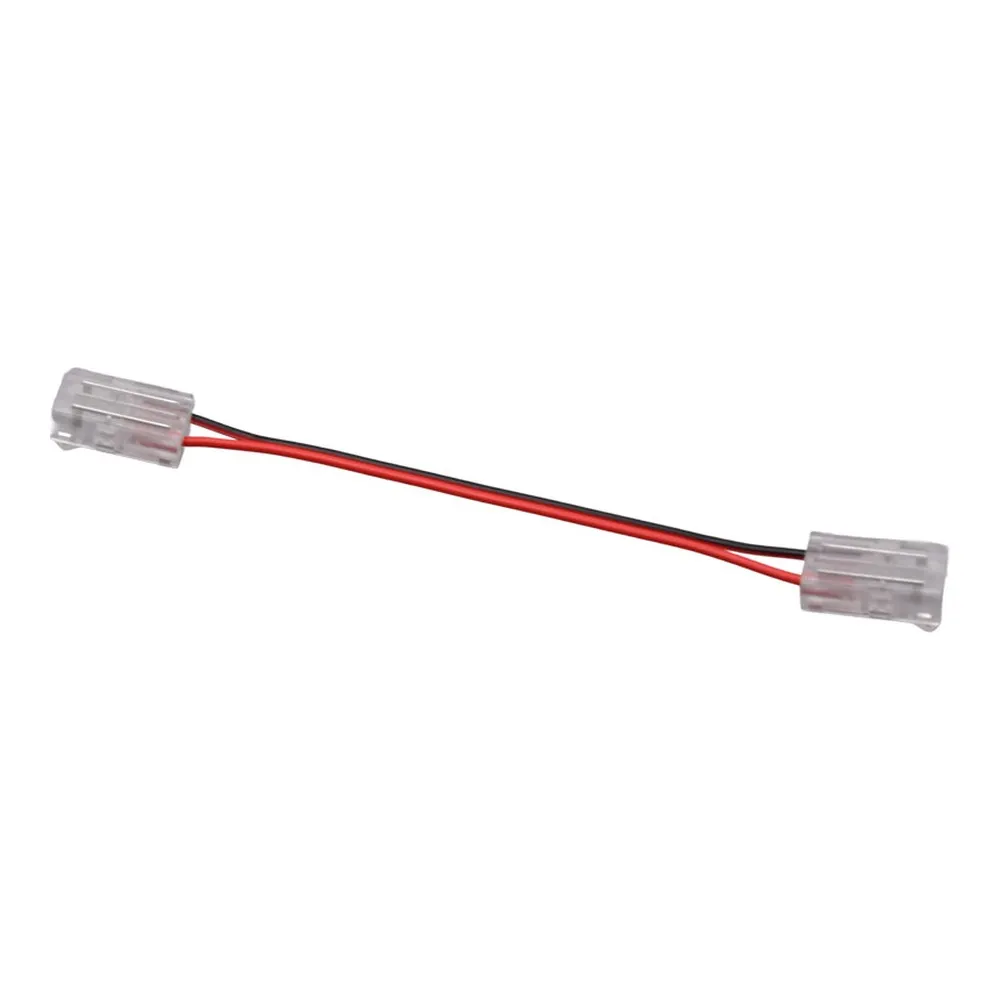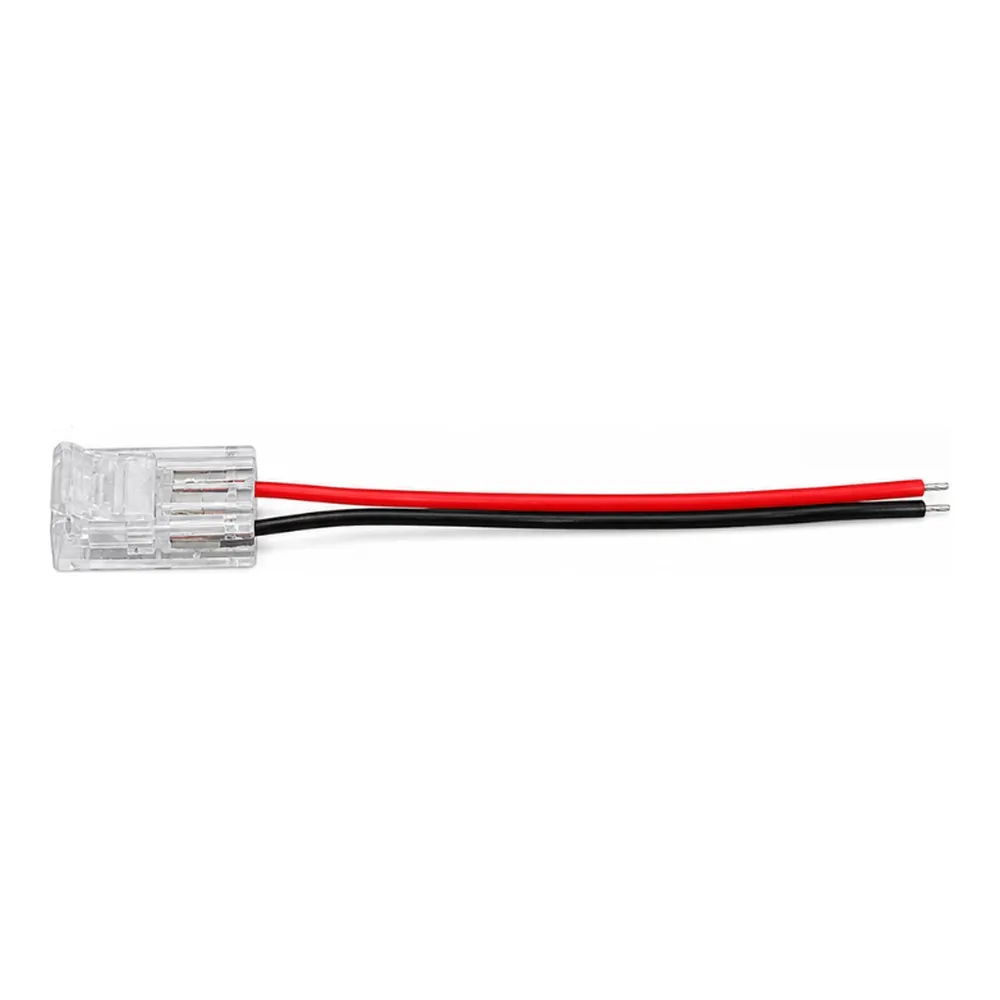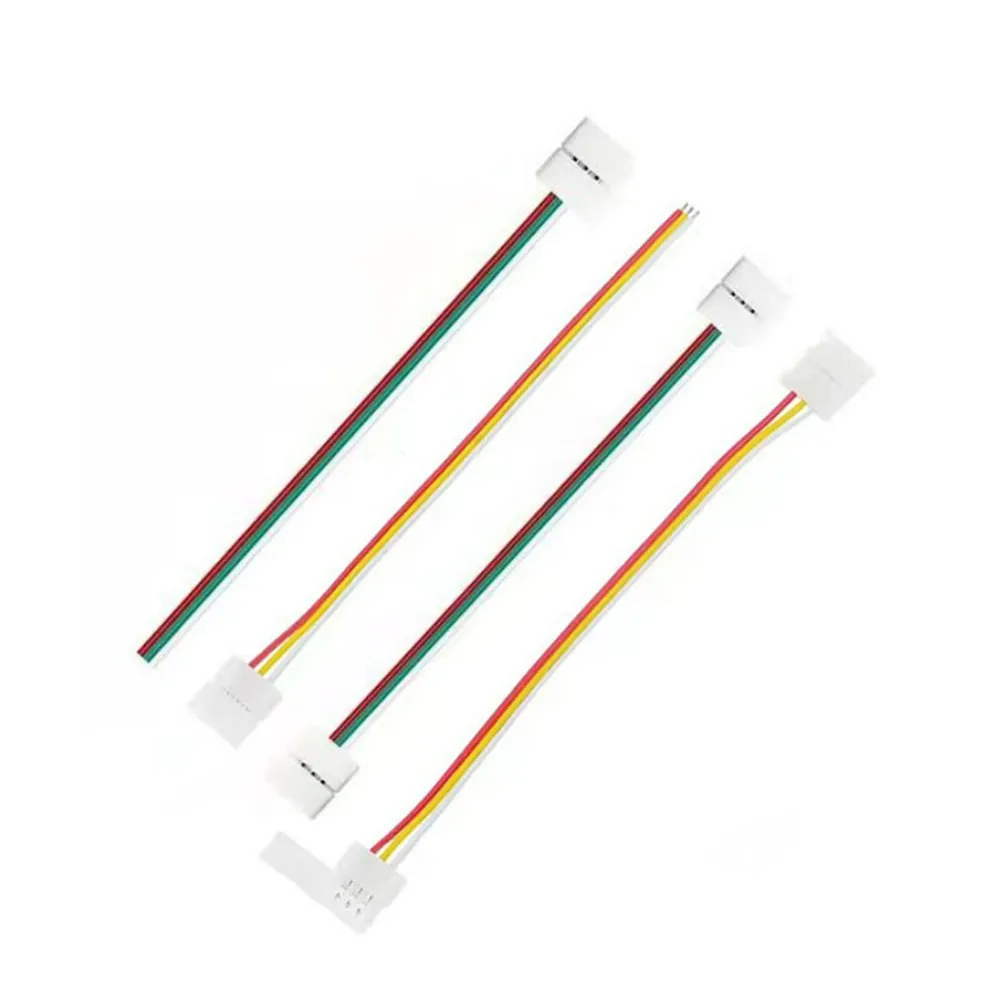
Connector wires and leads carry power and signal where an LED strip cannot go on its own: from the power supply to the first strip, from one cabinet to the next, across a doorway or around a wide corner. This category groups 43 connector wires, leads, extension wires and cords for single colour, RGB, RGBW, COB, SMD, SPI and CSP strips, plus waterproof extensions and supply cords for specific fixtures.
It is written for electricians, cabinet makers, sign installers and homeowners finishing a strip project. Below you will find the main types of leads, how to pick the right wire for the strip and the distance, practical wiring tips, and answers to the most common questions about extending an LED strip.
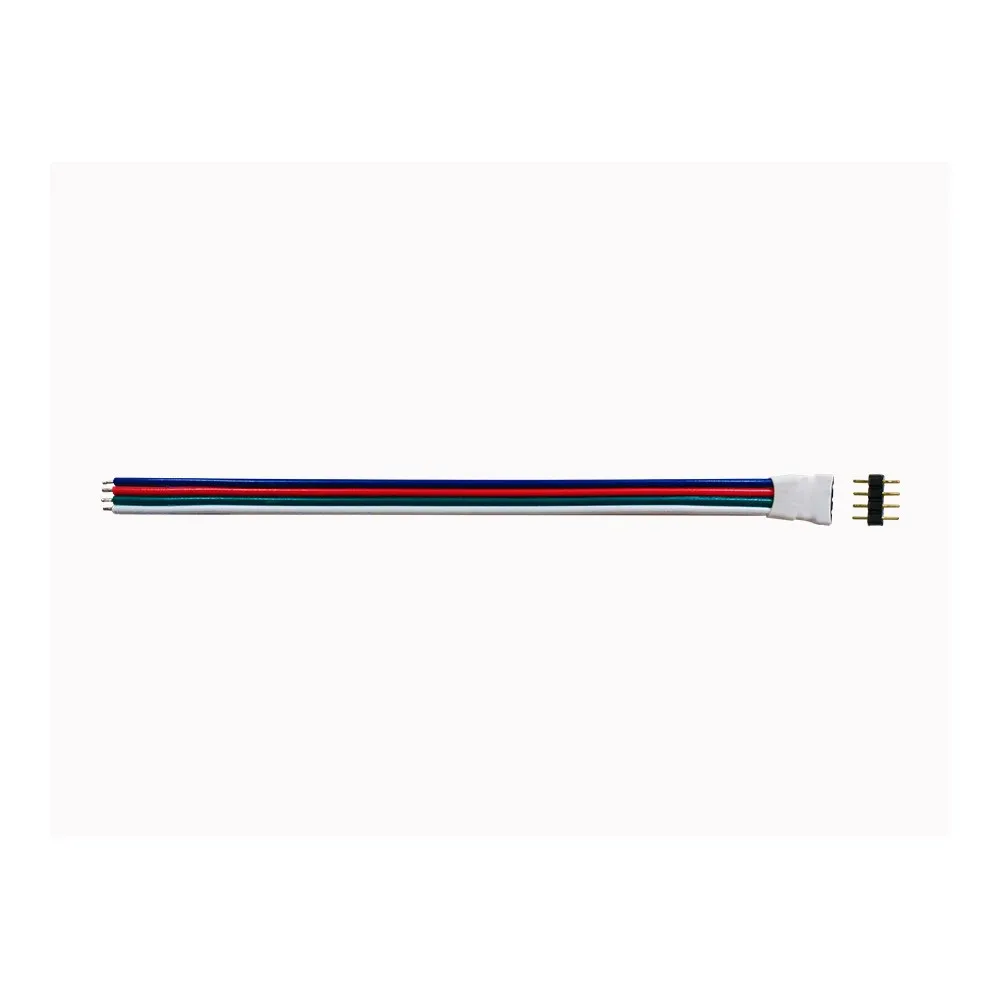
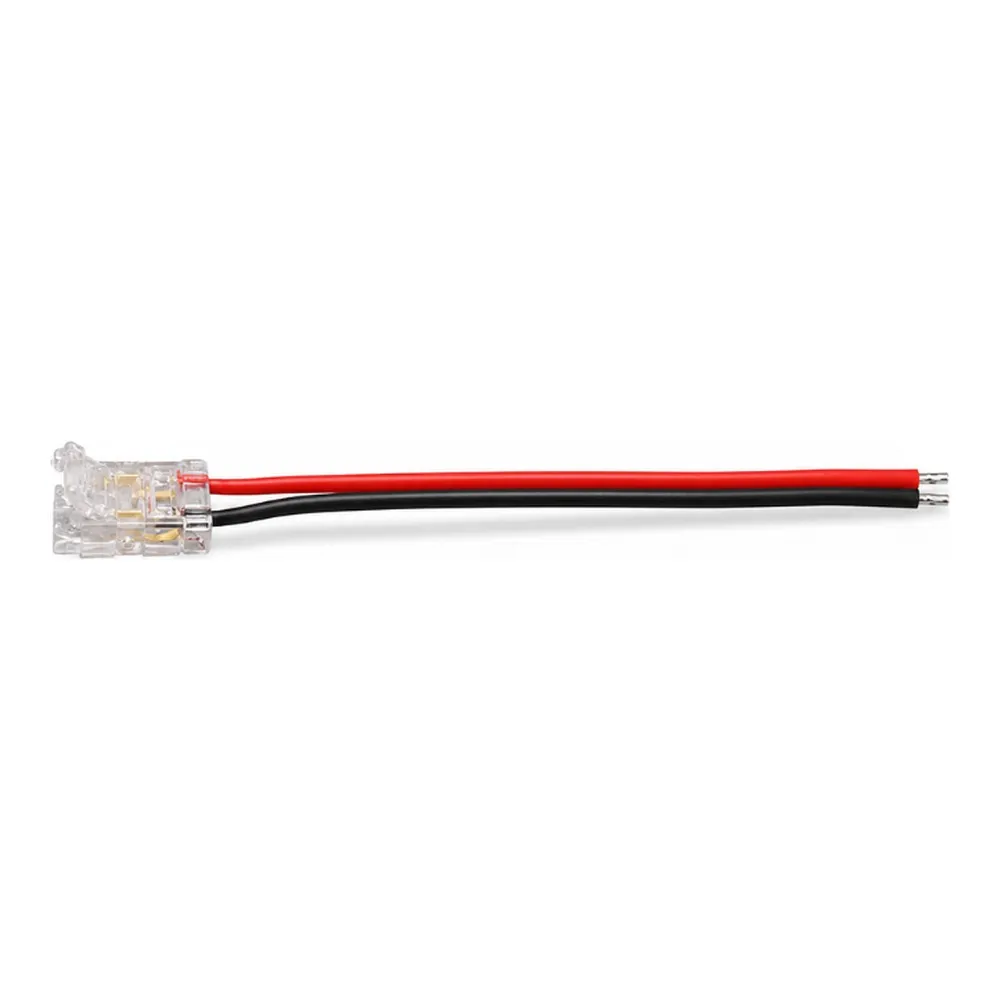
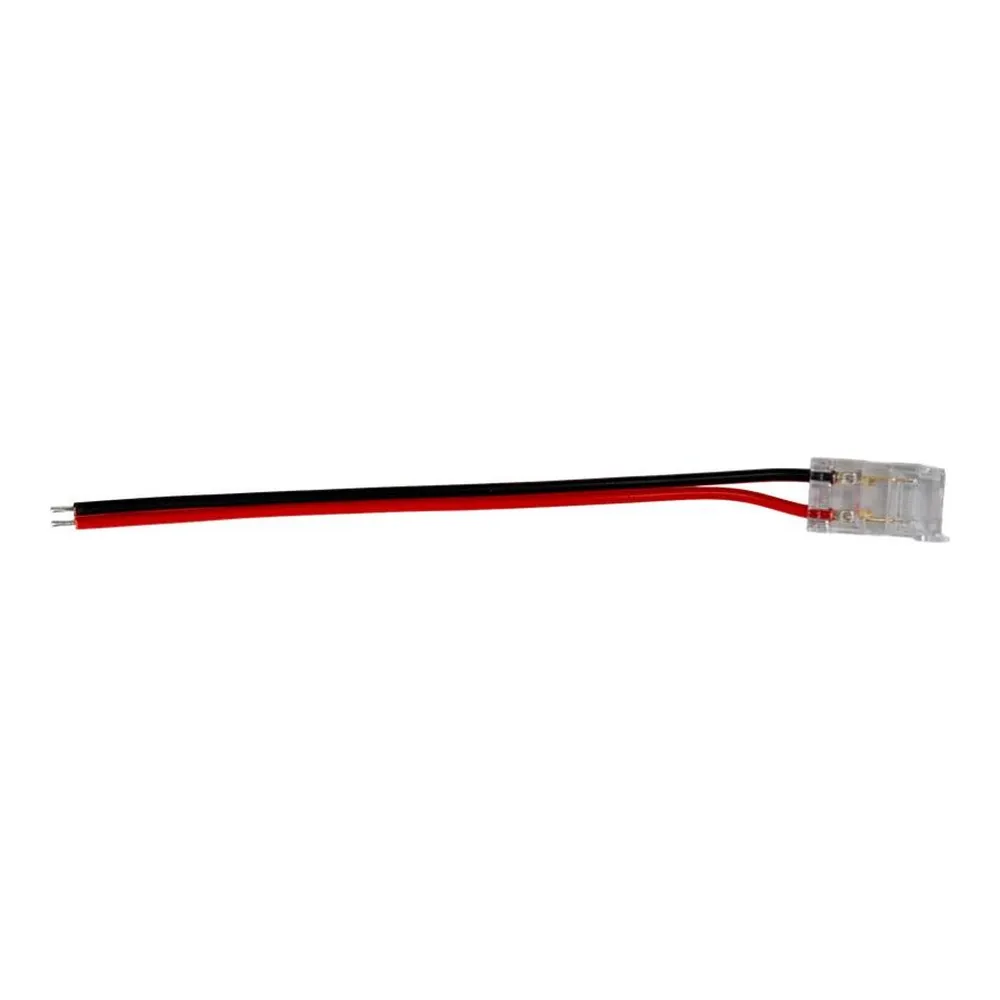
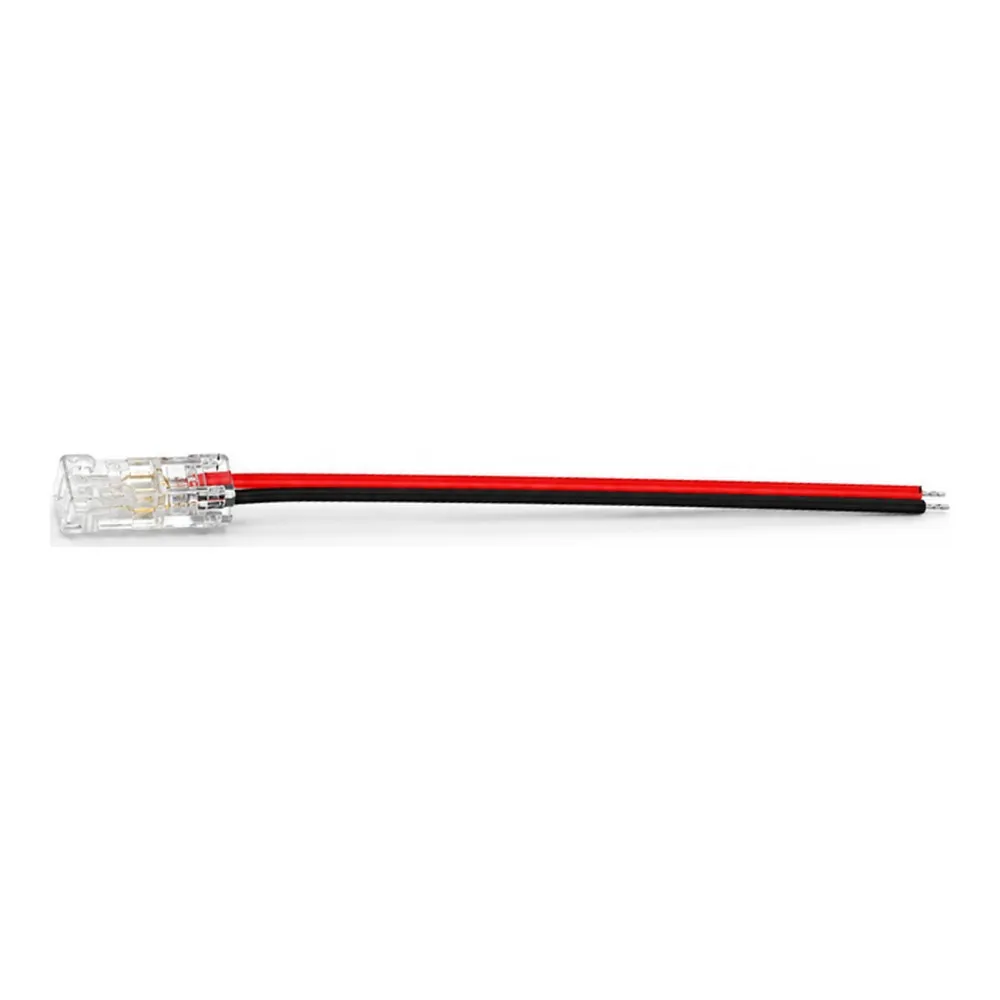
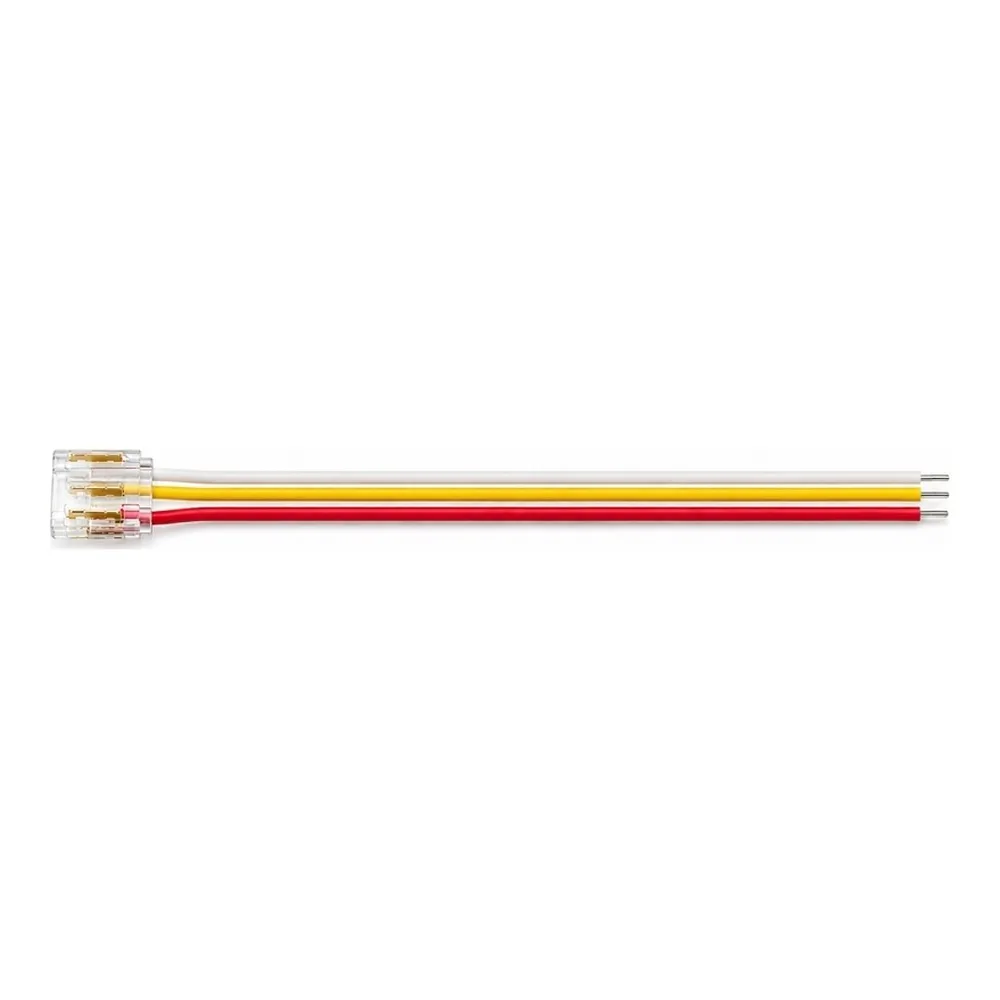
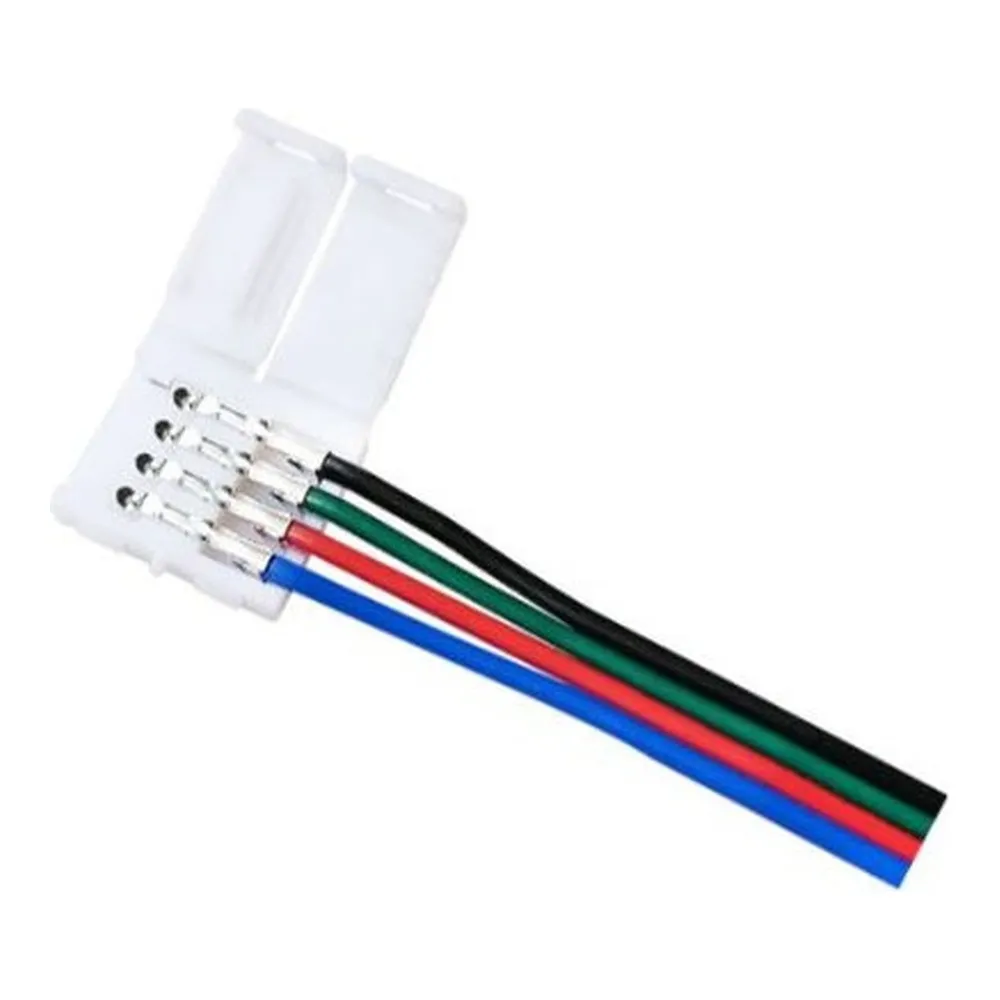
A wire-to-PCB connector clips onto the pads at the start of a strip and gives you a ready-made lead to run to the power supply or controller, with no soldering. Versions exist for mini COB 5 mm, COB 8 mm, COB RGB 10 mm, COB RGBW 12 mm, SPI 12 mm and SMD 12 mm strips. The 8 mm COB wire-to-PCB connector is a typical example. For damp locations, IP65 COB leads and IP67 CSP leads are also listed, the latter rated for a maximum current of 6A.
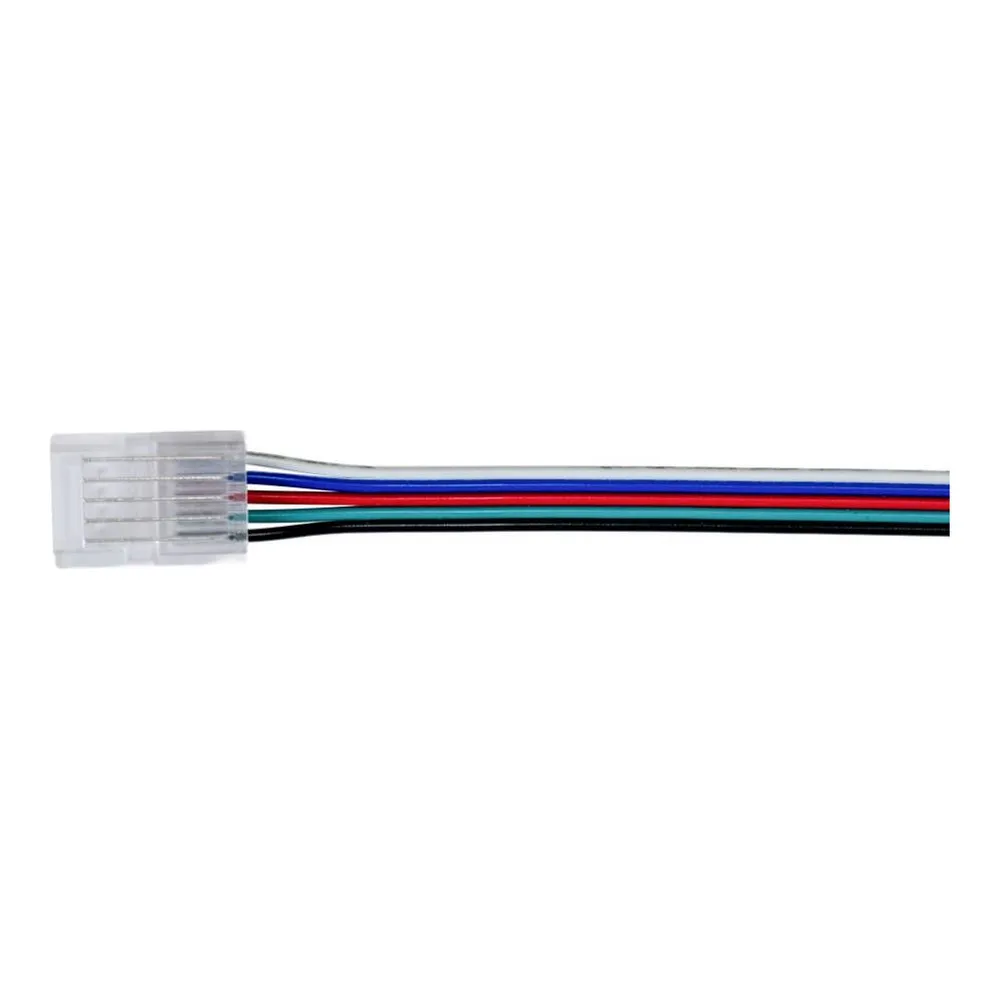
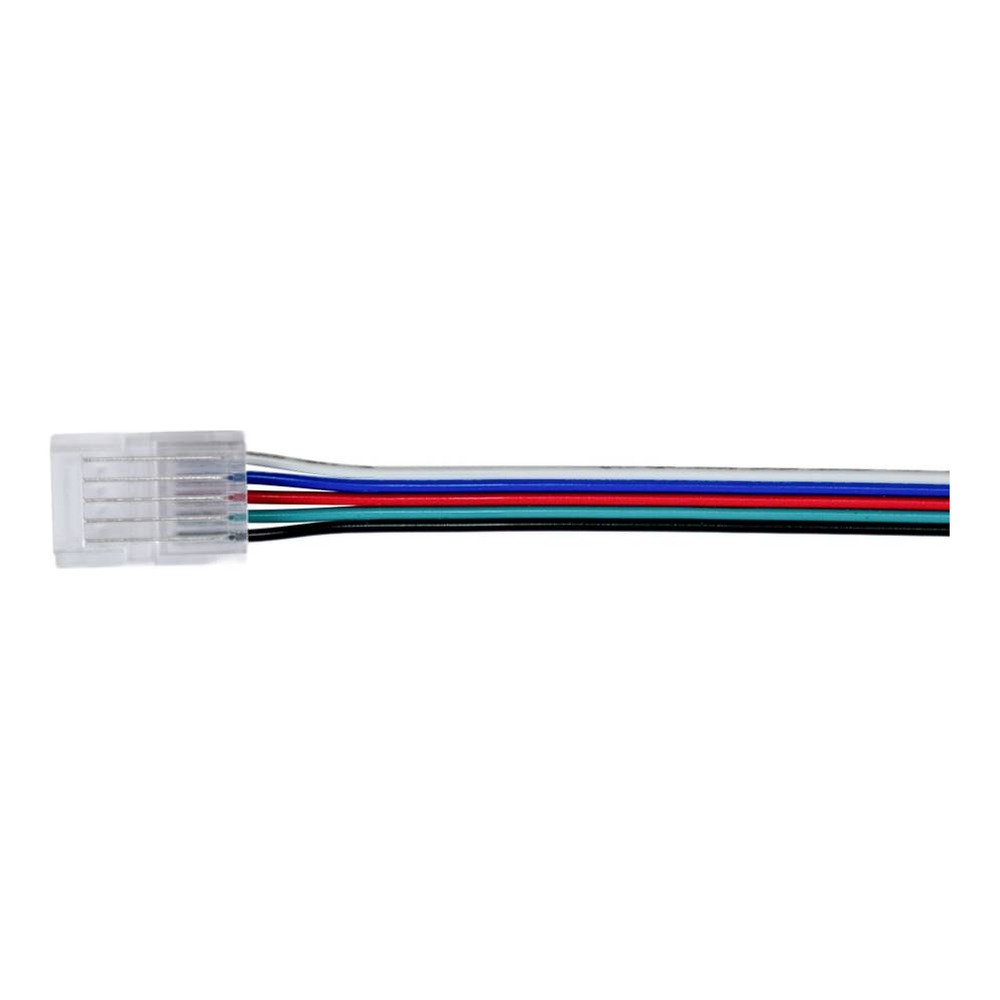
Strip-to-wire connectors do the same job for SMD and COB strips with a clip format. Single colour versions for 3528, 5050 and COB strips have 2 wires; the RGBW strip-to-wire connector has 5 independent wires, one for each colour channel plus the common. A double ended connector with wire lead also serves 3528 strips with 60 or 120 LEDs per metre.
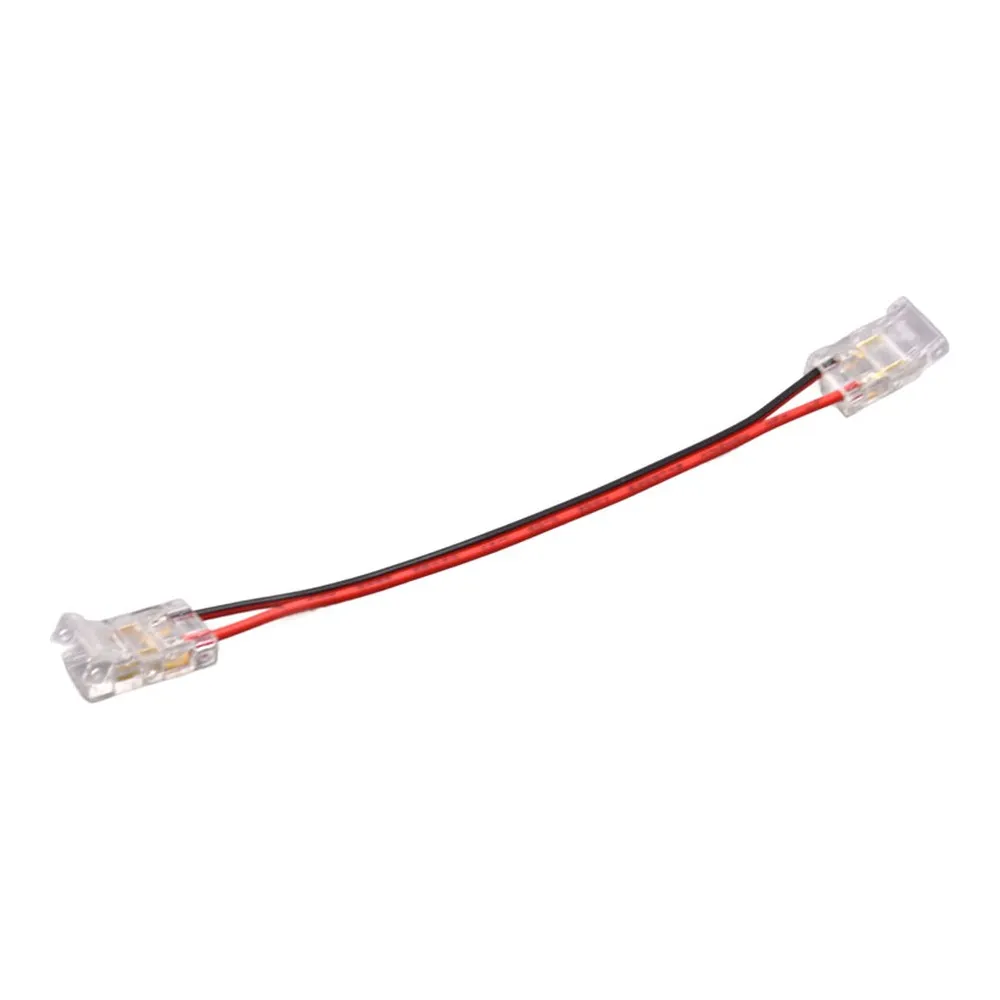
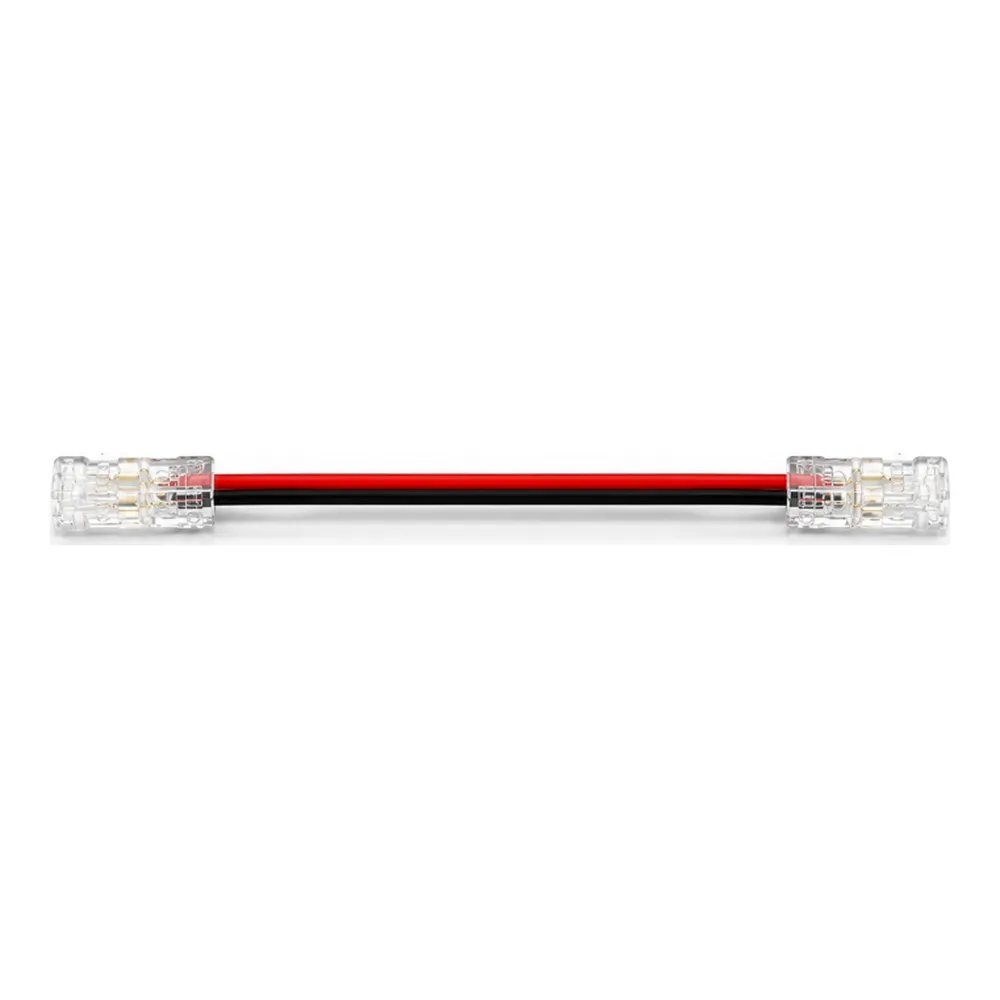
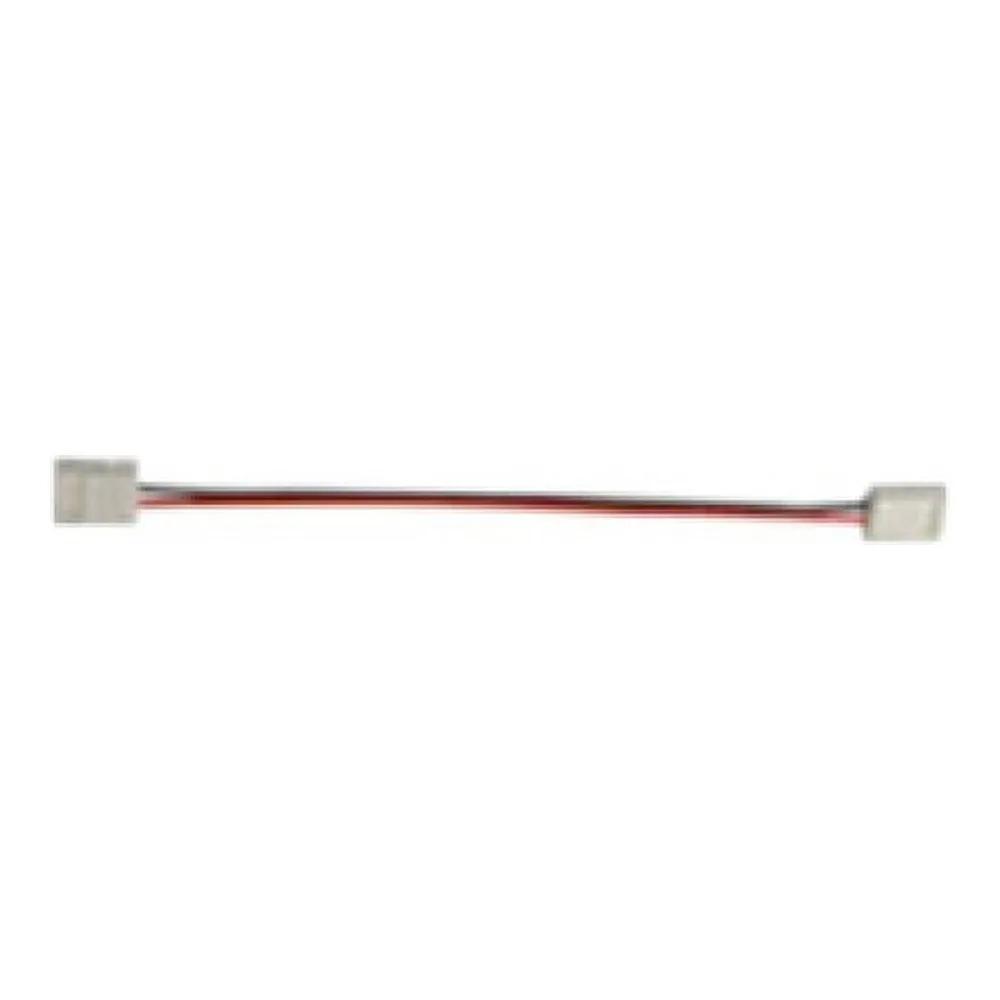
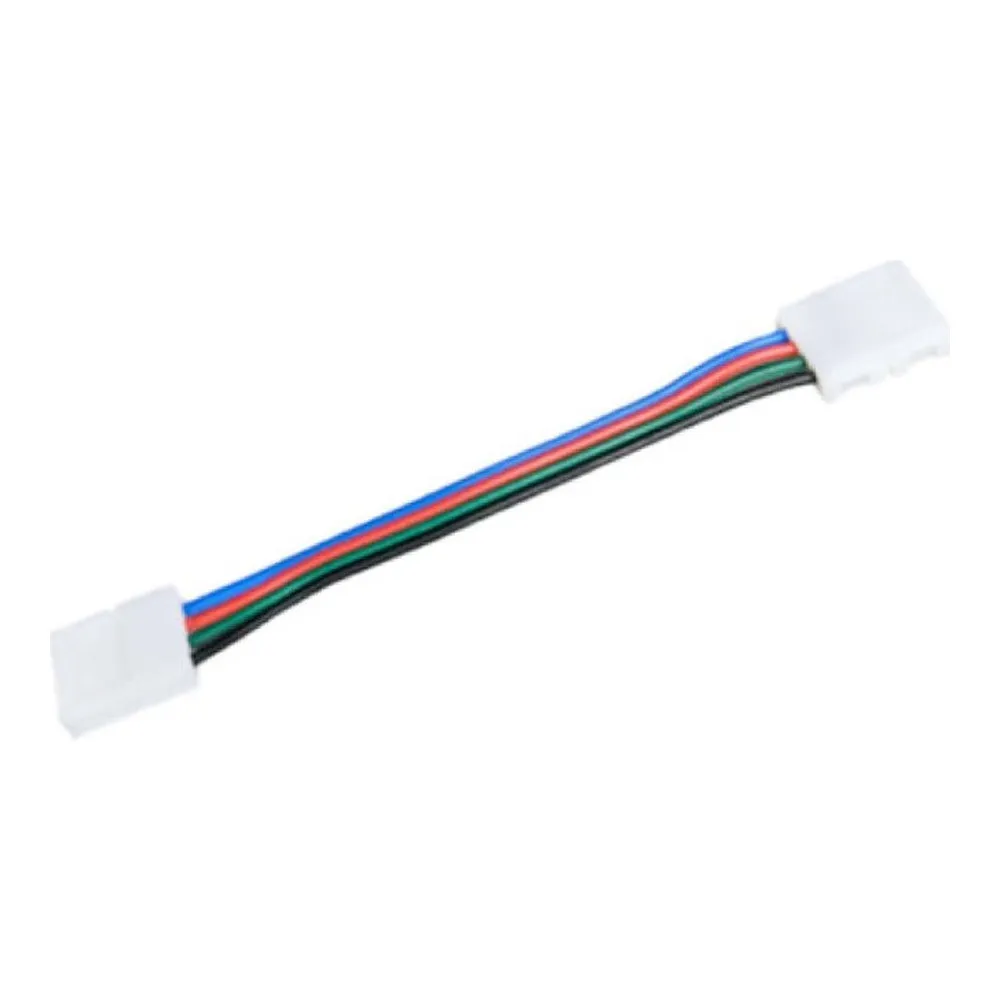
When two strip sections are separated, a PCB-to-PCB connector with wire bridges the gap while keeping the run on the same circuit. It is the usual solution between two upper cabinets, around a range hood or across the top of a window. Jumpers are available for SMD 12 mm, COB 5 mm and 8 mm, COB RGB 10 mm, COB RGBW 12 mm and CSP 10 mm strips.
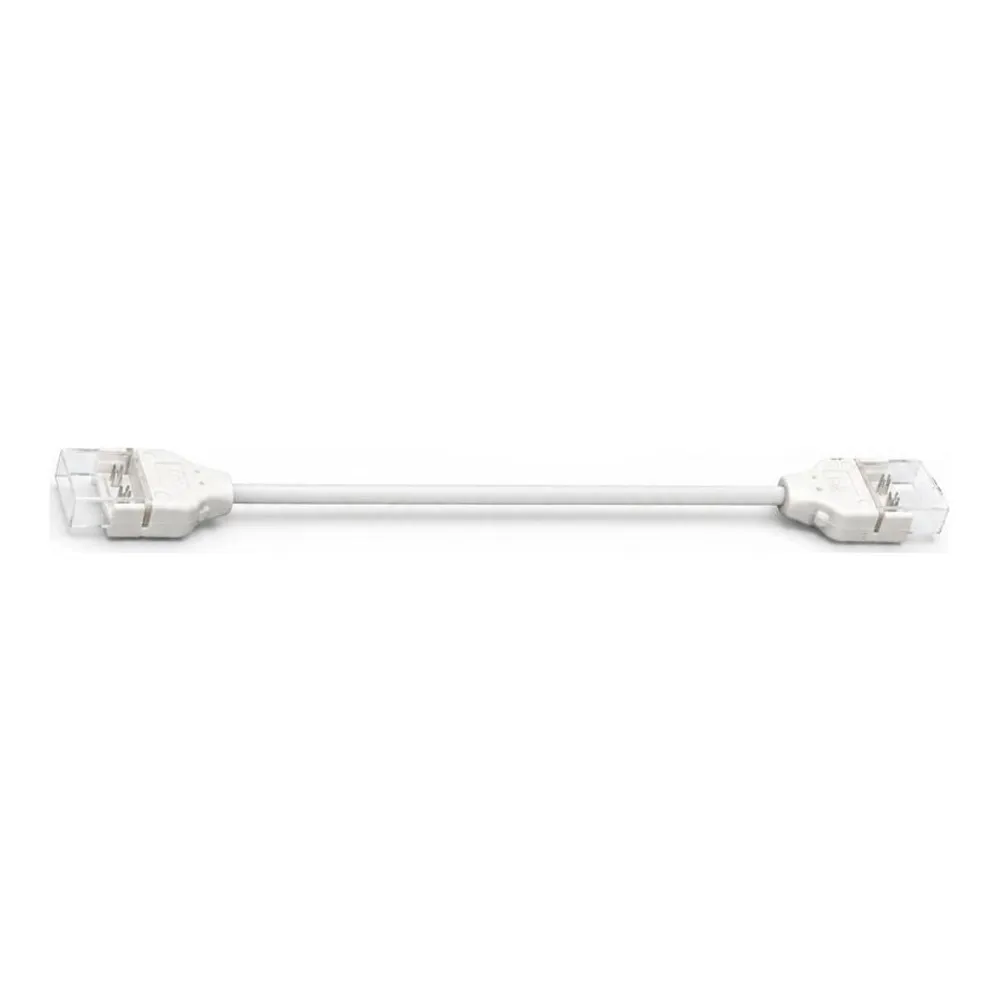
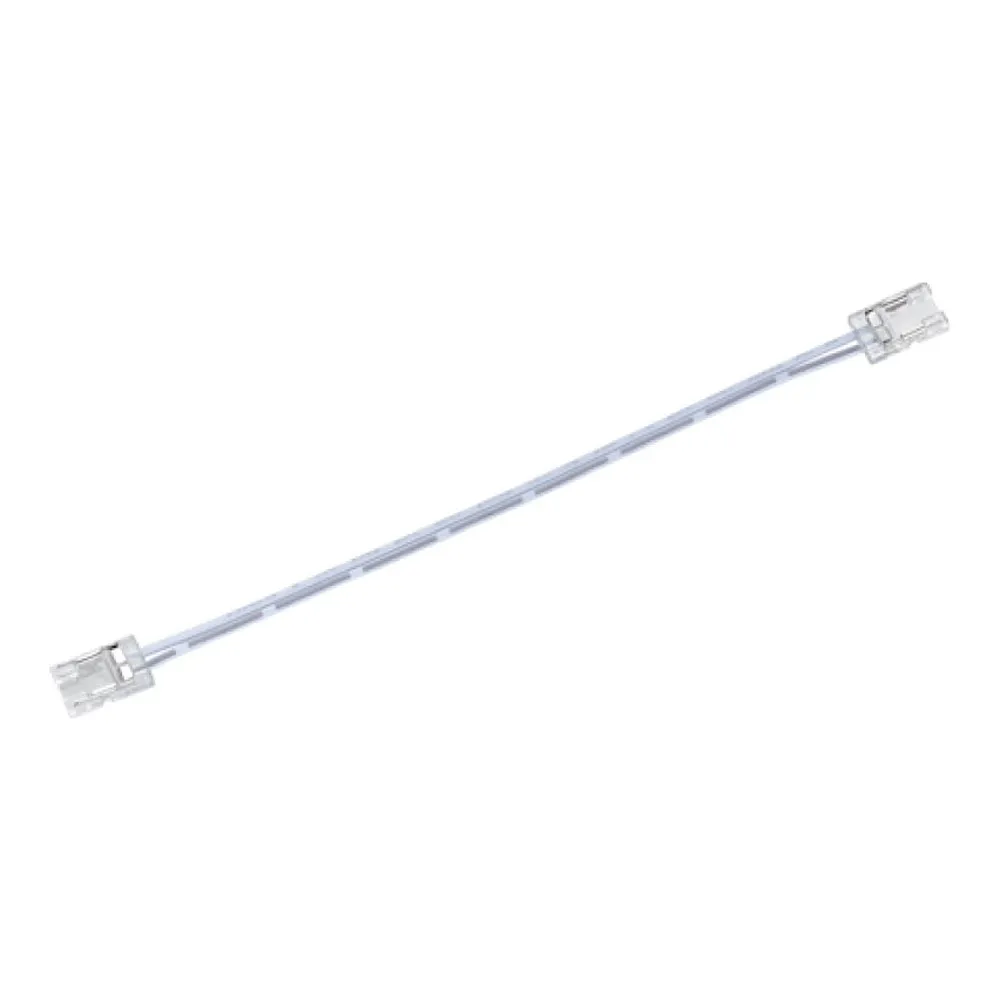
Some strips have their own leads. One-side and double-sided connectors with a 15 cm wire are made for the SL-25M, SL-RGB25M and SLS5 strips, a supply cord is made for the SL-50M, and the 6 in linkable extension wire joins sections of the SLS under cabinet strip. They fit perfectly, but only with their own series.
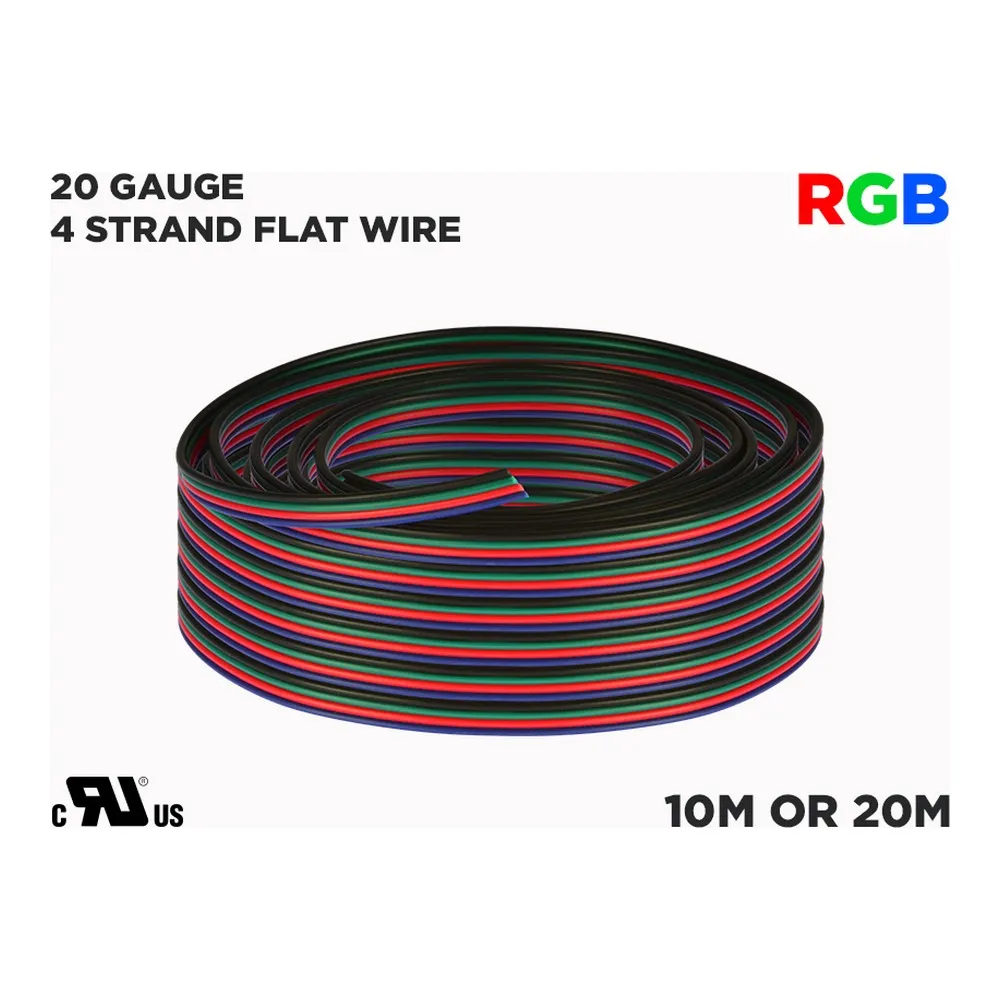
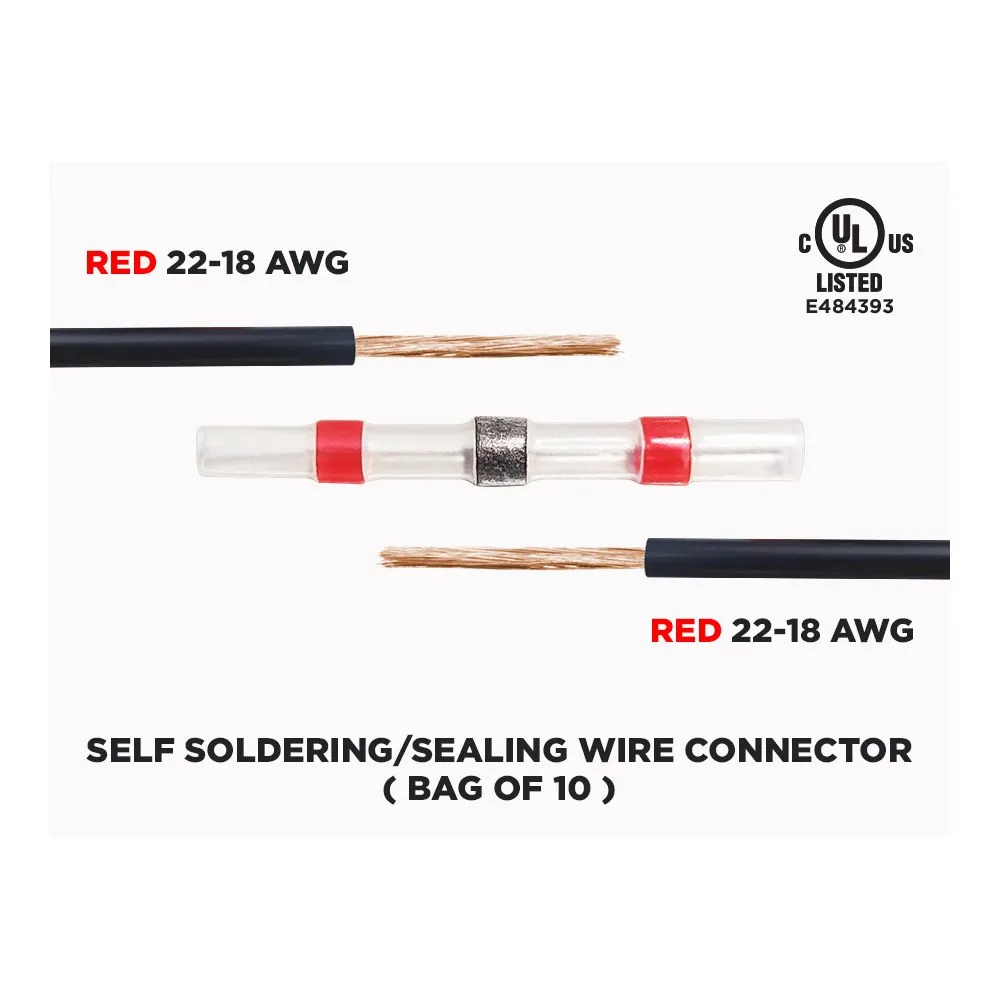
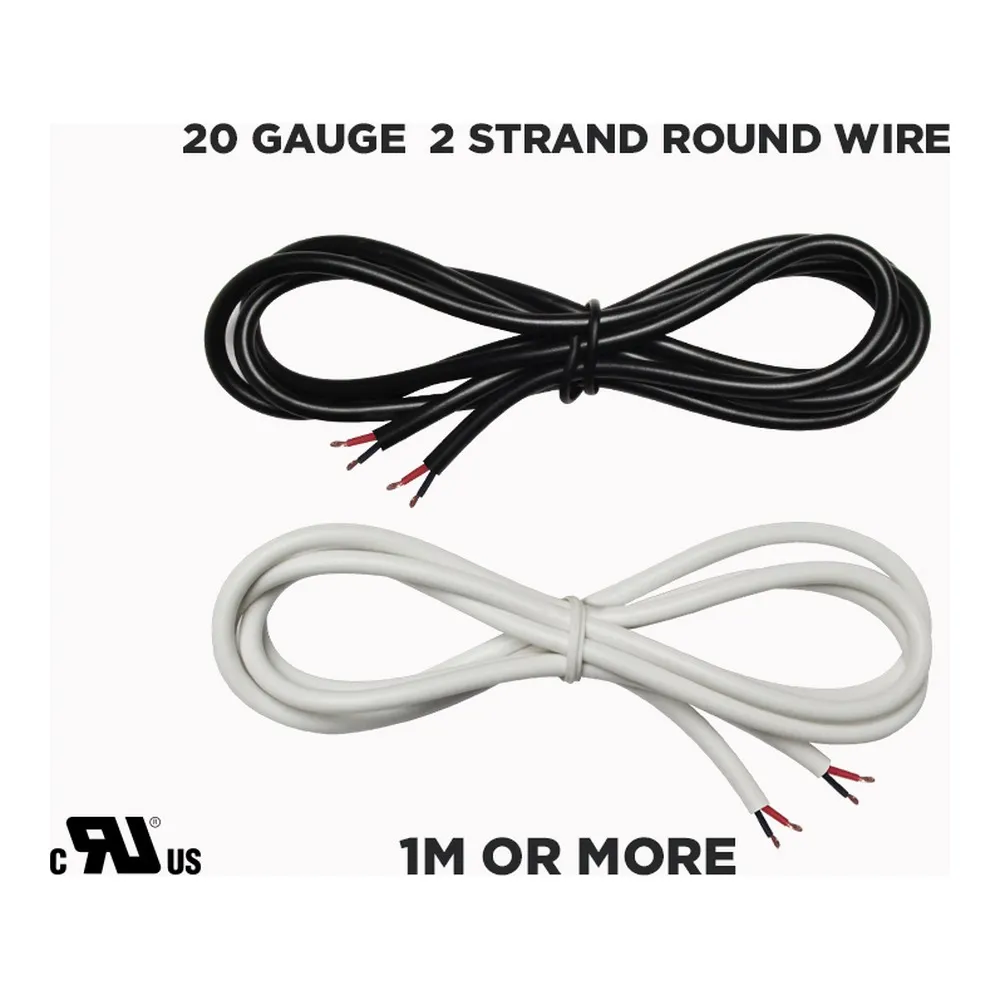
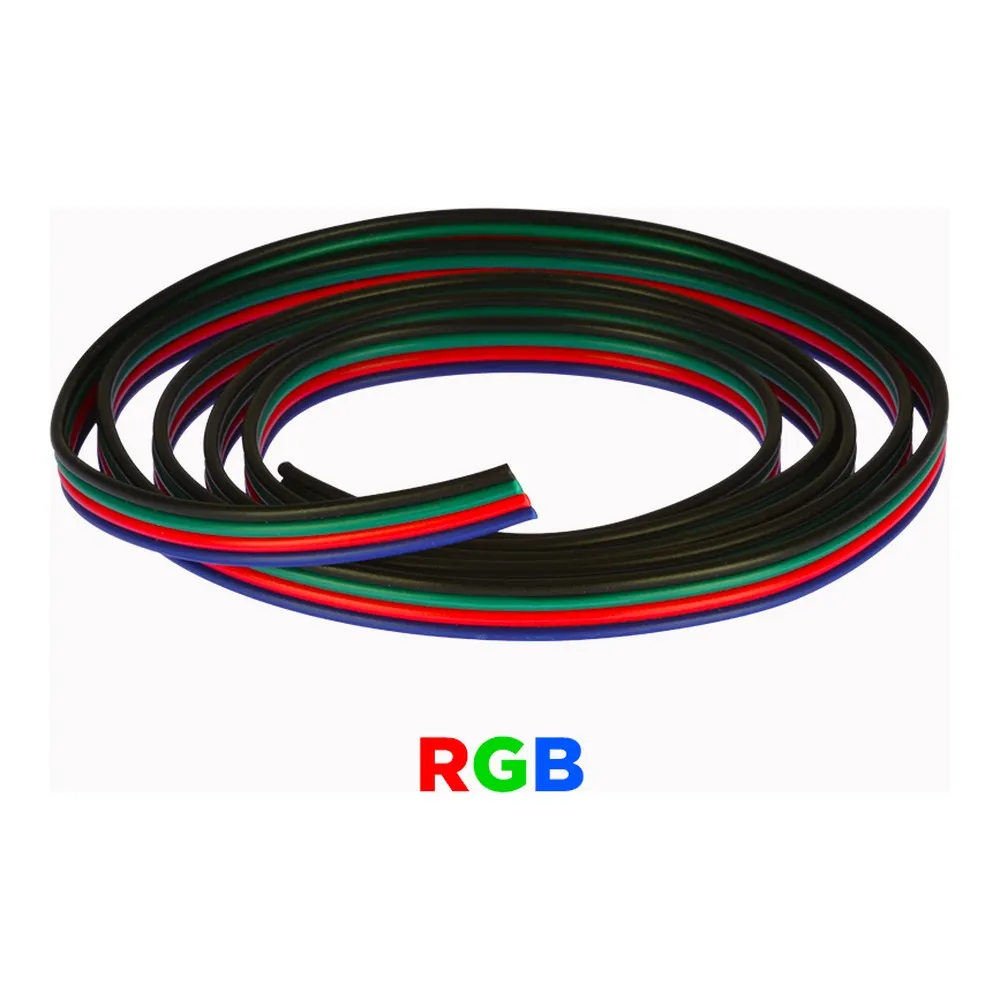
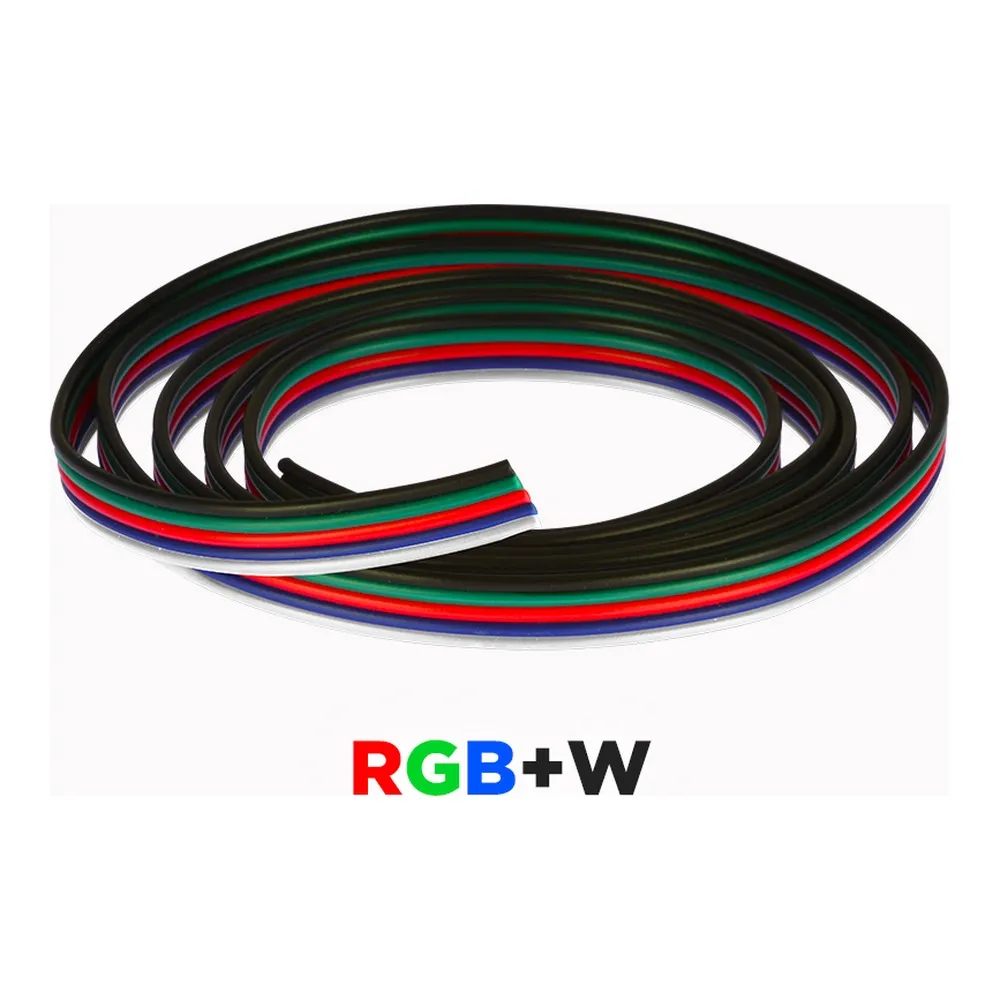
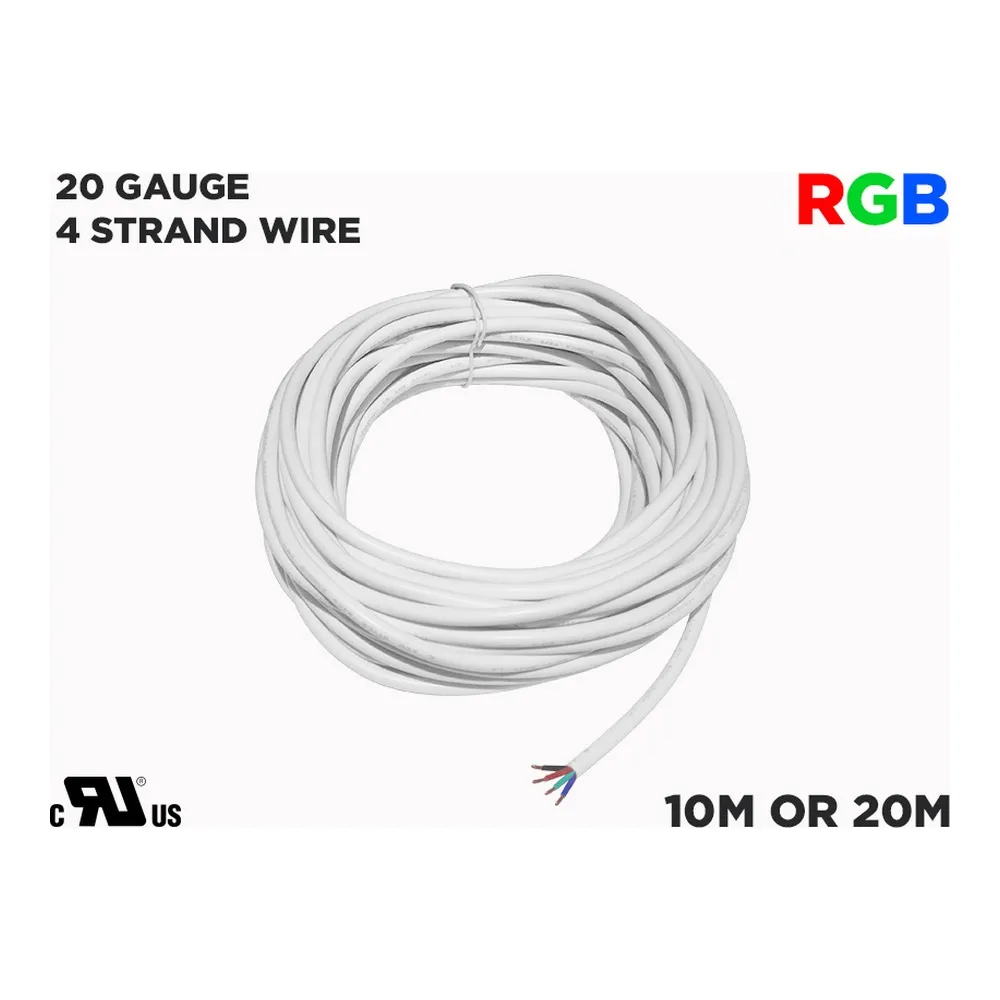
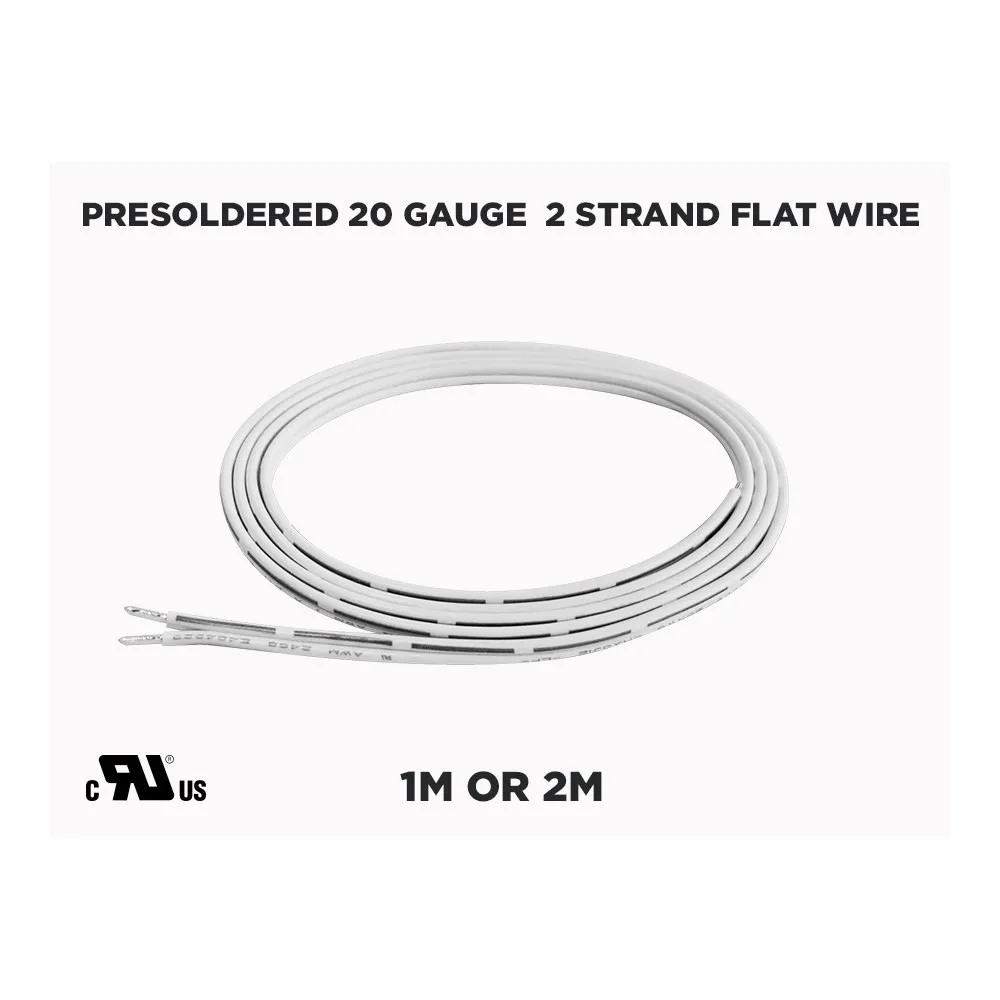
For custom lengths, bulk wire lets you build your own leads. Single colour, RGB and RGBW wires come in 1 m lengths; flat 2-strand presoldered wire in 20 gauge comes in 30 cm, 1 m and 2 m; RGB flat wire in 20 gauge and RGB wire in 22 gauge come in 10 m rolls. Self-soldering, self-sealing wire connectors (bag of 10) make durable splices with a heat gun.
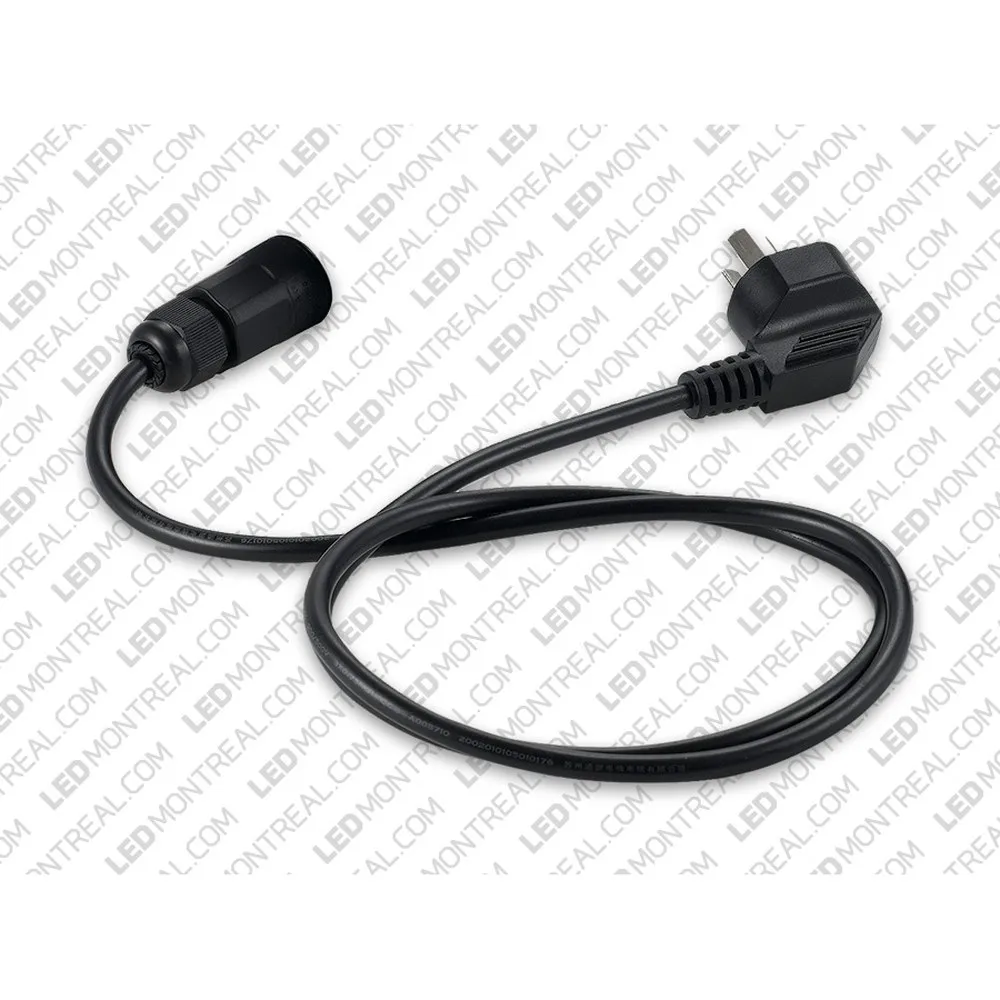
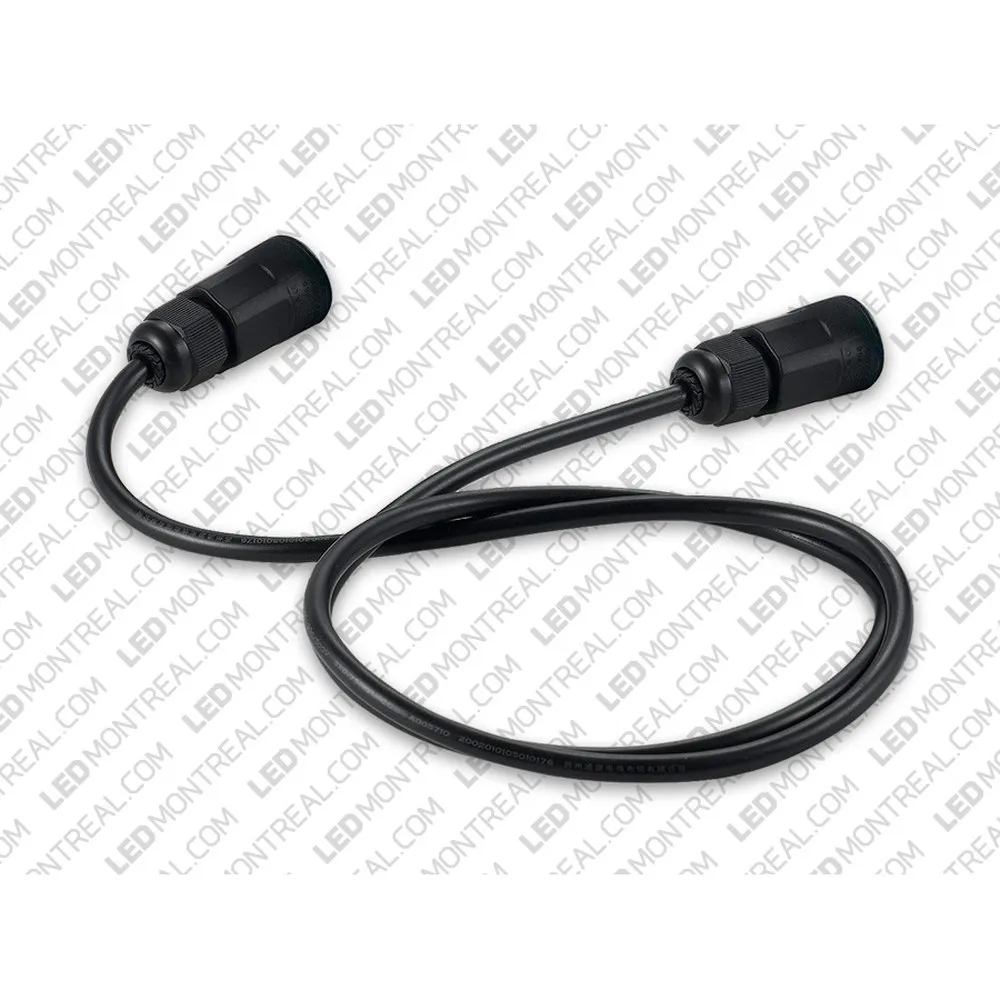
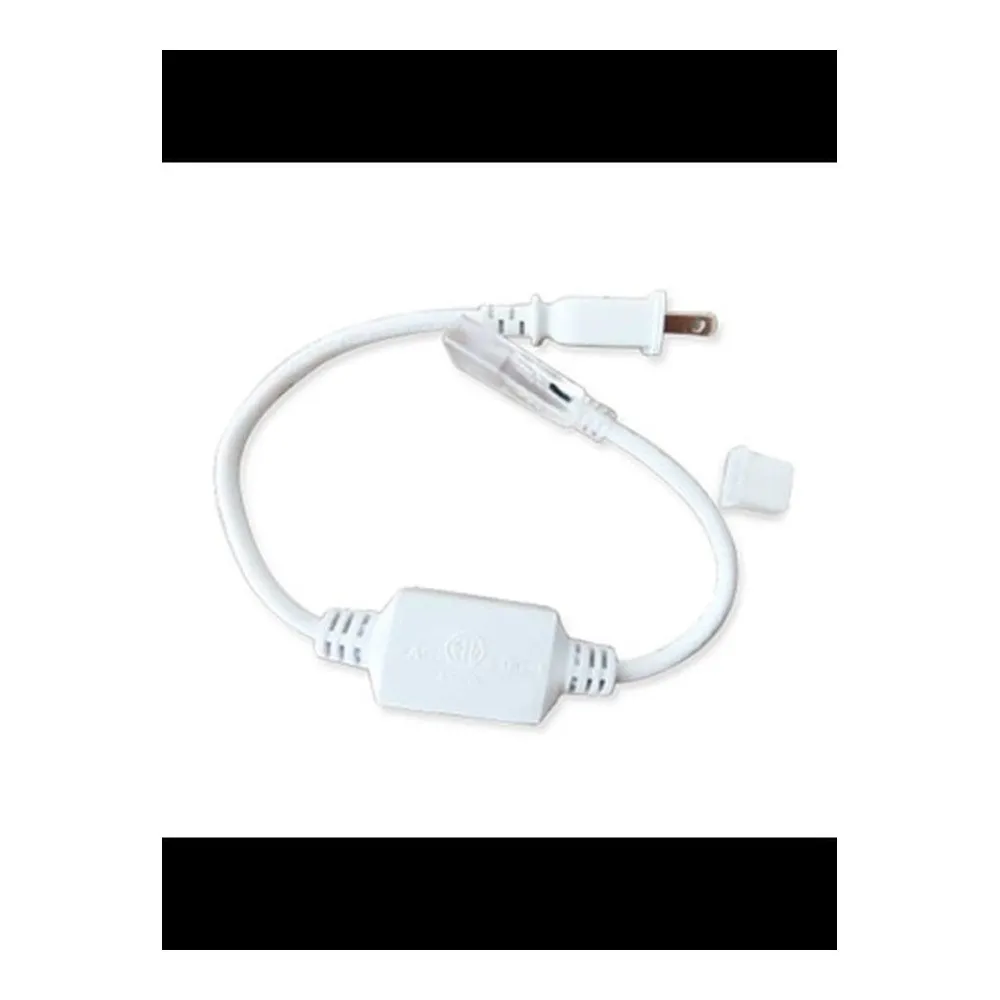
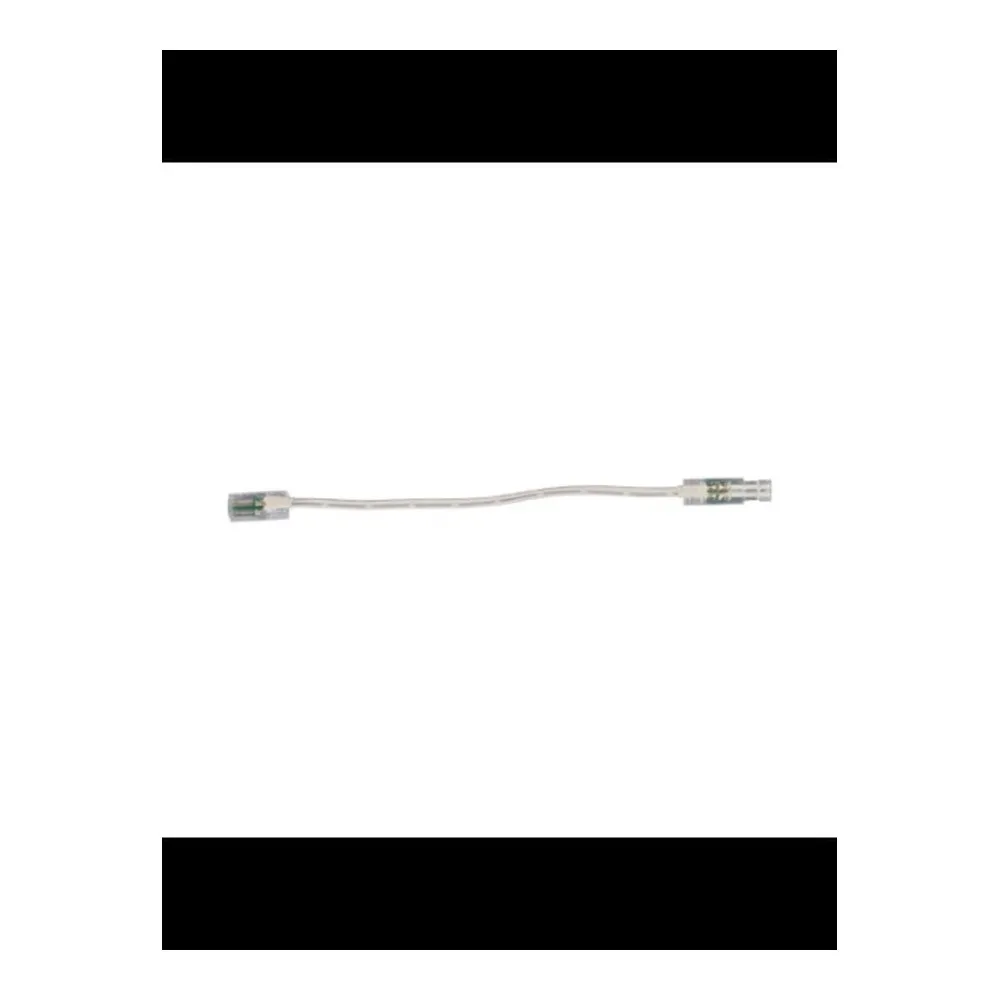
Tri-proof LED fixtures use dedicated waterproof connector wires in 15 cm, 1 m and 2 m extension lengths, plus a 120 V AC power cord of 1 m with a plug. These are not strip parts, but they follow the same logic: the right lead for the right fixture, sealed at every joint.
| Situation | Lead to choose |
|---|---|
| Feed a strip from the power supply | Wire-to-PCB connector or strip-to-wire connector |
| Bridge two separated sections | PCB-to-PCB connector with wire |
| Custom distance between strip and supply | Bulk single colour, RGB or RGBW wire |
| Join sections of a specific strip series | The series-specific lead (SL-25M, SLS5, SLS) |
| Damp or wet location | IP65 or IP67 leads, sealed splices |
Three checks avoid most mistakes: the number of conductors (2 for single colour, 4 for RGB, 5 for RGBW), the PCB width of the strip, and the protection level of the location. Then size the wire for the distance and the load: the longer the run and the higher the wattage, the thicker the wire should be.
Low-voltage strip loses voltage over distance, which shows up as dimmer or warmer light at the end of the run. Place the power supply as close as practical to the strip, and use a thicker wire for longer leads. Our LED strip installation guide explains feed points and voltage drop.
Mark plus and minus before you cut a lead, and keep the same colour order on RGB and RGBW wires from the controller to the last strip. A swapped conductor gives the wrong colour, not a dead strip, which can be confusing on site.
Route leads away from sharp edges and hinges, secure them with clips, and leave a little slack at every connector so the strip is never pulled. In a cabinet, hide the wire behind the front rail or inside an LED aluminum channel. Outdoors or near water, seal every splice.
Connector wires work hand in hand with strip connectors for straight and corner joints, solderless connectors for quick clip-on joints and the right LED power supplies. For RGB and RGBW projects, the leads run to the strip controllers and remotes. For general building wire, see electrical wires and cables.
In homes, leads connect under cabinet strips across a kitchen, link closet shelves and feed cove lighting from a hidden supply. In stores and showrooms, they let installers place the power supply out of sight and feed several display lighting runs from one location. Our guide to choosing LED strip lights helps match the strip, the voltage and the supply before you order the leads.
Yes. Use a wire with the same number of conductors and a gauge suited to the distance and load. Keep low-voltage extensions as short as practical to limit voltage drop.
The bulk wires in this category come in 20 gauge and 22 gauge. Thicker wire carries more current over a longer distance with less loss, so choose the thicker option for long leads or high-wattage runs, and check the power supply instructions.
Use a wire-to-PCB or strip-to-wire connector matched to your strip type and PCB width. It clips onto the pads and gives you a ready lead.
An RGB wire has four conductors: red, green, blue and common. An RGBW wire has five, with a separate white channel. Single colour wire has two.
A jumper (PCB-to-PCB connector with wire) links two strip sections. An extension wire or lead connects a strip to its power supply, controller or the next fixture over a longer distance.
Only the waterproof versions rated IP65 or IP67, with sealed splices and strips of the same rating. Standard leads are made for dry indoor locations.
Browse all LED strip accessories & connectors to find the lead, jumper or wire that matches your strip and your layout.