What it is and what it does
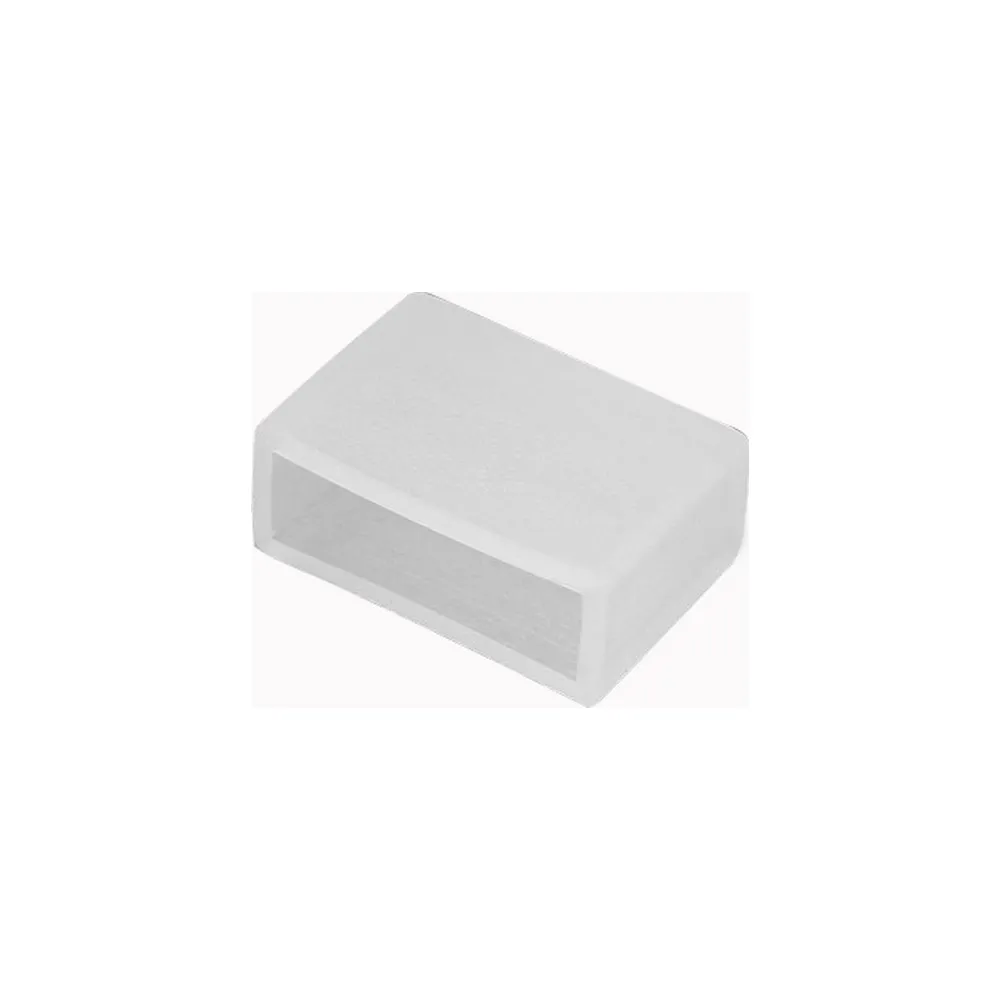
An LED strip is only waterproof where its jacket is continuous. The moment you cut a tape to length, you open the silicone sleeve and expose the copper solder pads at the end. This silicone end cap is the purpose-made plug that closes that opening. It slips over the finished end of the strip, wraps the cut edge, and gives you a sealed, tidy termination instead of a frayed piece of tape or a blob of hot glue. It is a small accessory, but it is the difference between an IP67 run that survives outdoors and one that corrodes at the last few LEDs.
Construction and material
The cap is moulded in soft silicone, the same family of material as the jacket on the strips it's meant to close. That matters for two reasons. First, silicone stays flexible in cold weather, so the cap keeps its grip through freeze-thaw cycles instead of hardening and popping off. Second, silicone bonds well to silicone: a bead of clear silicone sealant or LED-strip adhesive inside the cap before you push it on creates a continuous, watertight closure rather than a mechanical press-fit alone. Press it fully home, wipe the squeeze-out, and let it cure before energizing or exposing the run to water.
Technical specifications
SKU: ENDCAP
Brand: LED MONTREAL
Product type: Silicone end cap for LED strips
Material: Silicone
Compatible strips: IP67 LED strips, 3528 or 5050 format
Category: LED strip connectors
Use: Residential and commercial projects
Compatibility and installation
This cap is designed for IP67 3528 or 5050 LED strips, which covers the vast majority of jacketed tape on the market, in both single-colour and multi-chip layouts. Always cut the tape on its marked cut line so you keep full solder pads at the end. If that end is the far end of the circuit, cap it directly. If it's the feed end, make your solder joint or attach your waterproof connector first, protect the wires, then cap. A little silicone sealant inside the cap, and another small bead where the cap meets the jacket, is the trick installers use to keep the seal honest over years of exposure. Order one cap per terminated end — a single run cut into several sections needs a cap at every open end, so count your terminations before you buy.
Where it earns its keep
Think of every place a tape run stops: the end of an under-cabinet channel in a kitchen, a vanity or mirror surround in a bathroom, cove lighting in a basement ceiling, stair nosings and deck railings, a garage workbench, a covered patio, a boat or dock, a walk-in cooler, a car wash bay, a retail display case or a storefront sign band. In each of those, the capped end is what keeps humidity, splashes and cleaning products out of the electronics. For Canadian jobs especially — where a patio run sees rain in October and road salt spray in February — capping is not optional finishing, it's protection. Add a few silicone end caps to your strip lighting order so every run you install ends sealed, clean and ready for the weather.