What these connectors are for
The DC connectors for single colour LED strips are male and female DC plug ends used to create removable, low voltage connections in an LED strip installation. The most common use is joining two single colour LED strips end to end: the wires leaving strip number one go into the male connector, the wires feeding strip number two go into the female connector, and the two simply plug together. The second common use is power distribution — the male adaptor lets you bring DC current to an RGB controller input, so your controller, driver and strip all speak the same plug language instead of being twisted together with tape.
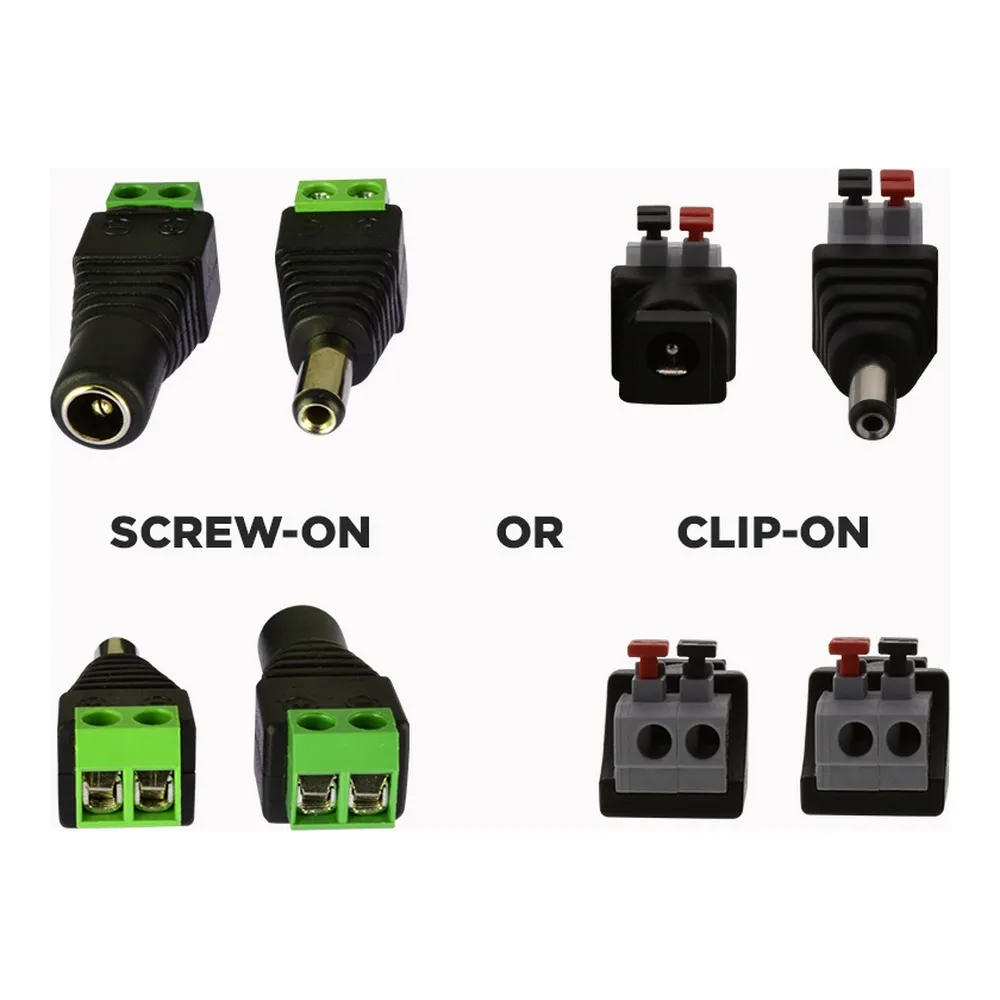
Two styles: screw-on or clip-on
LED MONTREAL offers two versions of this connector, selected in the drop-down menu on this page. The screw-on version is the classic terminal style: use a small screwdriver to unscrew the pin, insert the properly stripped wire, then screw the pin back down to clamp the conductor in place. It's dependable and lets you re-open the terminal if you ever change your wire gauge or redo a run. The clip-on version is the upgraded, no-tools option: push the pins down, slide the properly stripped wire in, then let the pins go so they clamp onto the wire and hold it. On a long install with many splices, the clip-on style saves real time and is the easier choice when you're working overhead or inside a tight cabinet.
Installation details that matter
Remember that these connectors do not attach directly to the LED strip — you must have wires (the strip's own leads or a length of low voltage wire) to insert. Strip the insulation cleanly and only as far as needed so no bare copper sticks out of the housing, keep your polarity consistent (positive to positive, negative to negative) since single colour LED tape light is polarity sensitive, and give each wire a light tug once seated to confirm the terminal is holding. Because the connection is a plug, plan its location where you can reach it later: inside a cabinet, above a valance, behind a removable panel. For runs that cross a corner or a door frame, place the connector in the gap so nothing shows once the trim goes back on.
Where they get used
These little parts show up in almost every LED strip lighting project. In homes: kitchen under-cabinet runs interrupted by a sink window, crown moulding cove lighting that turns a corner, stair nosings, closet shelving, basement bars and bathroom mirror surrounds. In commercial work: retail shelving and display cases, restaurant bar fronts, reception desks, cooler and pantry shelving in small food businesses, and hotel or condo corridors where each section needs to stay serviceable. Contractors doing multi-unit or renovation work often keep a handful of both styles in the van, because the gap between two strip sections is never the same twice.
Ordering and good practice
Order this accessory by SKU CONMFSC and choose screw-on or clip-on before adding it to your cart. Buy a few more than your drawing calls for: splices get added on site, and a spare pair costs you nothing in installation time. Keep them for single colour LED strip circuits and DC controller feeds — that's what they're built for. No documents are listed for this accessory; everything you need to wire it is in the steps above.