An LED strip controller sits between the power supply and the strip and decides what the light does: dim, change colour, shift from warm to cool white, chase along a handrail or switch on when someone walks by. This category groups 41 LED controllers and receivers for 12 V and 24 V strips, from simple inline dimmers and infrared RGB kits to multi-zone RF receivers, IP67 outdoor units, addressable pixel controllers and 5-in-1 controllers that work with Matter and HomeKit.
It is written for electricians, contractors and homeowners who already know what strip they are installing and now need to control it. You will find the controller types, the specifications to compare, how to plan zones and answers to common questions. The whole control family, including remotes and Wi-Fi units, is grouped under LED strip remotes and controllers.
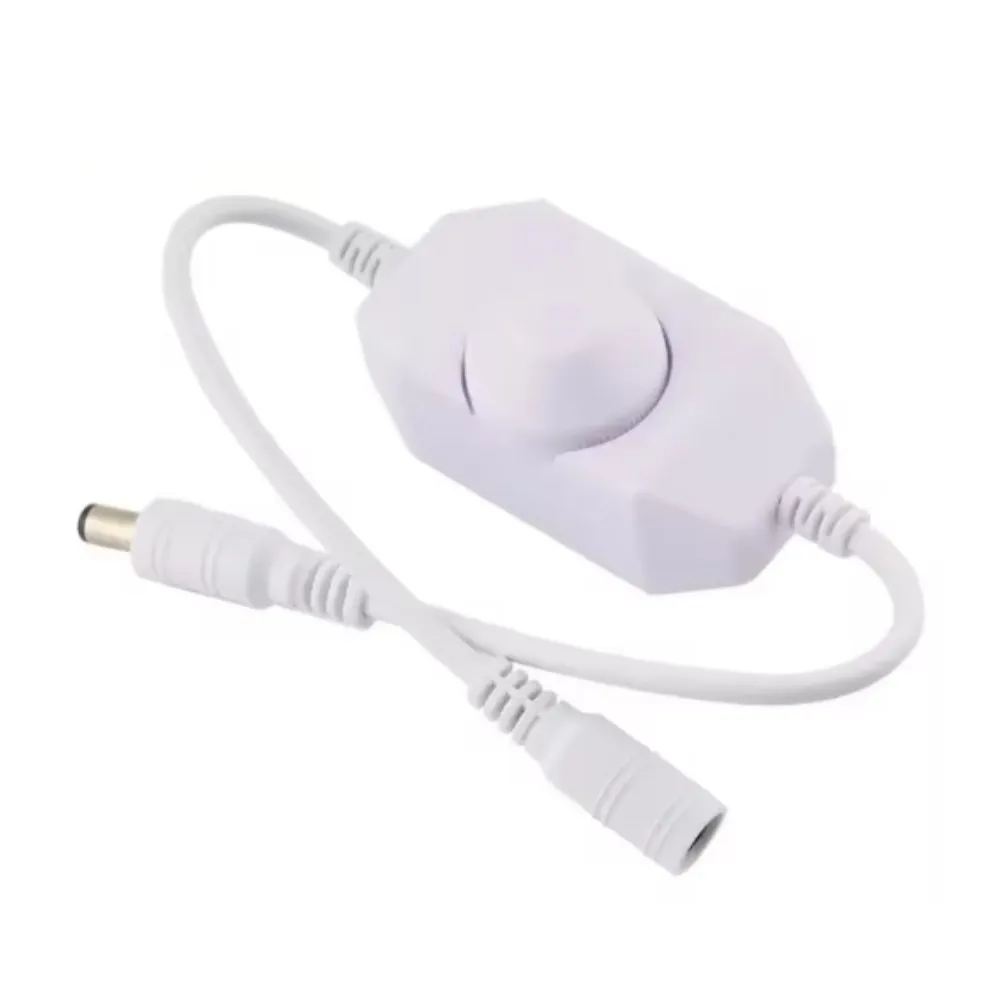
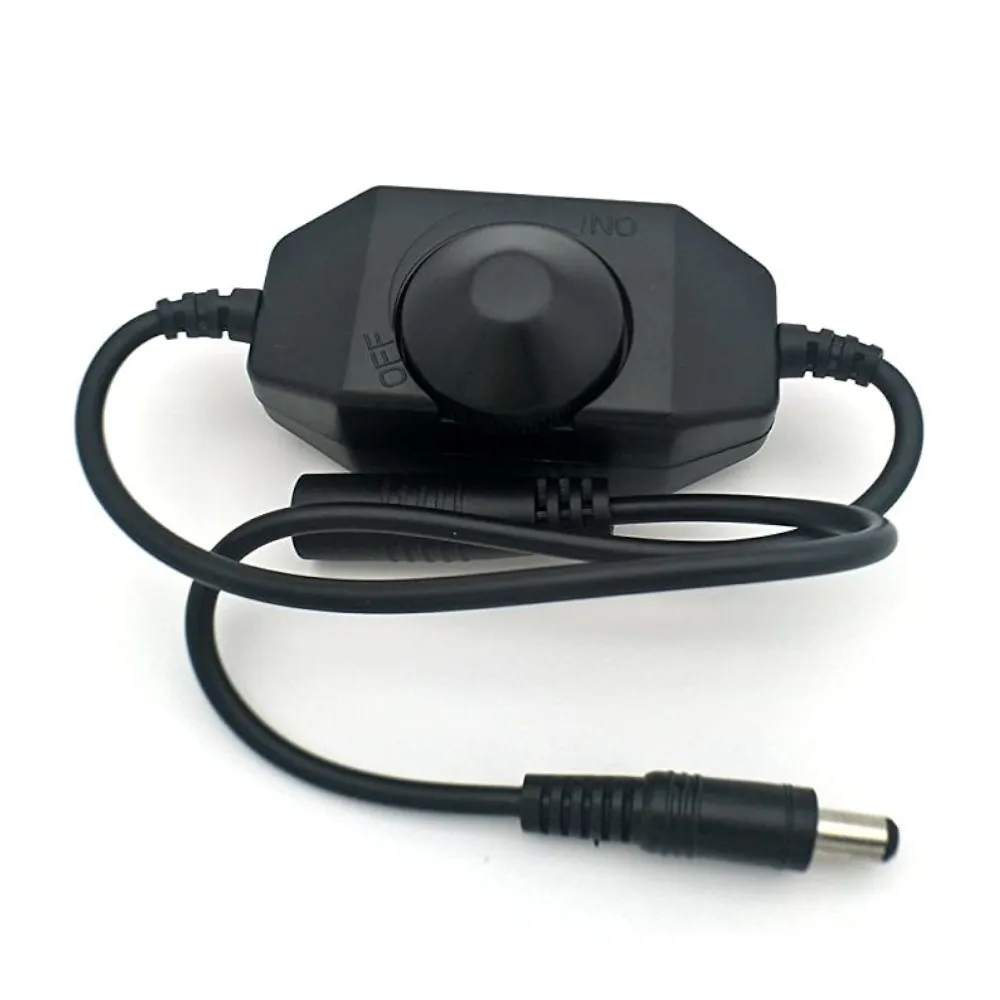
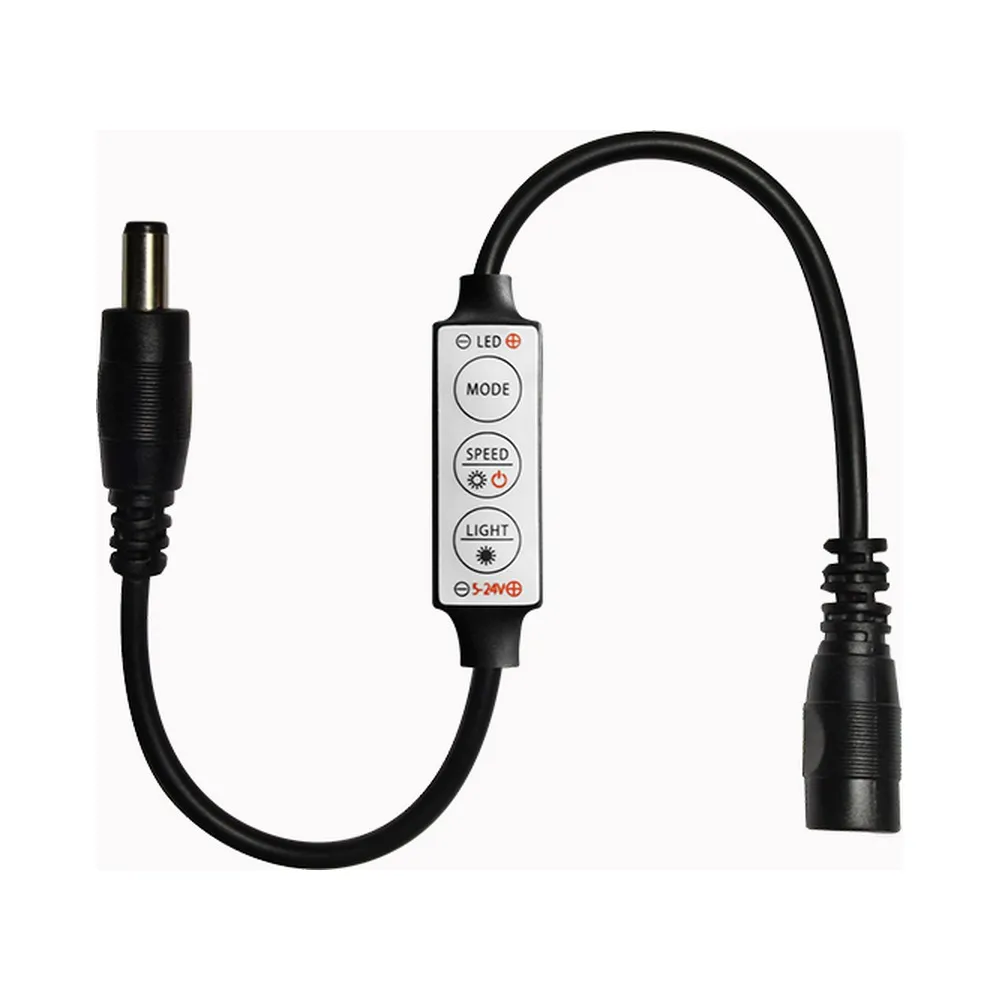
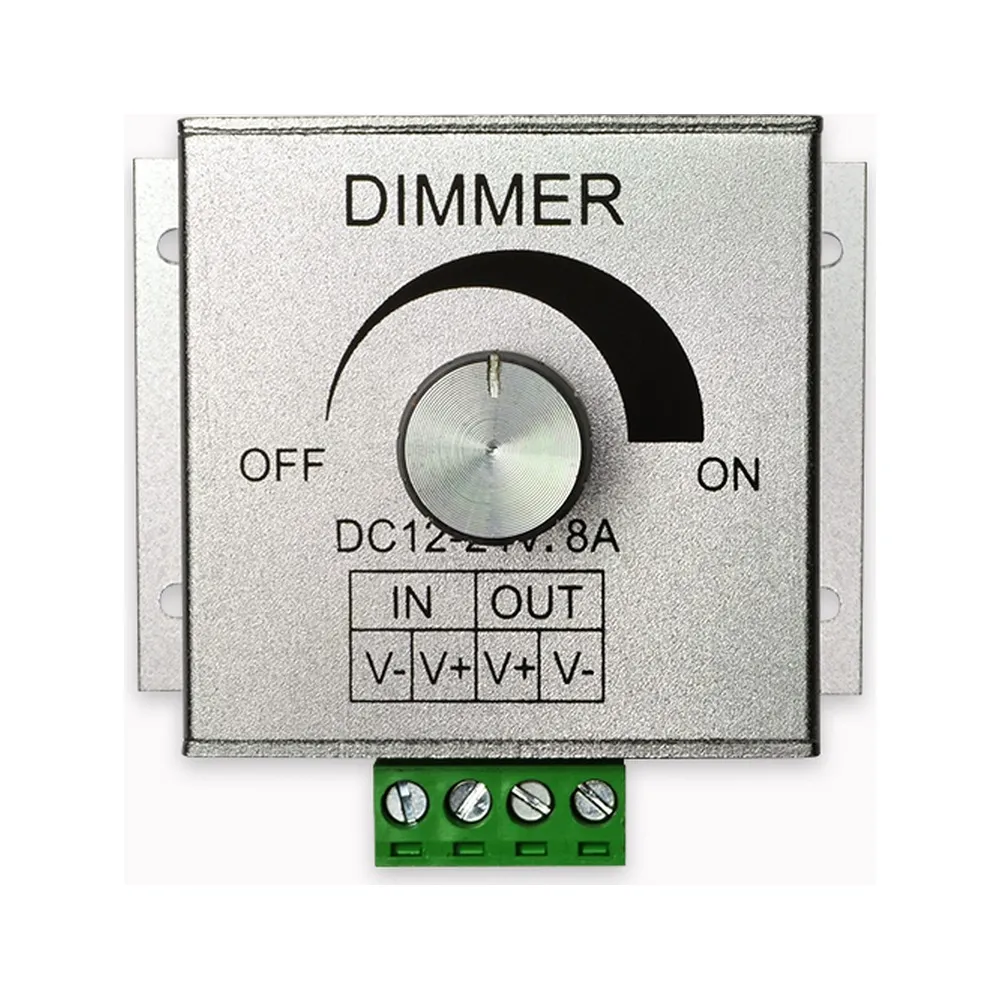
The simplest control is a small dimmer on the low-voltage wire. The roller dimmers in this category work from 9-24V at up to 2A, in black or white, with no pairing and no app: you turn a wheel and the strip dims. They suit a display case, a headboard or a shelf. Wired wall dimmers for single colour strips are also available. For dimming on the 120 V side instead, see LED dimmers.
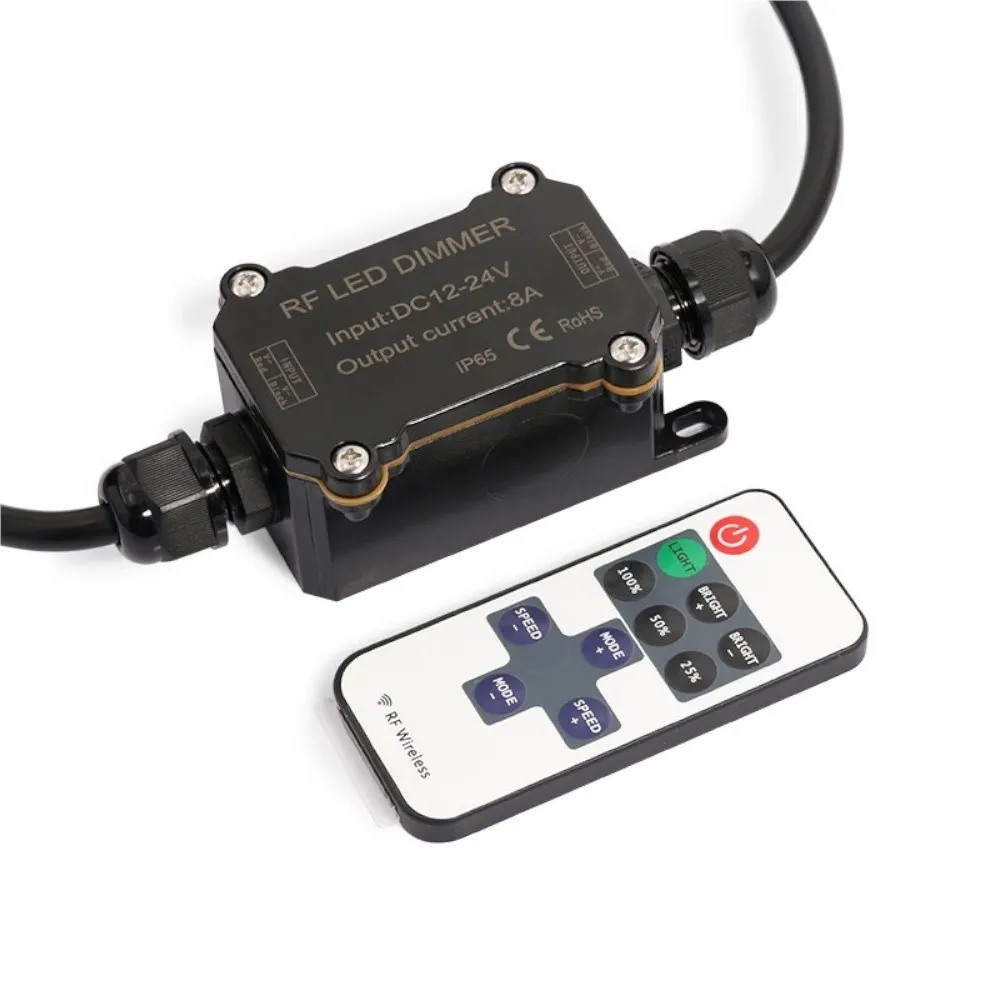
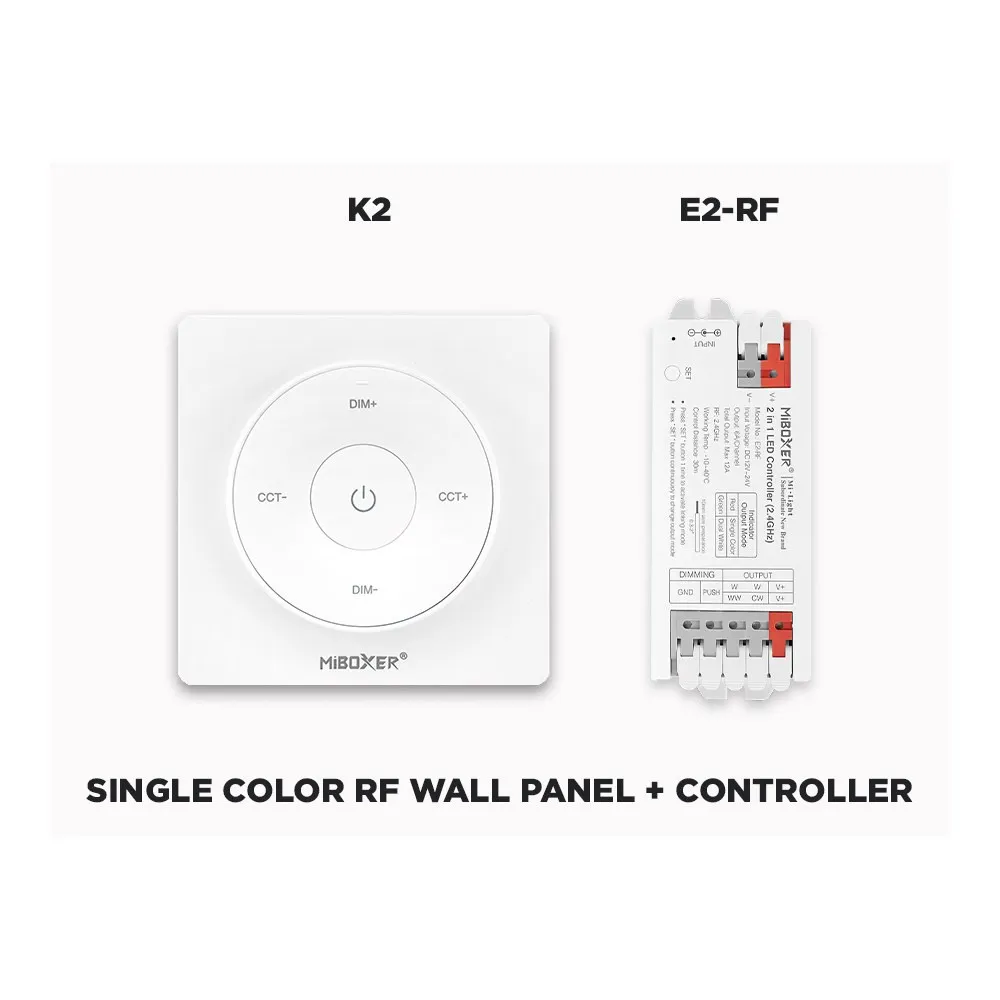
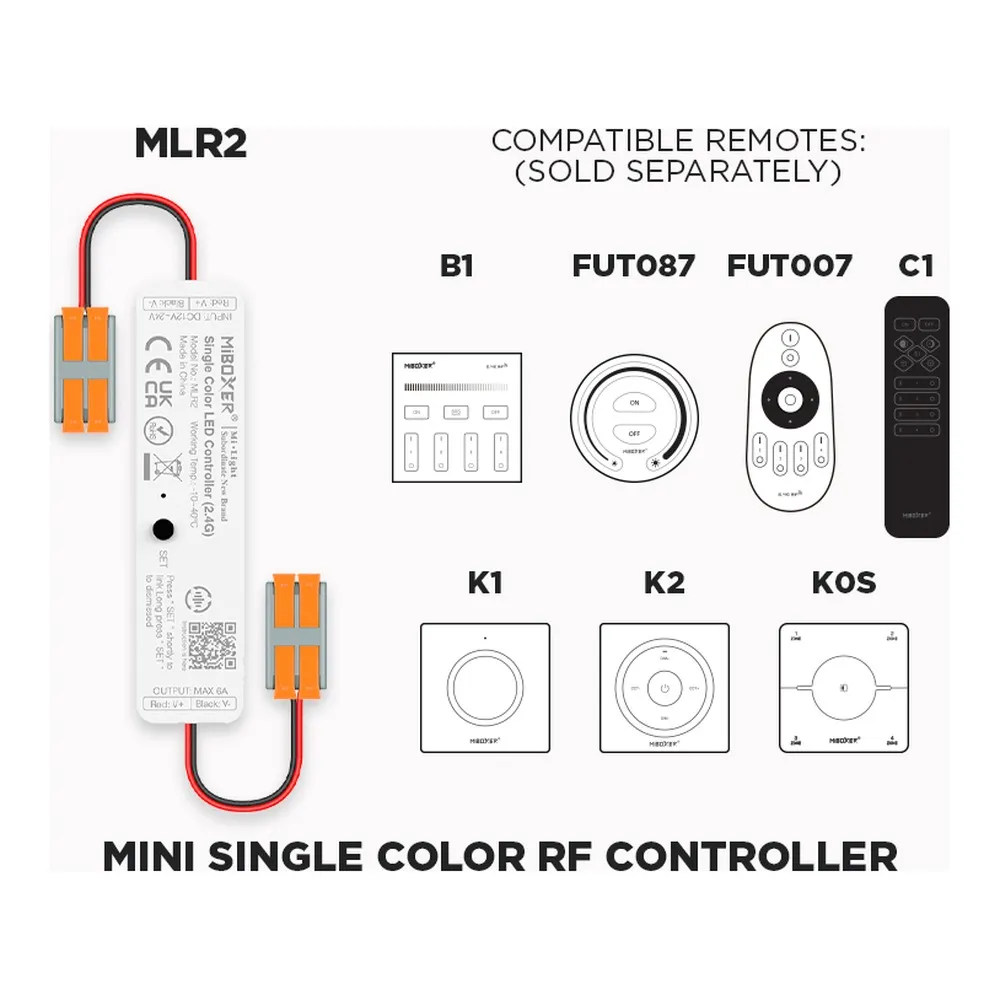
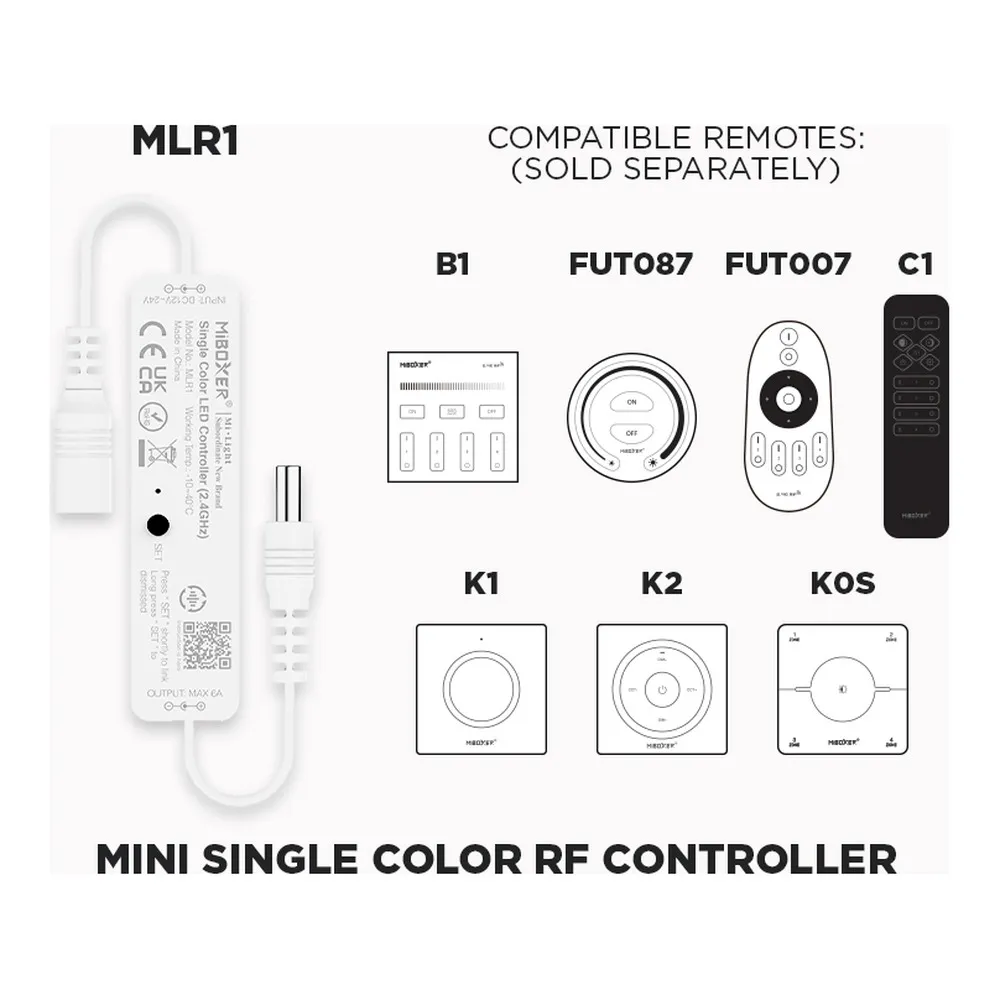
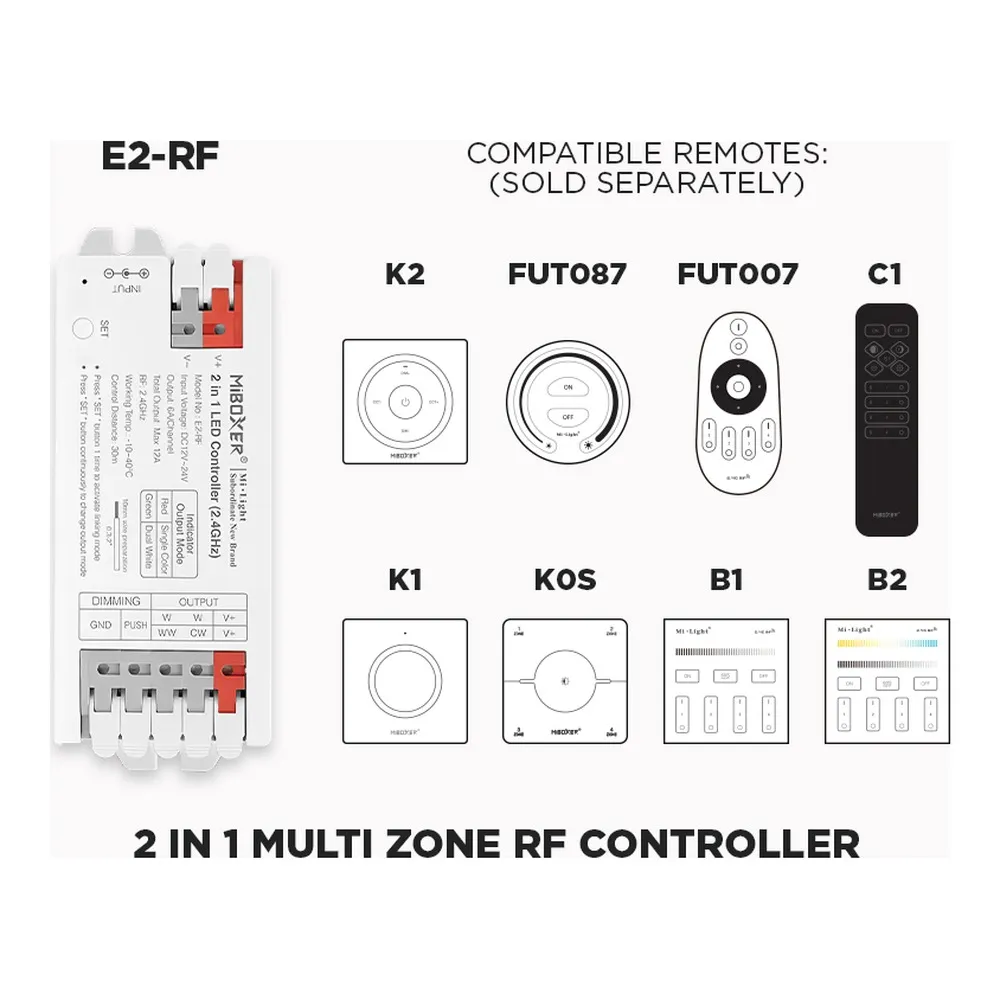
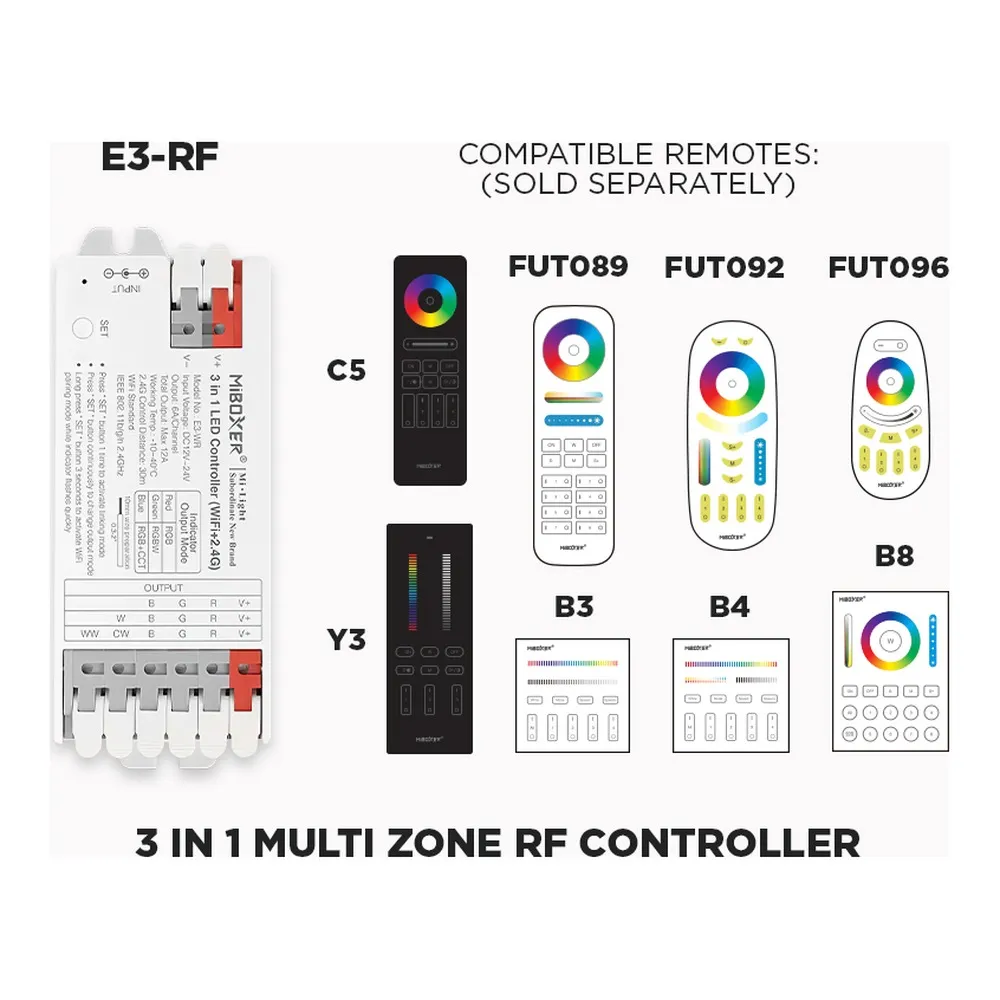
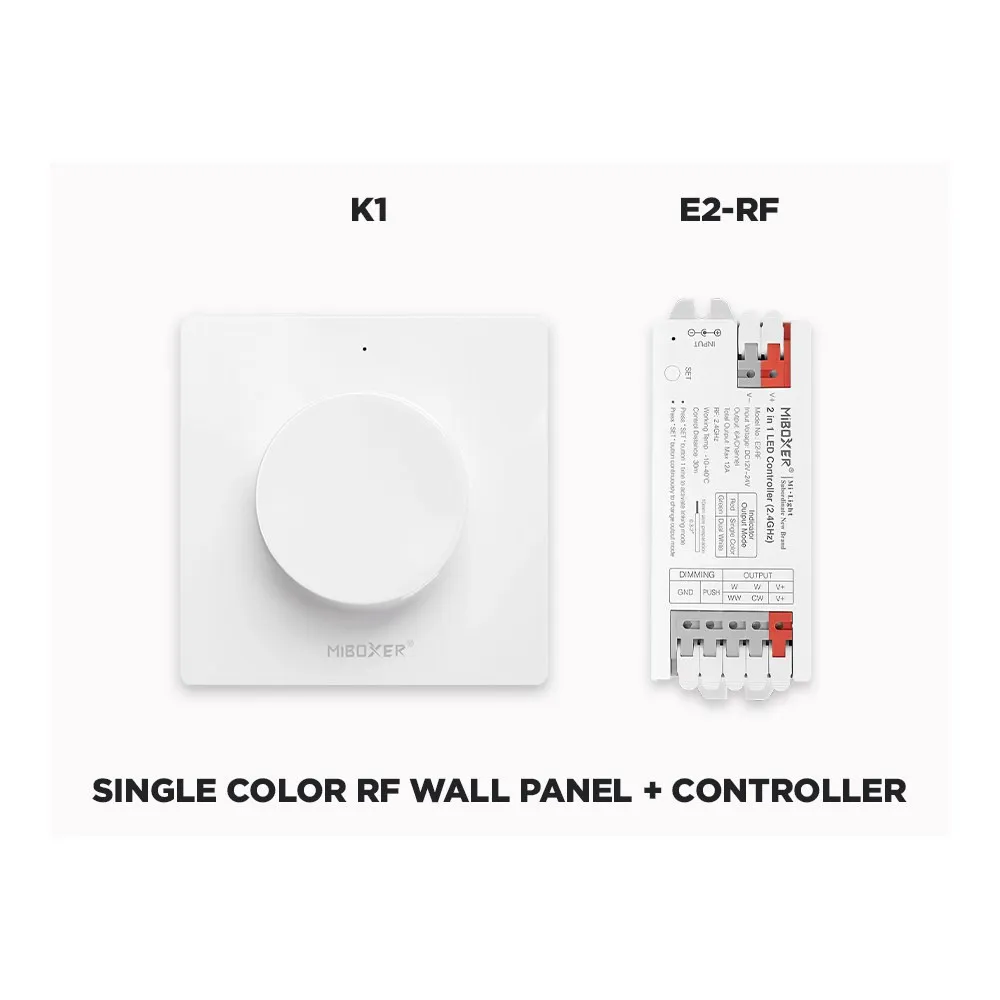
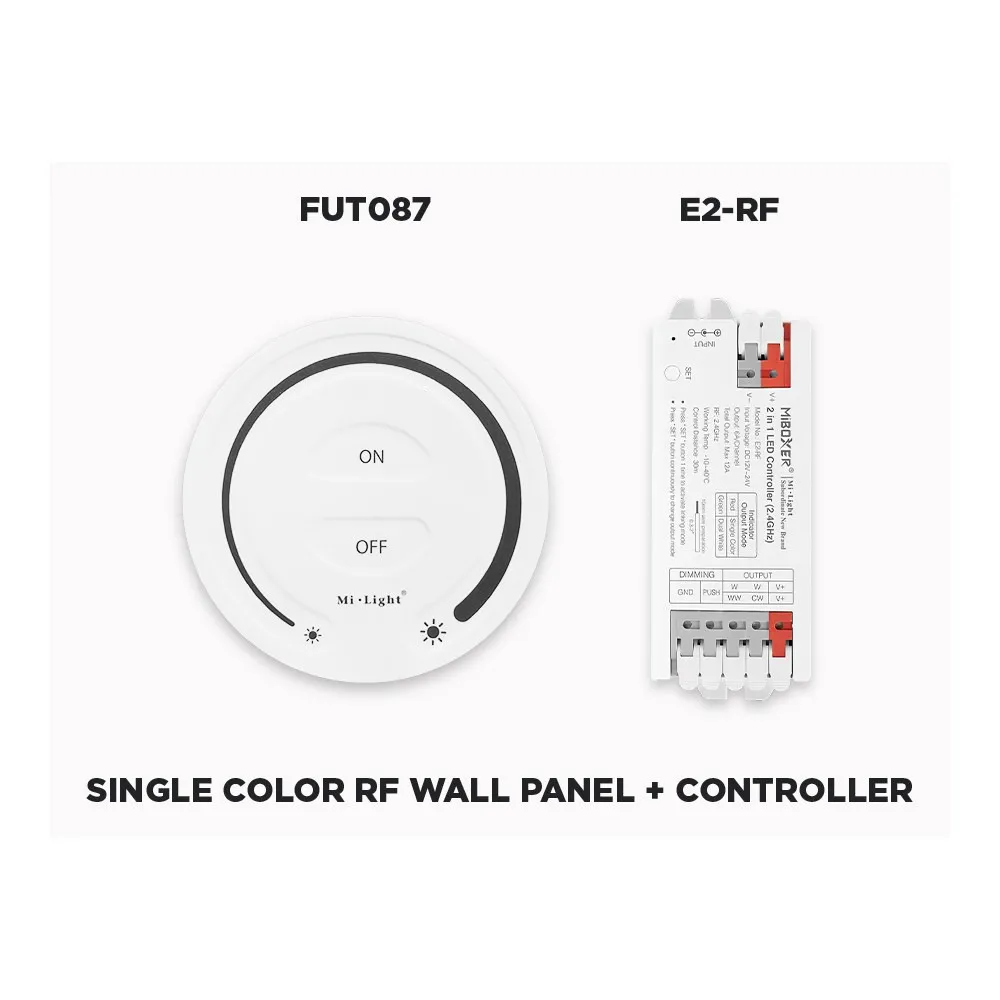
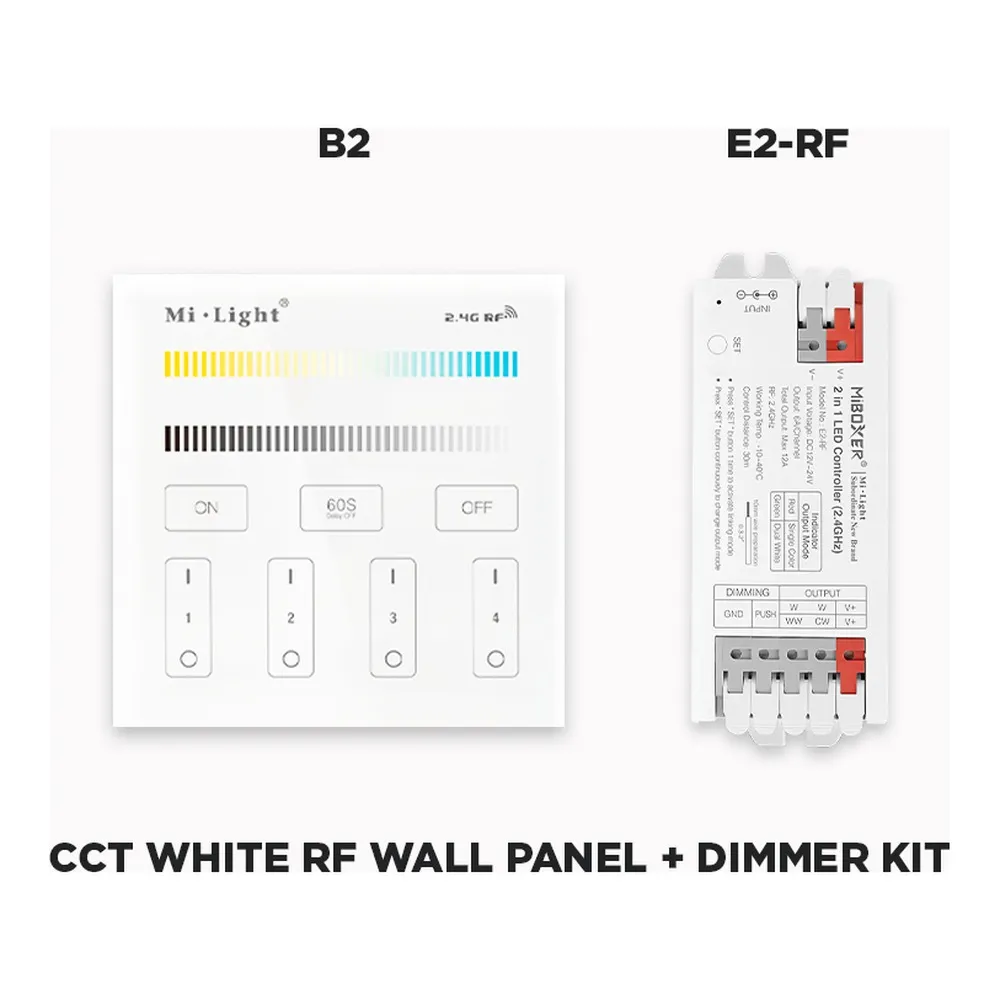
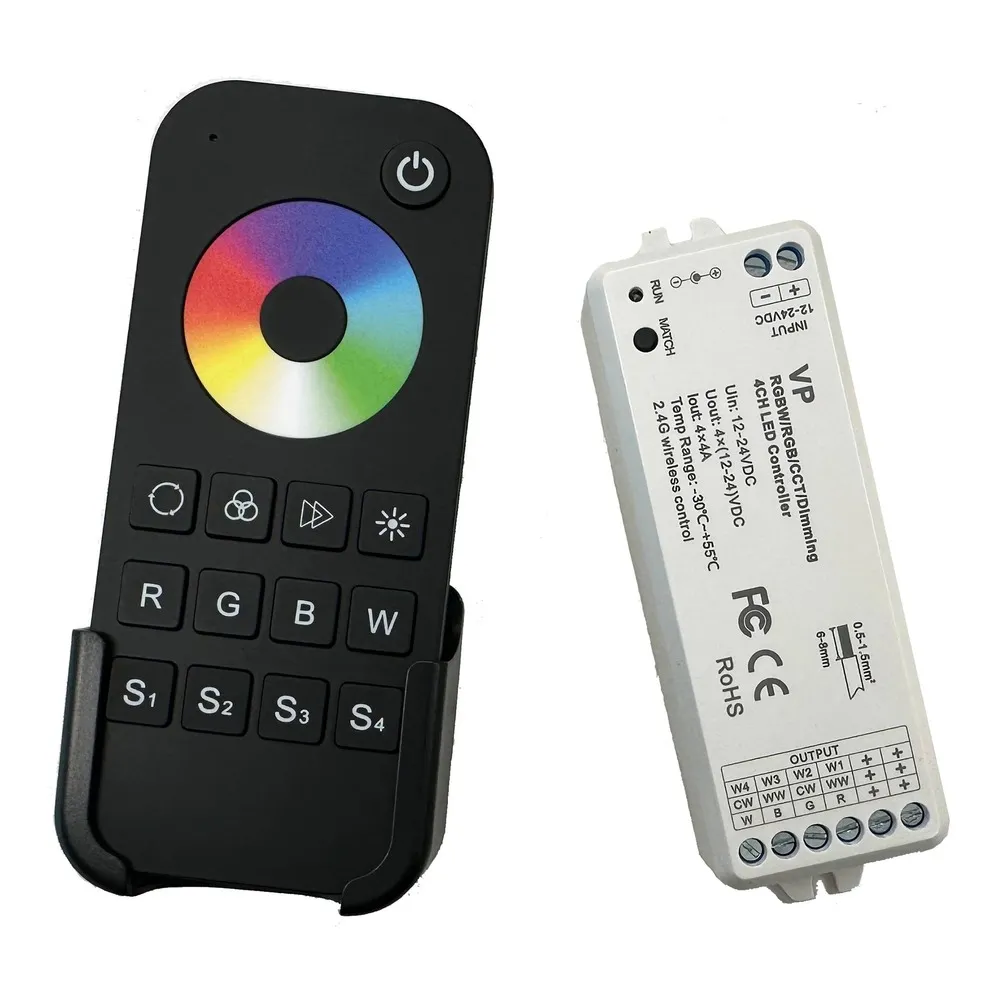
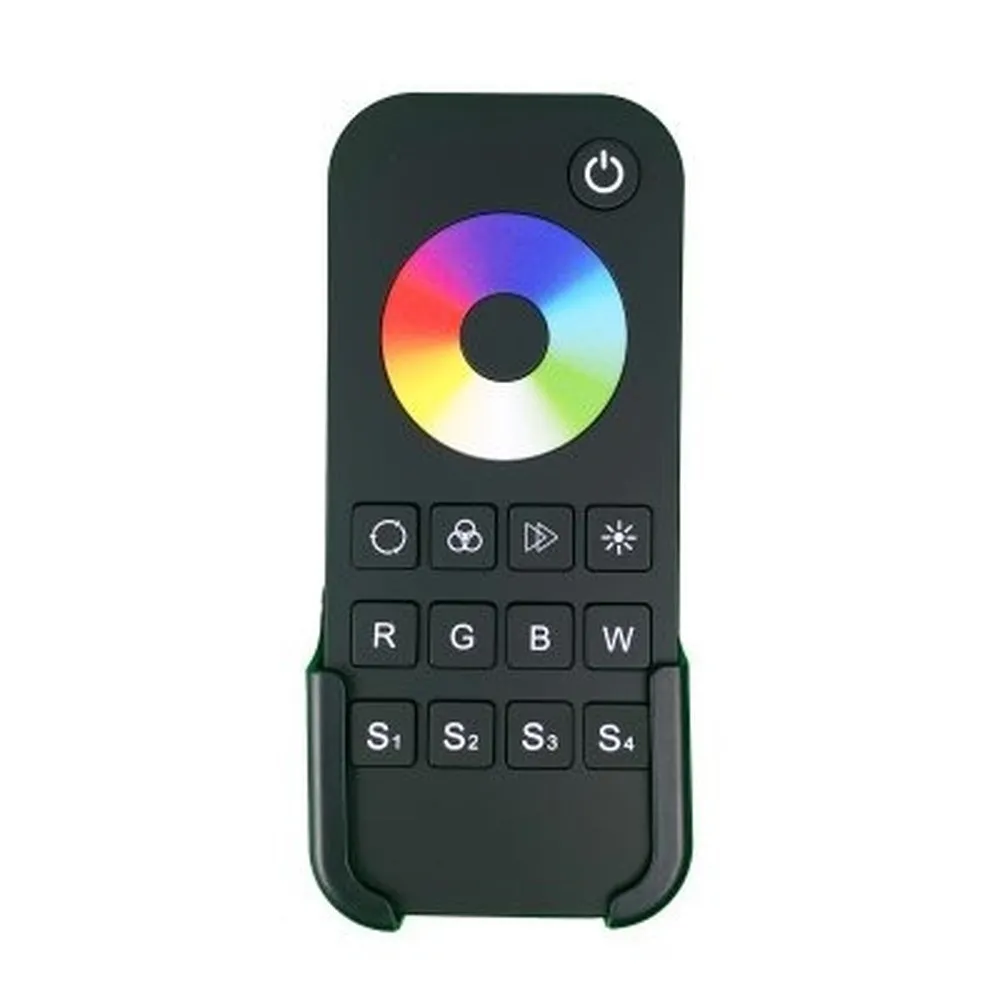
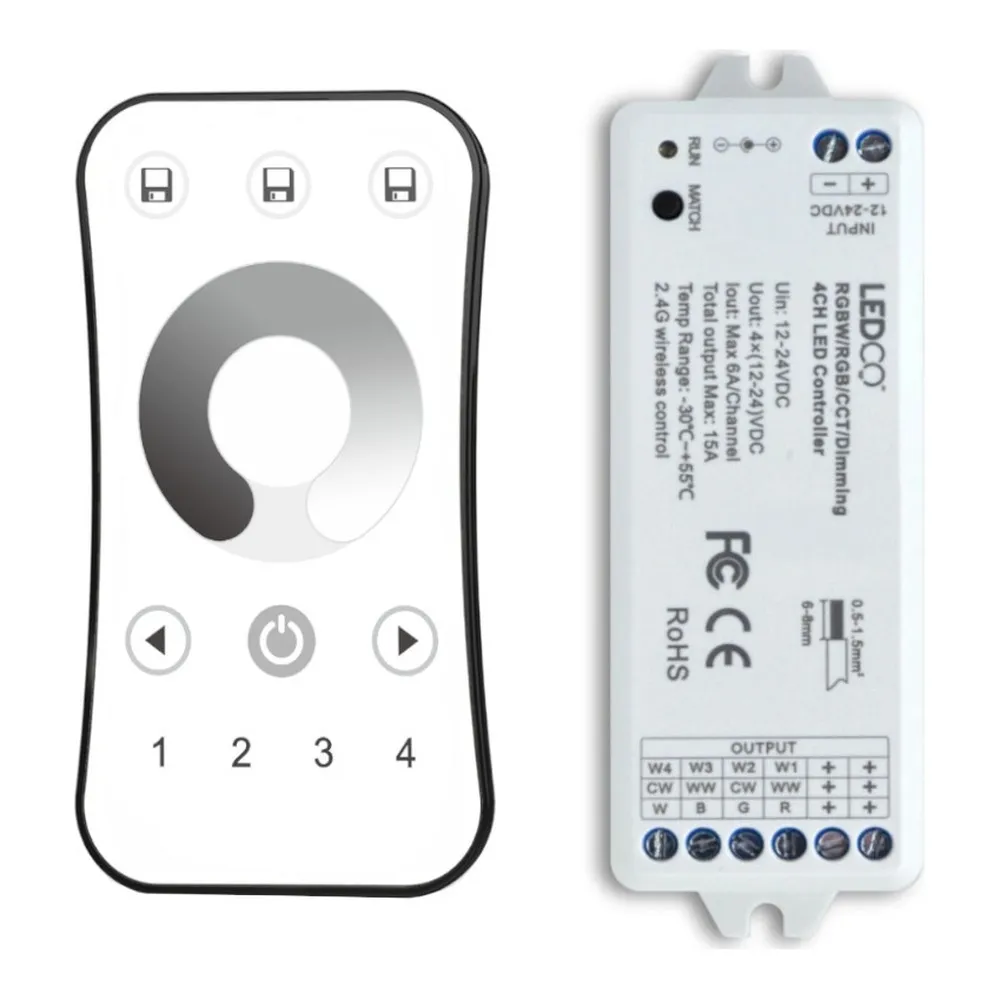
Radio frequency (RF) controllers receive commands from a handheld or wall remote without line of sight, so the receiver can hide inside a cabinet, a cove or an electrical box. The MLR1 and MLR2 mini single colour RF controllers measure 76 mm x 19,2 mm x 8,6 mm, and the MLR2 has WAGO lever connectors moulded into the body. The E2-RF handles single colour and CCT adjustable white, the E3-RF handles RGB, RGB+W and RGB+CCT, both on 1 to 8 zones with self repeating so large installations stay responsive.
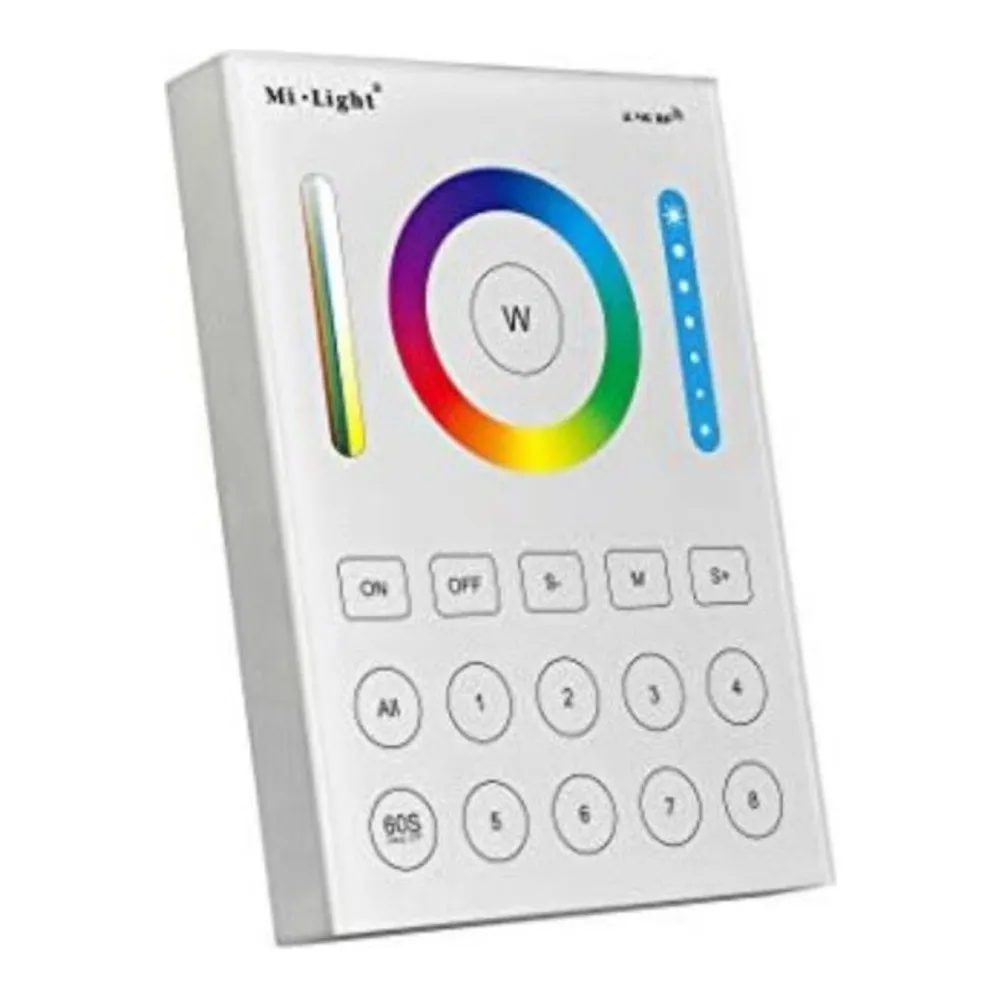
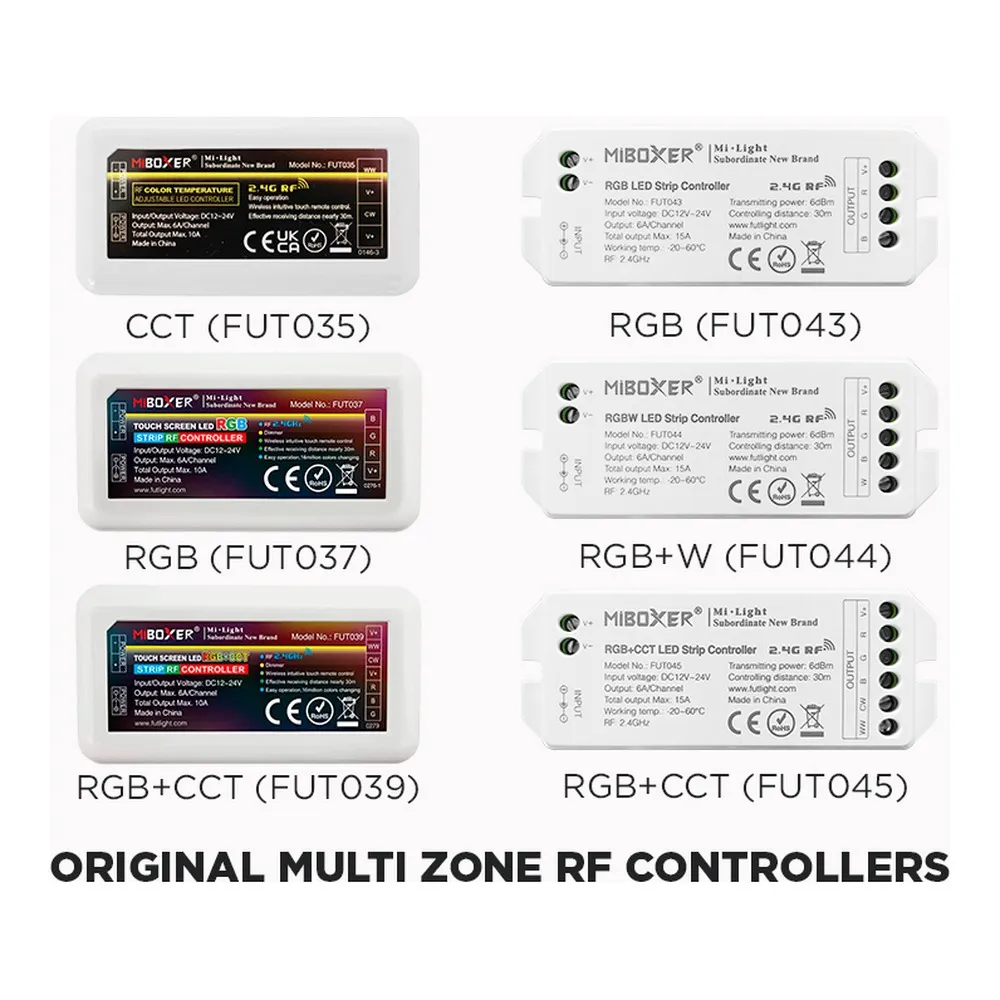
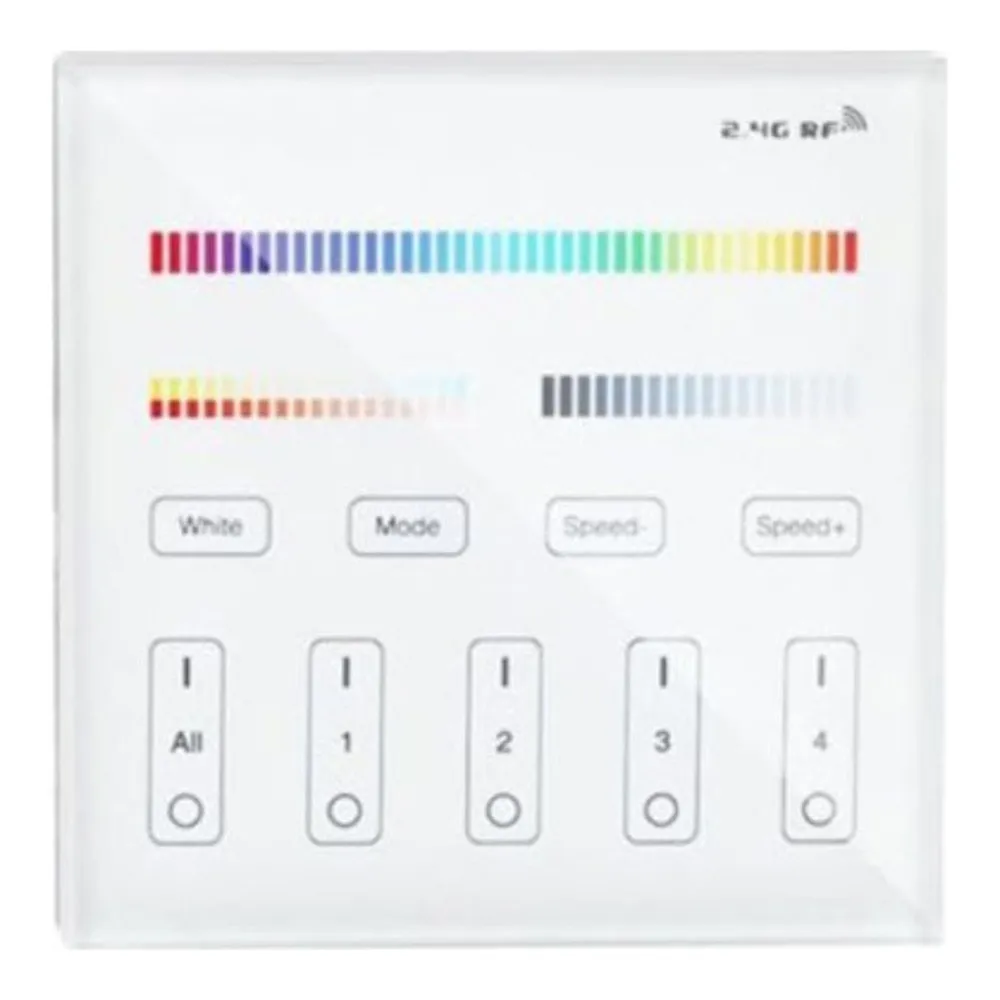
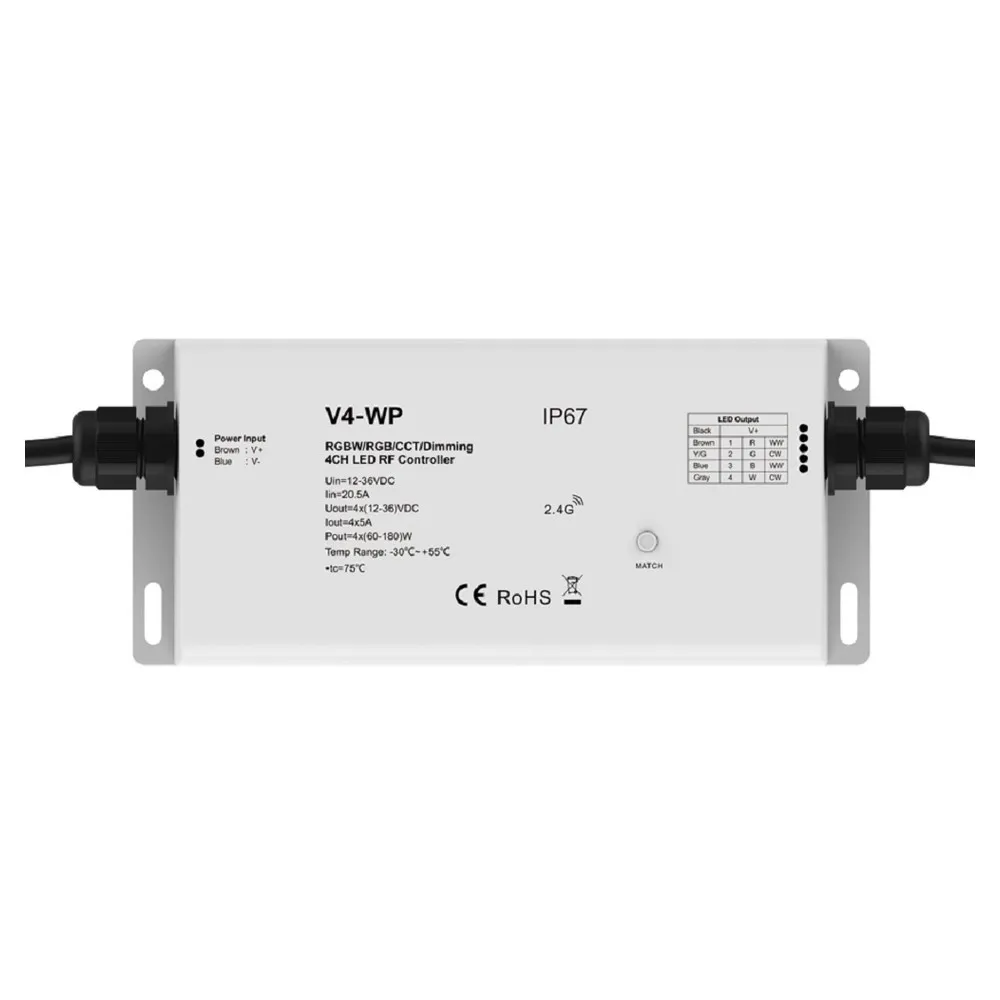
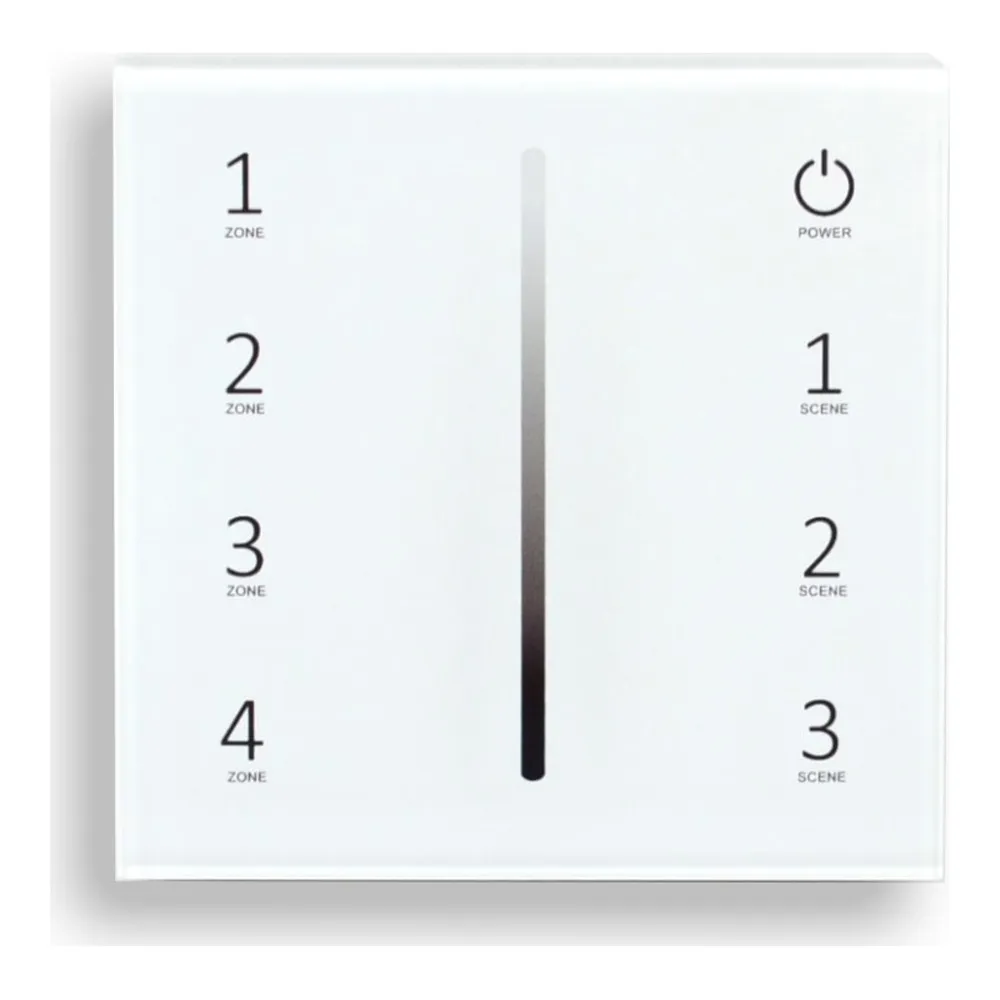
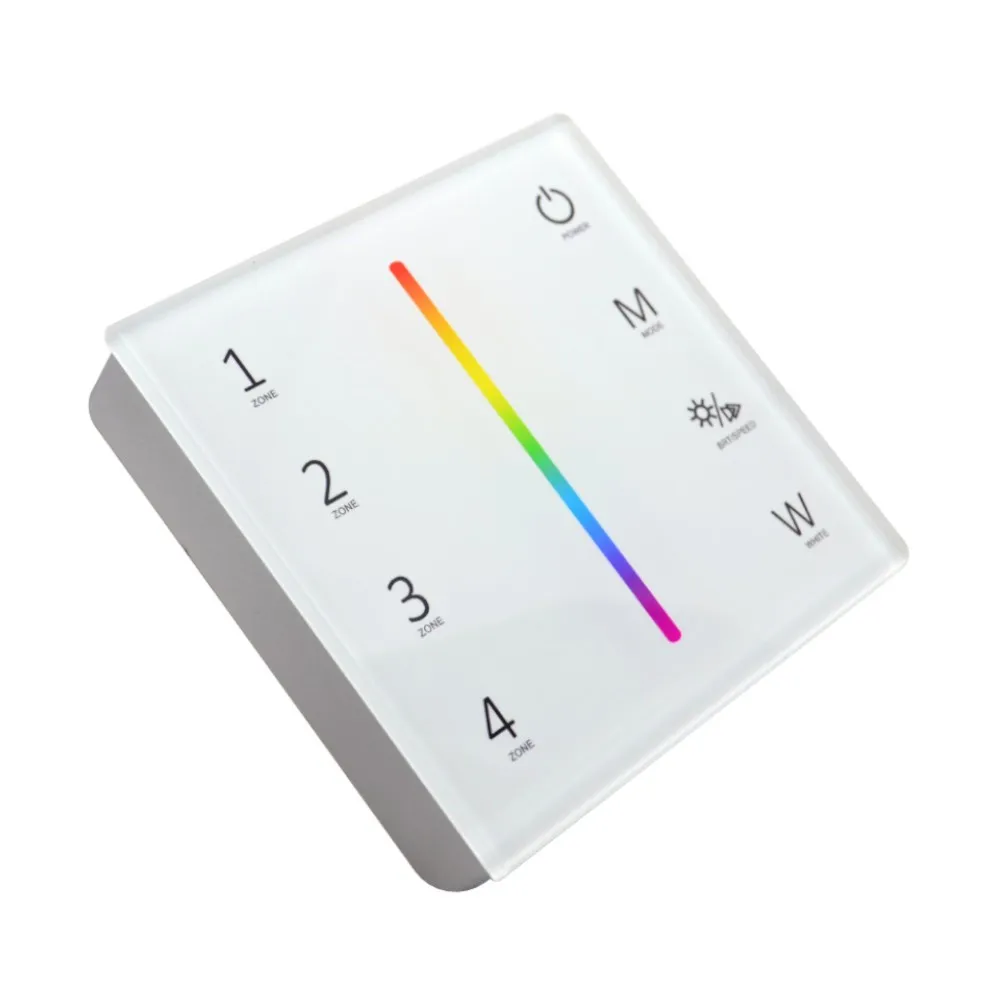
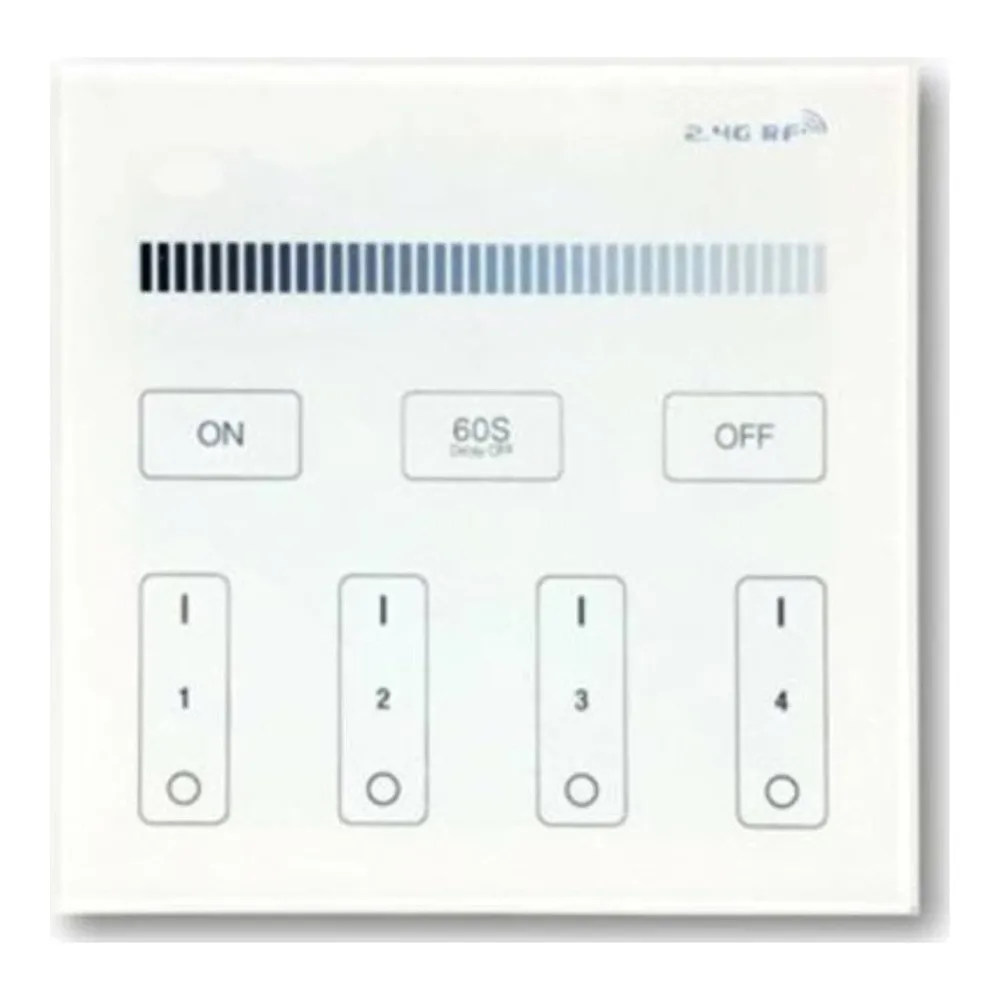
A multi-zone system lets one remote control several areas independently: the kitchen, the dining room cove and the stairs, for example. The 4 zone receivers come in a 12A universal version for indoor use and in a 4 zone exterior controller 20A universal IP67 for decks, soffits and signs. Battery-powered wall controllers in 4 zone and 8 zone versions replace a hardwired switch and stick to the wall or mount with 2 screws.
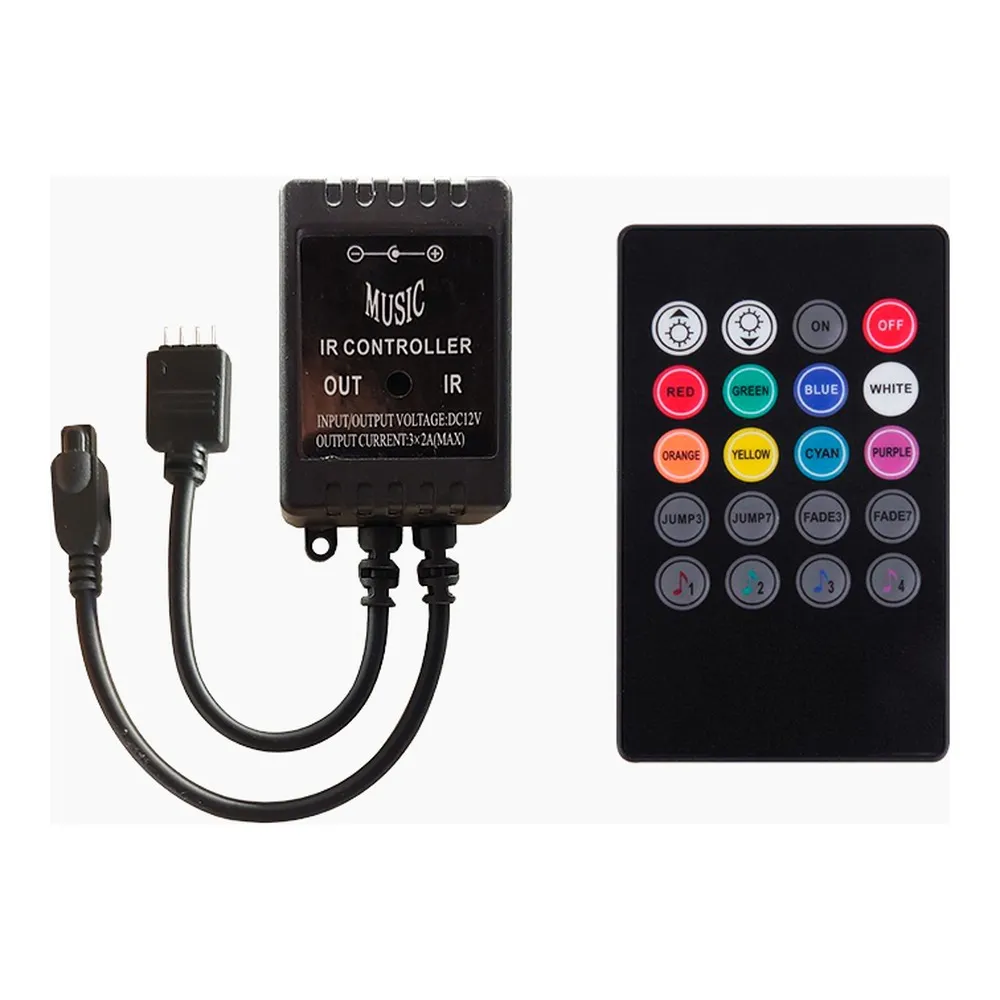
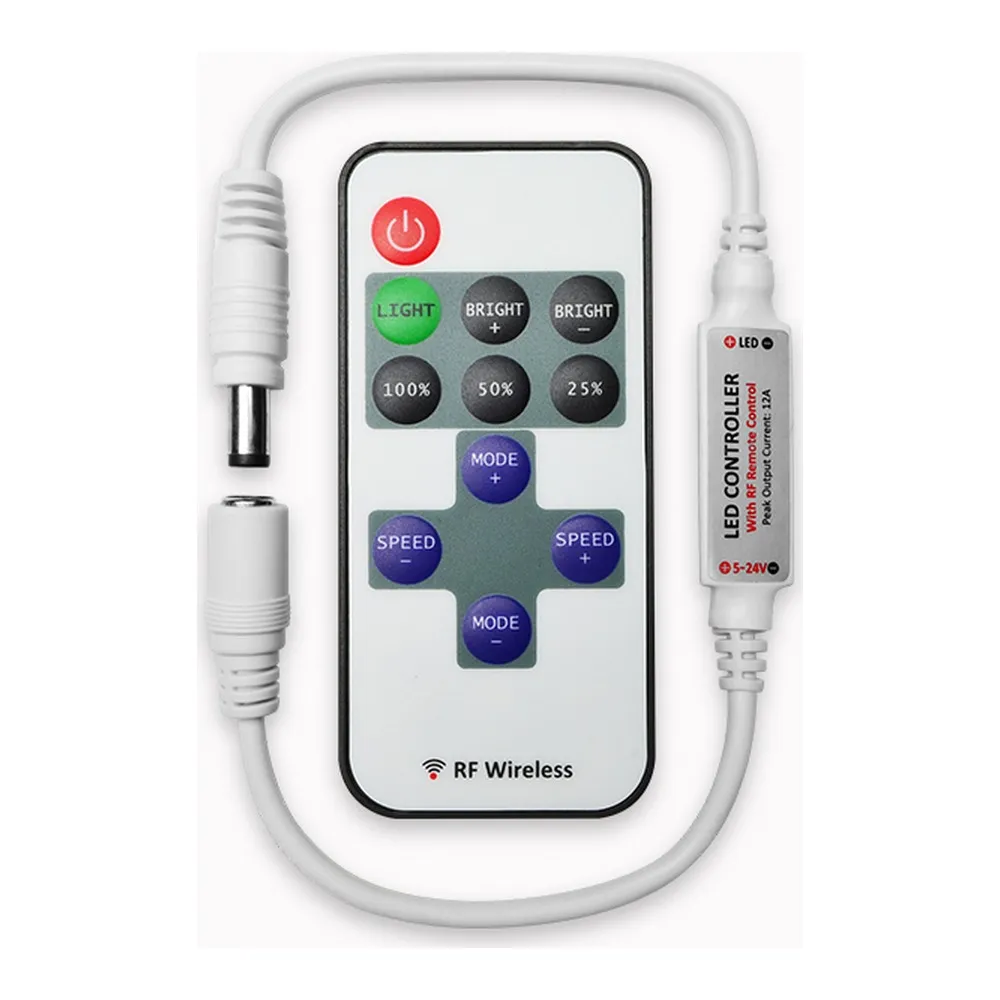
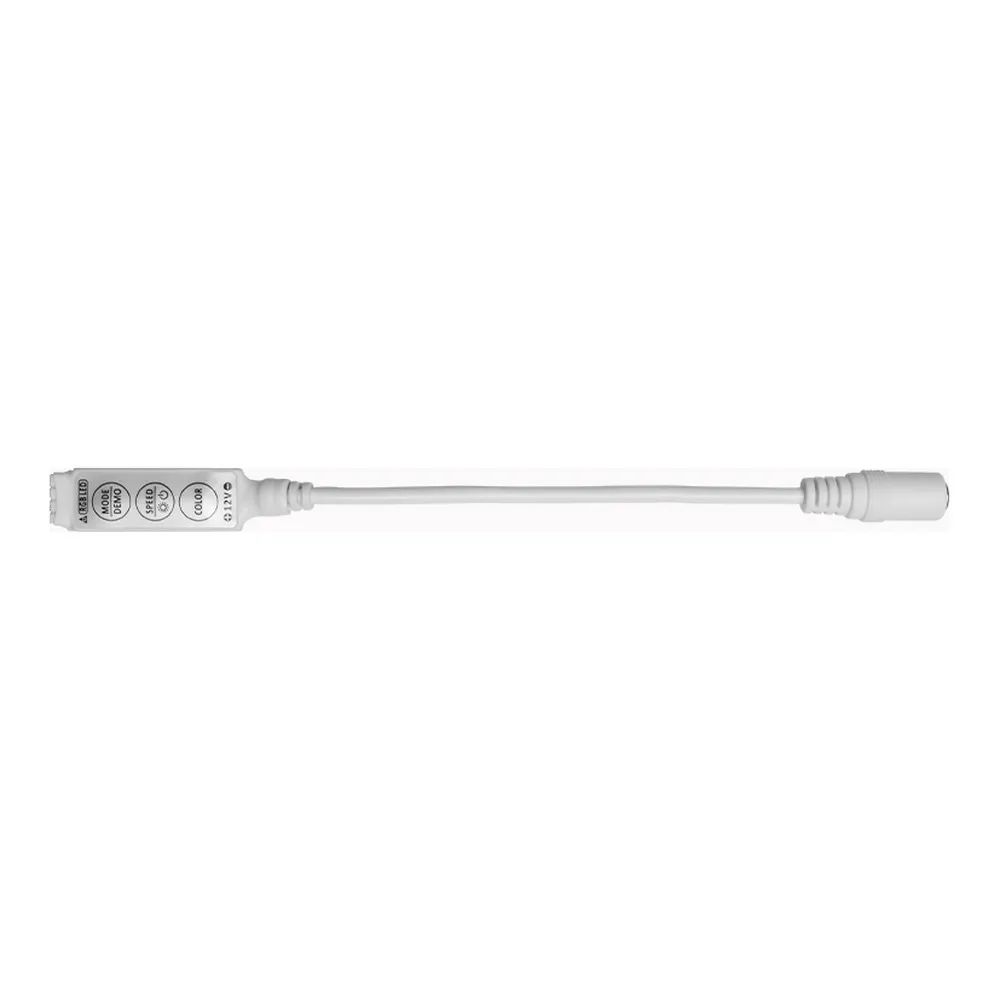
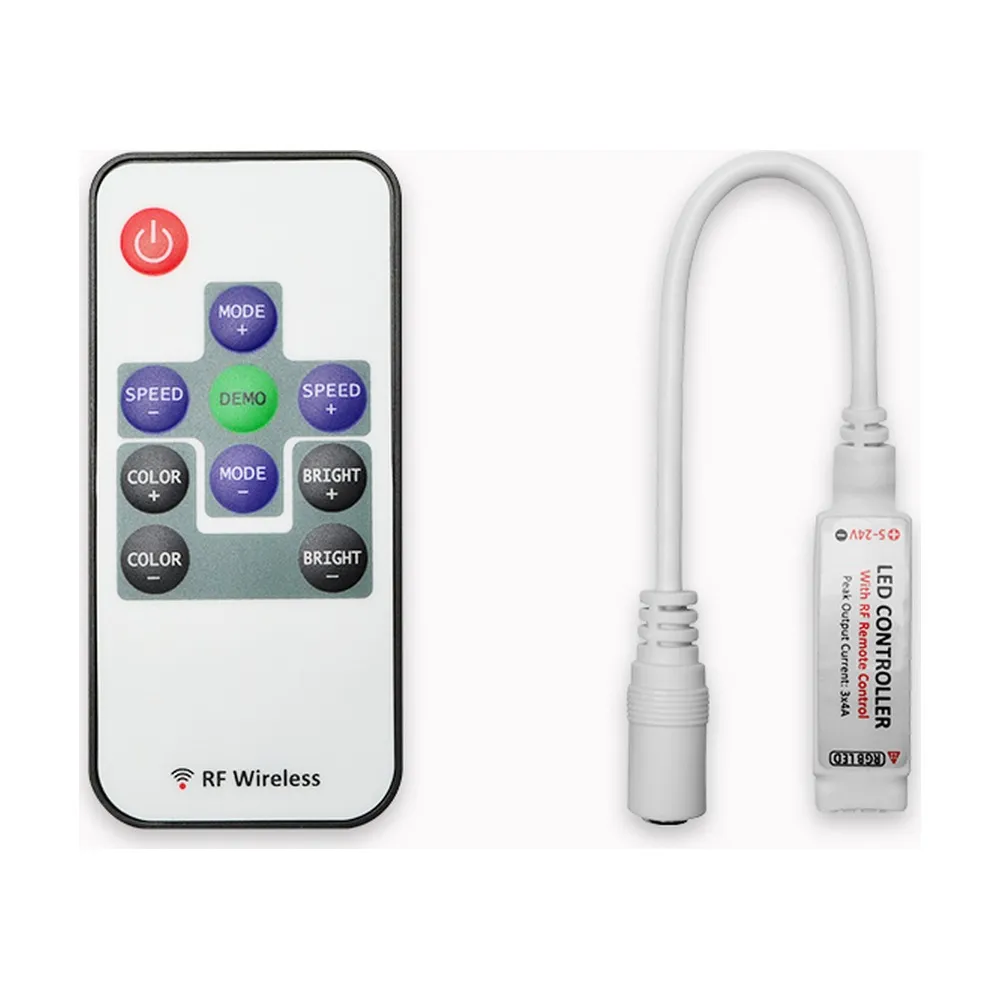
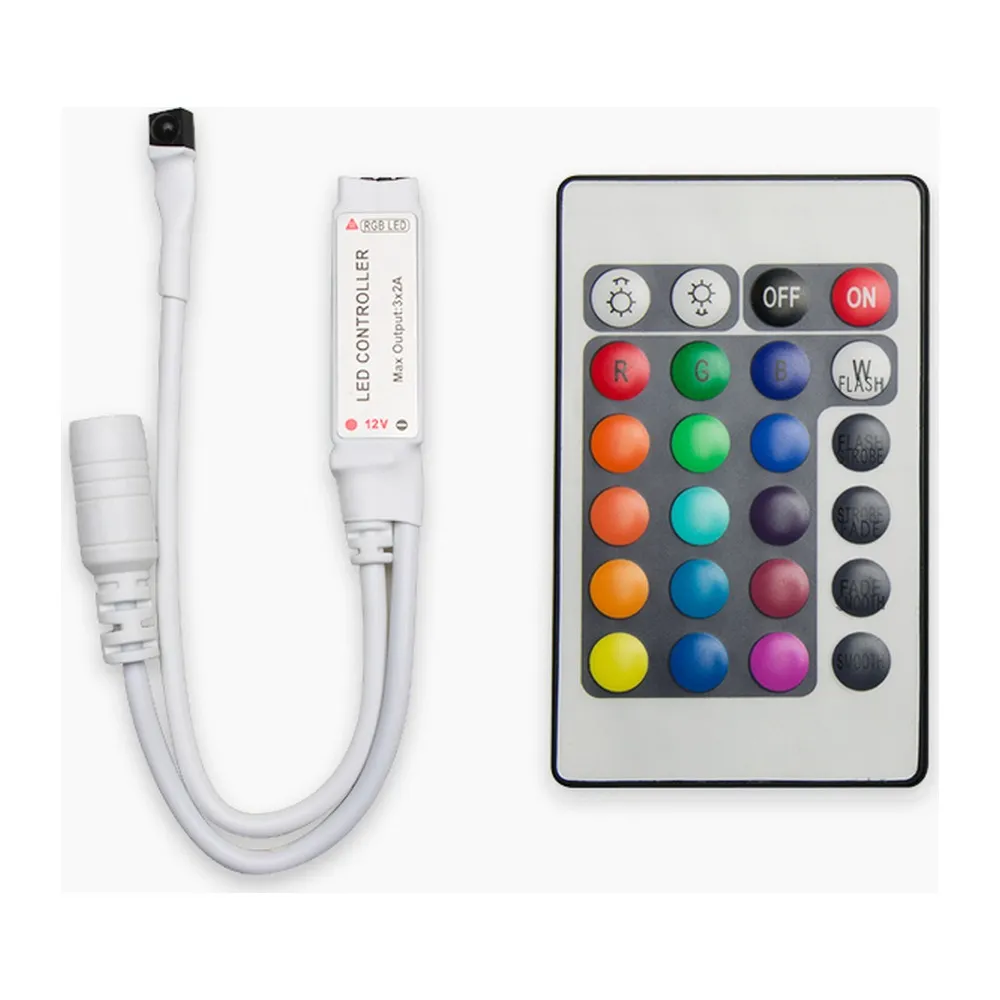
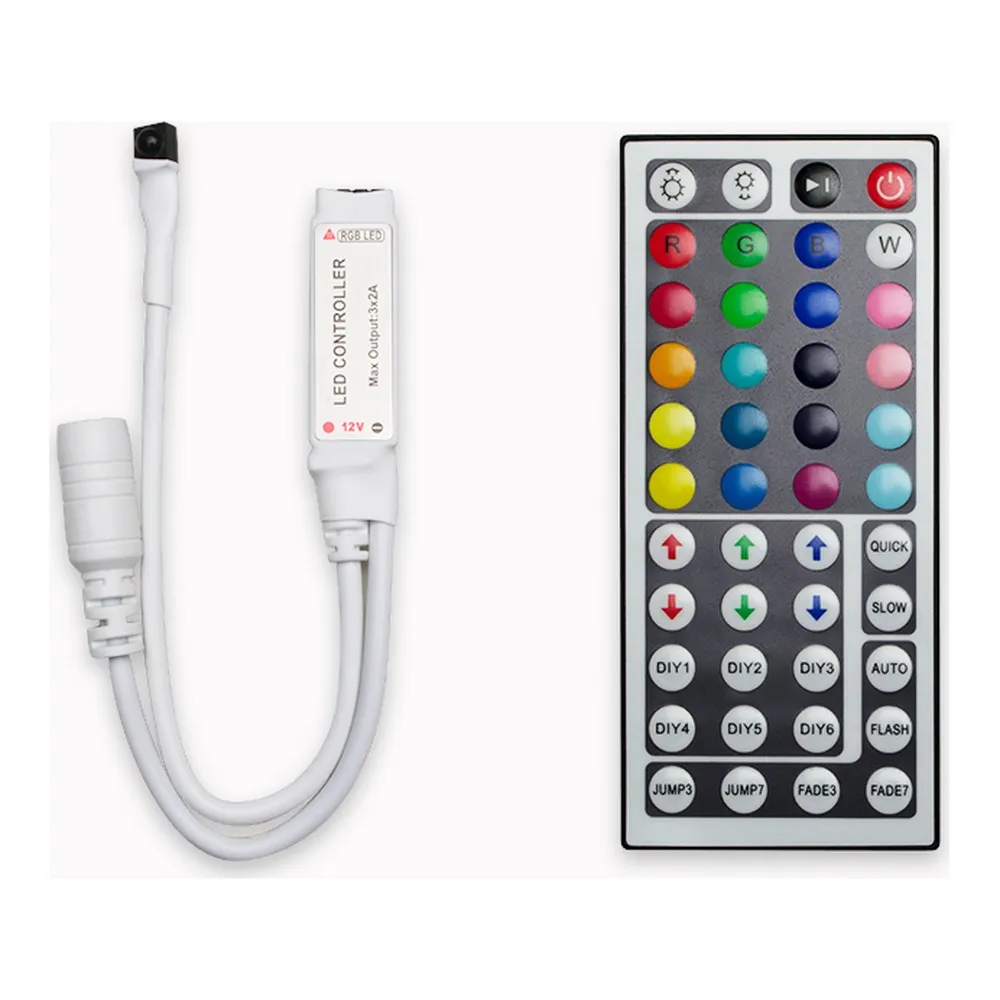
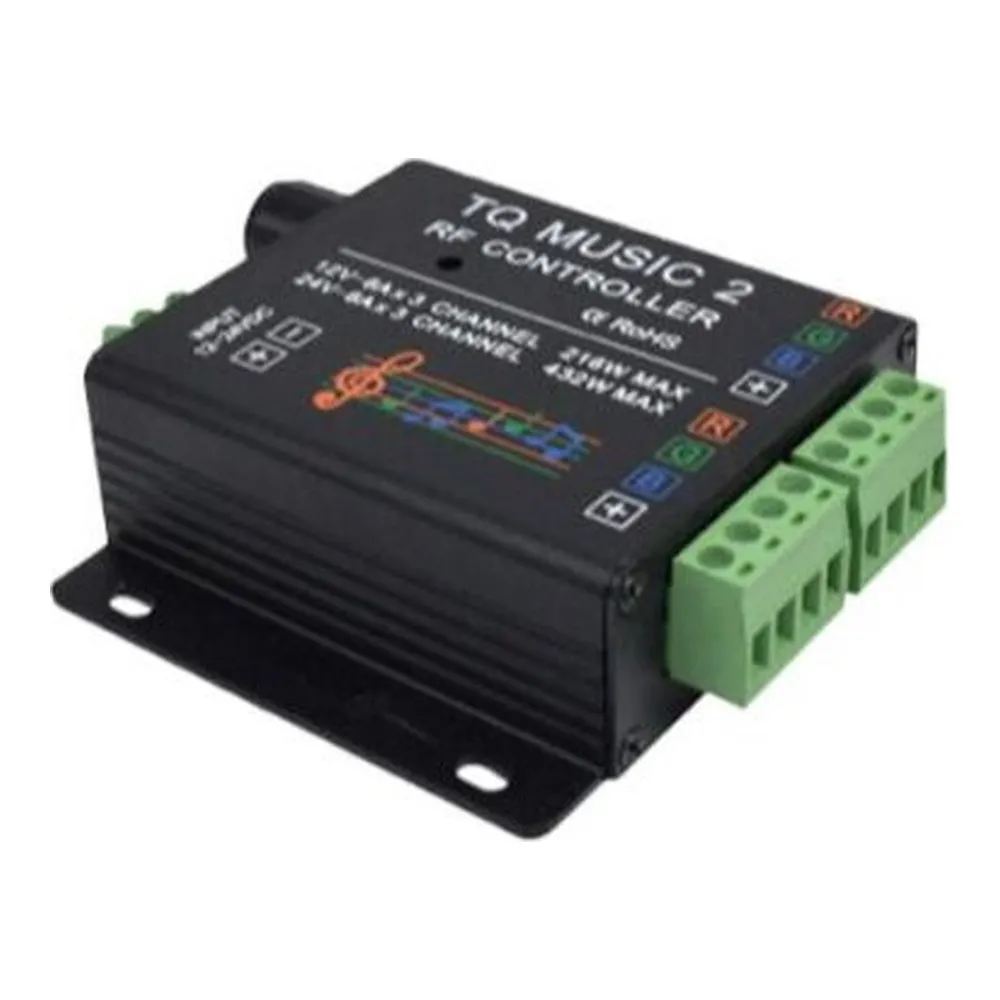
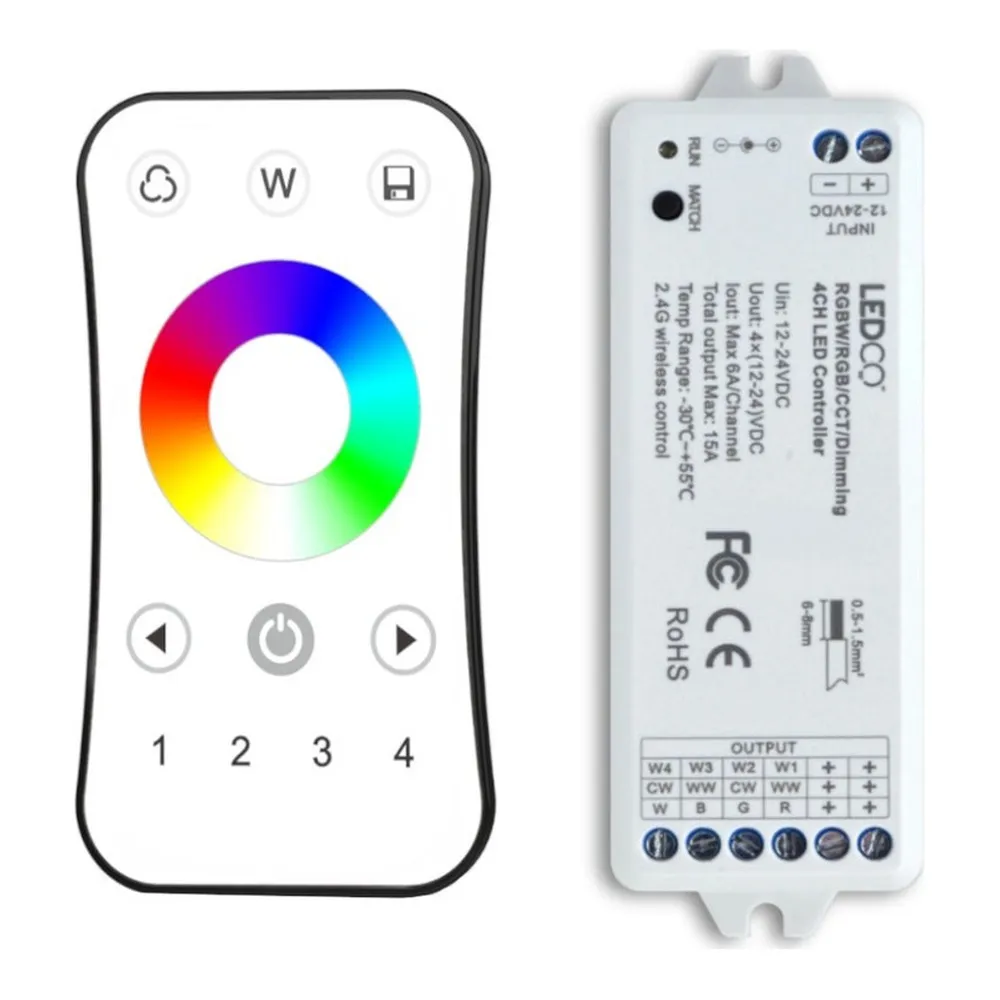
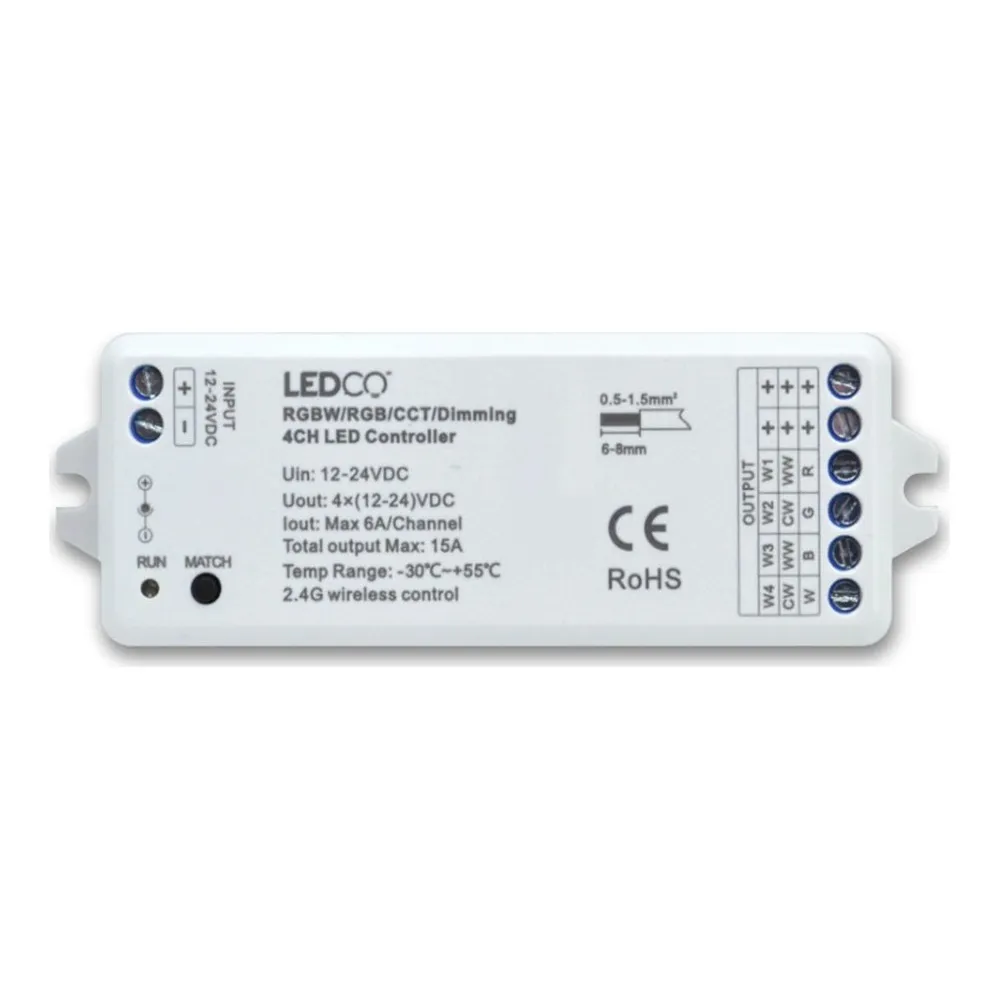
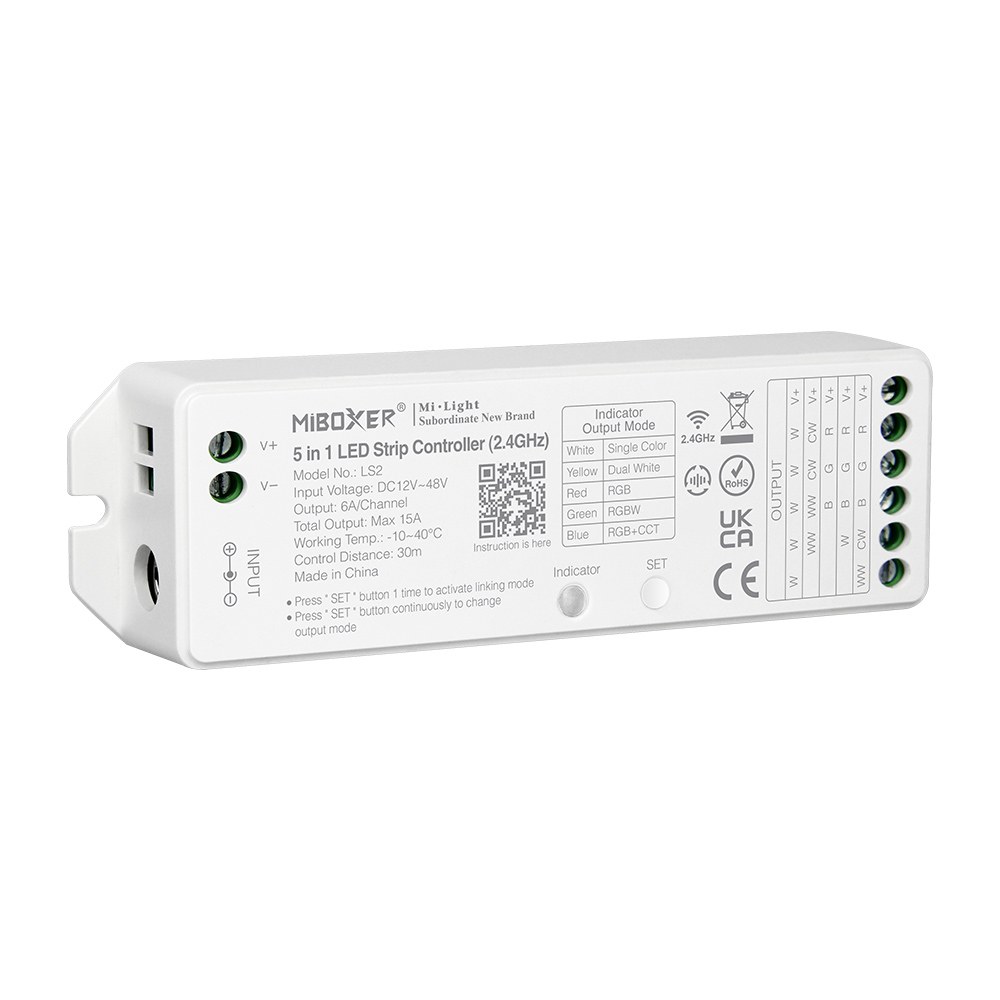
For colour-changing tape, you can start with a 44 key or 24 key infrared kit, a 10 key RF kit or a 20 key sound controller that reacts to music. ARANI RGB and RGBW RF controllers accept 12-24V. The CANOLIGHT 5-in-1 controller drives single colour, 3CCT, RGB, RGBW and RGBCW strips at 6A per channel, 15A total. Match them with RGB LED strips or CCT LED strips.
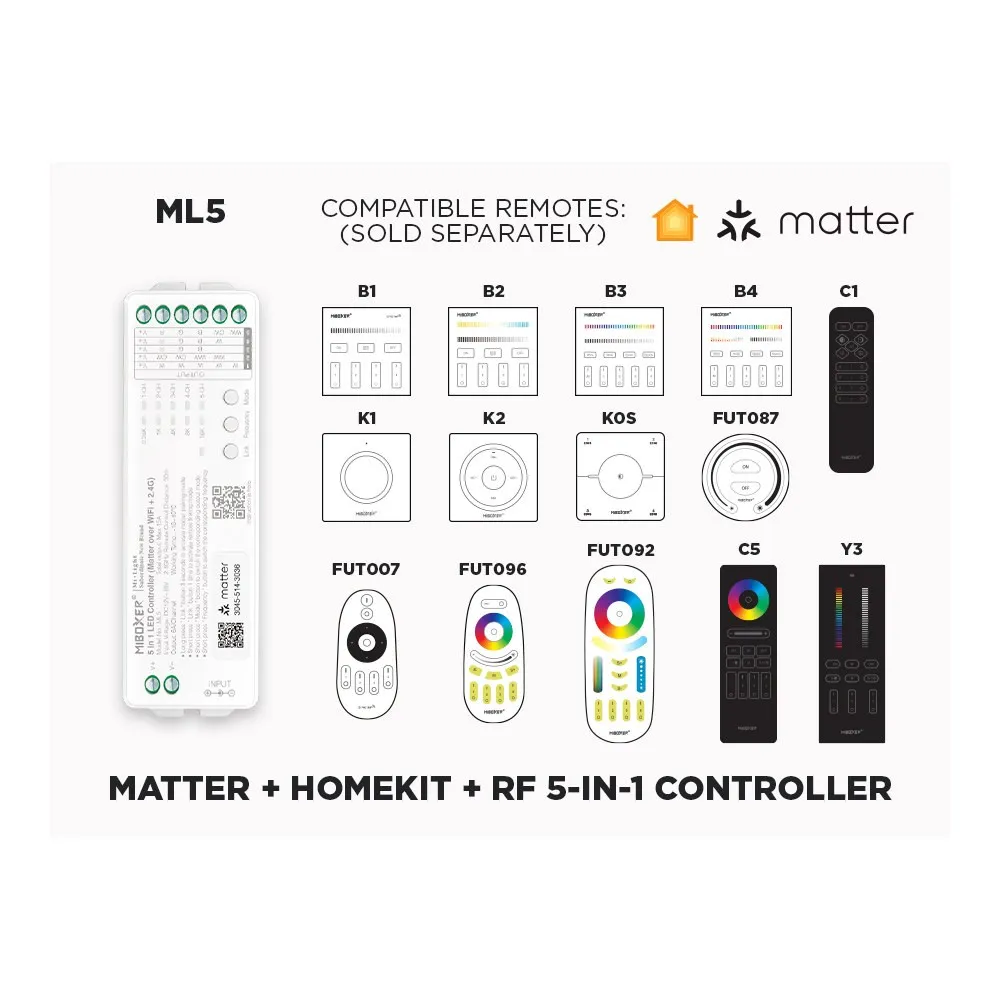
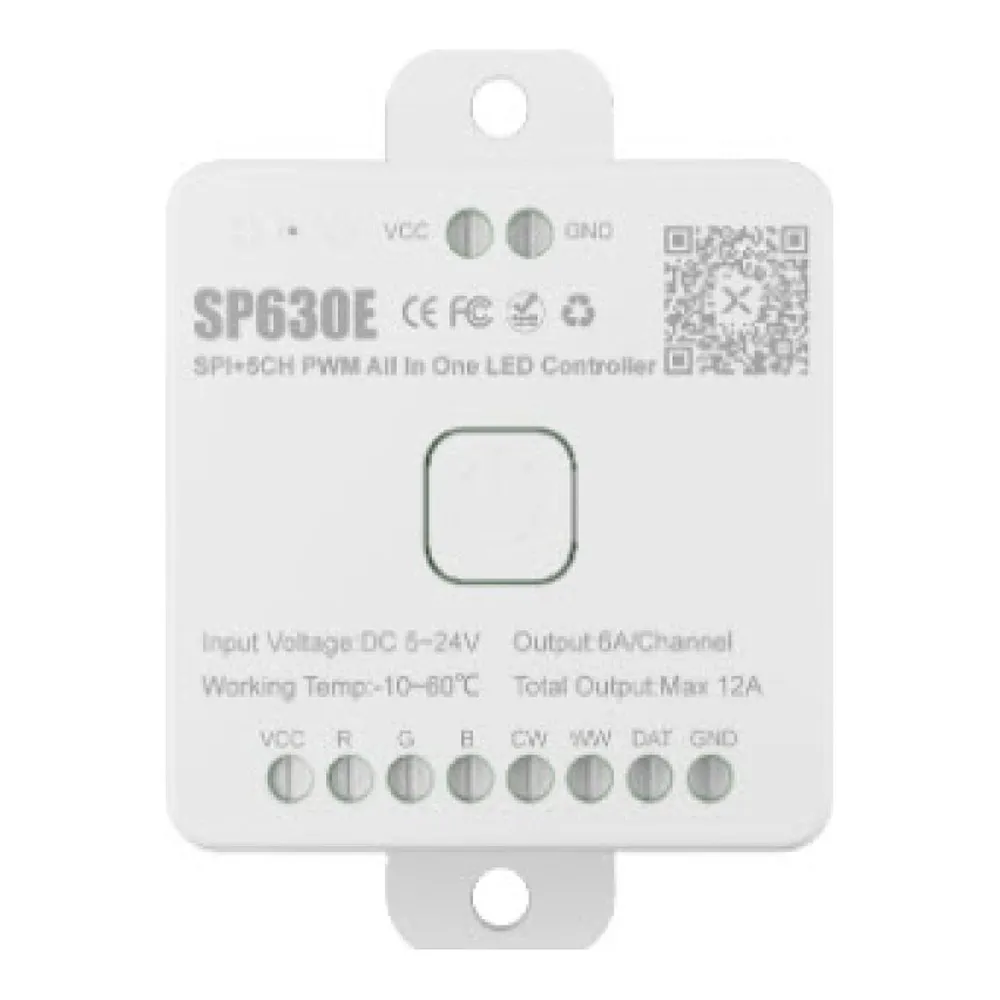
The ML5 is a 5-in-1 controller with Matter, HomeKit and RF, for single colour, CCT, RGB, RGBW and RGBCCT strips, with 18 built-in colour modes and 1 to 8 zones. For app control and Wi-Fi hubs, see Wi-Fi and smart controllers.
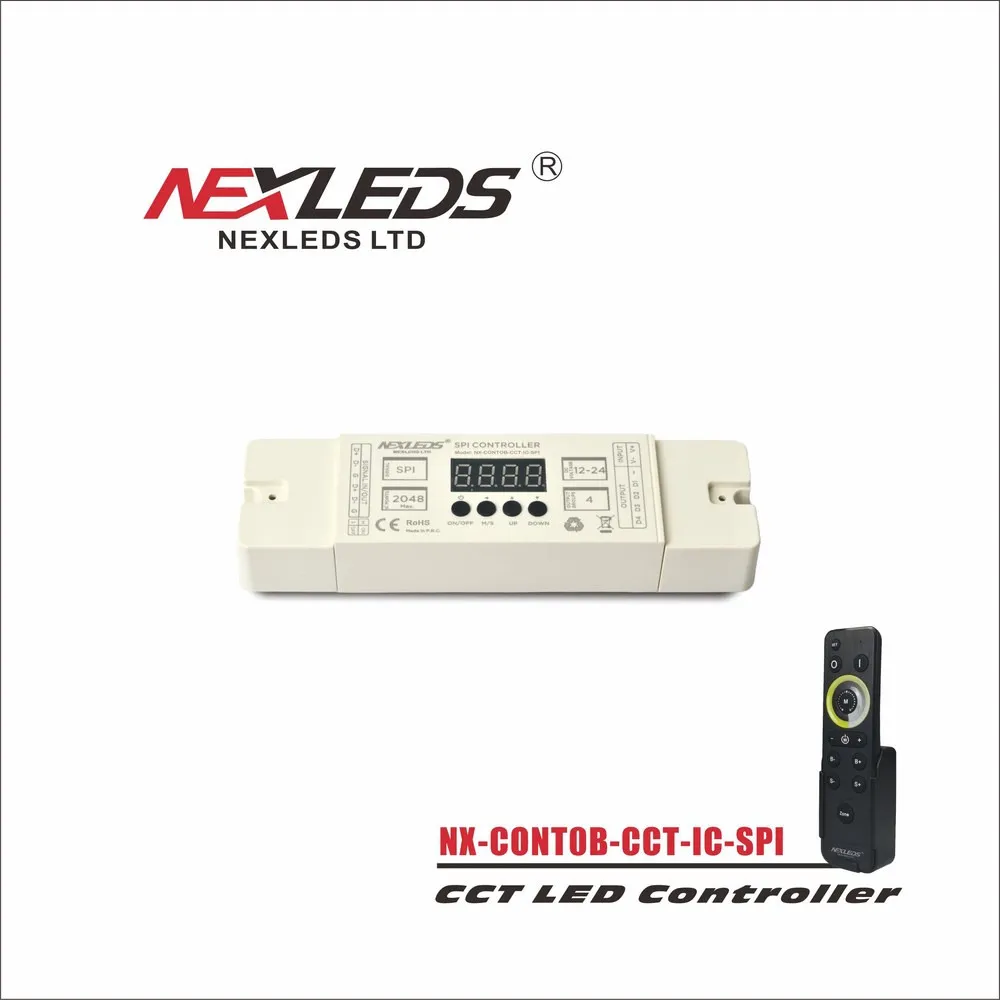
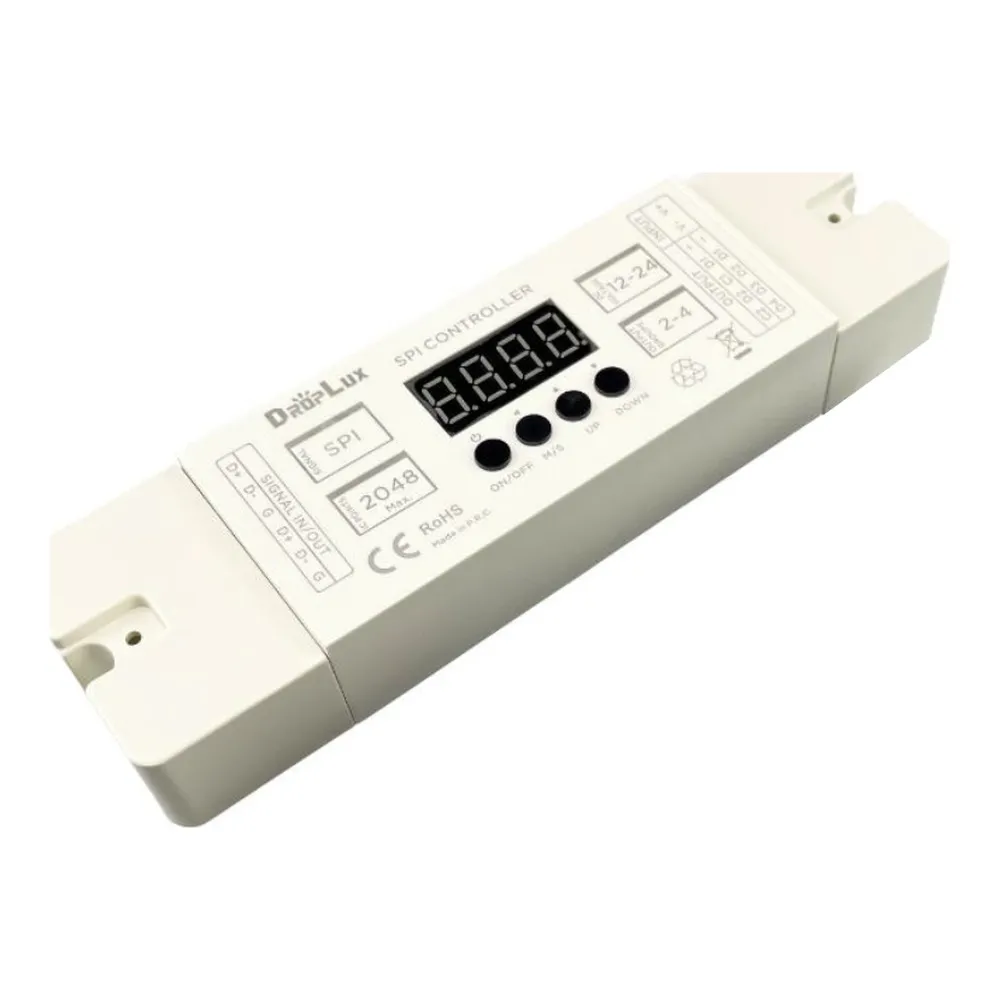
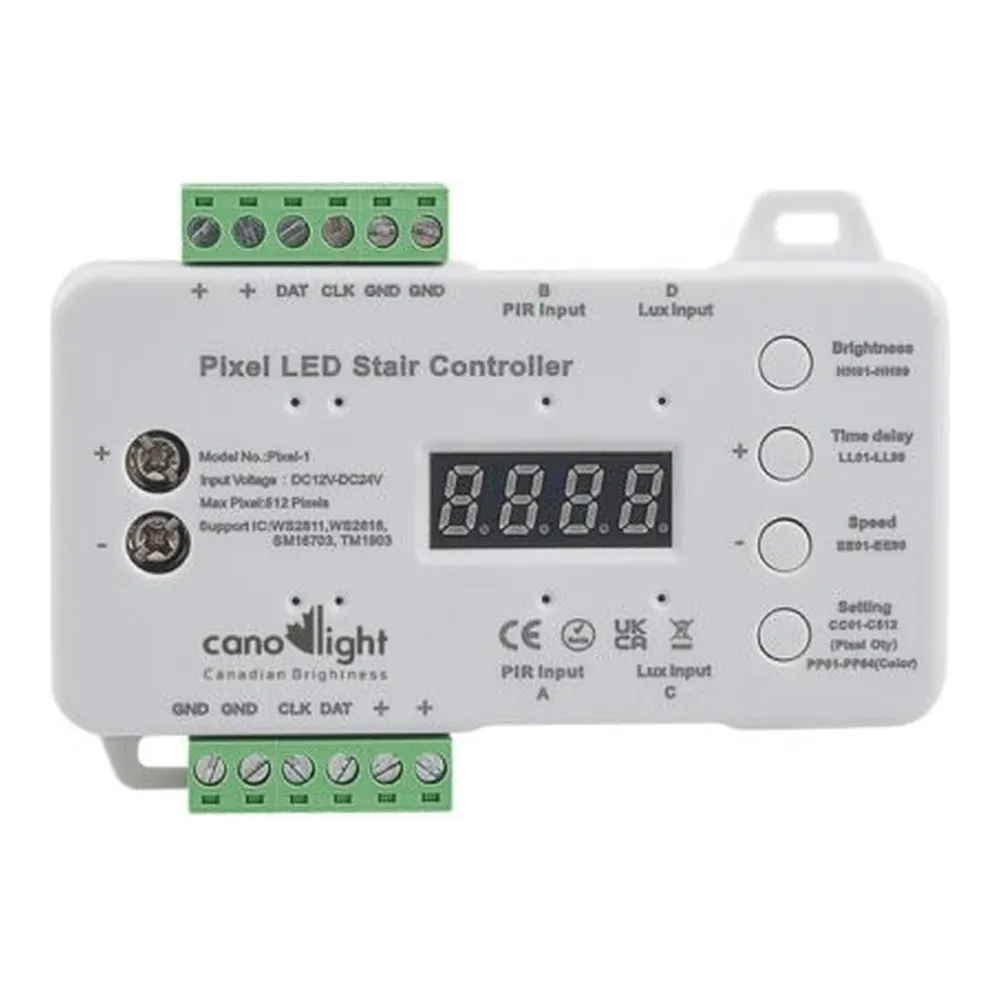
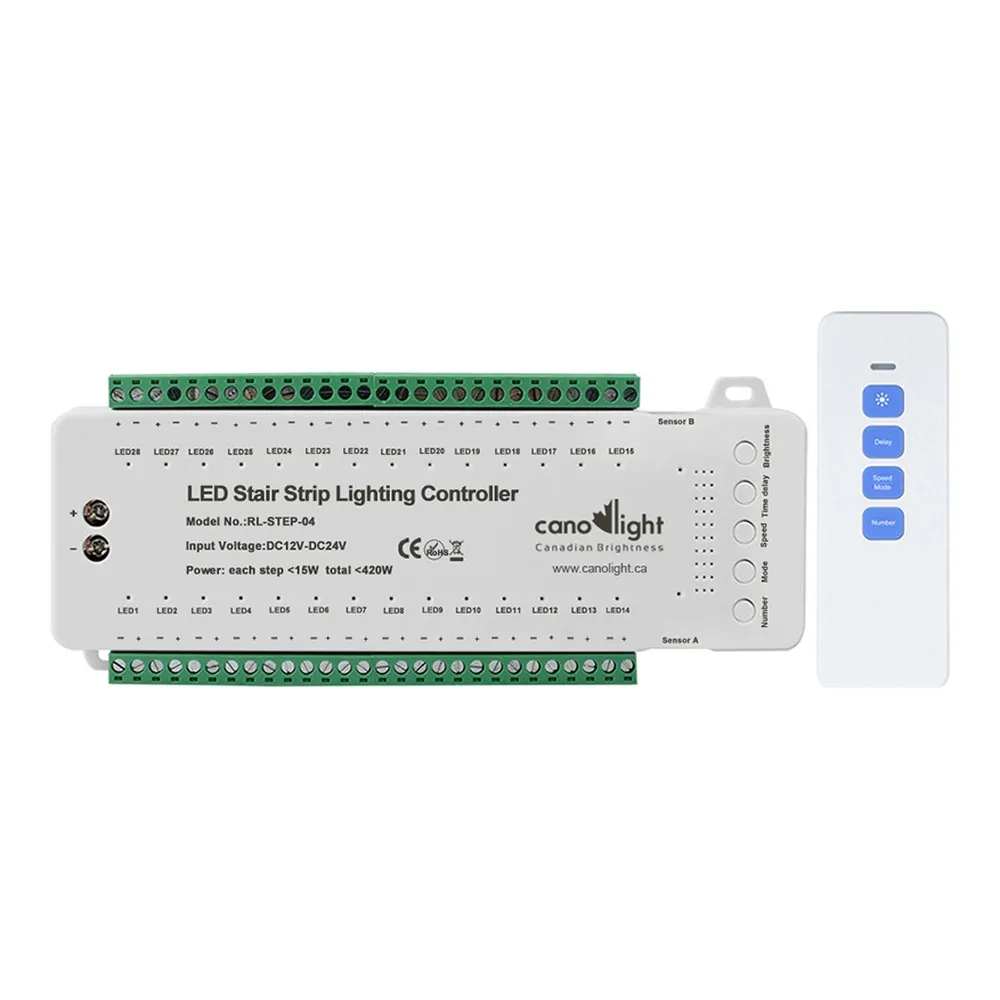
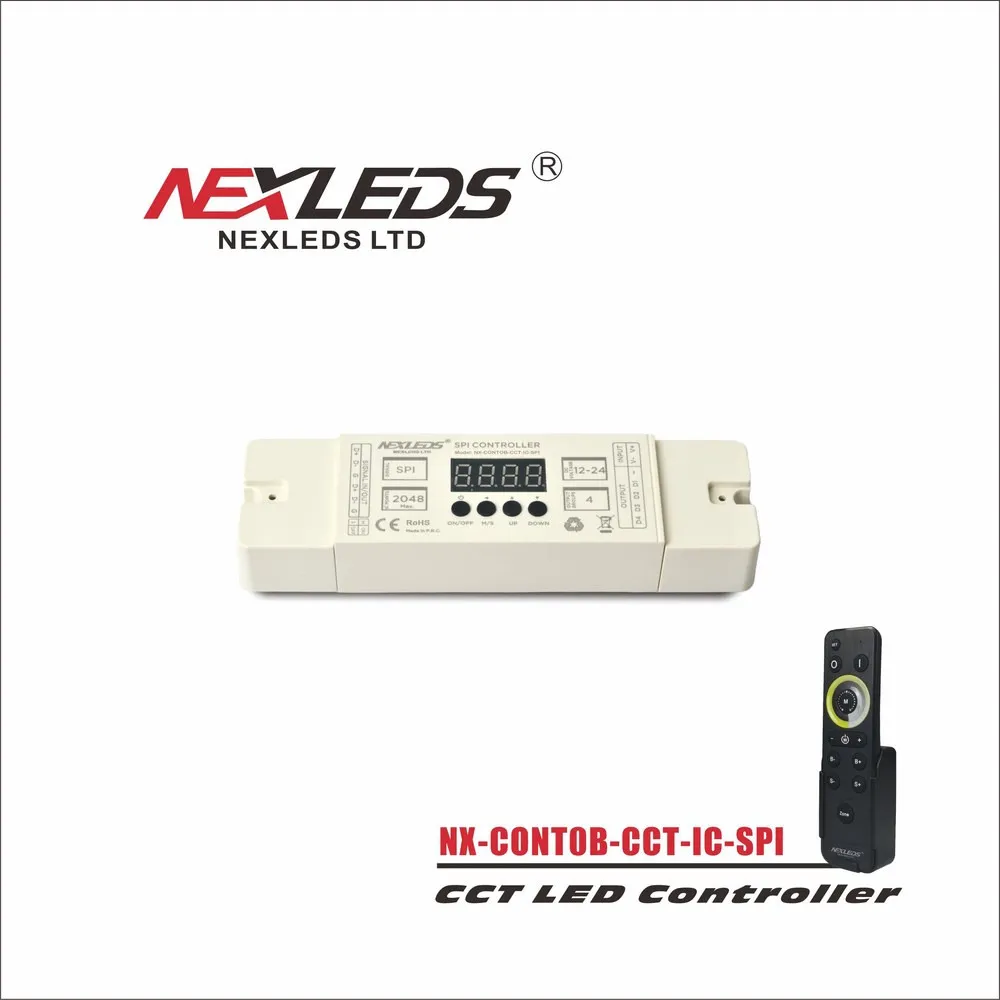
Addressable strips need a digital controller. The CANOLIGHT RF 2.4 GHz SPI controller addresses up to 2048 pixels on 12/24 V, and a handrail controller drives up to 512 pixels on single colour chasable strip. NEXLEDS adds digital CCT chase and RGBW controllers with remote. For stairs, the CANOLIGHT on/off sensor controller with 28 channels switches each step in sequence, up to 420W in total. See pixel LED strips and our staircase lighting ideas.
| Specification | What you will find | What to check |
|---|---|---|
| Input voltage | 12 V, 24 V, 12-24V, 9-24V | Same as the power supply and strip |
| Strip type | Single colour, CCT, RGB, RGBW, RGBCCT, pixel | Number of channels on the strip |
| Signal | IR, RF 2.4 GHz, Matter, HomeKit | Line of sight, range, app |
| Zones | 1 zone, 4 zone, 8 zone, 1 to 8 zones | Number of areas to control separately |
| Current | 2A, 6A per channel, 12A, 15A, 20A | Total strip load |
| Protection | IP20, IP65, IP67 | Indoor or outdoor installation |
A single colour strip has one channel, a CCT strip has two (warm and cool), RGB has three, RGBW four and RGBCCT five. The controller must offer at least as many channels as the strip. Multi-mode controllers (2-in-1, 3-in-1, 5-in-1) avoid stocking a different part for each strip.
Infrared needs line of sight between remote and receiver, like a TV remote. RF 2.4 GHz passes through cabinets and drywall, which is why it is the standard for hidden installations and multi-zone systems.
Install the receiver where you can reach it later, away from heat, and keep the low-voltage wires short between controller and strip. Our guide to choosing LED strip lights covers voltage drop and power, and the smart switches and sensors guide explains how remotes and motion sensors fit together.
At home, a 1 zone RF kit is enough for an under-cabinet run, while a 4 zone system covers a kitchen, a living room cove and a hallway from one remote. Tunable white controllers let you set warm light in the evening and cooler light for tasks. For a rental or a finished basement, a battery wall controller adds a switch where you need it without opening the walls.
In commercial spaces, multi-zone receivers control displays and signage by area, IP67 exterior controllers handle storefronts and patios, and pixel controllers create moving effects on facades and handrails. In a store, a wall controller at the counter lets staff change scenes without an app. On any project, keep a record of which receiver is paired to which zone: it saves time when a remote is replaced or a zone is added later.
No. When the controller does the dimming on the low-voltage side, use a standard non-dimmable power supply of the same voltage as the strip.
Yes, as long as they are the same type and voltage and the total load stays within the controller rating. For areas you want to control separately, use a multi-zone system.
IR needs a direct line of sight to the receiver. RF works through walls and cabinets and supports multi-zone remotes.
A controller with four channels, such as an RGBW controller or a 3-in-1 or 5-in-1 unit set to RGBW mode.
Yes, with a Wi-Fi controller, a Wi-Fi hub paired with RF receivers, or the ML5 with Matter and HomeKit.
Only if it is rated for it. Choose an IP65 or IP67 controller, or install an indoor unit inside a sealed box.
Find the right control for your strip among all LED strip controllers, from inline dimmers to multi-zone and pixel systems.