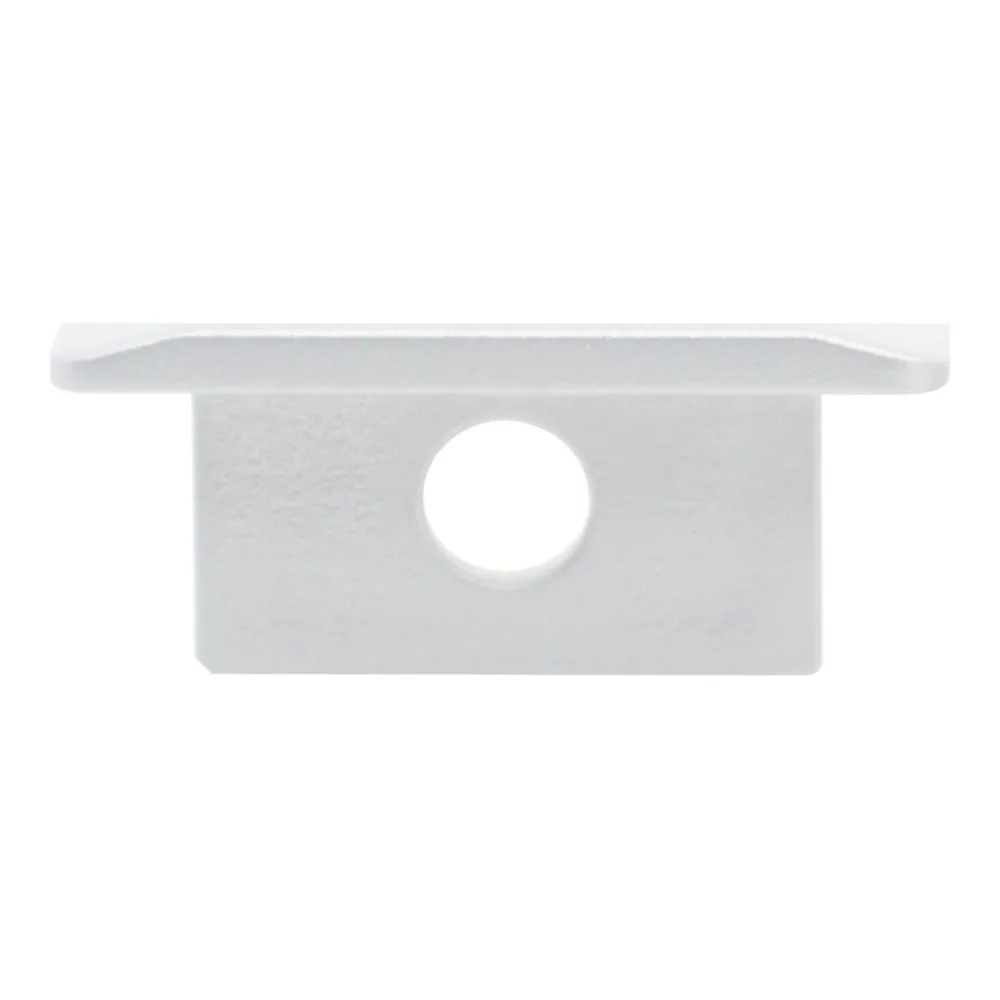
What this end cap actually doesAn aluminum LED channel is cut to length on site, and that cut leaves an open mouth at each end: you can see the tape, the wiring, the inside walls of the extrusion and the edge of the diffuser. The
finishing end cap is the piece that closes it. Seated into the profile, it hides the cut, holds the diffuser end in place visually and gives the run a squared, deliberate termination. This is the
white model
#86 with a hole, supplied as 1 unit, so you buy exactly the quantity your project needs — one for each open end rather than a pack you only half use.
The hole version and where it goesThe hole is not decorative. It is the
wire entry point, the cap you install on the feed side of the channel so the low-voltage supply cable can pass through and out to the driver without being crushed between the cap and the extrusion. A pinched conductor is a future service call; a cable routed through a proper opening is not. On the opposite end of the run, use a solid cap without a hole so the profile is sealed visually from both sides. On longer installations made of several joined sections, you generally only need one hole cap per feed point.
Fit and compatibilityEnd caps are profile-specific. Surface-mount, recessed and corner extrusions all have different cross-sections, and each one takes its own cap shape. Before ordering, confirm that your channel is the #86 profile — comparing the cap outline to the end of your extrusion is the fastest check. If your project uses a different profile, matching caps exist for those as well, such as the
Finishing end cap #11 with hole for the wire side and the
Finishing end cap #11 no hole for the closed side. For flexible
neon end caps, the side-view and top-view versions such as the
Flex neon endcap side view without hole cover those profiles instead.
Installation tips from the fieldRun your low-voltage lead through the opening first, then press the cap firmly into the channel until it sits flush with the extrusion walls. A small dab of adhesive, or a set screw where one is provided, keeps the cap secure in high-traffic spots and overhead locations where vibration or a passing shoulder could pop it loose. Leave a little service slack in the cable so the tape can be pulled later for maintenance or replacement without cutting anything. Finally, wipe the inside of the diffuser before you close the run — it is far easier now than after the cap is set.
Where it shinesKitchen and bathroom
under-cabinet lighting, cove and ceiling details, stair nosings, closets, display cases and shelving, bar fronts, retail gondolas and reception desks: anywhere a strip run terminates in plain sight, this cap is the difference between a finished detail and a rough one. It suits both residential renovations and small commercial fit-outs, and since it is sold individually, contractors can count exact quantities per drawing and still keep a handful in the van for the inevitable extra cut. No separate documentation is listed for this item; if you are unsure of your profile shape, measure the outside width and height of your extrusion before ordering.