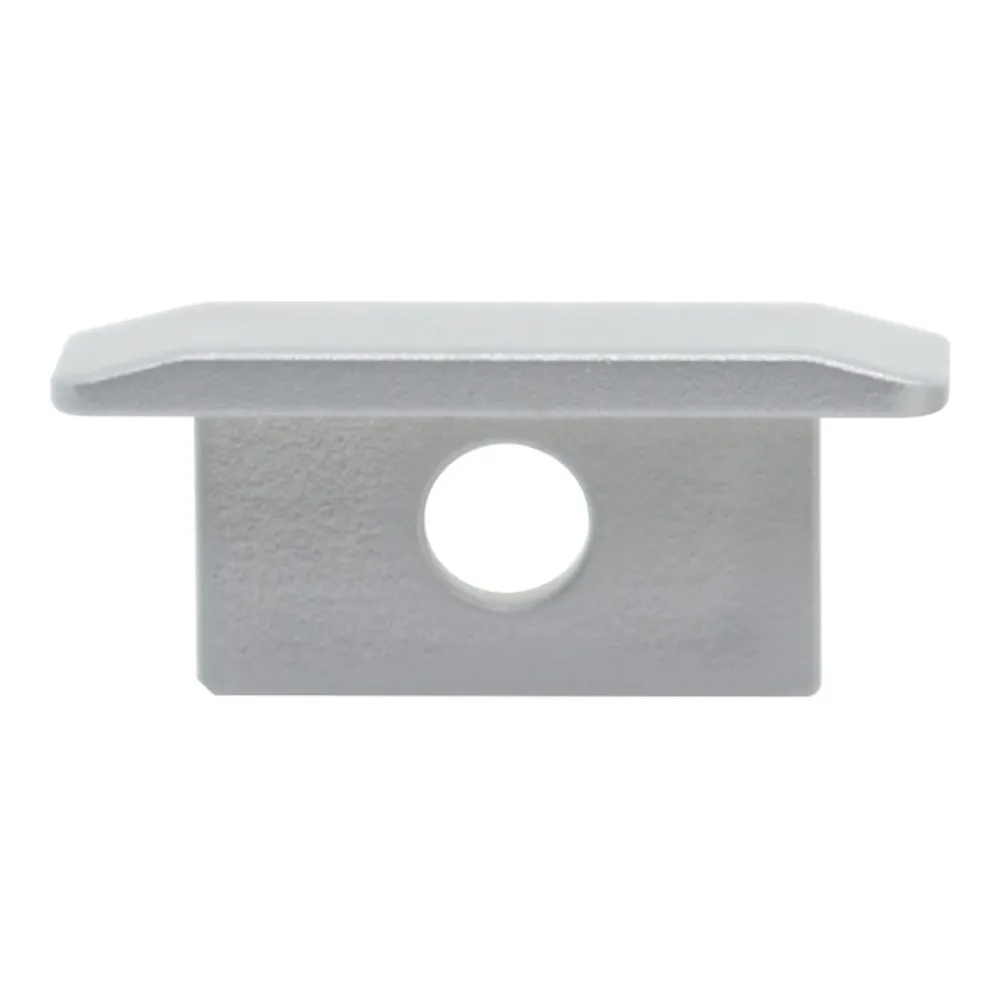
What this end cap isAn aluminum LED profile is cut to length on site, which always leaves two raw, open ends. This
finishing end cap #86 (with hole) closes one of them. It is the drilled version of the standard #86 cap: a small opening lets the power lead, the low-voltage supply cable or the connector pigtail exit the channel in a straight line. That single detail prevents the tight bend and the pinched conductor you often see when a cable is squeezed between the extrusion and the wall, and it keeps dust and debris out of the channel interior. Sold individually as 1 unit, SKU
LCENDCAP-STAND-86-H, so you buy only what the run requires.
Fit and compatibilityEnd caps are
profile-specific. The number in the name is the key: this one is made for the #86 channel series, and it will not substitute for another extrusion shape. Always match the cap to the channel you are actually installing — recessed, surface-mount or corner styles all have their own end cap profiles. A correct match does more than look good: it keeps the
diffuser lens and the LED strip pressed into their seats, maintains a uniform depth at the end of the run, and lines up two sections cleanly where they butt together. If you also need a closed end for the opposite side of the same run, pair this drilled cap with the solid version of the same series.
Installation, step by stepCut the aluminum channel and the diffuser to the same length so the cap seats flush against both. Pass the cable or connector lead through the hole before you press the cap onto the channel end — doing it afterwards is far more awkward. Seat the cap by hand until it sits square with the extrusion, then power up and test the
LED strip while the diffuser is still removable, so any correction happens before everything is closed up. For ceilings, soffits, vertical surfaces or anywhere vibration and handling are a factor, a small dab of clear silicone or adhesive on the inside face keeps the cap permanently in place. Silicone also gives you a neater seal around the cable exit.
Where it earns its keepThis is a staple of
cove and cabinet lighting: under-cabinet runs in a kitchen, toe-kick and island details, bookshelves and closet organizers, display cases and retail shelving, stair nosings, hallway accents, bar fronts, reception counters and interior signage. In light-commercial fit-outs it is the difference between an installation that reads as custom millwork and one that looks improvised. Canadian renovators appreciate that a drilled cap lets the feed cable slip behind a cabinet gable or through a small hole in a soffit without a visible kink. Specify one drilled cap at the power-feed end and a solid cap at the opposite end for each continuous run, or two drilled caps when you feed through to the next section.
Related accessoriesBuilding with flexible
neon-style LED instead of aluminum channel? The same family covers it with the
Flex neon endcap 3x6 with hole and the
Flex neon endcap 6x6 without hole. For another extrusion series, look at the
Finishing end cap #11 with hole and its solid counterpart, the
Finishing end cap #11 no hole. Remember to confirm the series number of your channel before ordering, and keep a couple of spares in the toolbox — end caps are the part most often lost on a job site.