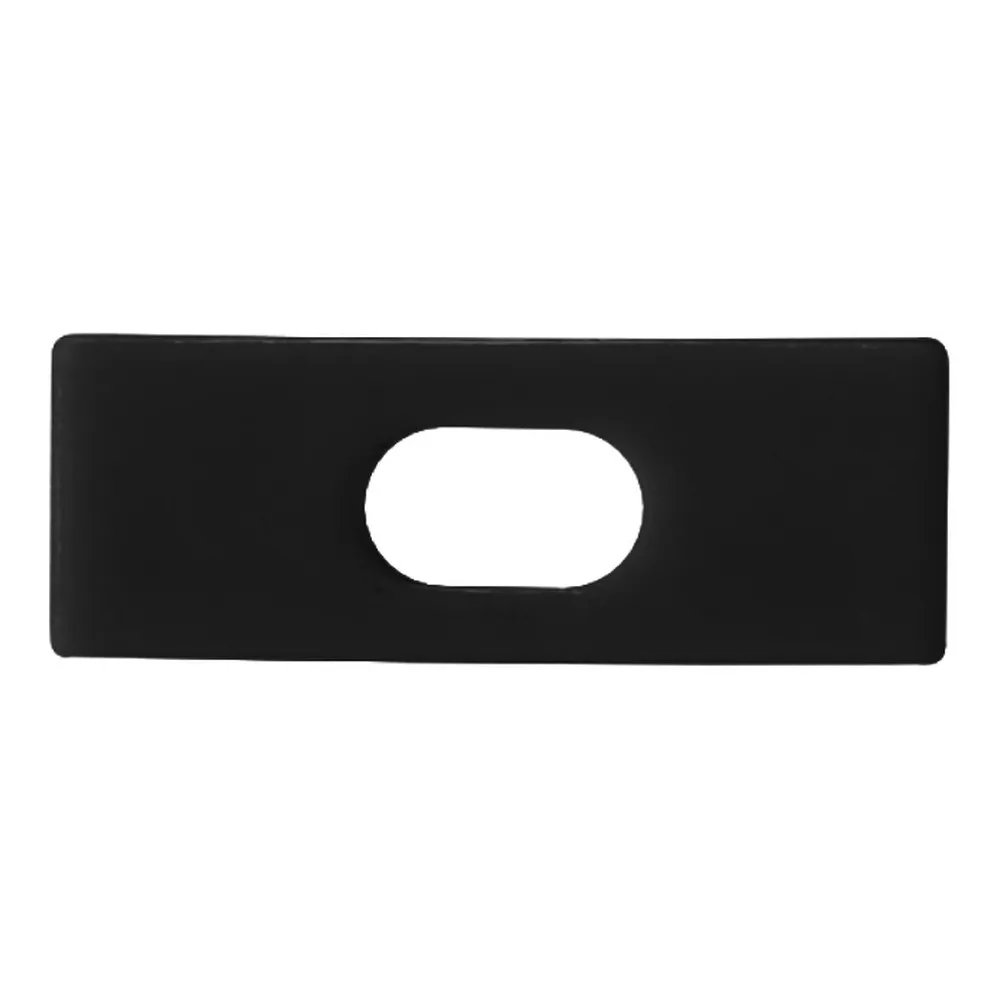
What this end cap is and what it closesAn LED channel is an aluminum extrusion that holds LED tape and carries a snap-in diffuser lens. Cut that extrusion to length and you are left with two raw ends: exposed aluminum, an open lens slot, and a direct path to the tape and wiring inside. The
finishing end cap #84 is the piece that closes one of those ends. It is the standard finishing profile shape, black, sold one per package, and this version is drilled with an opening so the supply wire or a connector can pass through. Ordering code
LCENDCAP-STAND-84-H-BK. In practice you use one capped-with-hole end where power enters the run and one solid cap at the far end, which gives the installation a deliberate, symmetrical look instead of an unfinished cut.
Fit, finish and constructionThe #84 designation identifies the profile shape the cap is moulded to, so it seats in channels built around that extrusion geometry — always match the cap number to the channel number you are installing. It friction-fits: you press it into the end of the profile and it holds without screws, glue or tools. The black finish is the one to choose when your extrusion is black or when the channel is recessed into a dark ceiling, a black millwork reveal or a matte-black retail fixture, where a silver cap would read as a bright dot at the end of the run. If your run sees vibration, gets handled often, or sits somewhere a bumped cap would be a service call, a small dab of adhesive on the seating surface will keep it permanently in place.
Wiring, protection and installationThe opening is the whole point of this version. It gives the supply conductor a clean route out of the profile instead of forcing it over a sharp cut edge, and it supports the cable so that movement at the exit point does not work the solder joints on the tape. Cut and deburr your channel first, clean out the aluminum chips, then feed the wire or connector through the hole
before pressing the cap home — trying to thread it afterward is how wires get trapped. Once closed, the cap keeps dust, drywall grit and insects out of the extrusion and puts a physical barrier between fingers and the
LED strip inside, which matters in closets, under counters and anywhere a hand can reach into a cove.
Where it earns its keepKitchen under-cabinet and toe-kick lighting, bathroom vanity details, cove lighting in a living room or hallway, stair and handrail runs, walk-in closets, pantry shelving, home theatre risers, garage and workshop benches. On the commercial side: retail display cases and shelf edges, restaurant bars and banquettes, reception desks, salon mirrors, office millwork and signage backers. Contractors typically order caps by the handful with every channel purchase, because runs get field-cut and the last thing you want is a finished installation with a bare aluminum end showing.
Related parts and documentationKeep the family straight when you order: for the other standard profile in the same series, see the
Finishing end cap #11 with hole for the feed end and the
Finishing end cap #11 no hole for the closed end. For
flexible neon projects rather than rigid aluminum channel, the matching pieces are the
Flex neon endcap 3x6 with hole and the
Flex neon endcap top view without hole. No spec sheet or IES file applies to this accessory; the fit is determined entirely by the profile number, so confirm your channel is a #84 before ordering and count one cap per open end.