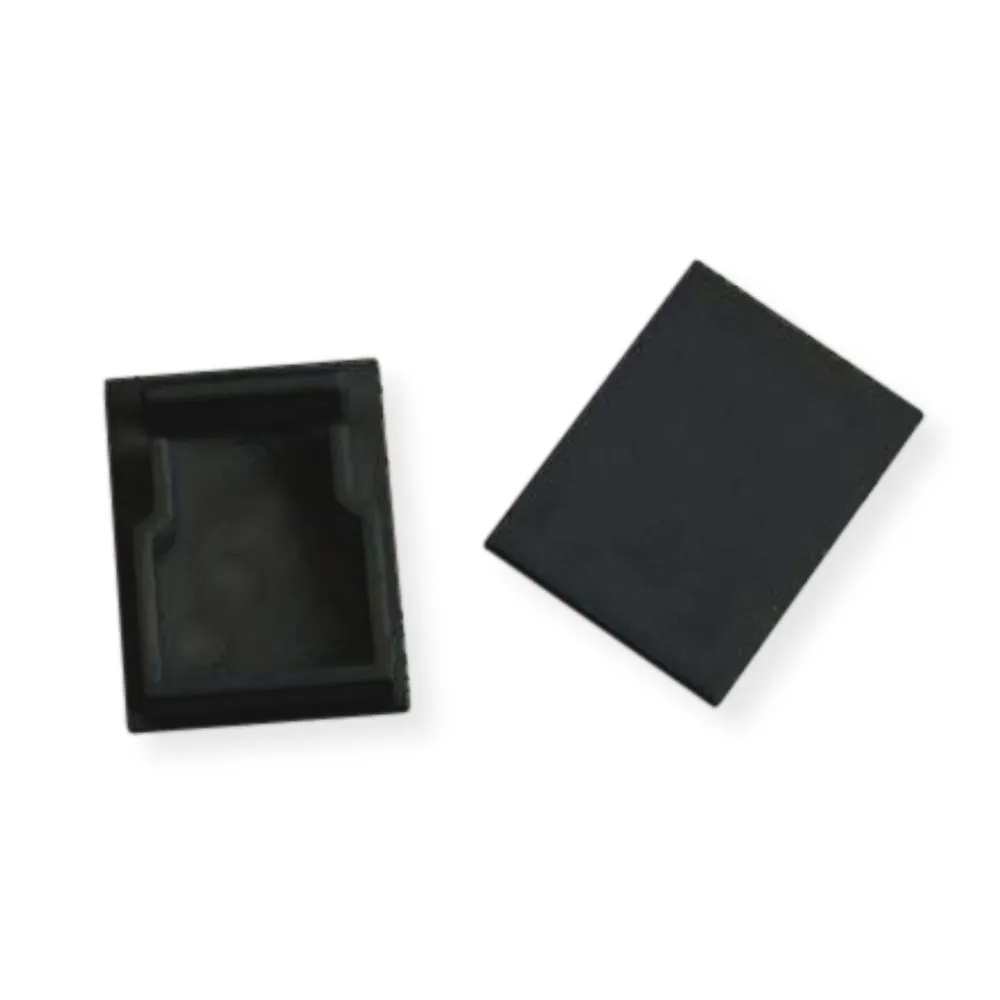
What this cap is and what it doesAn aluminum LED extrusion leaves two raw, open ends once it has been cut to length. This
finishing end cap #87 closes one of them. It is a single unit, the
standard profile version, in a
black finish, and it is the
no-hole variant — a solid face with no cable opening. Pressed onto the end of the channel, it conceals the cut edge, blocks the direct view of the last LEDs on the strip and turns an open extrusion into a deliberate, finished-looking linear fixture.
Build and fitThe cap is shaped to match the profile it belongs to, so it seats flush against the extrusion without gaps or overhang. That precise fit matters for more than looks: a well-seated cap helps hold the diffuser lens in position at the end of the run and shields the LED strip from dust and accidental contact, which is welcome in workshops, garages, display cases and anywhere fingers get close to the channel. The black finish is deliberately discreet — it reads as a shadow line rather than a bright accent, so it disappears against dark channels, dark millwork and painted reveals. Because several profile families each use their own dedicated caps, always match the cap to the channel you are installing rather than assuming one shape fits all.
Where it goes in the circuitThink of a channel run as having a feed side and a terminating side. The
no-hole endcap belongs at the terminating side, where nothing needs to exit the profile. At the feed side, where the power lead or a connector has to pass through, you normally use the matching cap with a cable opening — that is how you keep wiring tidy and avoid pinching the lead between the cap and the extrusion. On long installations made of several channel sections, most installers close only the two visible ends of the run and leave the internal joints butted together.
Installation tipsCut the extrusion square first — a mitre box or a fine-tooth blade gives the cleanest result — then deburr the edge with a file or emery cloth so the cap can seat fully. Dry-fit the cap before final assembly, install the strip and the lens, then press the cap on. In high-traffic areas, on stair nosings or in overhead locations where a dropped cap would be a nuisance, a small drop of adhesive keeps it permanently secure. Buy a spare or two: these small parts have a talent for disappearing into toolboxes on site.
Applications and related partsUnder-cabinet and over-cabinet kitchen lighting, cove and ceiling coffers, stair and hallway accents, closet and pantry strips, shelving and retail display cases, reception desks, bar fronts and workshop task lighting all rely on properly closed channel ends. It suits residential renovations and light-commercial fit-outs equally well. If your project uses the #11 profile instead, see the
Finishing end cap #11 (no hole) and, for the feed side, the
Finishing end cap #11 (with hole). For flexible neon runs, the
Flex neon endcap side view (without hole) and the
Flex neon endcap top view (without hole) do the same job for that format. Reference this part as
LCENDCAP-STAND-87-BK when ordering.