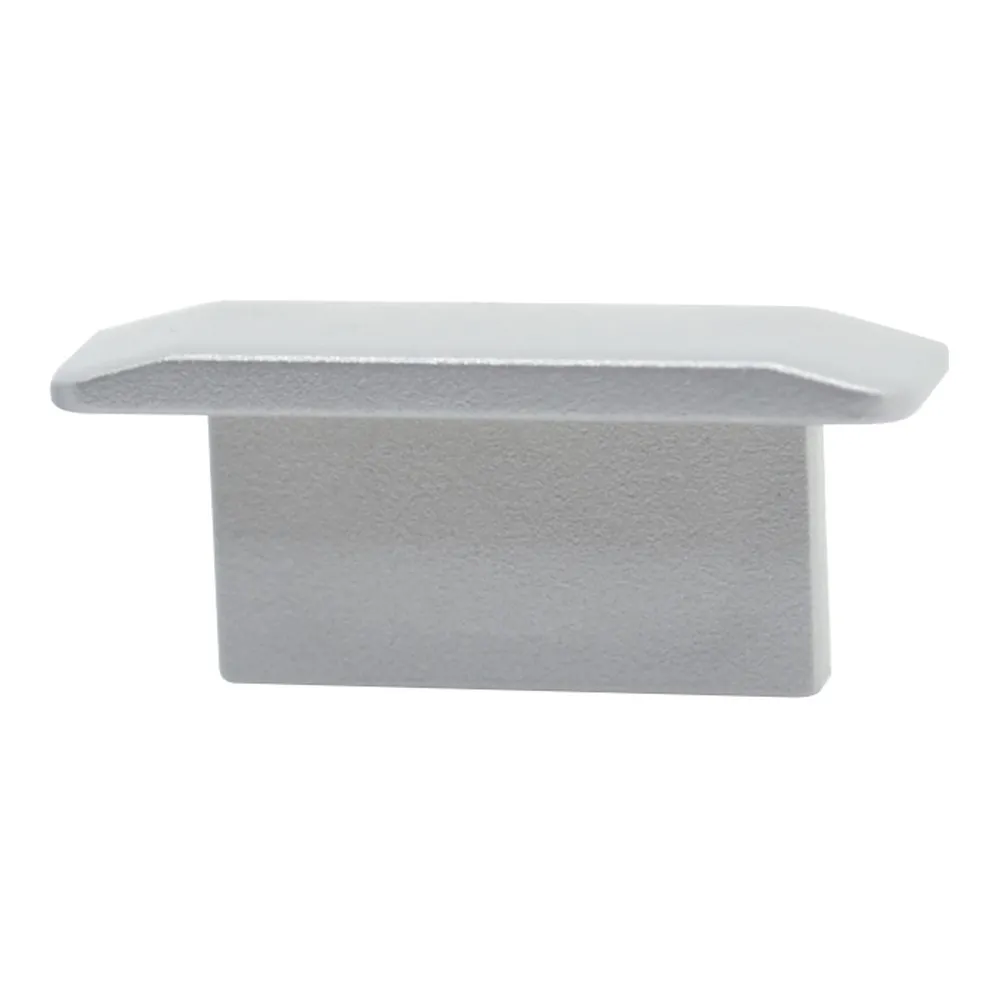
What this end cap actually doesAn aluminum extrusion cut to length always leaves two open ends: a visible cavity, a sharp machined edge and a clear view of the LED tape inside. This
finishing end cap #88 closes that opening. Pressed onto the extremity of the channel, it hides the cut, protects the edge from chipping, keeps dust and stray fingers out of the profile, and turns a piece of raw extrusion into a finished linear fixture. On a run seen at eye level — a display case, a kitchen valance, a reception desk front — it is the difference between "site-built" and "millwork quality".
Construction and fitThe cap is designed to match a
specific profile shape, identified as #88, and it holds in place through a
friction fit against the inside walls of the extrusion. No fasteners and no drilling are required, which also means the cap can be popped off later if you ever need to access the strip, re-solder a lead or swap a diffuser. The construction is sturdy enough to survive repeated test-fitting, transport in a tool bag and normal assembly handling. This particular reference is the
version without a hole: it is solid, with no cable opening, so it is used at the dead end of a circuit where nothing passes through. The opposite extremity of the same channel normally receives a cap with a hole, so the power lead exits cleanly instead of being pinched between the profile and the mounting surface.
Technical specificationsSKU: LCENDCAP-STAND-88
Type: Finishing end cap (standard)
Profile shape: #88
Cable opening: None (without hole)
Quantity: 1 unit
Retention: Friction fit
Category: End Caps, Lenses & Accessories
Installation tipsWork in this order: cut the channel to length, mount it, then test-fit the cap before final anchoring — it is much easier to correct a tight or loose fit before the profile is screwed or taped down. Press evenly with your thumbs, across the whole face of the cap, so it seats flush with the end of the extrusion rather than sitting proud on one side. Deburr the cut end of the aluminum lightly if your saw left a rough lip; the cap will seat better. For a channel installed overhead, in a stairwell, in a display case handled by customers or anywhere with a lot of traffic, a small dab of adhesive on the inner tabs will keep the cap from working loose over time. And plan your
cable exit early: decide which end of the run feeds the power and reserve the drilled cap for that side.
Applications and related accessoriesYou will find these caps everywhere
LED aluminum channel is used: cove lighting and crown detailing in a living room, under-cabinet and toe-kick lighting in a kitchen renovation, closet and pantry shelving, garage workbenches, retail shelving, jewellery and bakery display cases, office and hospitality millwork, plus signage and counter fronts in small businesses. Since caps are shape-specific, make sure the profile family matches before ordering; for other channel shapes, see the
finishing end cap #11 (no hole) and its
drilled counterpart #11. If your project uses flexible
neon LED rope instead of aluminum profile, the sealing caps for that format include the
flex neon end cap 6x6 (without hole) and the
flex neon end cap 6x6 (with hole). Buying two caps per channel — one solid, one drilled — is the simplest way to never stall a job for a missing part.