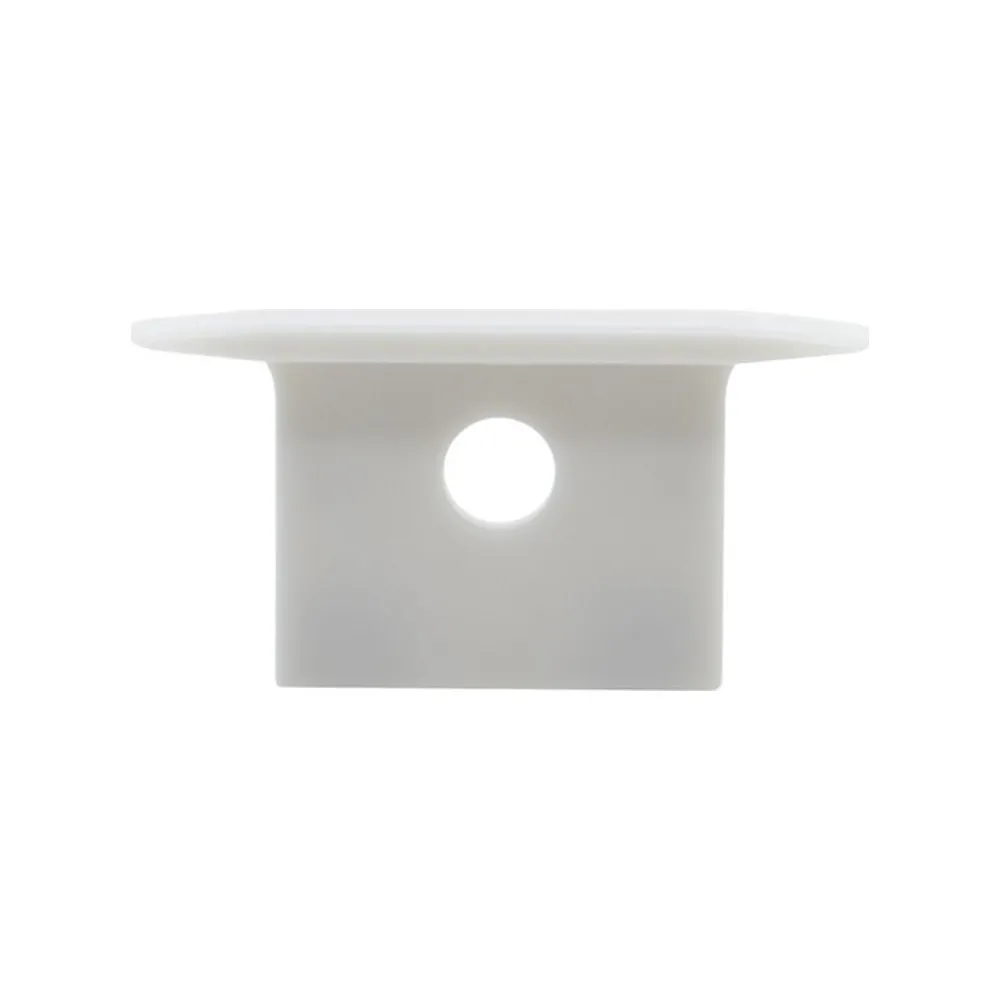
What this part isThe
#88 finishing end cap with hole is the closing piece of an aluminum channel system used with
LED tape. Sold as one unit under SKU
LCENDCAP-STAND-88-H, it seals the open extremity of the extrusion so the profile reads as a single continuous line rather than a cut piece of metal. The open version exists for one specific reason: at the power-feed end of a run, the supply wire or the low-voltage connector needs a clean path out of the channel. The hole gives it that path, keeps the conductor centred and protects it from the sharp cut edge of the aluminum.
Fit and compatibilityEnd caps are profile-specific. The cap must match the exact cross-section of the
LED channel you are installing — in this case the
#88 standard profile. Several profile styles are available across a channel range, and each one has its own matching cap, so always compare the shape of your extrusion before ordering. A practical rule on site: use the capped-with-hole version at the feed end and a closed cap at the opposite end of the run for a symmetrical, finished look. For other profiles and for flexible neon formats, see the matching caps in the same family, including the
Finishing end cap #11 (with hole), the
Finishing end cap #11 (no hole) and, for neon flex runs, the
Flex neon end cap 3x6 (with hole).
Installation, step by stepDry-fit the cap before you mount the channel — it takes ten seconds and saves rework. Pass the lead wire through the opening first, then press the cap onto the end of the profile. If the run sits in a high-traffic area or overhead, a small amount of adhesive can be added so the cap stays put for good. Leave a little slack in the wire so the cap seats flush and nothing gets pinched between the conductor and the aluminum. Only then fix the channel to the surface, snap in your
LED strip, and finish with the diffuser lens. Working this order means you never have to pull a mounted profile back off the wall to thread a wire.
Where it makes a differenceUnder-cabinet lighting, cove and ceiling details, display cases, reception desks, millwork and shop fixtures all benefit from properly capped channels. In a kitchen, the cap hides the feed wire where the profile meets the end of the cabinet run. In retail, it keeps shelf and display-case lighting looking factory-built. In an office reception or a restaurant bar, it is the detail a client notices without knowing why. It is also the small item most often forgotten on a materials list — keep a few on hand so a channel run is never left open.
Good to knowThis listing covers one cap, not a pair, so count one per open extremity: a typical run needs two caps, one with a hole at the feed and one without at the far end. There is no separate spec sheet for this accessory; the selection criterion is simply the profile number and whether you need the hole or not. If you are unsure, measure the width and the shape of your extrusion, or match it against the channel you already bought before adding the
#88 end cap to your order.