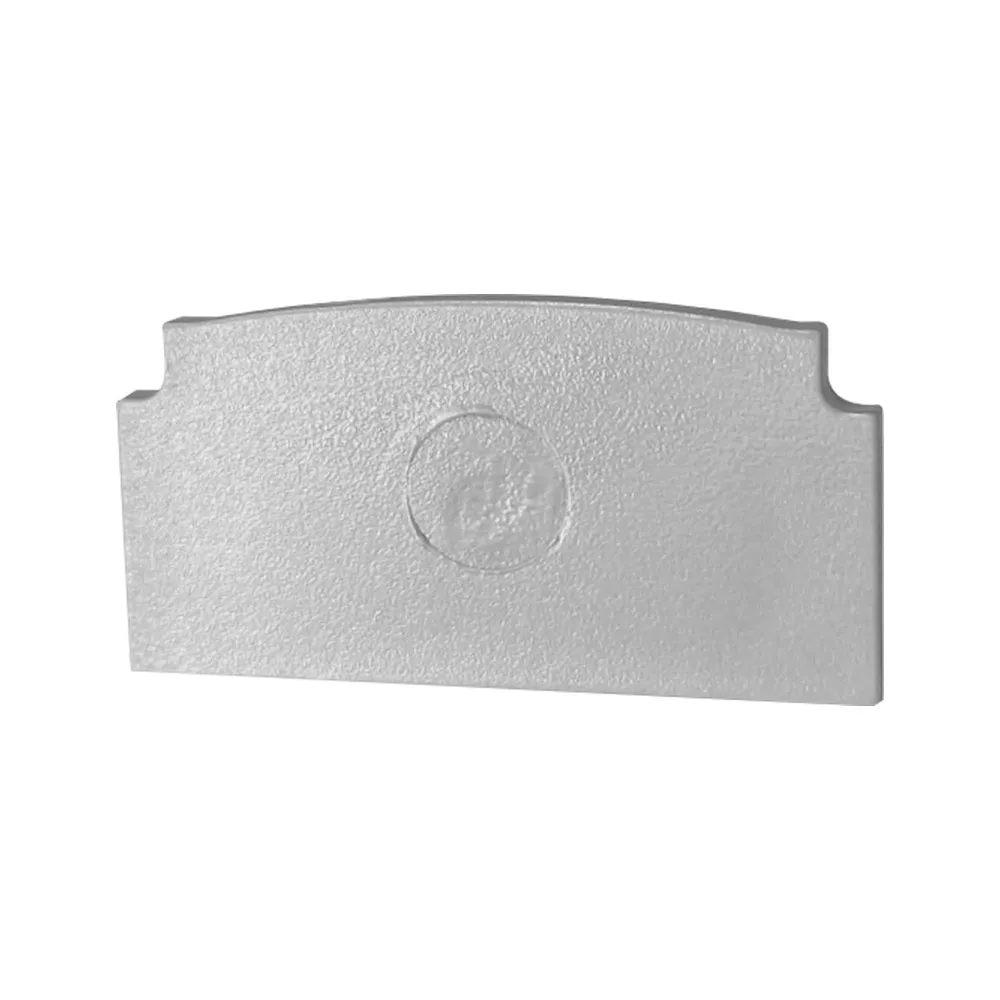
What this part isThe #89 finishing end cap is a single closing piece for an aluminum
LED profile, supplied in the standard style and in the solid version — meaning there is no cable opening moulded into it. Its function is purely mechanical and cosmetic: it caps the open end of the extrusion so the channel, the diffuser lens and the LED tape inside all terminate at the same plane. This is the part ordered as a replacement when one goes missing during a renovation, or as a spare kept on hand for future cuts, and it carries the SKU
LCENDCAP-STAND-89.
Fit and compatibilityEnd caps are
profile-specific, and that is the single most important thing to check before ordering. The shape is matched to a particular channel family; profiles differ in shape and depth, so a cap from another family simply won't seat. Identify the extrusion you're installing, then match the cap number to it. Several styles exist across the different channel families, and caps are typically sold individually rather than in sets, which lets you order the exact count a job needs instead of over-buying. On a typical run you'll want one solid cap like this one at the closed end, and a drilled cap at the end where the low-voltage lead exits the channel.
Installation, step by stepWork in the right order and this takes seconds. Cut and prepare your channel, lay in the LED tape, then fit the end caps before the final mounting of the profile, while the extrusion is still loose and accessible from every side. A gentle press is normally enough to seat the cap; if the fit is snug, a light tap with a soft mallet finishes the job without marking the aluminum. For permanent installs, a small dab of adhesive on the inside face keeps the cap from working loose over years of vibration, door slams or seasonal movement. Slide the diffuser in afterward so the lens sits square against the cap face. If you ever need to service the strip, a temporary friction fit on one end makes future access easier.
Where it makes a differenceThink of every place a channel run stops in plain view: the end of an under-cabinet strip in a kitchen, a cove detail above crown moulding, a lit toe-kick, closet and pantry shelving, a bar front, a retail display case, the edge of a reception desk, or a signage light box. In all of those, an open extrusion reads as unfinished and collects dust; a capped one reads as custom millwork. Functionally, the closed cap also limits dust buildup inside the channel and shields the strip's cut end from accidental contact — worth noting in workshops, garages and busy commercial spaces where the run sits within reach.
Related caps in the same familyIf your project uses more than one profile type, the same accessory line covers other shapes: the
finishing end cap #11 (no hole) and the matching
finishing end cap #11 (with hole) serve the #11 channel family the same way this one serves #89. For flexible neon-style runs, look at the
flex neon endcap 3X6 (without hole) and the
flex neon endcap 6X6 (without hole). There is no separate documentation for this accessory; selection is done by matching the cap to your extrusion, so keep your channel reference handy when you order.