A small accessory that finishes the whole job
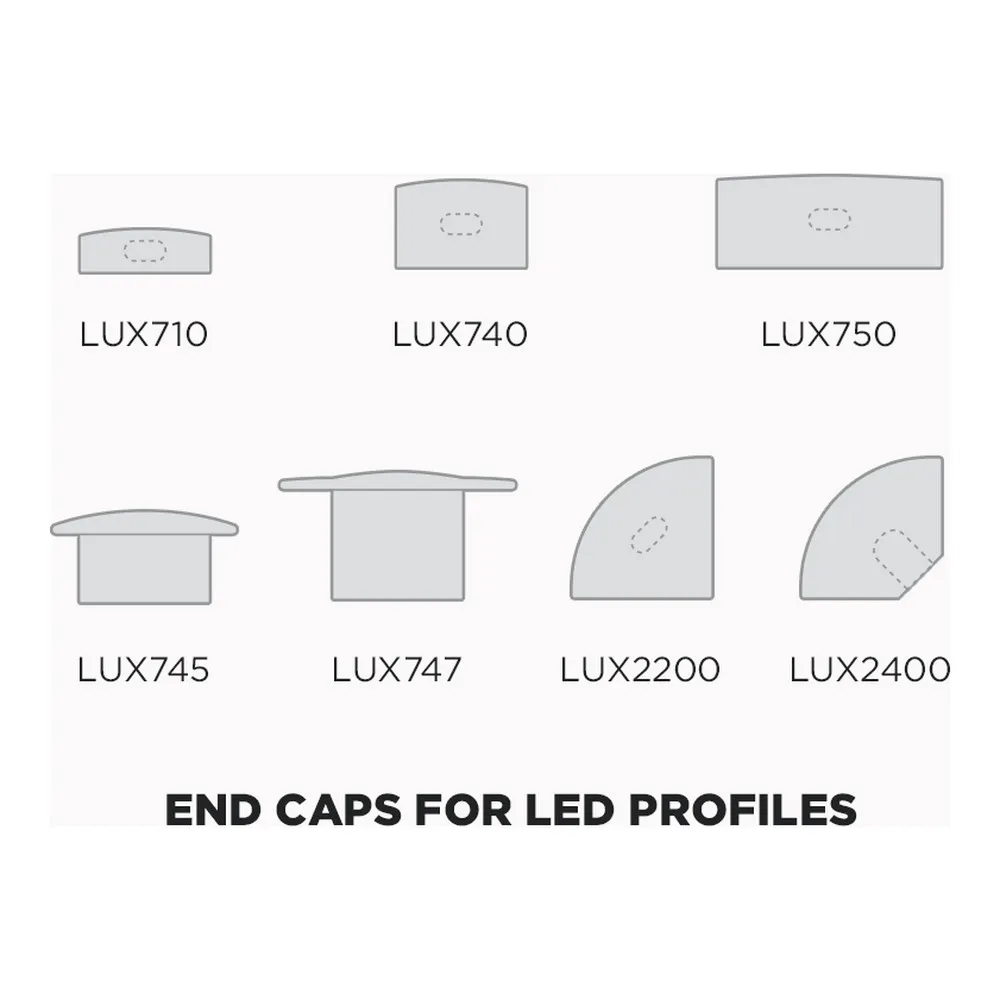
An LED profile is really a three-part system: the extruded aluminum body, the diffuser cover, and the end caps that close both extremities. Skip the caps and you leave a raw, open channel with visible wiring and a sharp aluminum edge. Install them and the run instantly reads as a built-in architectural light line. The End Caps for LED Profiles (SKU: ENDCAPLUX) from LED MONTREAL are made to slot into the ends of the profile, following its cross-section so the transition from cap to LED aluminum channel stays flush and discreet.
Protection where LED strips are most vulnerable
The weakest point of any tape light installation is the end of the strip: that's where the lead wires, the solder pads and the connectors live. End caps enclose that zone and act as a physical barrier against dust, dirt, moisture and other contaminants, which directly helps prolong the performance and the lifespan of the LED strip. They also reduce the risk of a connection being pulled apart by accident, a real concern in closets, under cabinets, in garages and in commercial spaces where people and equipment brush past the fixture every day.
Light quality and a cleaner finish
Beyond protection, closing the ends helps control the light itself. An open channel lets light leak out sideways and creates bright hot spots at each extremity; a closed channel keeps the diffusion more even along the whole run. Visually, the caps hide exposed edges and wiring for a polished, professional result, which matters a lot when the aluminum profile is mounted at eye level, on a stair, a countertop or a mirror surround where every detail is visible.
Choosing the right cap and installing it
End caps are profile-specific: each one matches the width, height and internal shape of a given extrusion, so always select them according to the channel model you are using. Most are supplied in two versions, a solid one for the closed end and one with an opening to let the power lead exit, so plan which end feeds the driver before you assemble. Dry-fit the cap before mounting the profile, pass the wire through the opening on the supply side, then press the cap into place. On a surface, recessed or corner-mounted run, install the caps once the strip is seated and the diffuser is in, so nothing shifts afterward. Keep a few spares in the toolbox, since these are the parts most often lost during a renovation or a fixture relocation.
Where they are used
Residential projects: under-cabinet kitchen lighting, cove and tray ceilings, stairs, hallways, walk-in closets, home theatres, bathroom vanities and headboards. Commercial projects: retail shelving and display cases, reception counters, restaurant and bar millwork, offices, corridors and signage. Anywhere a profile lighting run ends, a cap should be there. Simple, inexpensive to overlook, impossible to un-see once it's missing.