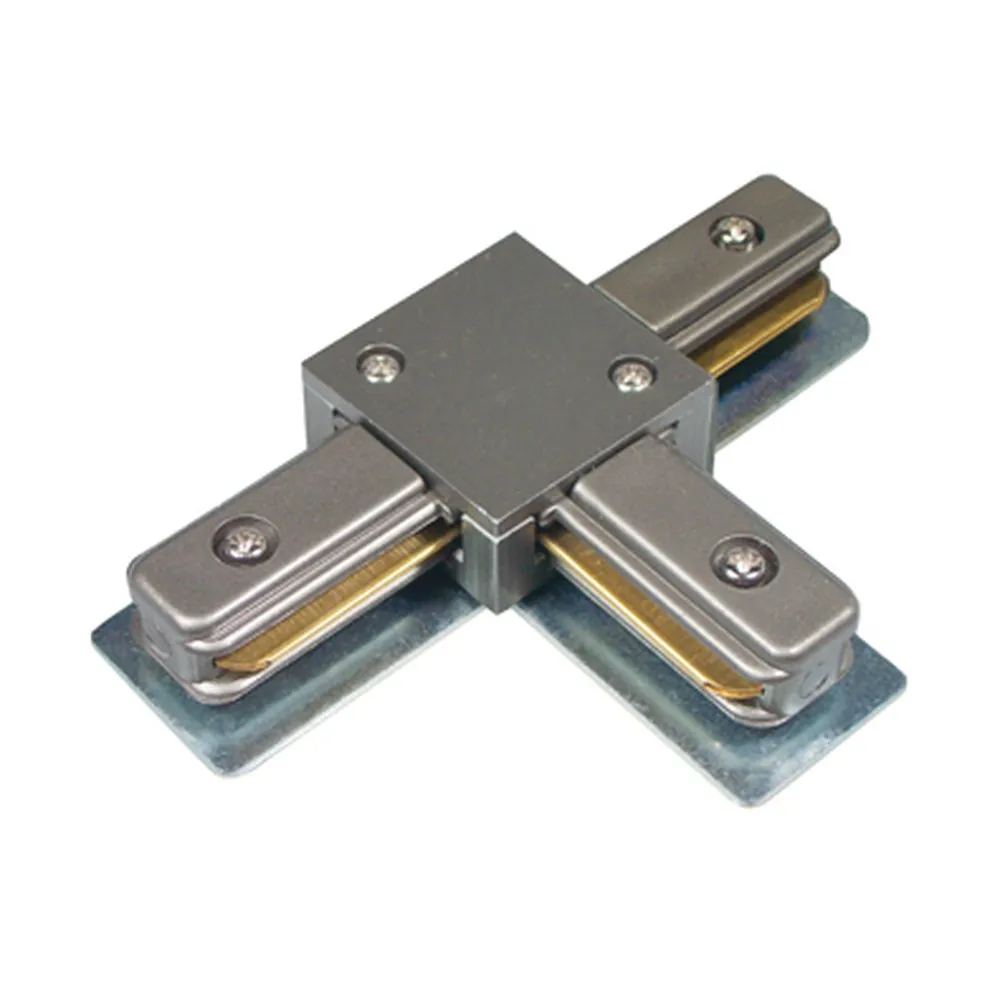
What a T connector does
A track "T" connector is the fitting that lets one track run become three branches: the main run continues on both sides while a third section leaves at a right angle from the middle. Instead of installing separate runs with their own canopies and power feeds, you build one connected layout powered from a single point. The TC6103-BN is the brushed nickel version of this connector, designed for a tidy, low-profile joint on the ceiling.
Construction and electrical path
The connector uses a solid conductor to carry power from one branch to the others, so every section of track attached to it is live once the feed is connected. It is a triple track line connection: each of the three openings receives the end of a section of track, and the conductors meet inside the housing. The product is cULus listed, and it is intended for use with the track, accessories and connectors of the same manufacturer's system; mixing track profiles from different systems is not recommended.
Planning and installation
Sketch the room first: where the main run goes, where the branch should reach, and where the power feed sits. Mark the joint on the ceiling, secure the track sections to the structure, then slide each section into the connector and fasten it firmly. Shut off the breaker before any work, and have a licensed electrician make the connection to the circuit, as required by local electrical codes in Canada. Once the layout is powered, you can clip track heads anywhere along the three branches and aim them at counters, artwork or shelving.
Choosing the brushed nickel finish
Brushed nickel is a warm, satin metal tone that hides fingerprints and dust better than a mirror finish. It works well with stainless steel appliances, nickel cabinet pulls and transitional or contemporary decor. For the most seamless look, keep the track, the connectors and the end caps in the same finish; the connector also comes in other finishes when your ceiling calls for a different colour.
Where it makes the difference
Typical uses include an L-shaped or open-plan kitchen where one run lights the counters and a branch reaches the island, a boutique where a main run crosses the store and branches light two display walls, or a long hallway that opens into a living area. Wipe the connector with a dry, soft cloth when you dust the fixtures; no other maintenance is needed.