Nov 06, 2026 / By the Lumibox team / in LED Guides
Good living room lighting and bedroom lighting come down to one idea: never rely on a single ceiling fixture, but stack three layers of LED light, namely ambient light from the ceiling, task light where you read, eat or get dressed, and accent light that gives the walls depth. Add warm white light, around 2700K to 3000K, and a dimmer on each layer, and the same room goes from bright cleaning light to a soft evening glow.
This guide is written for Canadian homeowners planning a renovation, and for electricians and designers laying out several living spaces at once. It covers the fixtures that suit each layer, the right colour of light, dimming, and a room-by-room plan for the bedroom, the nursery, the living room and the dining room.
A room lit by one fixture in the centre of the ceiling often looks flat: the middle is too bright, the corners are dark and faces get harsh shadows. Layered lighting fixes this by spreading light at several heights.
Ideally, each layer gets its own switch or dimmer. That is what lets you adapt the room to the time of day without changing a single fixture.
In a bedroom or living room with a finished ceiling, a ceiling light is still the simplest option, especially in a renovation, because it connects to the existing electrical box. Ultra-slim frameless flush mounts blend into the ceiling and give diffused, glare-free light. The ORTECH 12 in frameless 3CCT flush mount, for example, delivers 25 W and 2000 lumens with selectable colour temperature: enough to light a bedroom or a small living room with a single fixture.
For a more architectural look, LUMIFARO's adjustable-head ceiling fixtures for GU10 bulbs (Series 104, 190, 215 and 302, from 1 to 4 lights) bridge ambient and accent light. The Series 302 three-light GU10 ceiling fixture lets you aim each head at a wall, an artwork or a reading chair. Because GU10 bulbs are replaceable, you choose their brightness and colour of light yourself, and you can change them later without touching the fixture.
LED recessed lighting is a favourite for open-concept living rooms and primary bedrooms because it disappears into the ceiling. The secret to good living room pot lights is to place them so they light the walls and activity zones, not just the centre of the room. Trimless frames, like CANOLIGHT's DL3 Series frames in 3 in and 4 in, give a minimalist, plastered-in finish. For a high-contrast look, a black trim such as the ORTECH SLIM 4 ring pairs well with modern furniture.
In a living room, a multi-head linear recessed fixture can also serve as accent light. CANOLIGHT's 5-head linear blade light (10 W, 600 lm, 38° beam, CRI 90, 3000K) aims several precise beams at a bookcase or a stone wall. To work out how many pot lights you need and how to space them, use the recessed lighting calculator.
LED wall sconces are underused in living spaces. On each side of a bed, they free up the nightstands and give reading light that does not dazzle the person next to you. In a living room or hallway, they light the wall itself, which makes the space feel larger. The NEXLEDS white LED wall sconce, offered in multiple wattages with selectable colour temperature, suits a bedroom as well as a stairwell.
Above a table, nothing replaces a pendant. Decorative pendant lights focus light on the table and give the room character. Dining room pendant lights should be centred on the table, not on the room, and hung low enough to light the plates but high enough not to block the view between guests. For a long table, two or three pendants in a row or a linear pendant spread light better than one large fixture.
An LED strip hidden in a cove, behind a headboard, under a TV unit or above a sideboard gives very soft indirect light, ideal in the evening. Indoor LED strips come in white, tunable white (CCT) and colour. For a clean result, install them in an aluminum channel with a diffuser: you see the glow, not the individual dots.
The bedroom is the room where light should fade into the background the most. You want soft ambient light, reading light on each side of the bed and brighter light near the closet so you can see the true colours of your clothes.
For a closet or walk-in, a motion-sensor flush mount is handy: ORTECH's 9 in flush mount with built-in sensor (18 W, 1500 lumens, 5CCT, CRI 80, TRIAC dimming) turns on by itself when you walk in with your hands full. More ideas for LED lights for the bedroom ceiling and walls are on the LED bedroom lighting page.
In a nursery, the golden rule is never to put a light source directly above the crib: a baby lies on their back and looks straight at the ceiling. Prefer indirect light (a sconce aimed at the ceiling, a hidden LED strip) and a dimmer that goes very low for night feedings. Warm white, around 2700K, stays the gentlest. In a child's room, add good task light at the desk and keep a colour LED strip for fun. See also the LED nursery lighting page.
The living room is where you entertain, watch movies, read and play with the kids, so its lighting needs to offer several scenes. Use pot lights or a ceiling light as the ambient base, a lamp or sconce by the reading chair, and accent light on the walls: shelves, fireplace, artwork. During a movie, switch off the ambient layer and keep only an indirect glow behind the TV to reduce eye strain.
In an open-concept space, plan separate circuits: you should not have to light the whole kitchen to read in the living room. CSC LED's CYL cylinder lights, selectable at 21 W, 28 W or 35 W and at 2700K, 3000K, 3500K or 4000K, are a good choice for a high ceiling or an entryway where a pot light would be hard to install.
Dining room lighting is built around the table. The pendant is the star, but it is not always enough: add a few dimmable pot lights around it to light the sideboard and walls, or an LED strip above a china cabinet. Warm light makes food and faces look more inviting, and a high CRI brings out their true colours. Put the pendant and the ambient light on two separate dimmers: a dinner with friends does not call for the same light as homework night. For more dining room light fixtures and ideas, see the LED dining room lighting page.
| Room | Ambient | Task | Accent | Colour of light |
|---|---|---|---|---|
| Primary bedroom | Frameless flush mount or pot lights offset from the bed | Bedside sconces or pendants | LED strip behind the headboard | 2700K to 3000K |
| Nursery | Dimmable indirect light | Small light for the changing table | Hidden LED strip, dimmed low | 2700K |
| Kids' room | Ceiling light | Desk light | Colour LED strip | 3000K to 3500K |
| Living room | Pot lights or ceiling light | Reading sconce or lamp | Multi-head recessed light, adjustable GU10 ceiling fixture | 2700K to 3000K |
| Dining room | Dimmable pot lights around the table | Pendant above the table | LED strip on a sideboard or china cabinet | 2700K to 3000K |
Colour temperature. In living spaces, warm white is the most common choice: 2700K for a very cozy feel, 3000K for warm but crisper light. A 3CCT or 5CCT fixture lets you pick the shade at installation, which helps match fixtures from different brands. Full details are in the colour temperature and CRI guide.
CRI. The colour rendering index tells you how natural colours look. CRI 80 suits general lighting; CRI 90 is better where colour matters, such as fabrics, artwork or the dinner table.
Dimming. Check that every fixture is marked "dimmable" and that the dimmer is LED-compatible. In homes, you will mostly find TRIAC (forward-phase) and ELV (reverse-phase) dimmers. A mismatched dimmer can cause flicker or buzzing. The LED dimmer switch guide explains how to choose.
Warm white LED light, between 2700K and 3000K, dimmable, with an ambient source on the ceiling and a reading light on each side of the bed. Avoid placing a pot light directly above the pillow.
There is no single number: it depends on the size of the room and the table. What matters is a pendant that lights the table well, backed by dimmable ambient light: add up the layers. The how many lumens per room guide gives benchmarks per square foot.
It depends on floor area, ceiling height and the output of the pot lights. Enter the room's dimensions in the recessed lighting calculator, then shift the lights away from the bed so they do not dazzle you when lying down.
Indirect, warm and very dimmable light, never aimed at the crib. A sconce pointed at the ceiling or a hidden LED strip works well for night feedings.
Both work. A ceiling light is simpler in a renovation because it uses the existing electrical box; pot lights spread light more evenly in a large living room. Either way, add sconces or accent light to avoid flat lighting.
Low enough to light the table well and high enough not to block the view between guests. Centre it on the table, not the room, and check the manufacturer's recommendations. For any new circuit, call a licensed electrician.
Start with the ambient layer using a ceiling light or pot lights, then add wall sconces and a pendant for the table. With three layers and dimmers, your bedroom, living room and dining room adapt to every moment of the day.
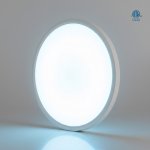 16" LED FLUSH MOUNT - 30W - 3000LMN - 3CCT - WHITE TRIM
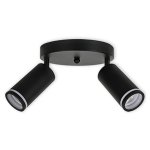 LED CEILING LIGHT FOR GU10 BULBS - SERIES 302 - 2 LIGHTS - BLACK
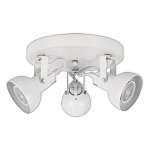 LED CEILING LIGHT FOR GU10 BULBS - SERIES 215 - 3 LIGHTS
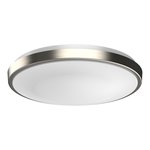 RIGID FM LED SURFACE MOUNT CEILING LIGHT - 15" DIA. - 24W (1800LM) - 5CCT SELECTABLE (27-3...
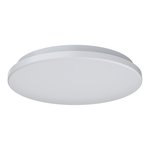 RIGID FM SLIM 14" SURFACE MOUNT RECESSED FIXTURE - 24W (1800LM) - 5CCT SELECTABLE (27-30-3...
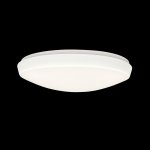 RGD-FM FLUSH MOUNT II LED SURFACE MOUNT RECESSED FIXTURE - 13" - SELECTABLE 22-18-15W (165...
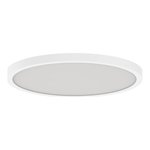 SLIM SURFACE MOUNT, 12", ROUND, 24W, 27/30/35/40/5000K, 120V, TRIAC/ELV DIMMING, WHITE
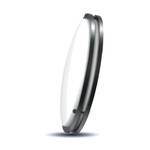 14" DOUBLE RING LED FLUSH MOUNT - 24W - 2000LMN - 3CCT - BLACK - DIMMABLE