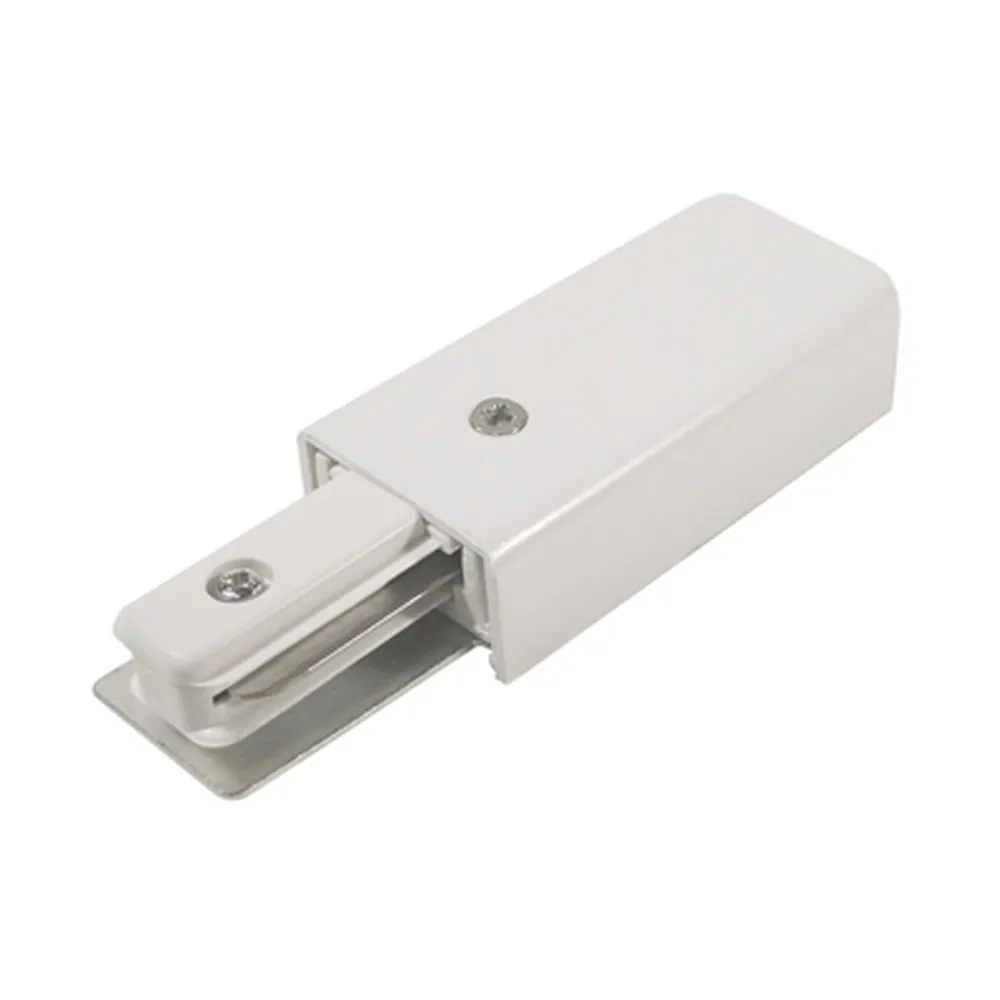
What a live end power feed does
Every track lighting installation needs one point where power enters the rail. The live end power feed is that point: it attaches to the end of a track section and connects to the building wiring, energizing the conductors inside the track. Once the feed is in place, track heads can be positioned anywhere along the rail and moved later without rewiring, which is exactly why track lighting is so popular for flexible, adjustable light.
Planning and installation
Start by locating the ceiling or wall junction box that will supply the track, then plan the run so the end feed lands over or near that box. With the power turned off at the panel, the feed is connected to the supply conductors and fixed to the end of the track, and the track is then secured to the ceiling. Local electrical codes apply everywhere in Canada, so the connection to the household supply should be done by a licensed electrician. Always check that the power feed, the track and the heads belong to the same track system before ordering.
A discreet white finish
This model, LE6110-WH, comes in white. On a white track and a white ceiling, the feed practically disappears, keeping attention on the light rather than on the hardware. It is a natural choice for bright, contemporary interiors, Scandinavian-style kitchens and gallery-like walls where a clean look matters.
Where end-fed track shines
An end feed is ideal when the junction box is at one end of the area to be lit: along a kitchen counter, above a long island, down a hallway, across a living room wall or over a store shelf. In commercial spaces such as boutiques, cafés and offices, track lets you re-aim light whenever displays change. In homes, it offers accent lighting for artwork, bookcases and work areas without opening the ceiling for multiple pot lights.
Care and good practice
Once installed, a power feed needs no maintenance beyond occasional dusting with a dry cloth, power off. Keep the track and connectors free of paint and debris, and turn off the circuit before adding, removing or moving any track head. Planning the full layout, including connectors, end caps and heads, before installation makes for a faster job and a professional result.