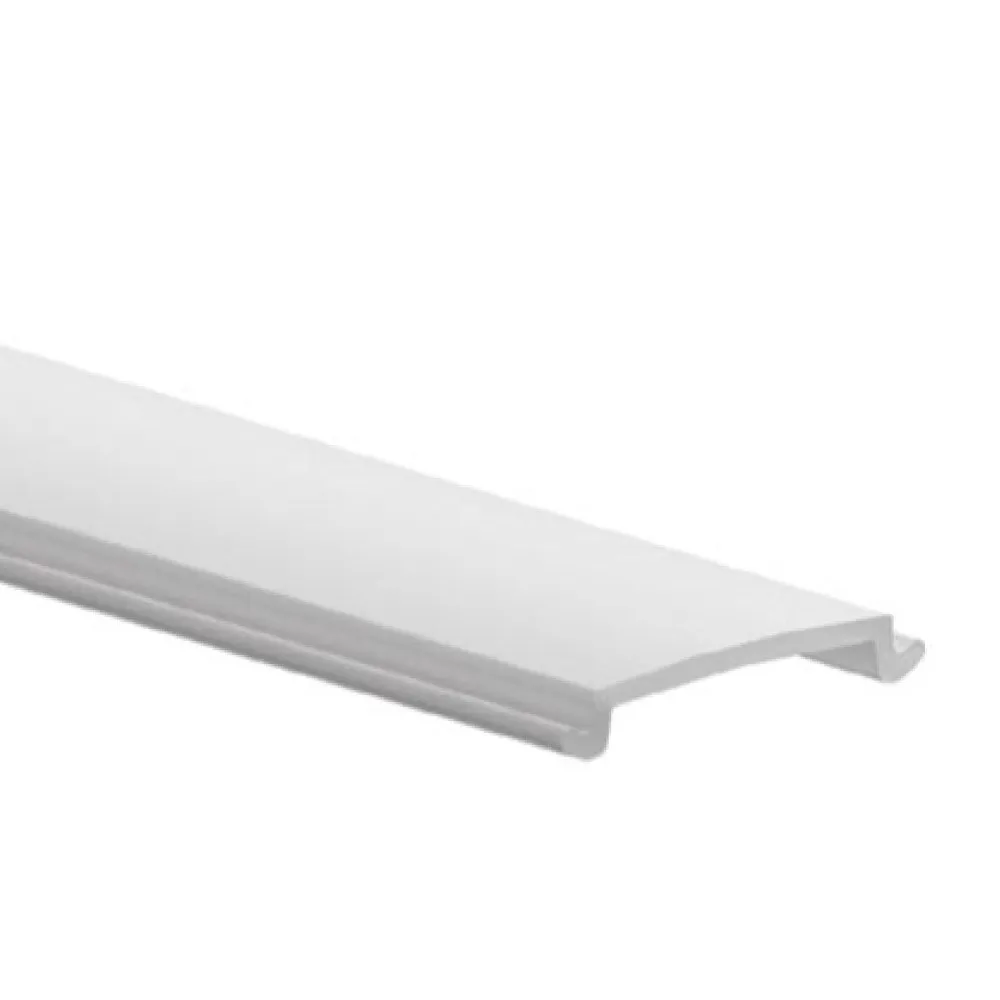
What this lens actually isEvery aluminum
LED channel is a two-part assembly: the extrusion that holds and cools the tape, and the cover that faces the room. This opaque lens is that cover, made for
profile #145. It slides or snaps into the channel's retaining grooves and rides above the strip, so the diodes, the copper pads and any solder joints stay out of direct view. Searches for a
custom extruded lens, an
extruded light lens or an
aluminum extrusion c/w translucent lens almost always come back to this part — it is the difference between a raw strip stapled under a cabinet and a proper architectural line of light.
Light quality and diffusionClear covers protect the tape but let you see every diode. An opaque cover works differently: it scatters the output across its whole surface so the run reads as one continuous, uniform glow. That means no dotting on a gloss backsplash, no hot spots reflected in a mirror or a glass display case, and much softer brightness when the channel is mounted at eye level or overhead. Tighter-pitch tape diffuses best, but even standard-density strips look dramatically smoother behind this
white lens. It also acts as a physical barrier, keeping dust, grease and fingers off the tape in kitchens, bars and workshops.
Cutting, installation and end capsThe cover is cut to size on site with a fine-tooth saw or a sharp blade — score, snap, then lightly deburr the edge so it slides freely. Test-fit the lens before you fasten the channel and leave a slight margin at each end; a profile screwed down dead tight can pinch the cover and make it impossible to seat. For long runs, plan your joints where a cabinet edge or a wall break hides them. Finish both ends with matching
LED channel end caps so the cut edge is covered and the run looks intentional. If you ever damage a section, you replace only the lens, not the whole channel.
Compatibility and powerThis lens is profile-specific: it is made for channel
#145 and will not clip into extrusions with a different groove width. Confirm your profile number before ordering — that single check prevents almost every return on this category. The cover has no effect on the electrical side of the system: your tape is still driven by the same low-voltage driver and stays
dimmable with the compatible dimmers you selected. Working with other profiles on the same job? The family also includes the
8ft opal diffuser lens for LED profile #44, the
16ft opal diffuser lens for LED profile #80 and the
8' frosted lens #84 #85 #86 #88.
Where it earns its keepUnder-cabinet lighting and pantry millwork, vanity and mirror surrounds, hallway coves, stair nosings, home theatre risers, closet shelving, bar fronts, retail display cases, clinic corridors and open-plan offices — anywhere the fixture itself is visible, a diffused cover is what keeps the look clean. Contractors use it to standardize finishes across a whole project; homeowners use it to fix a run that was installed bare and shows every diode. No spec sheet or IES file is published for this accessory, so match it by profile number and cut length rather than by photo, and keep a spare length on hand for long commercial installations.