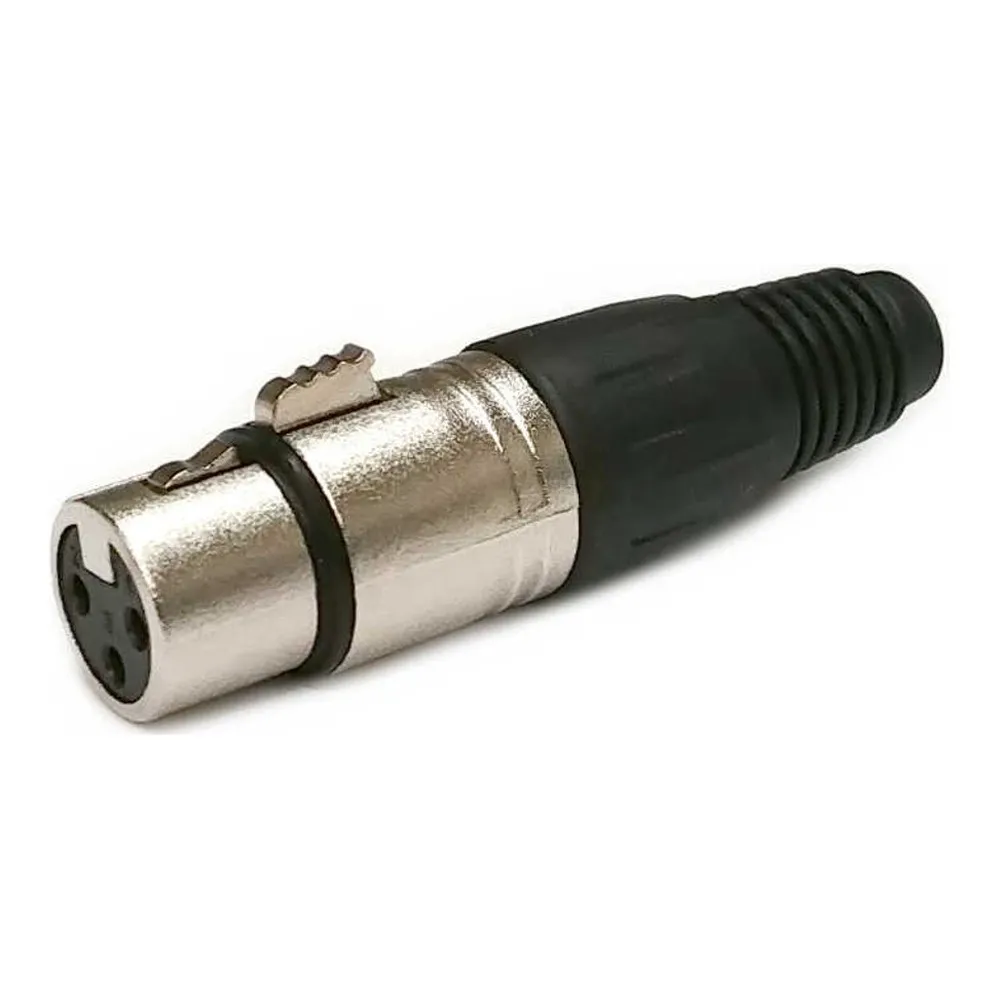
What this connector is forAn architectural lighting run is only as good as its weakest joint. This
XLR connector exists to remove the weak joints: it is the piece that carries both the electrical connection and the mechanical hold between compatible
wall washer, linear and accent fixtures. Rather than running a separate feed to each luminaire — more wire, more junction boxes, more places to fail — you chain the fixtures and let one connection serve the next. The result is a continuous line of light with no dark gaps between housings, which is the whole point of wall grazing, cove lighting and facade work.
Build and holding powerThe
locking design is what separates this from a simple push-fit plug. Once seated, the connector holds firmly, so vibration from HVAC equipment, wind load on an exterior wash, or someone brushing against a run while working nearby will not break the circuit. The contacts are made to maintain a stable current flow across linked fixtures, which protects consistent brightness and consistent colour from one end of the run to the other — no visible step in output halfway down a feature wall. The housing itself is made to resist handling, dust and jobsite wear, the three things that kill cheap connectors before a project is even commissioned.
Installation and safe practiceWork cold: always cut power before linking or unlinking fixtures. Confirm polarity and orientation before seating the connector — an XLR body only goes in one way, and forcing it is how pins get bent. Push until it clicks fully into its lock, then give a gentle tug to confirm. On outdoor, damp or below-grade runs, keep every joint protected and supported so no mechanical strain is transferred to the connection itself; a strapped cable or a small support clip just before the joint does more for long-term reliability than anything else on the punch list. Several configurations are available across the family, so match the connector to the fixture ends actually on site before you order quantities.
Where it earns its keepResidential and commercial projects both benefit. Think feature walls and fireplace surrounds in living rooms, lobby accent walls in hotels and office towers, storefront and signage lighting, restaurant interiors where the light has to look designed rather than assembled, gallery walls where an uneven run would be immediately obvious, and exterior building washes — always on the condition that the connected fixtures themselves are rated for the location. For contractors, the real payoff is labour: fewer feeds to pull, fewer terminations to make, faster commissioning.
Related connectors and accessoriesSKU
LCCON-XLR-FEM belongs to a wider family of lighting connectors worth keeping in the van. For low-voltage tape work, look at the
straight COB connector 2-pin 8mm for LED strip for in-line joints, the
L-shape COB connector 2-pin 8mm for LED strip for corners, and the
L-shape COB connector with wire cable 2-pin 8mm for LED strip when you need to jump an obstacle. On the supply side, the
green connector for power supply and the
green female connector for power supply handle the driver end of the job. No documents are posted for this item; if you are unsure which configuration mates with your fixtures, check the fixture end before ordering.