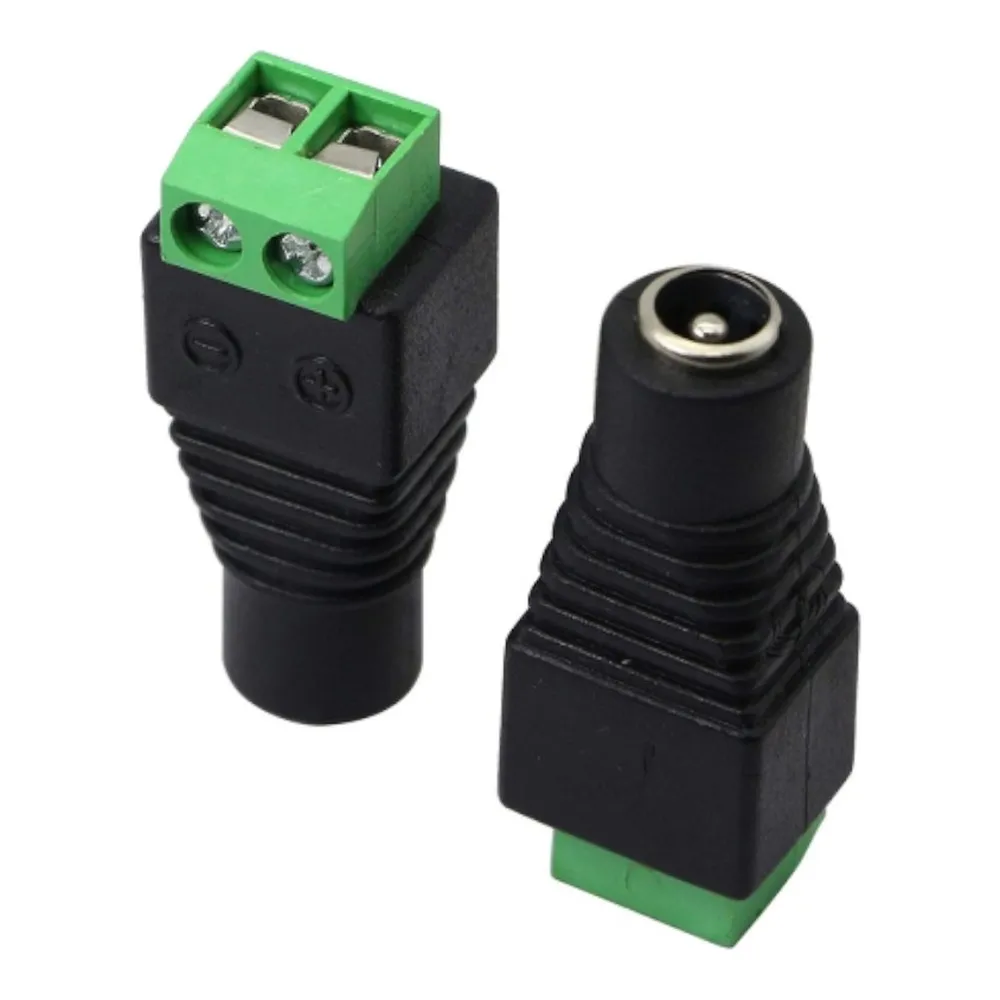
What this connector actually doesMost LED power supplies leave the installer with a moulded output plug and a decision to make. The
female connector for power supply removes that decision: it mates with the output plug of a compatible driver and converts it into a screw-terminal block you can wire, open and re-wire. The result is a defined, accessible junction point between the driver and the low-voltage load — LED tape, a light bar, a module chain or a small fixture — instead of a splice buried in a soffit. For anyone who has chased a flicker back to a twisted pair under a cabinet, that accessibility is worth more than the time it takes to install.
Construction and wire retentionThe housing separates the conductors so the positive and negative sides stay isolated from each other inside the body. The captive screws clamp
stranded or solid wire firmly and stay with the block, which matters when you are working overhead or in a cabinet and do not want to lose hardware. Good clamping pressure is what prevents the loose contacts that cause intermittent light output, so give each conductor a gentle tug after tightening — if it moves, open the terminal and redo it. Strip only as much insulation as the terminal actually needs; excess bare copper outside the block is an invitation to a short.
Polarity and safe installationThis is a
polarity-based connection, which makes marking your leads the single most important step of the job. Identify positive and negative before you tighten anything. If the polarity is reversed, nothing dramatic happens on a DC LED load — it simply will not light — and swapping the two wires corrects it. Always confirm the
LED power supply is unplugged before wiring, keep low-voltage joints in a dry and accessible location, and match the connector to the driver output it is intended for. Treat the terminal as a serviceable point: label it if the run is long or the ceiling is closed, and the next technician will thank you.
Compatibility and companion partsUse this female end with its male counterpart, the
green connector for power supply, when you need to build a disconnect point mid-run. On the load side,
LED strip connectors keep the rest of the installation solder-free: the
straight COB connector 2-pin 8mm for in-line joints, the
L-shape COB connector 2-pin 8mm for corners, and the
L-shape COB connector with wire cable when you need to jump a gap between two sections. Always verify that the driver output matches the connector before ordering.
Where it earns its keepKitchen under-cabinet lighting, basement coves and stair accents, retail display cases, reception desks, showcases, bar backs and workshop benches — anywhere a driver has to meet a low-voltage run neatly. It fits new construction, renovation and light-commercial retrofit work equally well, and because the run can be disconnected without cutting wire, seasonal display changes and fixture swaps become a five-minute task. No documentation is listed for this part; if you need confirmation of the driver output it mates with, check the specifications of the power supply itself before wiring.