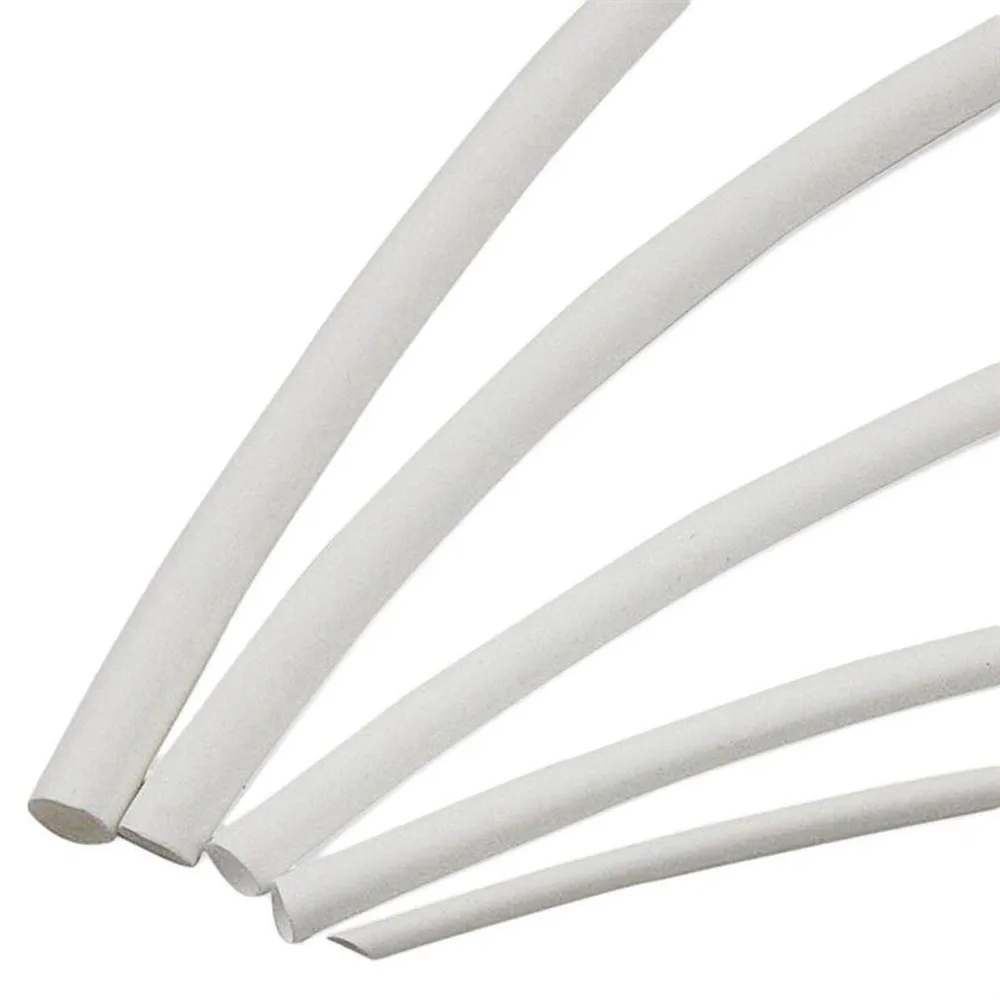
Sold by the inch — order exactly what you needMost shrink tubing forces you into fixed kits full of sizes you'll never use. This one is
sold by the inch, so the quantity you enter is the length you receive, in one continuous piece you cut yourself. Working through a fixture retrofit with twelve splices? Order enough inches for twelve pieces plus a little margin. Repairing a single lamp cord? Order a couple of inches. That flexibility keeps waste low on one-off repairs and keeps a job box stocked without a drawer full of mismatched offcuts. It also makes it easy to standardize: cut every sleeve to the same length so each connection on a project looks identical.
How the sleeve performsApply heat and the
heat-shrink tubing contracts tightly, hugging the conductor and any connector, crimp or solder joint sitting underneath. What you're left with is a continuous insulating layer that resists moisture, dirt and mechanical wear — the three things that quietly kill a splice inside a ceiling, a soffit or a shop bench. The material stays flexible after shrinking rather than curing into a brittle shell, so wires can still be dressed, coiled and bent without the jacket cracking. The smooth
white surface is deliberately discreet: it blends into pale wiring, white fixture housings and trim instead of drawing the eye.
Installation, step by stepThe golden rule: slide the tube onto the wire
before you make the connection — everyone forgets once, and nobody forgets twice. Make and test your splice, then slide the sleeve back so it's centred over the joint with equal overlap on both sides. Warm it evenly with a
heat gun, rotating the wire as you go so the heat wraps all the way around. Even heat gives a smooth, wrinkle-free shrink that grips uniformly. Avoid an open flame: it scorches the sleeve, leaves soot marks on the white finish and can weaken the wall of the tubing. Let it cool for a moment before flexing the cable.
Where it earns its keepThis sleeving is a natural on
LED strip and LED tape connections, where solder pads and feed wires need insulating and strain relief before the strip goes into a cove or under a cabinet. Beyond that: fixture leads, low-voltage runs, driver and transformer leads, automotive and workshop wiring, speaker and sensor cable, and any repair that has to look intentional. It's at home in residential renovations — kitchens, basements, garages, home theatres — and in light-commercial work such as retail spaces, restaurants and small offices, where an inspector or a customer might well see the wiring.
Sizes and companionsThis page is for
LCFAB-SHRINK-10MM. The same white tubing is offered in two other diameters so you can match the sleeve to the joint:
white heat-shrink tube 8 mm for slim conductors and tight bundles, and
white heat-shrink tube 12 mm for larger connector bodies and multi-wire joints. Many pros keep a length of each on hand. Browse the rest of the
connectors and wiring category to pair this tubing with the accessories your installation calls for.