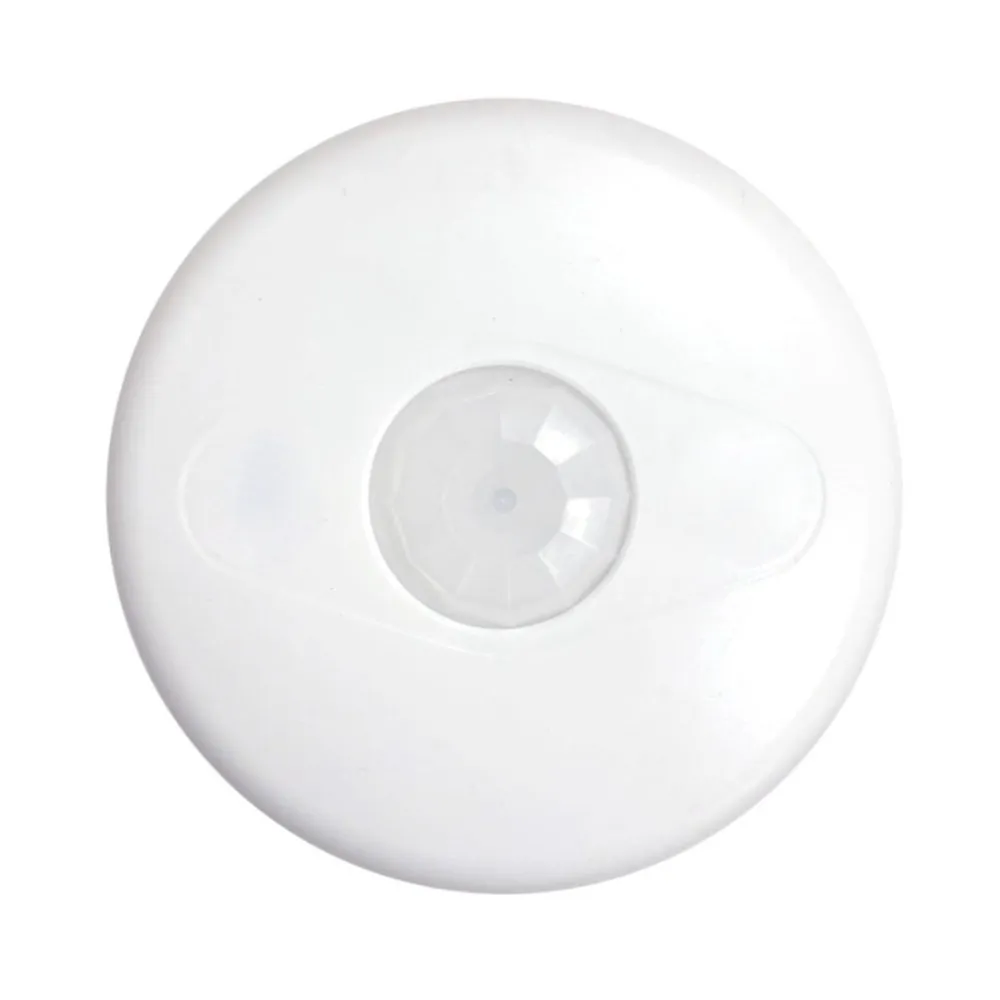
What it is and how it works
The TL-1032-Plus is a passive infrared (PIR) occupancy sensor built for ceiling mounting. Passive infrared technology detects the heat signature of a person moving through the detection field — it emits nothing itself, it simply reads the change in infrared energy in front of it. When a warm body enters the zone, the sensor closes the circuit and your lights come on; when the zone stays still and empty, the lights go back off. Because it reacts to movement of a heat source, the best results come from positioning the unit so people cross the field rather than walking straight at it, and from keeping the lens clear of ducts, beams, shelving tops and hanging signage that could block the line of sight.
360° coverage from the ceiling
The detection pattern is 360°, which is exactly what you want from a ceiling-mounted device: the sensor sits in the middle of the space and watches all the way around, instead of covering a single wall-facing cone. In a square stockroom, a corridor intersection, a washroom or an open bay, that means fewer sensors to cover the same floor area and no blind spot directly behind the unit. Mounting height, obstructions and traffic patterns all influence real-world coverage, so on larger floors it is good practice to lay out sensor positions on the reflected ceiling plan before the ceiling is closed up.
Technical specifications
Model: TL-1032-PLUS
Brand: TUROLIGHT
Type: passive infrared (PIR) occupancy sensor
Detection pattern: 360°
Supply: line voltage
Mounting: ceiling mounted
Applications: residential and commercial projects
Wiring, compatibility and installation
Being a line voltage sensor, the TL-1032-Plus is wired into the same circuit that feeds the luminaires, which keeps the installation familiar for any licensed electrician and avoids the cost and complexity of a separate low-voltage control network. This simplicity is what makes it so popular on retrofit jobs: you can add automatic control to an existing lighting layout without pulling new control wire through finished ceilings. Always confirm the electrical ratings and load type in the spec sheet against the fixtures and drivers you intend to control, and follow the Canadian Electrical Code and your local authority having jurisdiction for the final connection. Installation and service must be done with the power off.
Applications and documentation
Think of every space where light is needed occasionally but paid for constantly: warehouse and high bay aisles, loading areas, electrical and mechanical rooms, janitorial closets, stairwells, parking structures, office corridors, staff rooms, school hallways, church basements and community centres. On the residential side it is a favourite in garages, cold rooms, laundry rooms, basements and walk-in closets. Pairing an occupancy sensor with efficient LED fixtures compounds the savings — the LEDs draw less while they are on, and the sensor makes sure they are on far fewer hours. The complete TL-1032-Plus Spec Sheet is available for download in the Documentation tab of this page; keep it with your submittals and hand a copy to your installer so mounting position and wiring are right the first time.