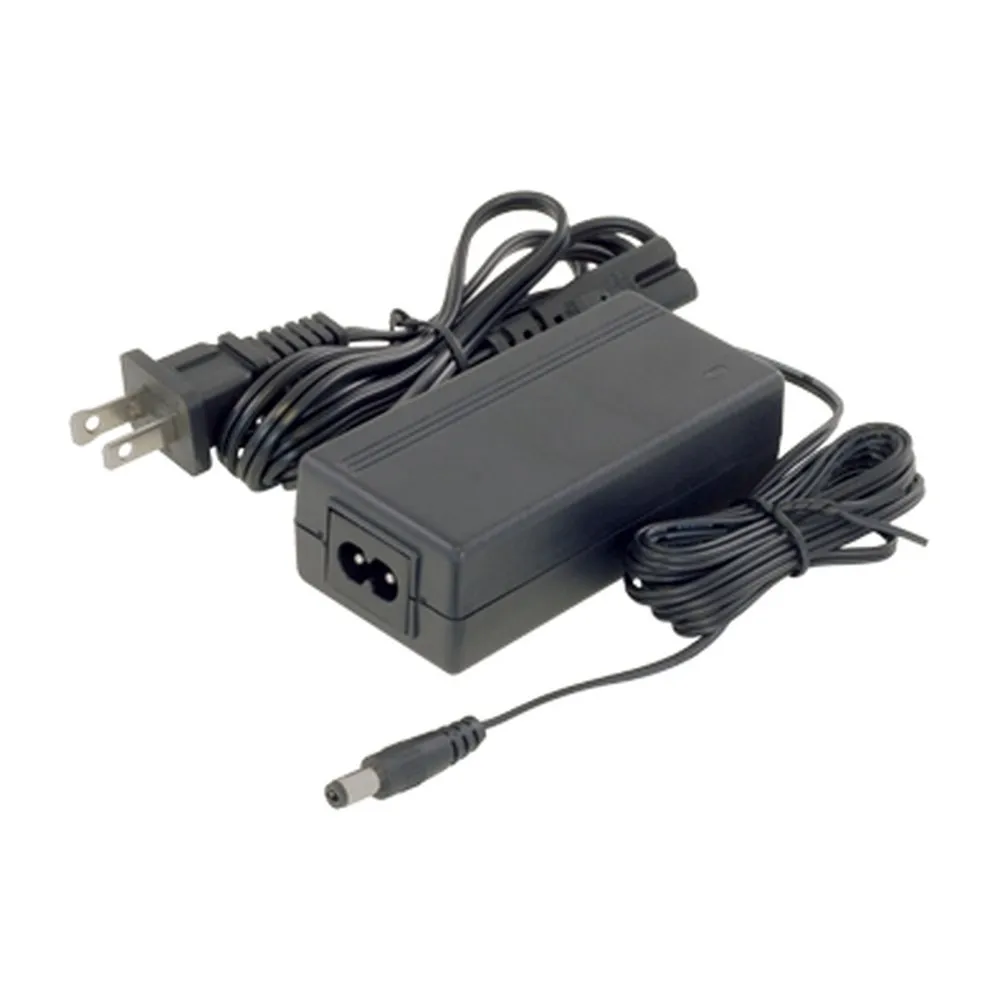
Why a 24V driverLow-voltage LED lighting such as
LED tape, puck lights and slim under-cabinet bars runs on direct current, not on household power. A
driver (also called an LED power supply, adapter or transformer) makes the conversion. This model supplies
24V DC with a capacity of
24W, so it is designed for lights built for a 24V system. Always match the voltage of the driver to the voltage printed on your lights; a mismatch can leave them dim, flickering or damaged.
Plug-and-play connectionThe driver comes with a
power cord and plug on the input side and a
2.1 DC barrel-style output, the small round connector widely used on plug-in low-voltage lighting. With lights that use the same connector, installation is simply plug in and connect. There is no junction box to open and no hardwiring on the supply side, which saves time in kitchen retrofits, closets, shelving units and display cabinets.
Sizing your projectAdd up the wattage of every light or length of tape you plan to connect and keep the total within the 24W rating, ideally with some margin so the driver stays cool. If your project calls for more power, step up to the
24V DC LED driver 60W, which uses the same Class 2 plug-in format. Splitting larger layouts into zones, each with its own driver, is another clean solution.
Installation and safety tipsAs a
Class 2 power supply, the driver is part of the low-voltage family commonly used for residential LED lighting. Keep it indoors and dry, give it some air, and do not bury it in insulation or next to a heat source. Unplug the driver before connecting or disconnecting lights, and route the low-voltage wire neatly along cabinets or inside millwork with clips.
Everyday usesUse the
LED-DVR-24V-24W to power under-cabinet task lighting above a kitchen counter, a strip of LED tape along a bar or a headboard, a glowing bookcase or pantry shelves. In shops and showrooms, it drives display lighting in showcases and on shelving where the setup changes with the seasons.