From plug-in to permanent
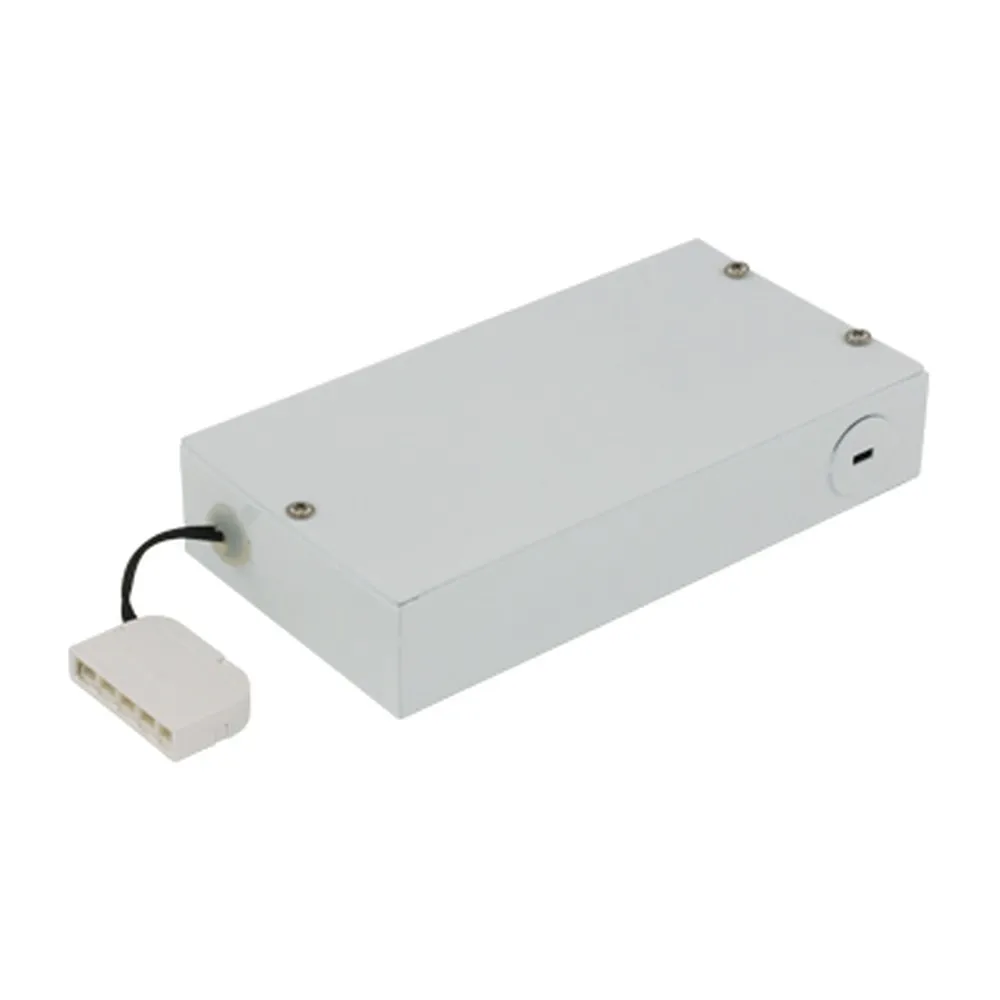
Plug-in low-voltage lighting is easy to start with, but in a renovated kitchen or a new home, a cord running to an outlet is rarely the look you want. The hardwire box replaces the plug-in adapter with a driver connected directly to the building wiring. It supplies 12VDC with a 12W capacity and is made to work with 12VDC DIY lighting products, so your lights keep working exactly as before, only now controlled from a wall switch and with no visible cord.
Planning your project
Add up the wattage of every light you want to connect and keep the total within the 12W rating, with some margin to keep the driver cool. Check that every light is designed for 12V DC. If you have more lights than one box can handle, split the layout into zones, each with its own hardwire box, which also gives you separate control of each area, such as the counter and the display cabinets.
Installation
Because the box connects to household power, the connection must be made by a licensed electrician in accordance with your province's electrical code. Choose a dry, accessible, ventilated location, typically inside or above a cabinet or in a closet, and never bury the box in insulation. Route the low-voltage wiring neatly along the underside of the cabinets or through the millwork, and turn off the breaker before any work.
A discreet white housing
The WH suffix of the LED-HWB12-WH identifies the white version. Inside white kitchen cabinets, closets and utility spaces, it stays out of sight and out of mind, keeping attention on the light rather than on the equipment.
Typical uses
Use it to hardwire under-cabinet lighting in the kitchen, a lit pantry, a bathroom vanity niche, a walk-in closet, bookcases and display cabinets. In small businesses such as cafés, boutiques and offices, it turns plug-in accent lighting into a permanent part of the space, operated from the same switches as the rest of the lighting.