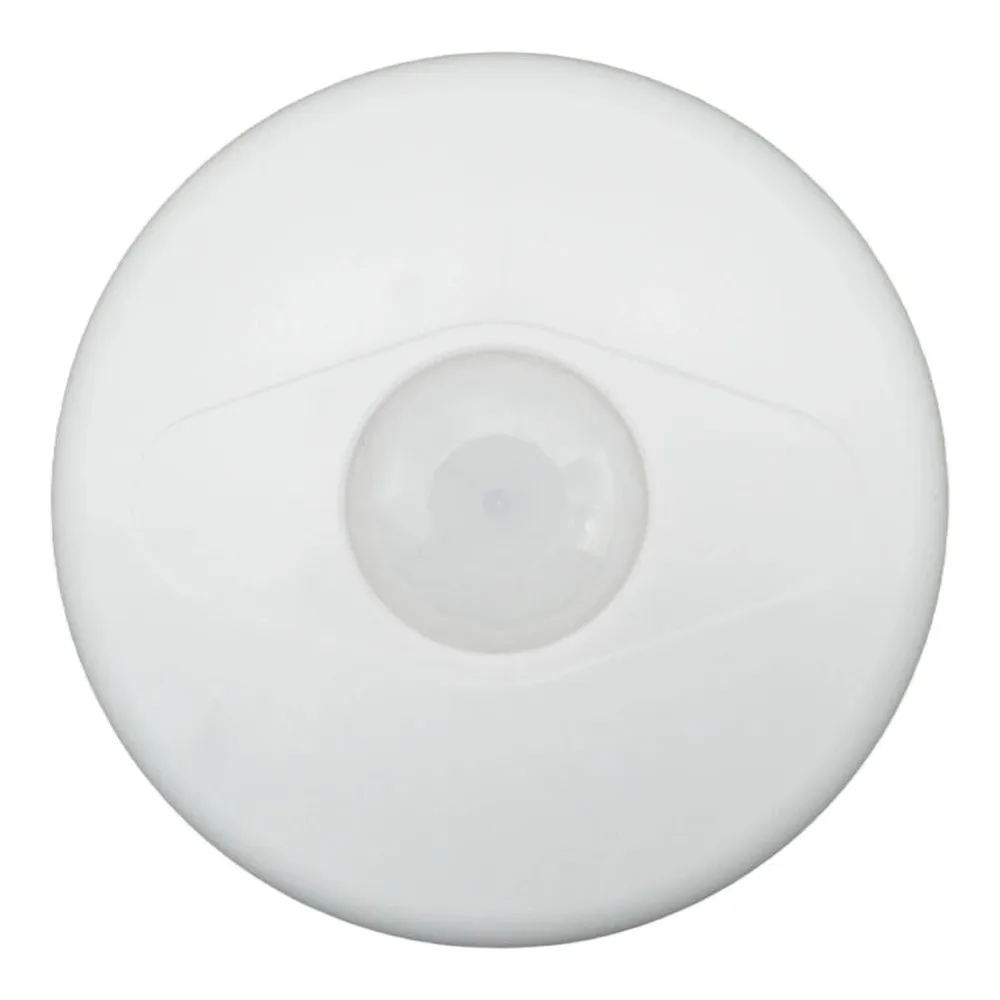
What this detector is
The SPECLITE ZZCODPIRSK is a ceiling-mounted PIR (passive infrared) motion sensor with programmable operation. PIR technology is the workhorse of occupancy detection: instead of emitting anything, the sensor reads the infrared energy naturally given off by warm bodies and reacts when that pattern shifts across its field of view. A person walking in triggers it; an empty room does not. That makes it a dependable occupancy sensor for spaces where you want light on demand and darkness the rest of the time, and it avoids the false triggers that plague cruder switching methods.
Why the ceiling is the right place for it
A sensor is only as good as what it can see. Sitting in the middle of the ceiling, this ceiling motion detector looks down over the whole floor area with nothing in the way — no coat rack, no bookshelf, no half-open door blocking its view like it would with a sensor built into a wall switch. It also keeps the detector out of reach of kids, carts and vacuum cleaners. In long rooms or L-shaped layouts, installers often place several units so every corner is covered and nobody is ever left standing in the dark waving their arms.
Programmable behaviour
The word that matters here is programmable. Rather than one fixed factory setting, the unit is configured on site so its response suits the room: quick, frequent switching in a corridor people cross all day, a calmer setting in a conference room where someone may sit still for a while, another approach again in a storeroom entered twice a shift. That flexibility is what turns a motion sensor from a gadget into a real control device, and it is why the same model can be specified across a whole building instead of ordering a different sensor for every room type. Programming also means the sensor can be re-tuned later if the room changes use — a spare bedroom becomes a home office, a stockroom becomes a workshop.
Installation and applications
Installation is ceiling work: the detector goes up in a central position over the area to be covered and is wired into the lighting circuit it commands. Plan the location before you cut — keep it clear of supply-air diffusers, heaters and direct sunlight through a skylight, since moving warm air and strong heat sources are what confuse any infrared detector. Keep the coverage aimed at doorways and traffic paths so the light comes on as someone enters rather than three steps later. Typical jobs include residential hallways, stairwells, garages, basements, laundry and storage rooms, plus commercial offices, washrooms, corridors, break rooms, warehouse aisles and back-of-house areas in shops and restaurants. Anywhere a light gets left on by accident is a candidate.
Documentation
The technical PDF for the ZZCODPIRSK (FICHE TECHNIQUE ZZCODPIRSK) is available in the Documentation tab of this page — download it for the full manufacturer data before you specify or install, and keep a copy with your project file for the electrician and the building owner. Have the sensor connected by a qualified electrician and in accordance with the Canadian Electrical Code and your local requirements.