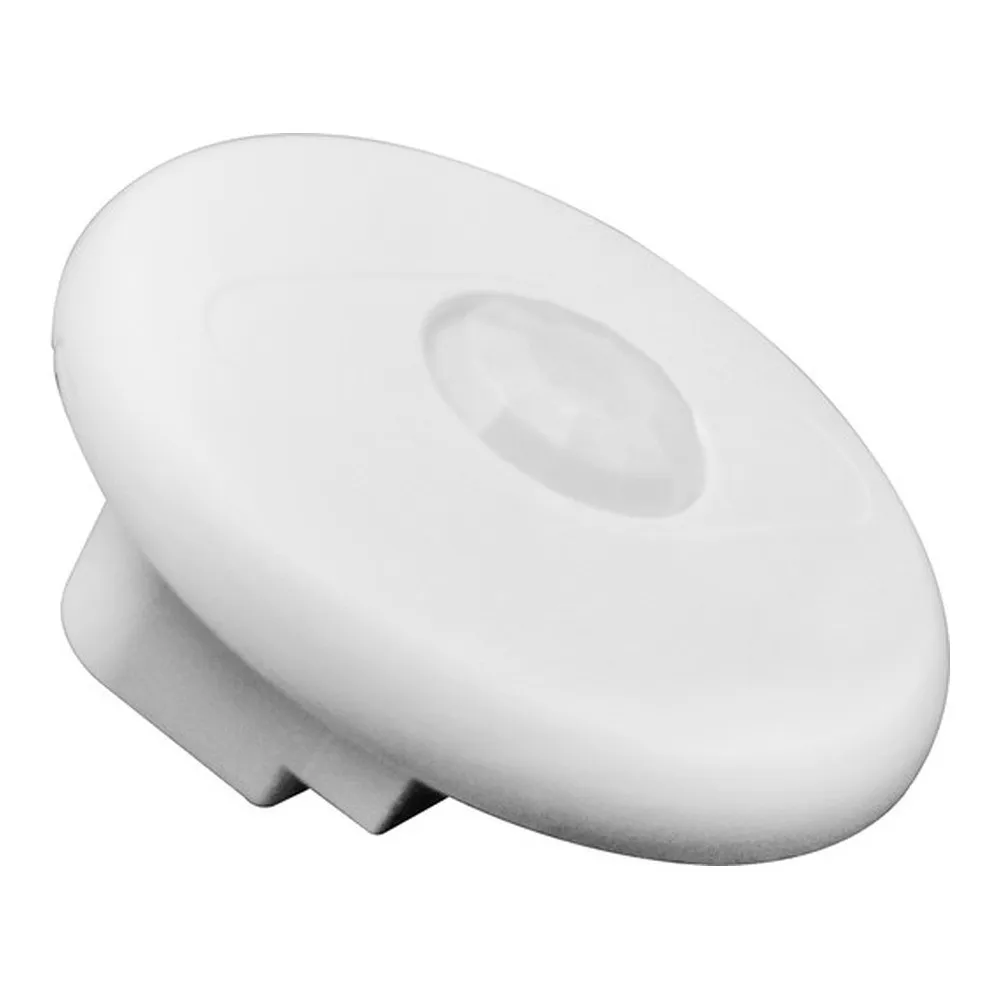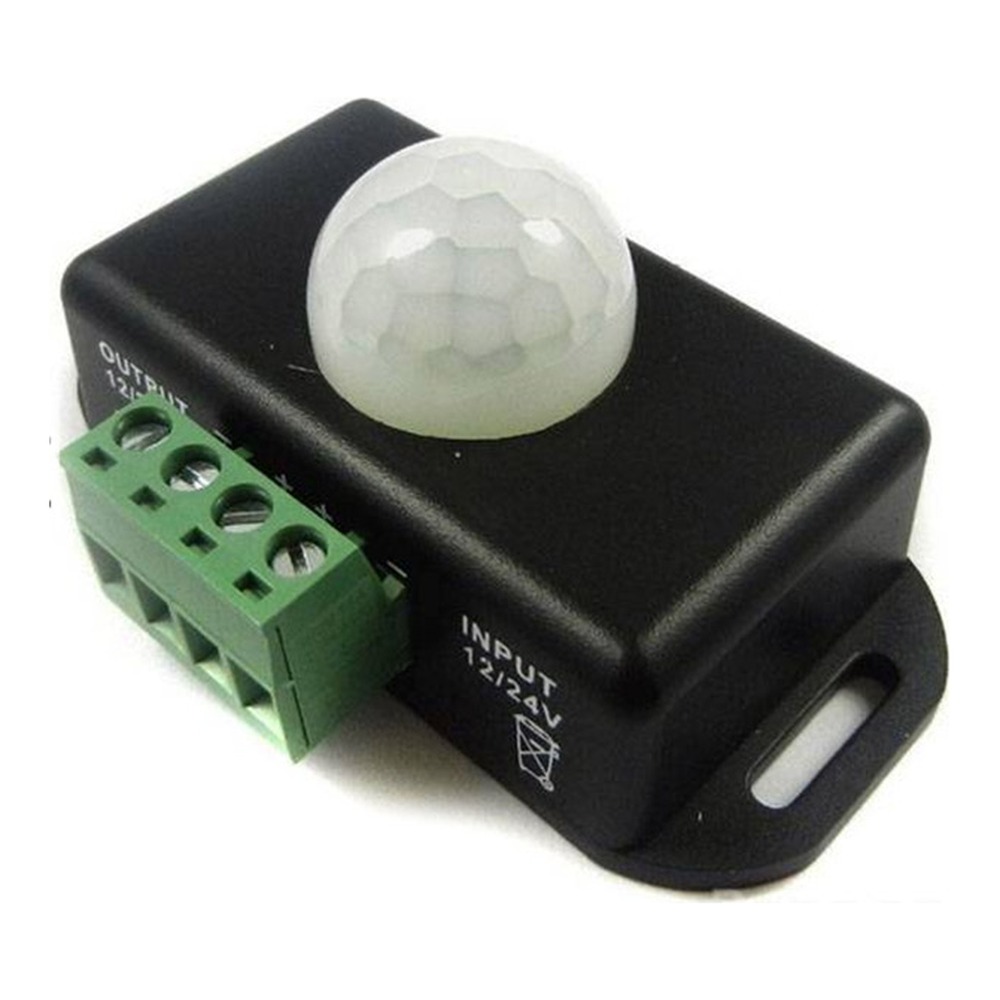
Motion sensors for LED lighting switch lights on when someone arrives and off, or down to a low level, when the space is empty. They cut wasted hours in warehouses, garages, corridors, washrooms, closets and parking areas, and they add convenience at home. This category brings together 47 products: wall switch sensors, ceiling occupancy sensors, plug-in sensors for high bays and wall packs, low voltage sensors for LED strips and cabinets, plus the remotes, controllers and knuckle mounts that go with them.
The page is written for electricians, contractors, facility managers and homeowners who need to pick the right sensor for a fixture or a room. You will find the main sensor types, PIR versus microwave detection, the specs to check, how to choose, installation tips and answers to common questions. These products belong to our wider sensors and detectors range.
A wall switch sensor replaces a standard switch in the box. The TL-6012-PLUS PIR wall switch sensor, 120-277V works in occupancy mode (automatic on and off) or vacancy mode (manual on, automatic off), with or without a neutral wire, which makes it practical in older buildings. The SPECLITE MSWITCH120 is a 120V PIR switch with neutral, rated 15A and 500W, with a 180° field of view and a delay adjustable from 5s to 5min. An indoor 120 VAC occupancy sensor switch in white completes the choice for offices, washrooms and laundry rooms.
Ceiling sensors watch a whole room from above, which suits open offices, classrooms, storage rooms and corridors. TUROLIGHT offers the TL-1032-Plus PIR ceiling sensor and a TUROSMART Bluetooth mesh line: a 120-347V on/off sensor, a 120-347V sensor with 0-10V output and a low voltage ceiling PIR with 0-10V output that requires a 12V auxiliary supply. A TUROSMART relay power pack, 120-347V and 6A with a 12V DC output, powers and switches those low voltage sensors. ARANI adds a PIR ceiling sensor for 120-347V, and SPECLITE a programmable ceiling PIR.
Bi-level sensors do not simply switch off: they dim the fixture to a standby level when the area is empty, then return to full output on detection. ARANI makes bi-level PIR sensors in 120V and 347V, such as the bi-level PIR sensor, 347V, 0-10V dimming, IP65, and a bi-level microwave sensor in 120V. The Light Efficient Design high/low motion and daylight sensors combine PIR detection with a photocell, in limited range and extended range versions, for spaces with different mounting heights.
Many commercial fixtures have a receptacle for a matching sensor. CSC LED offers sensors for its high bays, floodlights, wall packs, strip and vapour tight fixtures. The HB01DMS-B sensor for LHB2 and LHB03 high bays combines passive infrared and a photodiode with 5.8GHz microwave detection under 0.5mW, and manages daylight threshold, hold time and standby dimming. The HB01DMS-C does the same job on CWP04 and AWP04 wall packs. Mounting height drives the choice: the MS02 is rated for 12 ft max, the MS03 for 25 ft max, the YM2503A covers up to 30 ft, and the ST4 and VT4 sensors come in 2.5-4 M and over 4 M versions. CANOLIGHT sensors for its linear high bays detect up to 15 meters (motion) or 12 meters (PIR), and SPECLITE offers a 12VDC plug and play sensor with a magnetic band for its LF VT series. See our LED high bays for compatible fixtures.
For 12V and 24V lighting, the sensor sits between the power supply and the LED load. The LS-MS-PIR3 PIR motion sensor, 12-24V DC, 6A switches a strip on when it detects motion and off after the preset time. The LS-MS surface mount sensor has a timer of 1-10 min, and the LS-MS-PIR recessed switch reacts to hand motion up to 3 m (10 ft), ideal in drawers, closets and cabinetry. TUROLIGHT microwave sensors for 12V DC strip lighting can detect through wood, drywall and plastic, so they can hide behind a panel.
Programming a sensor on a high ceiling is easier from the floor. CSC LED remotes adjust settings wirelessly; the MS02-RC works within 25 feet of the sensor. TUROLIGHT controllers set its low voltage microwave sensors, and an ORTECH remote configures its PNP and ALS PIR sensors. Knuckle mounts in white, bronze or black let you aim compatible exterior sensors.
| Application | Sensor type | Examples in this category |
|---|---|---|
| Office, washroom, laundry | Wall switch PIR | TL-6012-PLUS 120-277V, MSWITCH120 120V |
| Open office, classroom | Ceiling PIR, 0-10V | TUROSMART, ARANI 120-347V |
| Warehouse, high ceiling | Plug-in or bi-level | HB01DMS-B, MS03 25 ft, YM2503A 30 ft |
| Cabinets, closets, strips | Low voltage PIR or microwave | LS-MS-PIR3 12-24V DC, LS-MS-PIR |
First, match the voltage: 120V, 120-277V, 120-347V or 347V for line voltage sensors, 12V or 12-24V DC for low voltage ones. Second, check how the sensor talks to the fixture: a simple on/off relay, a 0-10V dimming output for bi-level operation, or a dedicated plug-in sensor made for one fixture series. Third, match the coverage to the mounting height and the room size. Finally, decide whether you also want daylight harvesting, which keeps lights off when there is enough natural light. For dusk-to-dawn control only, see our photocells and daylight sensors.
In industrial spaces, plan the sensors with the fixtures: our high bay calculator helps size the lighting, and the sensors listed for each high bay ensure compatibility. At home, a wall switch sensor or a low voltage sensor is usually all you need; our smart switches and motion sensors guide compares the options.
In commercial and industrial buildings, motion sensors control high bays in warehouses, fixtures in stairwells and parking garages, wall packs around the perimeter, and lights in washrooms and storage rooms; see ideas for LED warehouse lighting. At home, they light garages, laundry rooms, closets, under-cabinet strips and entrances automatically. For step lights with a built-in sensor, browse our deck and step lights.
An occupancy sensor turns the lights on and off automatically. A vacancy sensor requires you to switch the lights on manually, then turns them off automatically when the room is empty. Some wall switch sensors offer both modes.
It depends on the model. The TL-6012-PLUS works with or without a neutral wire, while the MSWITCH120 requires a neutral. Check the box before you buy.
Yes. Bi-level sensors with a 0-10V output dim the fixture to a standby level when the area is empty and return to full output on detection. The fixture driver must support 0-10V dimming.
Choose a sensor rated for the mounting height, such as the MS03 (25 ft max) or the YM2503A (up to 30 ft), or the plug-in sensor listed for your high bay model. Microwave and dual technology sensors cover large areas well.
Yes. Low voltage sensors such as the LS-MS-PIR3 install between the power supply and the strip. Check that the sensor rating, here 6A, exceeds the current drawn by the strip.
No, PIR needs a line of sight. For a hidden installation, use a microwave sensor that detects through wood, drywall or plastic.
Find the right detector for your fixtures and rooms in our full selection of motion and occupancy sensors.