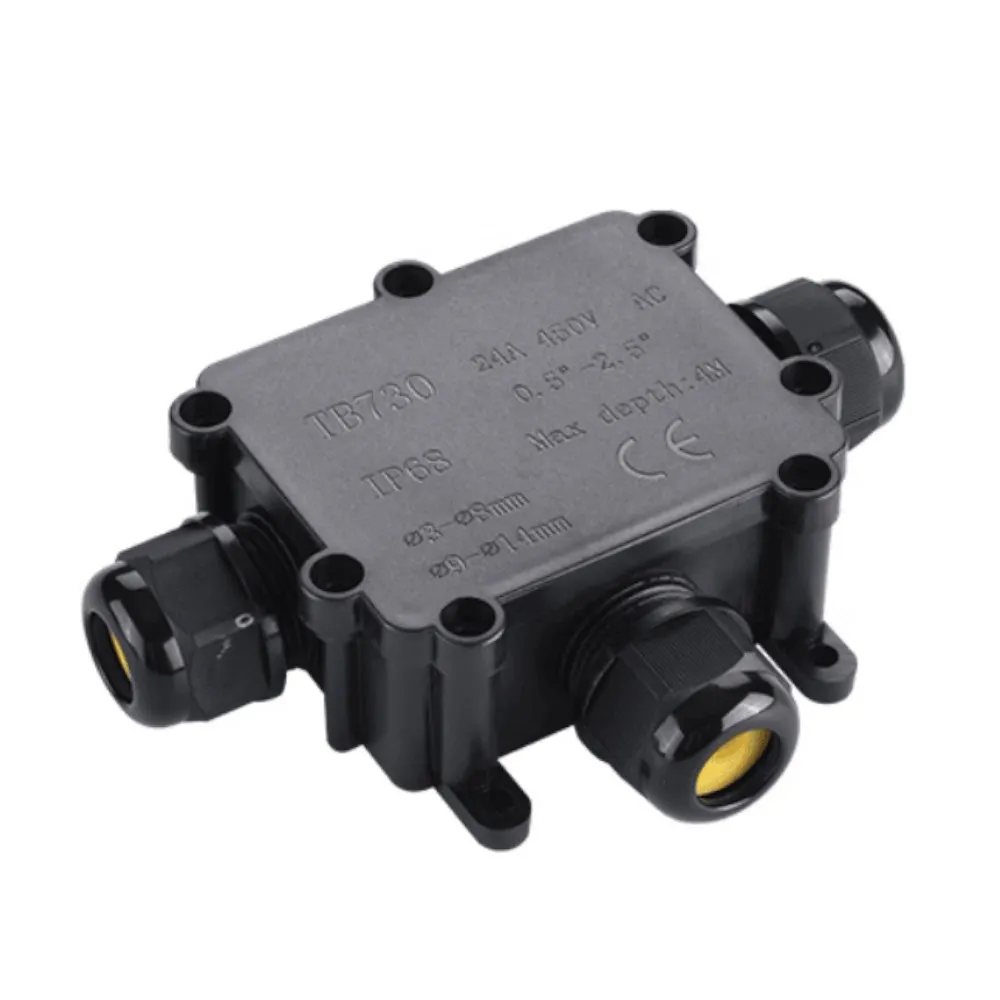
Built to stay sealedEverything about this enclosure is aimed at one failure point: the splice. The body is gasketed and sealed, rated
IP68, so water, dirt and insects simply cannot reach the conductors inside. That level of sealing is what allows it to be used for direct-burial as well as above-ground work — under mulch, in a planting bed, behind a retaining wall, at the base of a post — places where a standard indoor box would be flooded within a season. Sprinkler spray, snow melt, standing water and constant ground moisture are all part of the design brief, not surprises.
Materials that survive Canadian weatherThe housing is made of corrosion-resistant materials that resist UV exposure and temperature swings. That matters more than people think: a cheap plastic box left in full sun goes chalky, then brittle, then cracks at the first hard freeze, and the gasket seat is the first thing to go. This one is intended to stay flexible and sealed through repeated freeze-thaw cycles, which is the real test of any
outdoor junction box between Victoria and St. John's. Several sizes and configurations are available depending on how many conductors you need to bring together.
Where it fits in your systemUse it anywhere you need to join, tap or extend a run in a
low-voltage LED landscape lighting layout. Typical spots: between the transformer and the fixture runs, at branch points feeding path lights, spotlights, deck lights or in-ground well lights, and at repairs on existing wiring after a shovel, an aerator or a rodent has done its damage. Beyond lighting, it serves irrigation valve wiring, controllers, pumps and other exterior accessory wiring on residential and light-commercial properties. Concrete examples: a three-way branch feeding a row of garden path lights along a driveway, a tap for two uplights washing a stone façade, a buried repair splice under a lawn, or the connection point for
outdoor sign lights at a small storefront.
Installation tips that make the seal workA waterproof box is only as good as the install. Strip your conductors cleanly, seat them fully in the connectors, and make sure the gasket surface is free of grit, sand or mulch fibres before you close the lid — a single grain of sand is a water path. Mount the box so cable entries face downward whenever possible, and leave a small drip loop in the wire so water runs away from the enclosure instead of tracking along the jacket into it. Give yourself a little slack so a future repair doesn't mean pulling new cable, and note the location if the box is buried. Always respect local and provincial electrical code requirements for the circuit you're working on.
Related products and documentationSKU
LCJUNCBOX-EXT-IP68 is the wet-location member of our junction box family. For dry or sheltered locations, or where you need more interior room for conduit and multiple splices, compare the
rigid PVC junction box, the
compact rigid PVC junction box and the
metal junction box. No spec sheet is posted for this item; if you need confirmation of a specific size or conductor capacity before ordering, ask and we'll confirm which configuration matches your run.