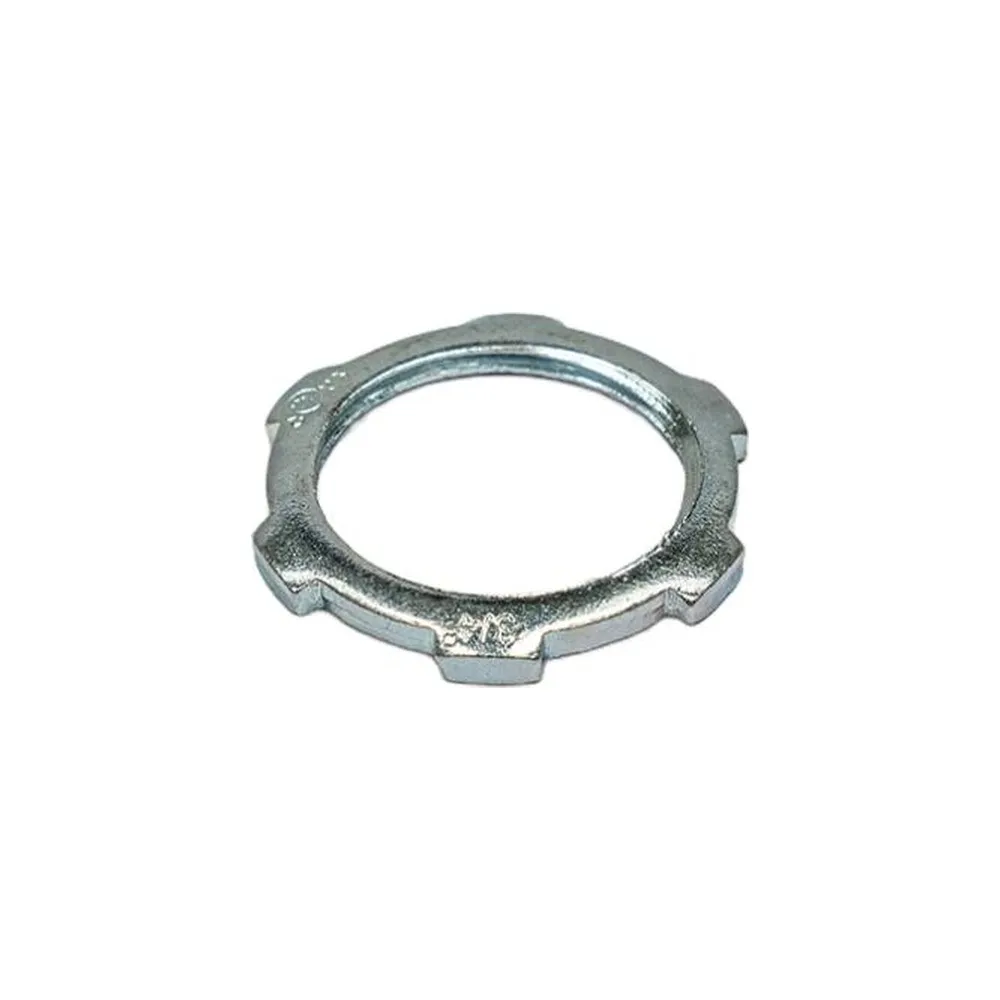
A bigger locknut for bigger runs
The ED-LNS-S075 is a 3/4 in steel locknut, sold in a bag of 10 for residential and commercial projects. Its job is simple and essential: once a connector or conduit fitting has been pushed through a knockout, the locknut threads onto its end inside the box and is tightened against the wall, clamping the fitting in place. The result is a rigid, square connection that holds the cable or conduit where it enters the box and keeps it from working loose over time.
Matching the right fittings
Always pair a locknut with a fitting of the same trade size. This one is for 3/4 in threaded ends: EMT set-screw and compression connectors, 3/4 in cable connectors, flexible metal conduit and liquid-tight connectors, threaded rigid conduit and similar hardware. You will find 3/4 in knockouts on load centre and subpanel enclosures, disconnect switches, larger junction and pull boxes, wireways and many pieces of equipment. Connectors often come with a locknut, but on a busy site those are easily dropped, lost or damaged; a spare bag of 10 keeps you from improvising with the wrong size.
How to install it
Cut the power first. Open the 3/4 in knockout and clean off any burrs, insert the connector from the outside, then thread the steel locknut on by hand from inside the box. Tighten it against the inside wall with a screwdriver, pliers or a locknut wrench until the fitting is firmly seated and cannot rotate, and double-check it before pulling the conductors. Have the work carried out or verified by a licensed electrician, following the electrical code that applies in your province.
Product details
Model: ED-LNS-S075
Product: locknut
Material: steel
Size: 3/4 in
Package: bag of 10
Applications: residential and commercial electrical projects
Documentation: PDF in the Documentation tab
Real-world examples
A contractor running 3/4 in EMT from the main panel to a detached garage, an electrician connecting a liquid-tight conduit to an air conditioner disconnect, a maintenance technician replacing a damaged fitting on a pull box in a warehouse: in each of these jobs, the 3/4 in locknut is the unglamorous part that keeps the connection solid. Keeping a full bag in the van means the right size is always there when the fitting is in your hand. The manufacturer's PDF document is available in the Documentation tab for reference.