Protecting conductors on larger runs
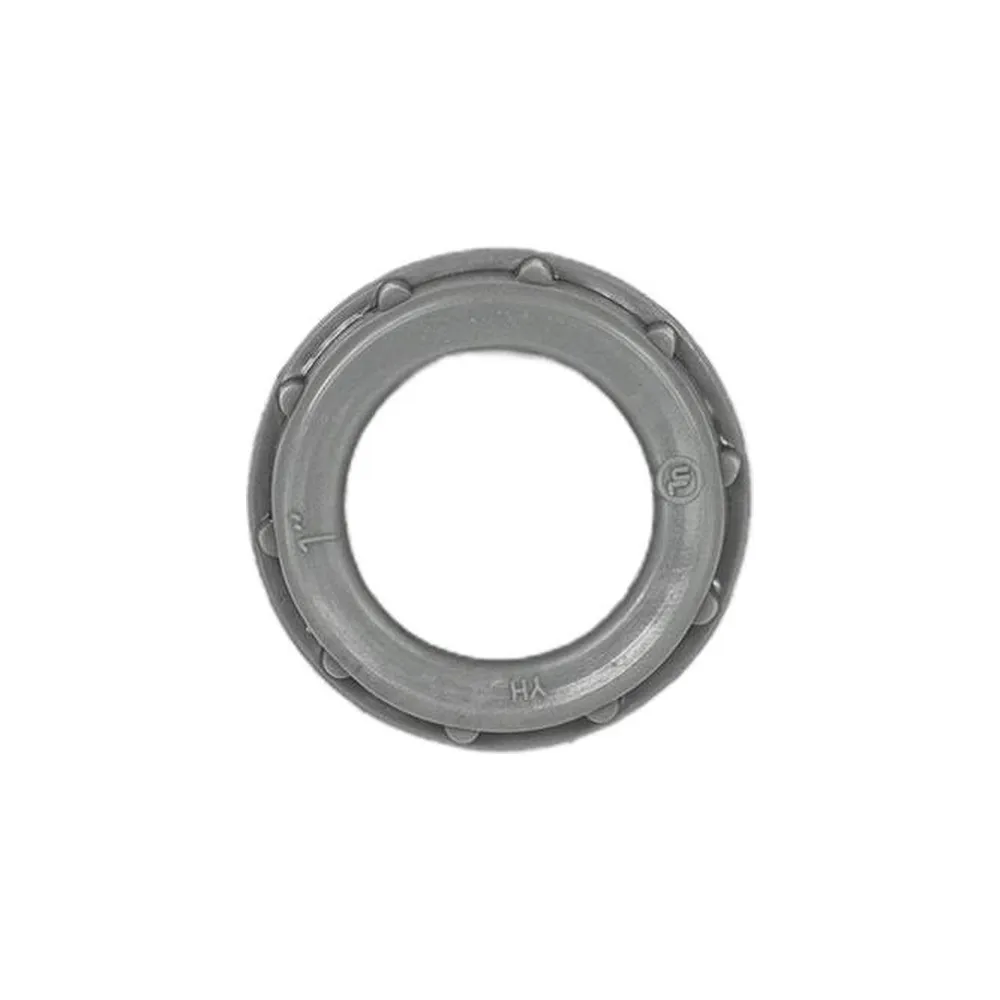
On 1 in conduit, conductors are usually larger and more numerous, and pulling them puts real pressure on the edge of the fitting where they enter the box. The ED-PBT-100 plastic bushing, a 1 in bushing sold in a bag of 4, threads onto that edge inside the enclosure and gives the conductors a smooth, rounded surface to slide over. It is made for residential and commercial projects where a clean, protected entry matters as much as the mechanical connection itself.
Compatible fittings and enclosures
This bushing is for 1 in threaded ends: threaded rigid conduit, the threaded ends of EMT, cable, flexible metal and liquid-tight connectors, and the conduit nipples that join two enclosures. You will find it useful in load centres and subpanels, disconnect switches, splitters and wireways, large junction and pull boxes and equipment enclosures, as well as on open conduit ends such as stub-ups from a concrete slab or sleeves through a foundation wall. Pair it with a 1 in locknut: the locknut clamps the fitting to the box, the bushing protects the wires.
Installation tips
Turn the power off before opening any enclosure. Install the fitting and tighten its locknut first, then thread the plastic bushing onto the exposed threads by hand until it sits snugly against the locknut or the enclosure wall. Avoid overtightening it with tools. Pull the conductors only once the bushing is in place, using a wire-pulling lubricant on long runs if needed. Where the electrical code specifies a bushing type for your conductor size, check that your choice meets it, and have the work performed or verified by a licensed electrician.
Product details
Model: ED-PBT-100
Product: bushing
Material: plastic
Size: 1 in
Package: bag of 4
Category: electrical connectors
Applications: residential and commercial projects
Documentation: PDF in the Documentation tab
Real-world uses
An electrician feeding a subpanel in a detached garage, a contractor bringing a conduit up through the slab of a new commercial unit, a maintenance technician rewiring a machine in a plant: each pull goes more smoothly, with less risk to the insulation, when a 1 in bushing caps the end of the fitting. Keeping a bag of 4 in the truck means the right protection is ready before the first conductor goes in. The manufacturer's PDF document is available in the Documentation tab for reference.