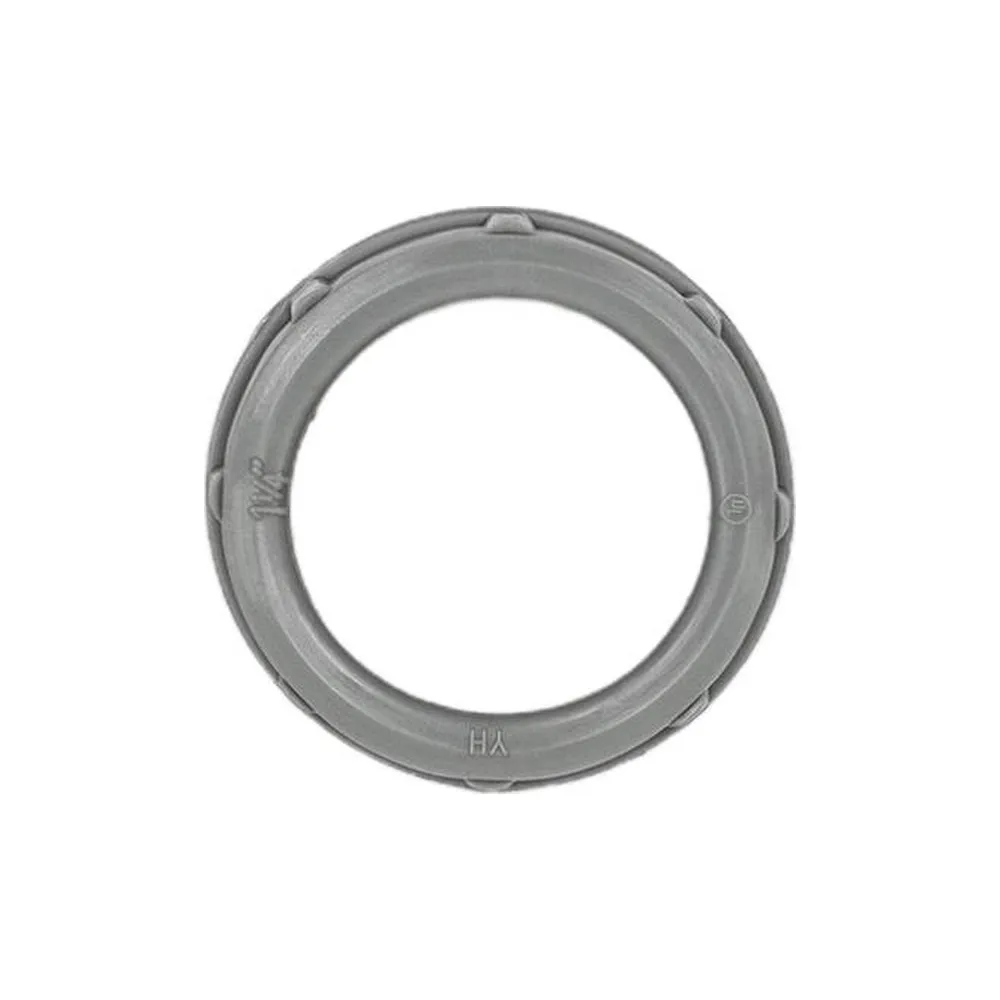
The last piece of a large fitting
On a 1-1/4 in conduit, the conductors are big and the pulling force is high, and the edge of the fitting where they enter the enclosure is where their insulation is most exposed. The ED-PBT-125 plastic bushing, a 1-1/4 in bushing sold in a bag of 2, threads onto that edge inside the enclosure and gives the conductors a smooth, rounded path into the panel or box. It is made for residential and commercial projects, from a home feeder to a commercial distribution system.
Where it goes
This bushing is for 1-1/4 in threaded ends: threaded rigid conduit, the threaded ends of EMT, cable, flexible metal and liquid-tight connectors, and the conduit nipples that join two enclosures. Typical locations include load centres, distribution panels and subpanels, disconnect switches, splitters and wireways, and large junction and pull boxes. It is just as valuable on open conduit ends, such as a stub-up rising from a slab or a sleeve through a foundation wall, where conductors would otherwise be pulled over a raw edge. Pair it with a 1-1/4 in locknut: one holds the fitting, the other protects the wires.
Installation tips
De-energize the equipment before any work. Install the fitting and tighten its locknut, then thread the plastic bushing onto the exposed threads by hand until it sits snugly against the locknut or the enclosure wall; there is no need to force it with tools. Check that the edge is fully covered before pulling, and use a wire-pulling lubricant on long or tight runs. Where the electrical code specifies a bushing type for your conductor size, make sure your choice meets it. Feeder and panel work belongs to a licensed electrician and must be inspected according to the rules of your province.
Product details
Model: ED-PBT-125
Product: bushing
Material: plastic
Size: 1-1/4 in
Package: bag of 2
Category: electrical connectors
Applications: residential and commercial projects
Documentation: PDF in the Documentation tab
Practical examples
A contractor running a new feeder to a workshop subpanel puts a 1-1/4 in bushing on the fitting at each end before the pull. An electrician replacing an old fuse panel caps the existing conduit ends so the new conductors slide in without a scratch. A maintenance team adding a circuit in a plant finishes the stub-up in the floor the same way. With a bag of 2 on hand, both ends of the run are protected. The manufacturer's PDF document is available in the Documentation tab for reference.