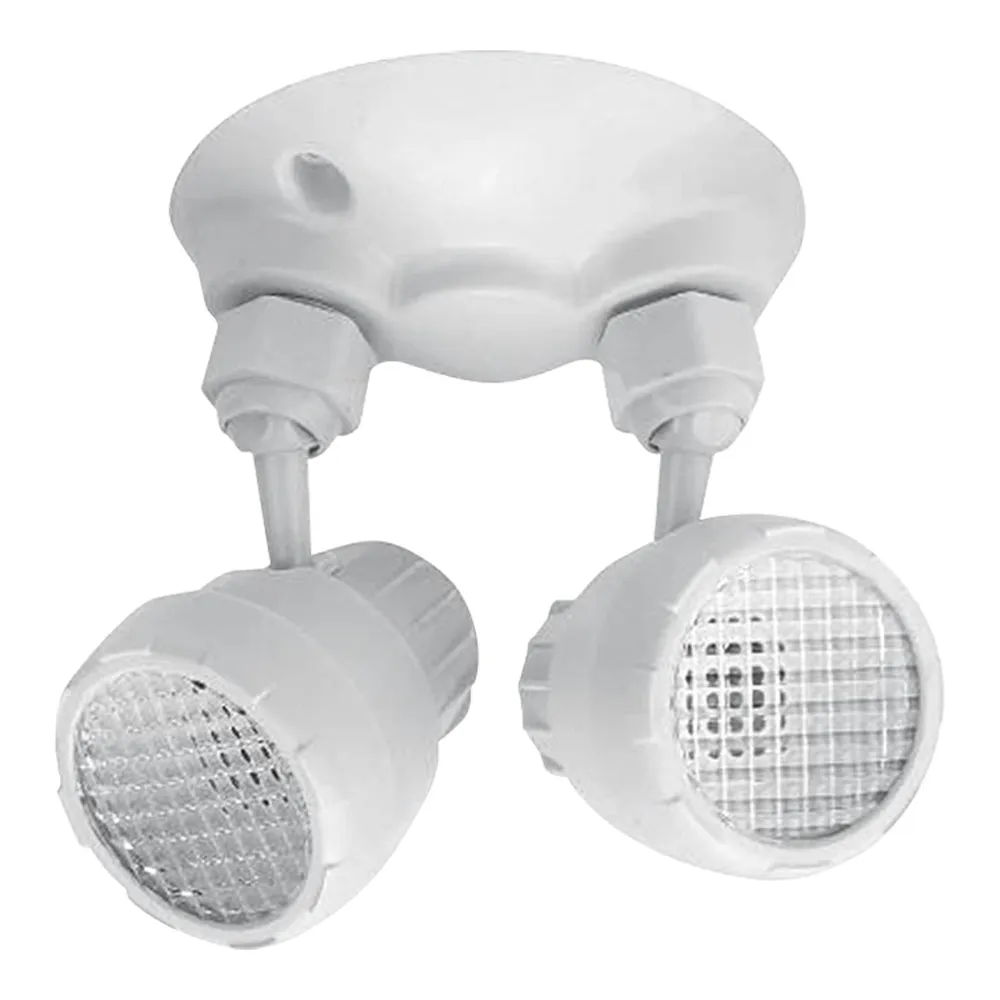
Description and specifications – TL-EM002-14W
What a remote head is
In an emergency lighting system, the battery unit charges continuously from the building power and switches on when that power fails. A remote head is a lamp fixture without its own battery that is wired to such a unit, so the emergency light can reach places located away from it. This TUROLIGHT model is a double head: two LED lamps in one fixture, for a total of 14W, to light more of the path with a single installation point.
Why choose LED remote heads
Older emergency heads used incandescent or halogen lamps that consumed more power and needed regular replacement. LED emergency heads draw less from the battery for the light they produce, which helps the system make the most of its stored energy during an outage, and they need far fewer lamp changes over the years. For building owners and managers, that means less maintenance on equipment that must work perfectly the day it is needed.
Electrical and installation details
A remote head must be connected to a compatible emergency battery unit with enough remote capacity for the total load of all heads on its circuit. Add the 14W of this fixture to the other heads planned on the same unit and compare with the capacity of the unit before you order. The wiring between the unit and the heads also matters: long runs and small wire gauges reduce the voltage reaching the lamps. Emergency lighting is regulated by building and electrical codes, so the layout, the wiring and the testing must be done by a qualified electrician.
Applications
Place the double head at the junction of two corridors to light both directions, on a stairwell landing to light the steps up and down, above an exit door in a warehouse, in the open area of a restaurant, or along the common hallway of a residential building. In each case, the goal is the same: give occupants enough light to find the exit calmly and safely during a power failure.
Documentation
The TUROLIGHT spec sheet for this remote head is available in the Documentation tab of this page. Review it with the documentation of your emergency unit to confirm mounting and compatibility, and remember to include remote heads in the regular testing of your emergency lighting system.