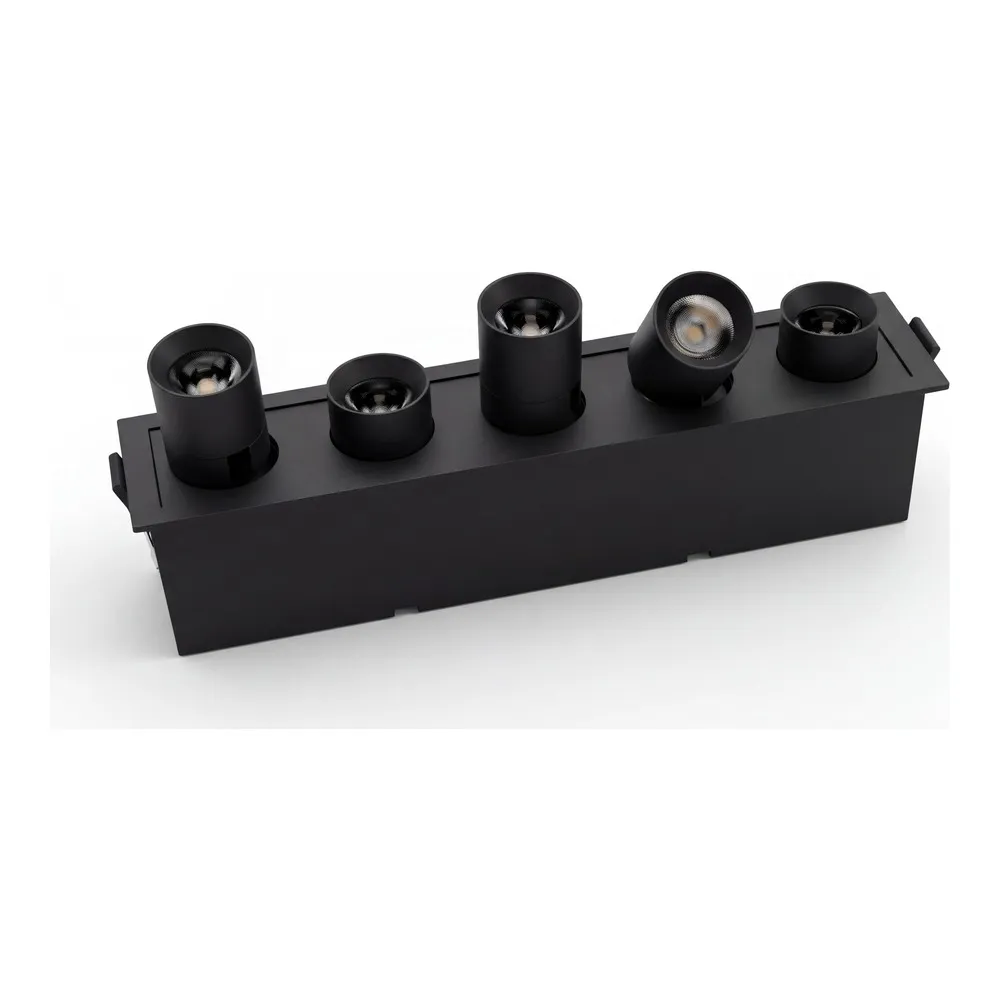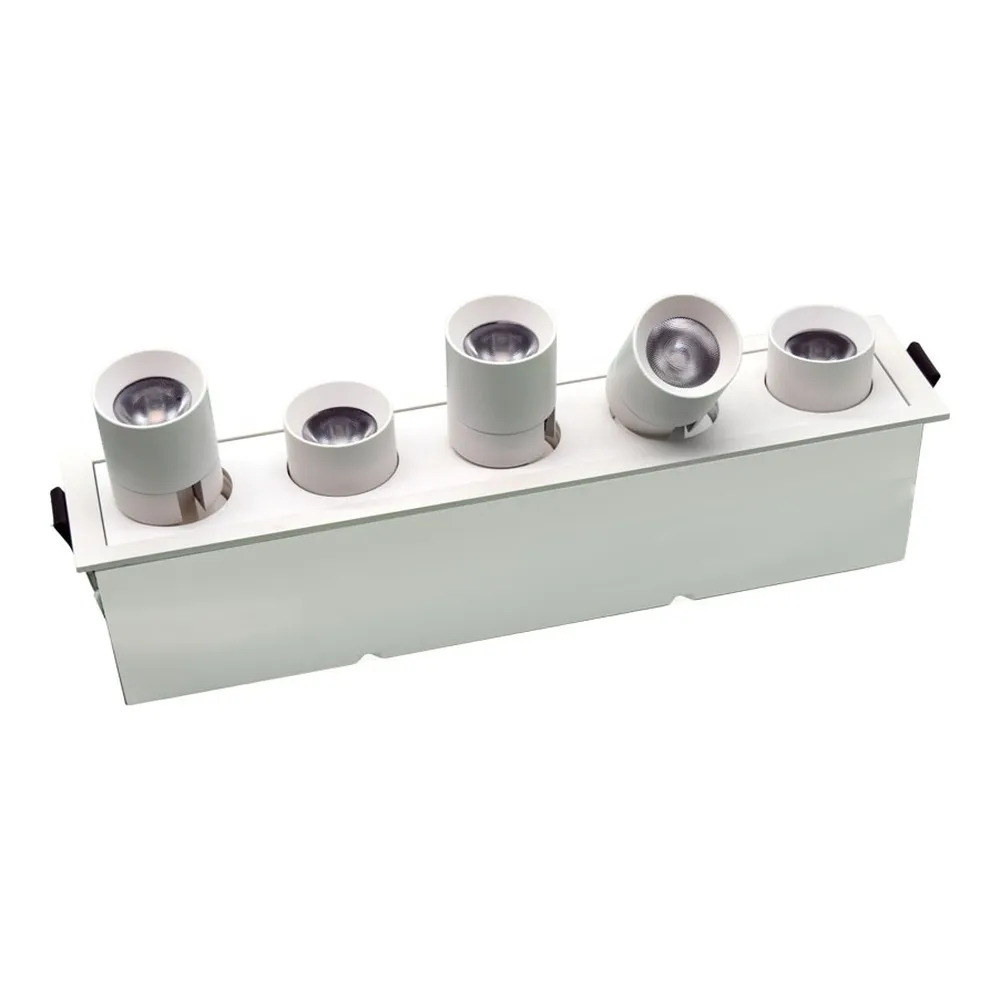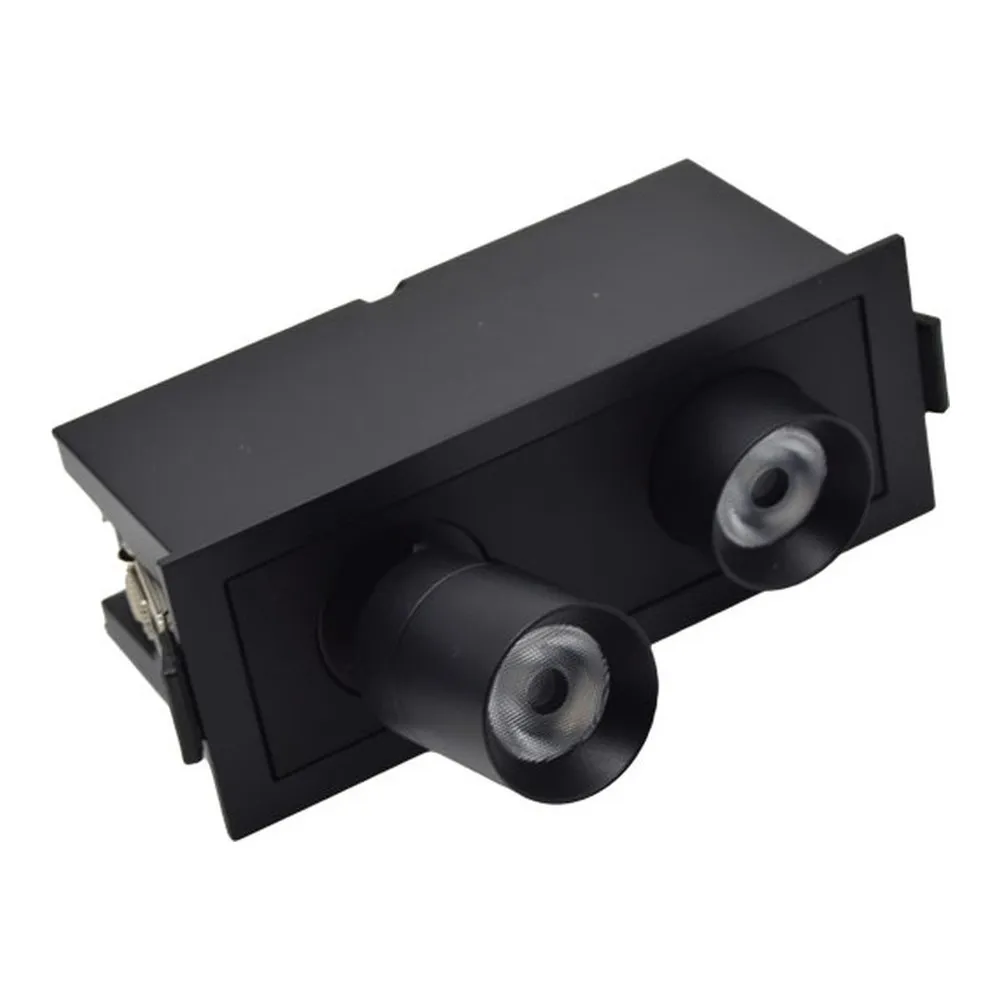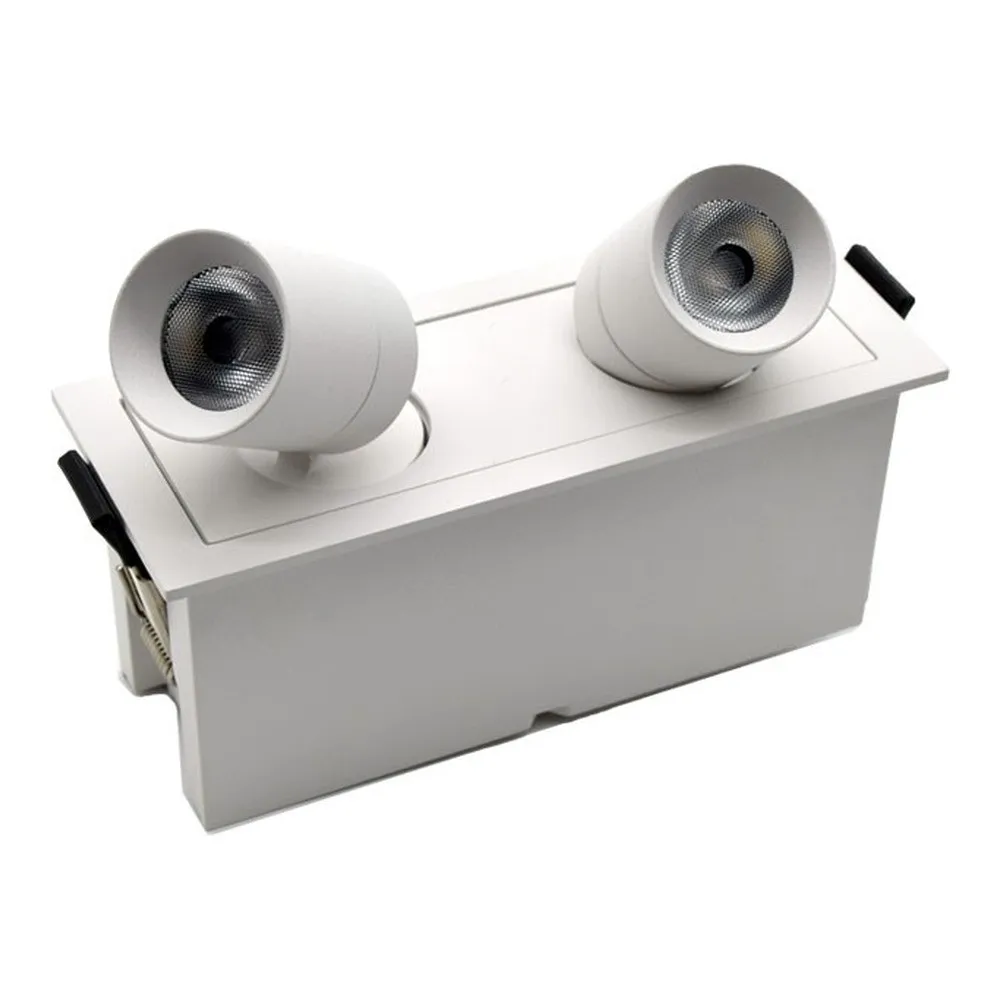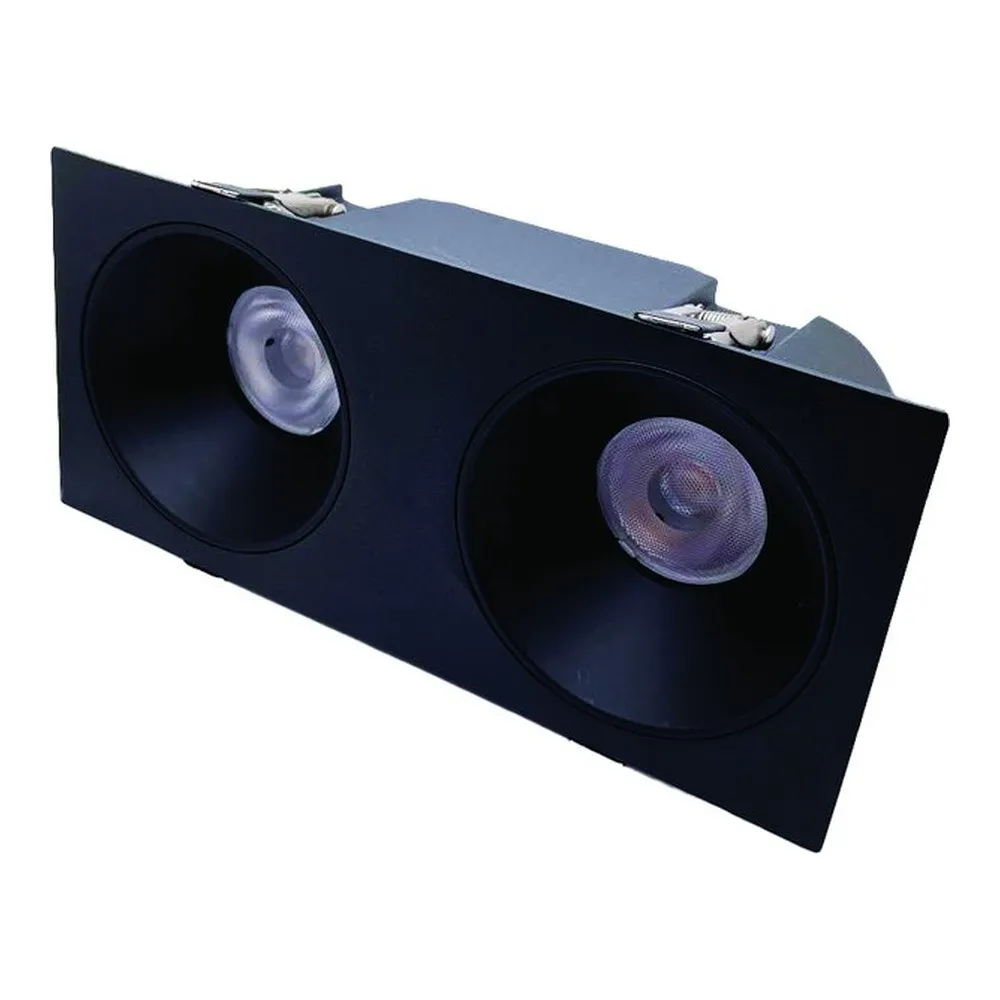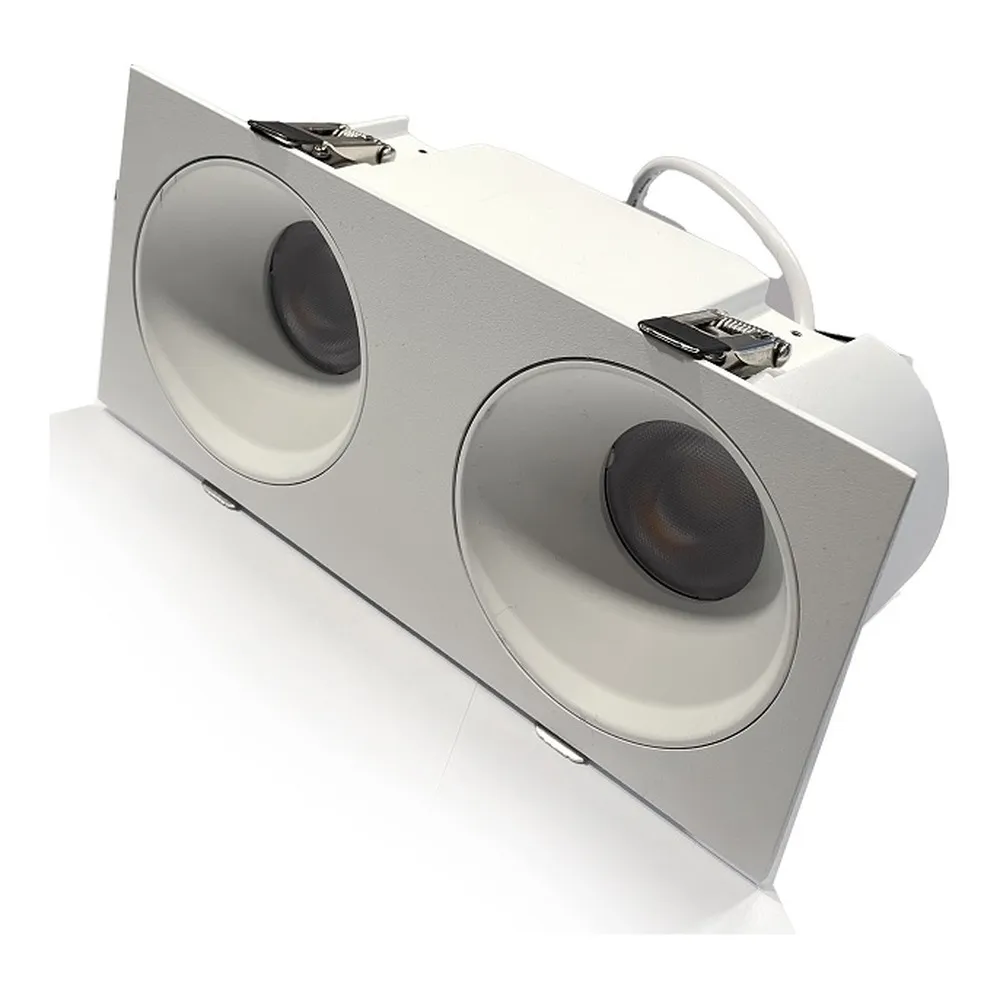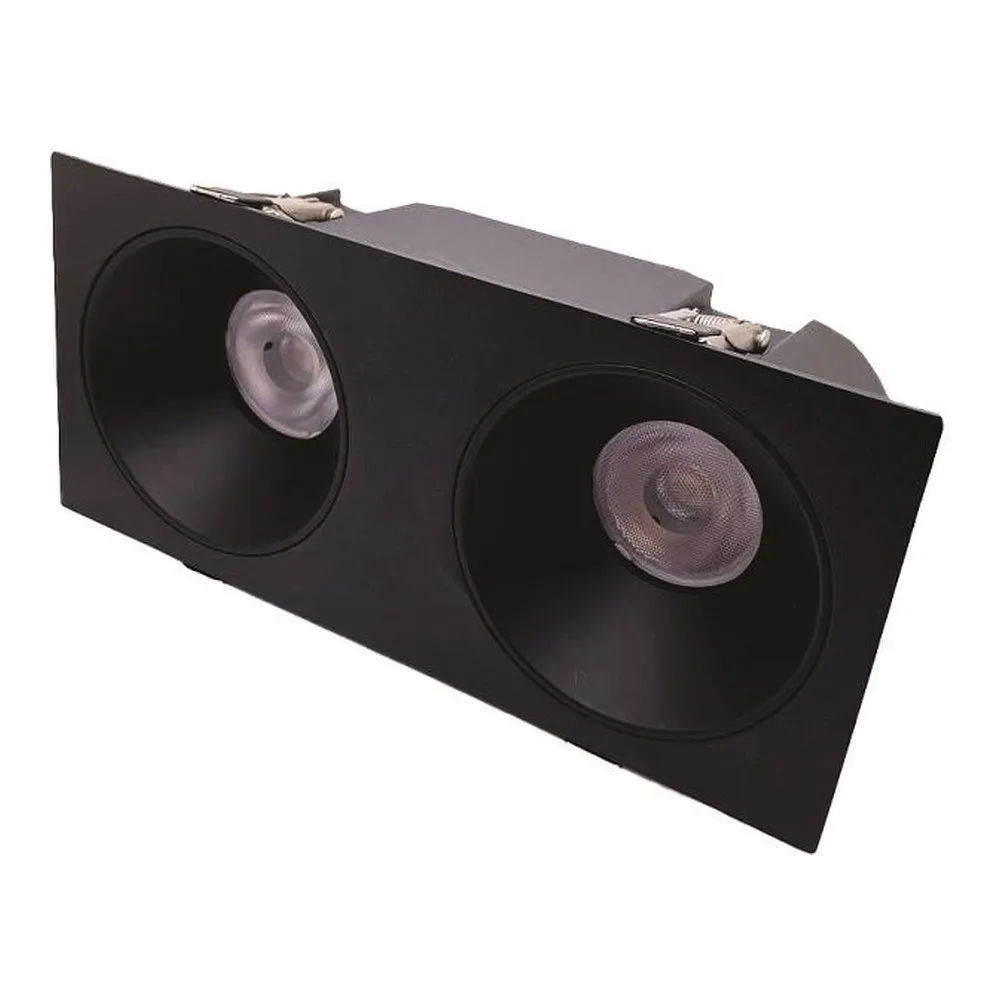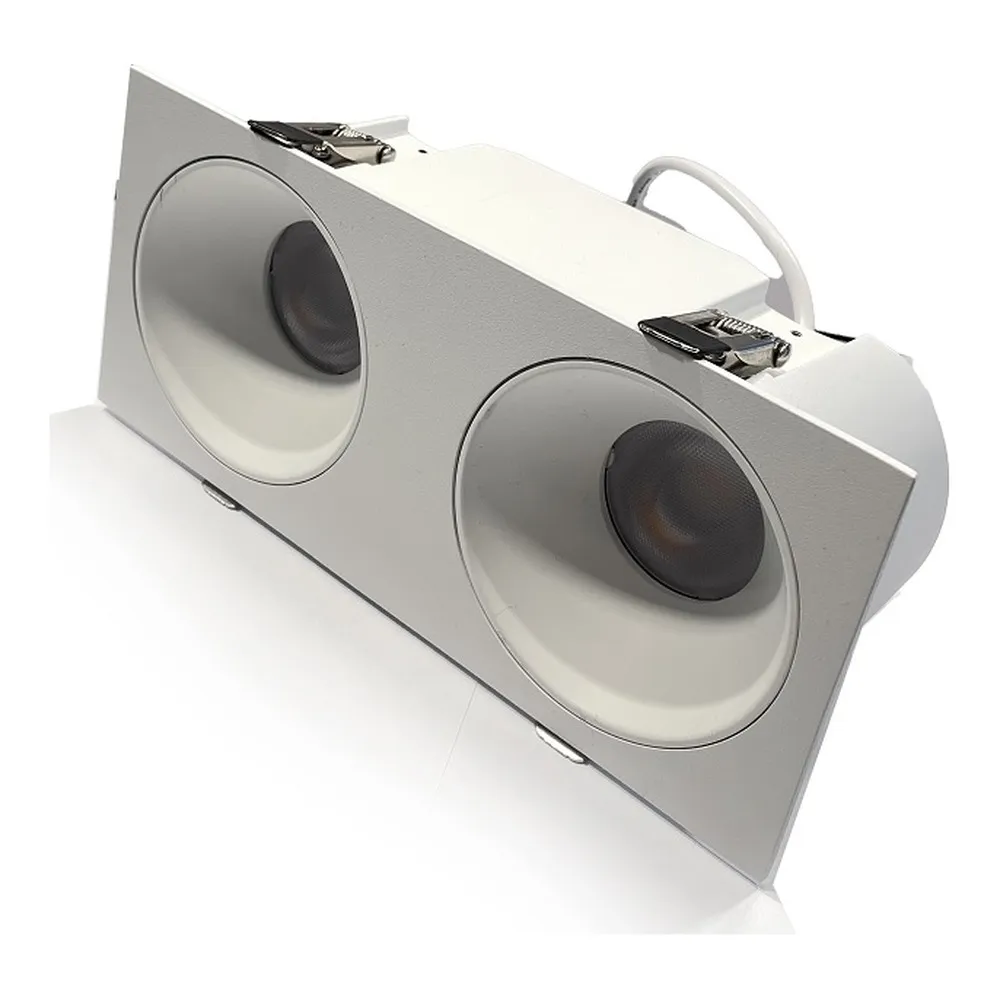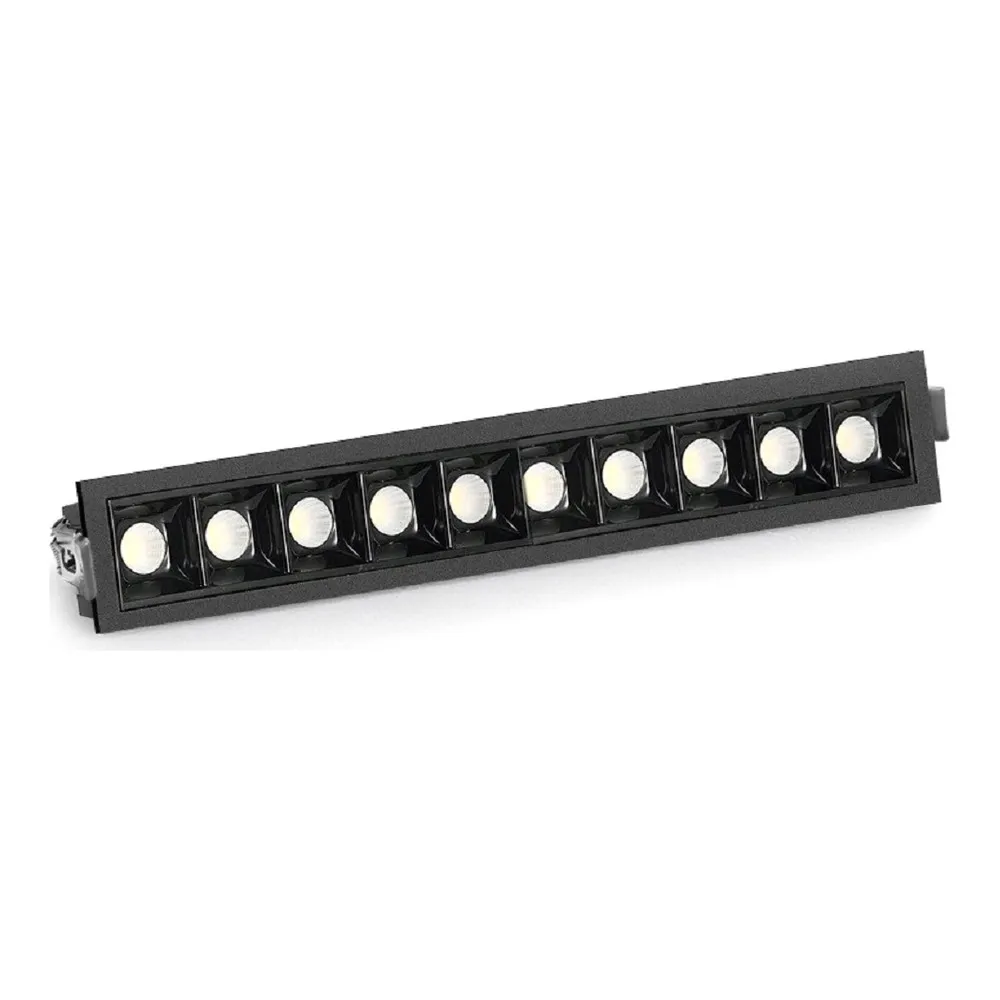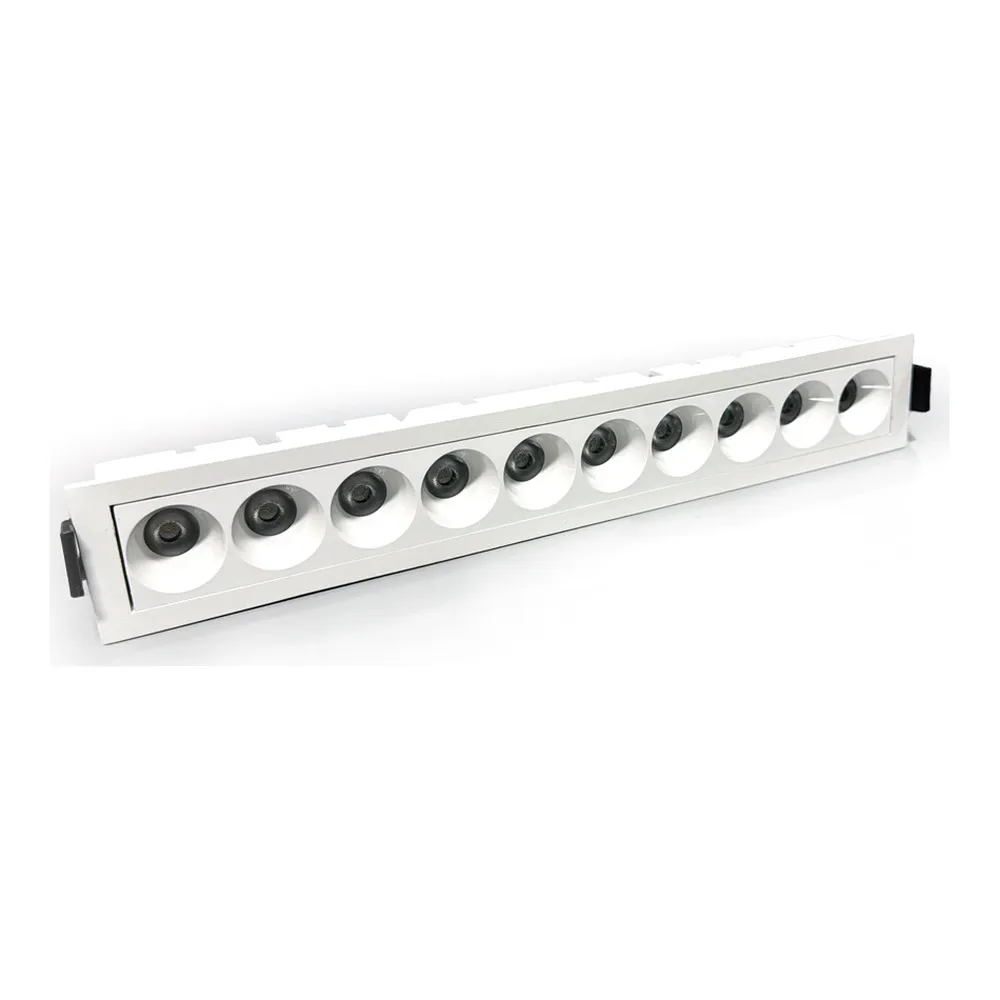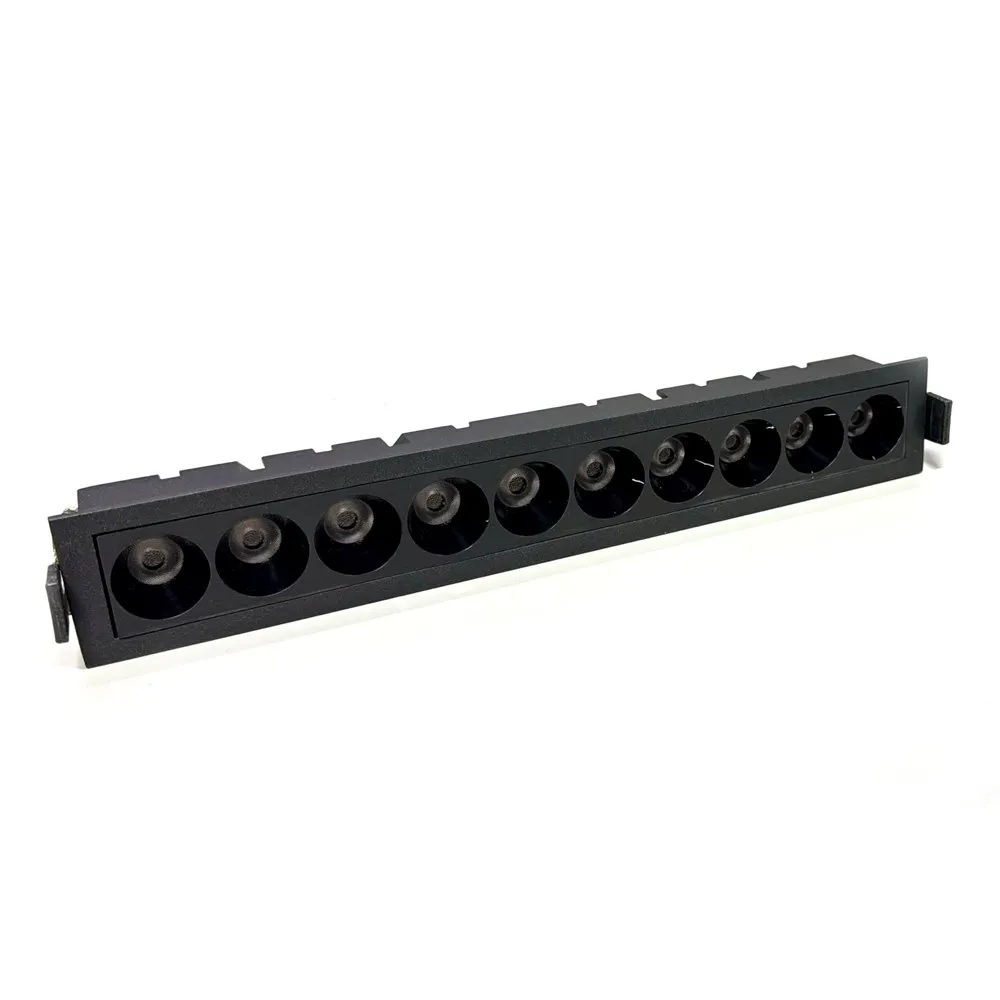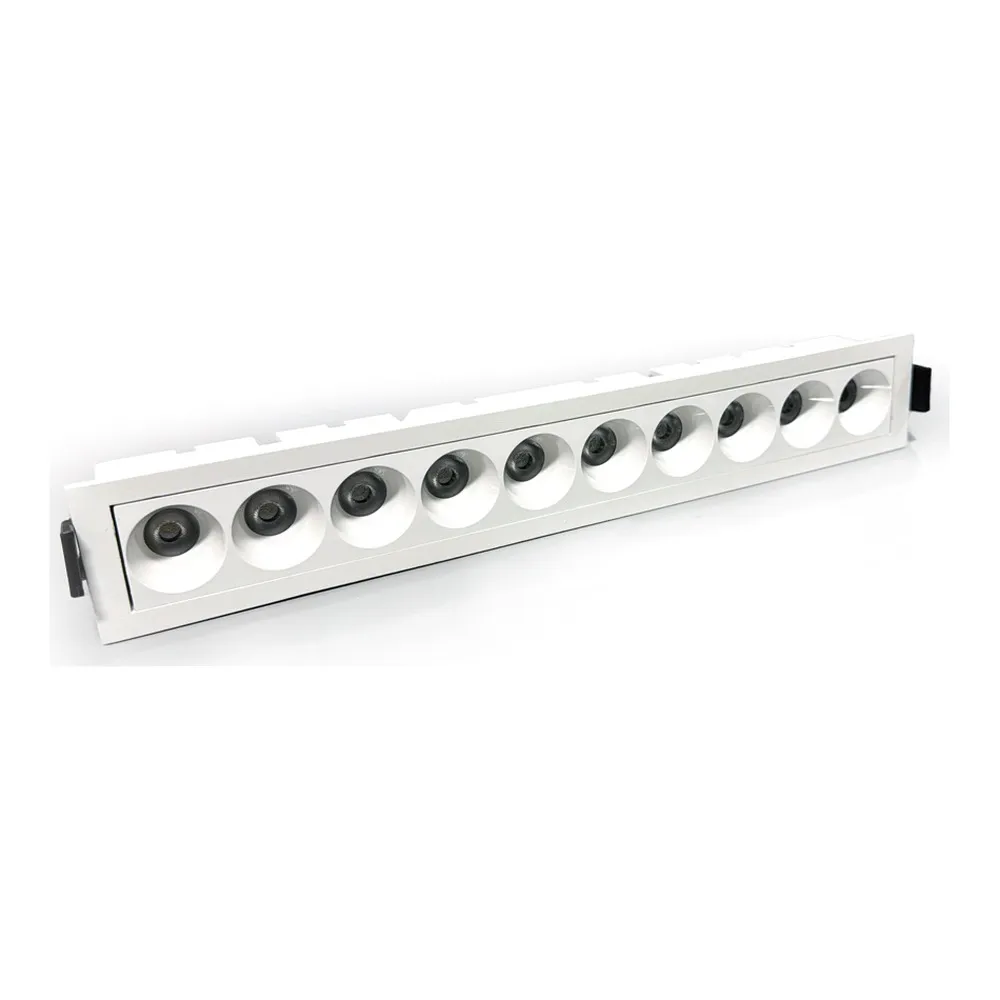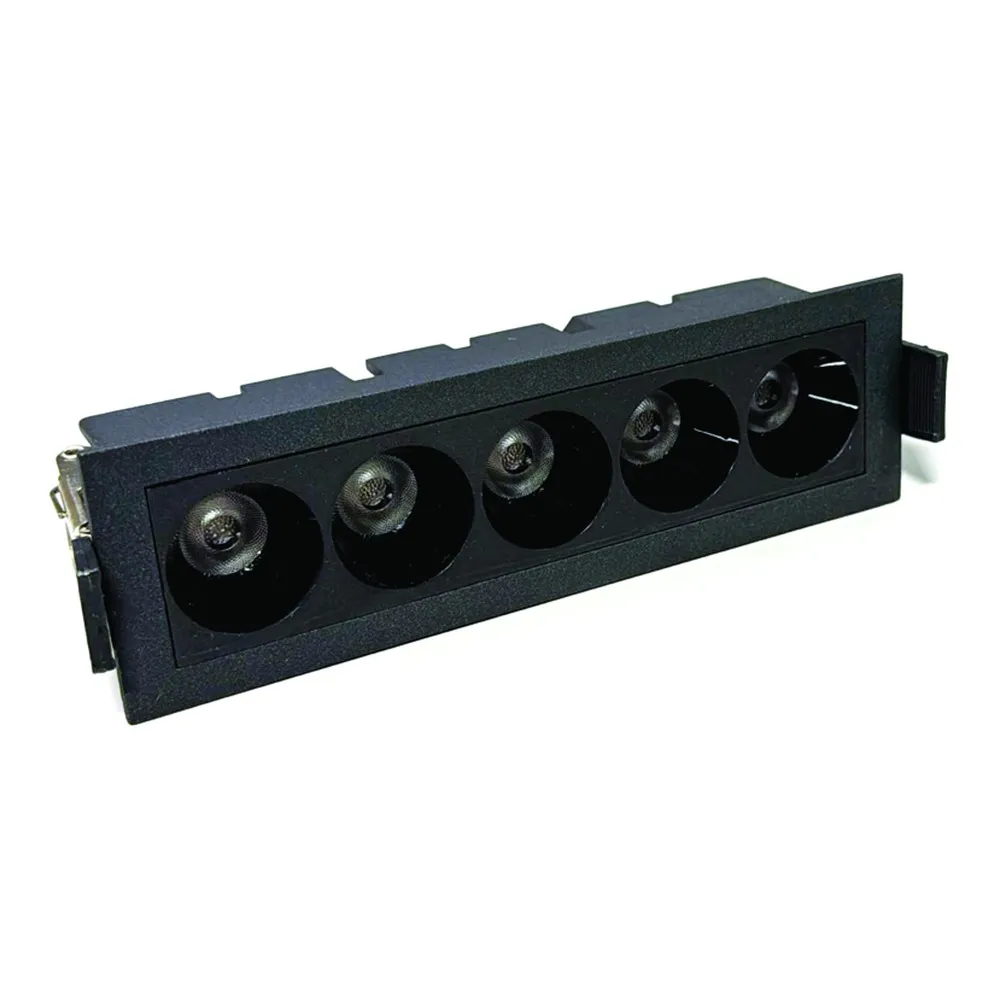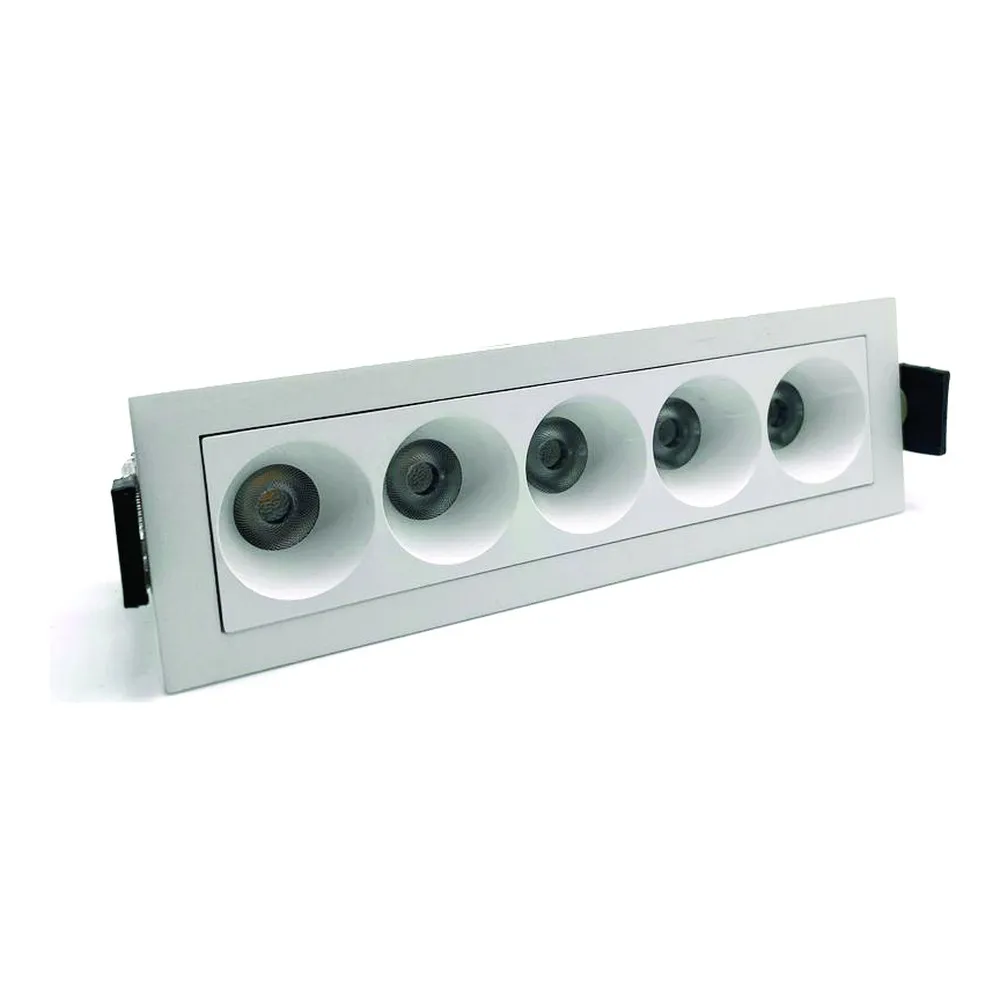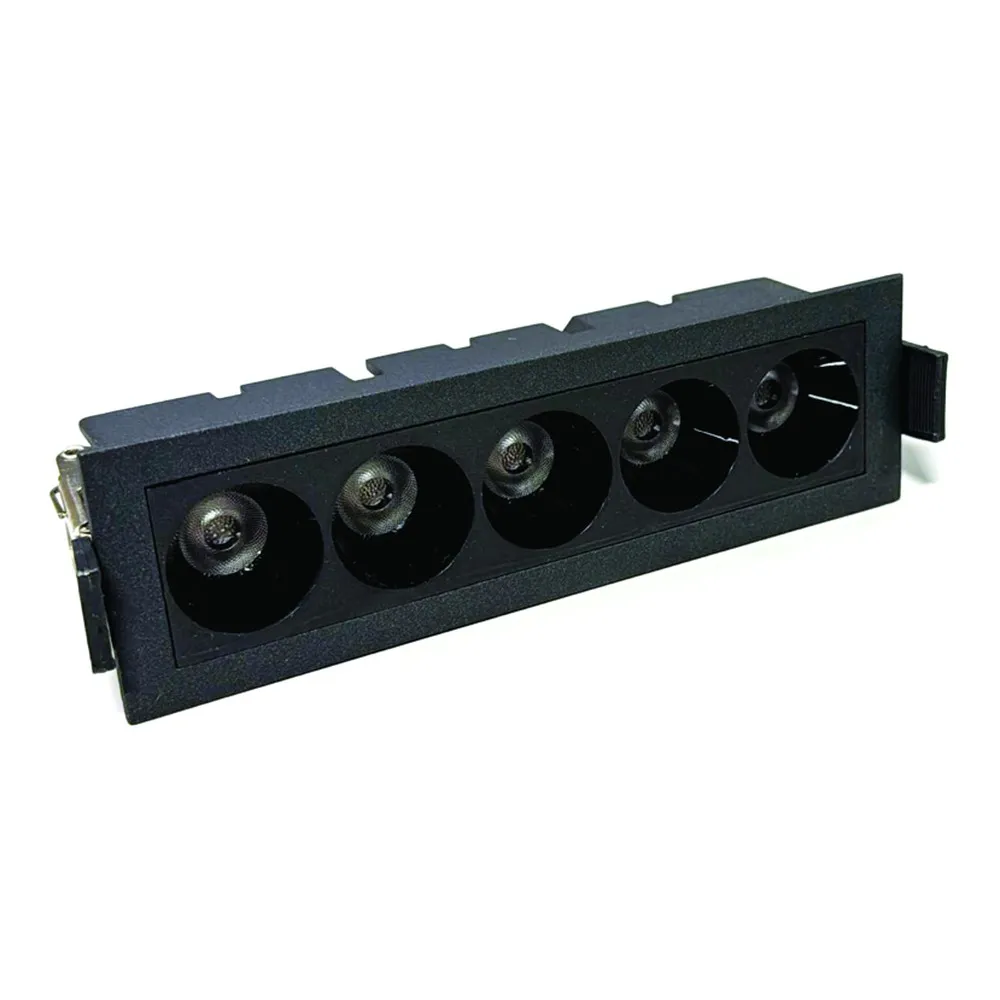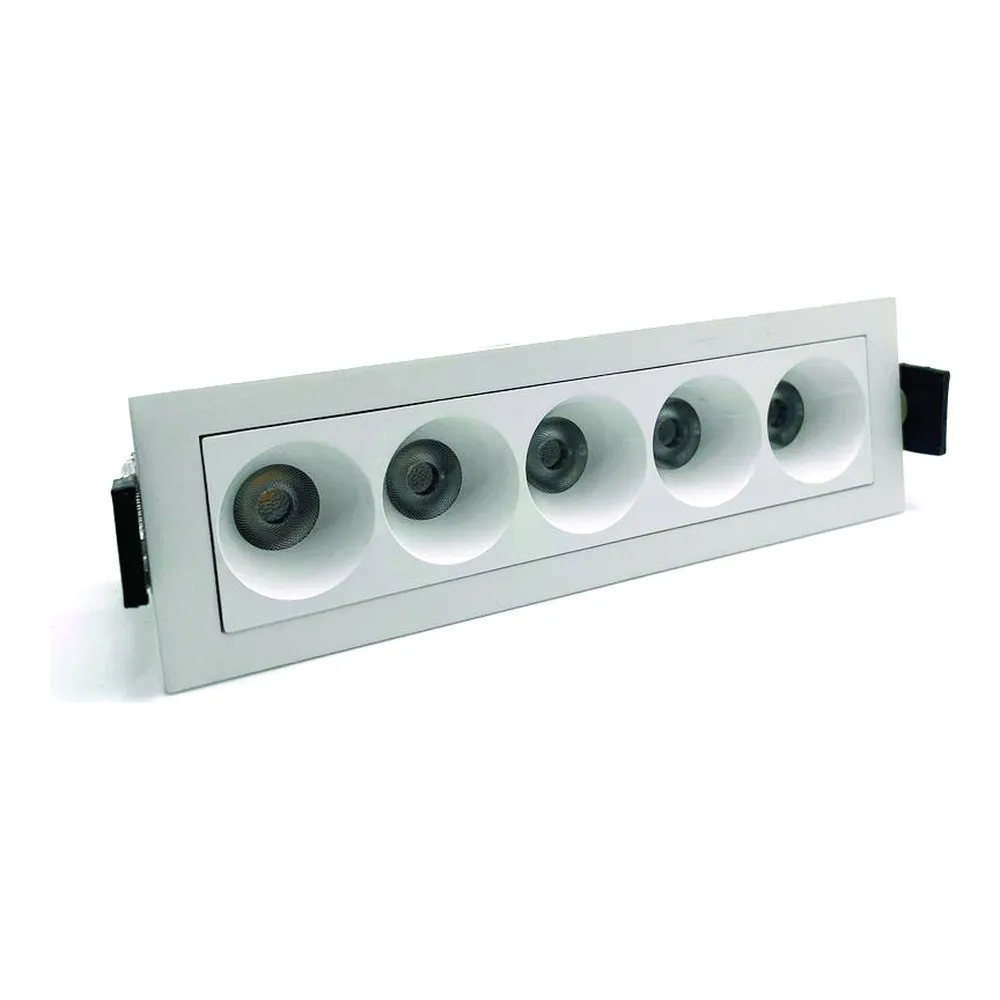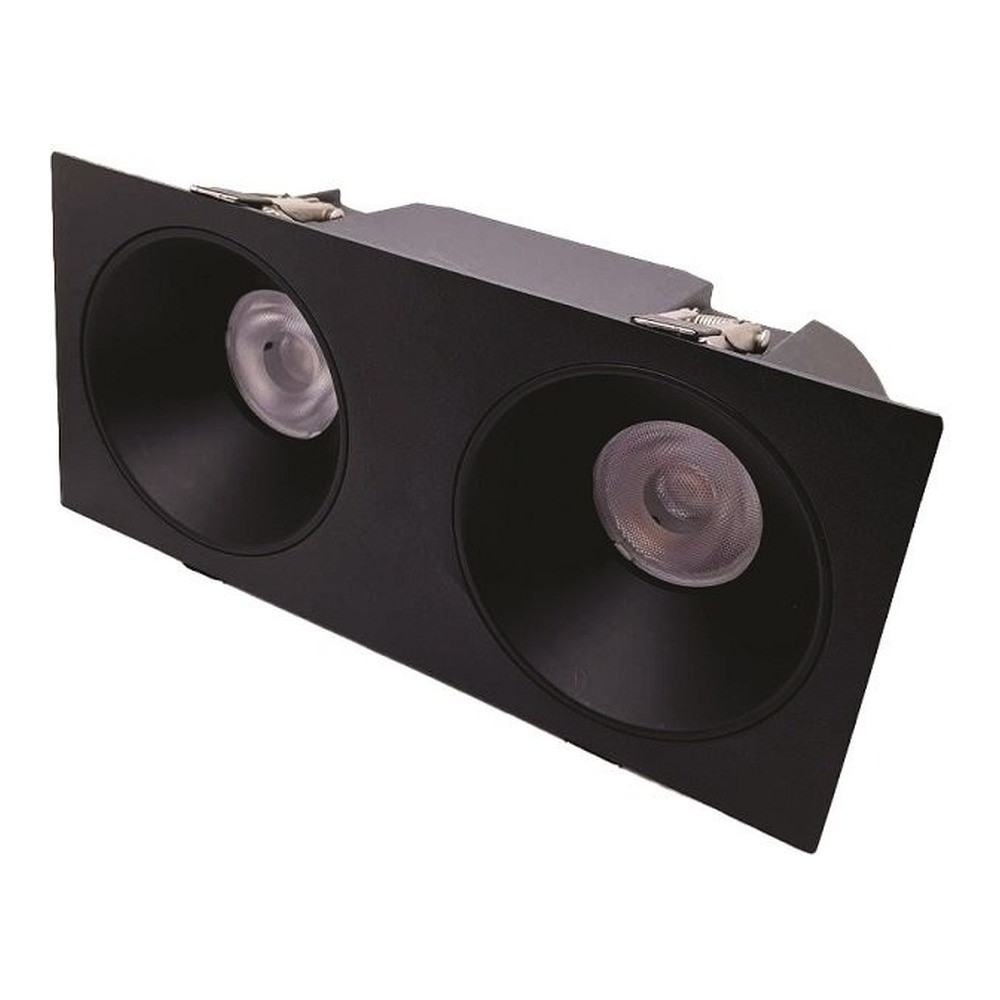
A multi-head LED downlight groups several light heads in one recessed trim. Instead of cutting five separate holes for five pot lights, you install one linear fixture that gives the same multi-point effect, with a cleaner ceiling and less wiring behind it. This category brings together 20 CANOLIGHT fixtures: linear blade lights with 5 or 10 heads, adjustable linear spots with 2 or 5 heads, and anti-glare single and double head recessed fixtures, all with CRI 90.
The page is written for designers, electricians and contractors who light stores, galleries, restaurants and showrooms, and for homeowners who want precise accent light over a kitchen island, a bookcase or a feature wall. You will find the families, the specs to compare, how to choose, layout tips and the questions buyers ask most often.
The 5-head linear blade light houses five LED heads along a slim recessed blade: 10W, 600 lumens, a 38° beam and CRI 90+. The 10-head linear blade light in black doubles the line: 20W, 1650 lumens, same 38° beam. Both run on 120VAC with a power factor of 0.9+, are rated for damp locations and come in 3000K or 4000K, with a white or black trim. The aluminium linear body includes heat-dissipation channels that keep the LED boards cool.
When each head needs to point in a different direction, choose the adjustable linear spot. The 2-head model draws 6W and the 5-head adjustable spot in white draws 15W. Both offer 5CCT selectable colour temperature, CRI 90, a 38° beam and a wet location rating, in black or white. They are a good fit for retail shelving, artwork and a shower or bathroom ceiling where water can reach the fixture.
The anti-glare range uses deep, shielded optics to keep the light source out of sight. The double head anti-glare recessed fixture delivers 2100 lumens from 30W with a 36° beam; the single head version gives 1050 lumens from 15W. Both are CRI 90+, power factor 0.9+, damp location rated and offered at 3000K or 4000K in white or black. They pair naturally with multi-head blades when a project needs a single point of light in the same style.
| Model | Heads | Wattage | Lumens | Beam | Colour | Rating |
|---|---|---|---|---|---|---|
| Linear blade CL-LB5 | 5 | 10W | 600 | 38° | 3000K or 4000K | Damp |
| Linear blade CL-LB10 | 10 | 20W | 1650 | 38° | 3000K or 4000K | Damp |
| Adjustable spot CL-LBS2 | 2 | 6W | See product page | 38° | 5CCT | Wet |
| Adjustable spot CL-LBS5 | 5 | 15W | See product page | 38° | 5CCT | Wet |
| Anti-glare CL-DL1-D | 2 | 30W | 2100 | 36° | 3000K or 4000K | Damp |
| Anti-glare CL-DL1-S | 1 | 15W | 1050 | 36° | 3000K or 4000K | Damp |
To understand CRI and colour temperature in more depth, read the guide to LED colour temperature and CRI.
Start with the effect you want. For a row of light along an island, a counter or a corridor, a linear blade gives a clean line with all heads pointing down. For merchandise, shelves or artwork that sit at different spots, an adjustable spot lets you aim each head. For a single accent with no visible glare, the anti-glare single or double head is the simplest answer.
Then size the output. A 5-head blade at 600 lumens works for an accent over a vanity or a bookcase. A 10-head blade at 1650 lumens can light a full island or a display table. The double head anti-glare at 2100 lumens is the strongest option in this category, a good fit for higher ceilings and retail.
Finally, match the finish. White trims blend into a white drywall ceiling; black trims stand out on dark ceilings and in modern commercial interiors. For general room lighting, compare with square downlights or round downlights, and use the recessed lighting calculator to estimate how many fixtures a room needs.
Align linear blades with the main axis of the room or of the furniture they light: parallel to an island, centred over a corridor, or in line with a display wall. Leave enough distance from walls so the beams land on the surface you want to highlight rather than on the wall itself.
Each fixture is recessed in the ceiling and connected to 120V. Check the cut-out size and the ceiling depth on the product page before cutting. On adjustable spots, aim the heads after installation, with the light on, to see exactly where each beam lands. The guide on how to install pot lights covers the basic steps, from layout to wiring.
In commercial spaces, multi-head downlights are a favourite for retail store lighting, galleries, showrooms and restaurants, where they light products and tables with high colour accuracy and little glare. A row of 10-head blades over a counter gives a strong architectural signature. In a gallery or a showroom, adjustable spots let staff re-aim the light each time a display changes, without moving a single fixture.
At home, a linear blade over a kitchen island, an adjustable spot aimed at a fireplace or a bookcase, or an anti-glare fixture in a home theatre adds depth to the lighting plan. For a continuous slot of light in the ceiling, see the linear recessed fixtures.
It is a recessed fixture that holds several LED heads in one trim. It replaces a cluster of separate pot lights with a single, cleaner installation.
On the adjustable linear spots, yes: each head can be pointed toward a shelf, a wall or a piece of art. On the linear blades, the heads light downward in a line. Check the product page if aiming is a must.
Yes. Damp location models suit a bathroom ceiling away from the shower. Above or inside a shower, choose a wet location model such as the 2-head or 5-head adjustable spot.
Accent light draws the eye to an object. With CRI 90, colours look natural, so food, wood, fabric and artwork appear as they really are.
4000K is a common choice for retail because it is crisp and neutral. 3000K suits boutiques, restaurants and spaces that want a warmer atmosphere.
Not necessarily. It concentrates light in focused beams on specific areas. For general room lighting, combine it with standard downlights.
Browse all multi-head LED downlights, or see the full range of recessed lighting for every shape and size.