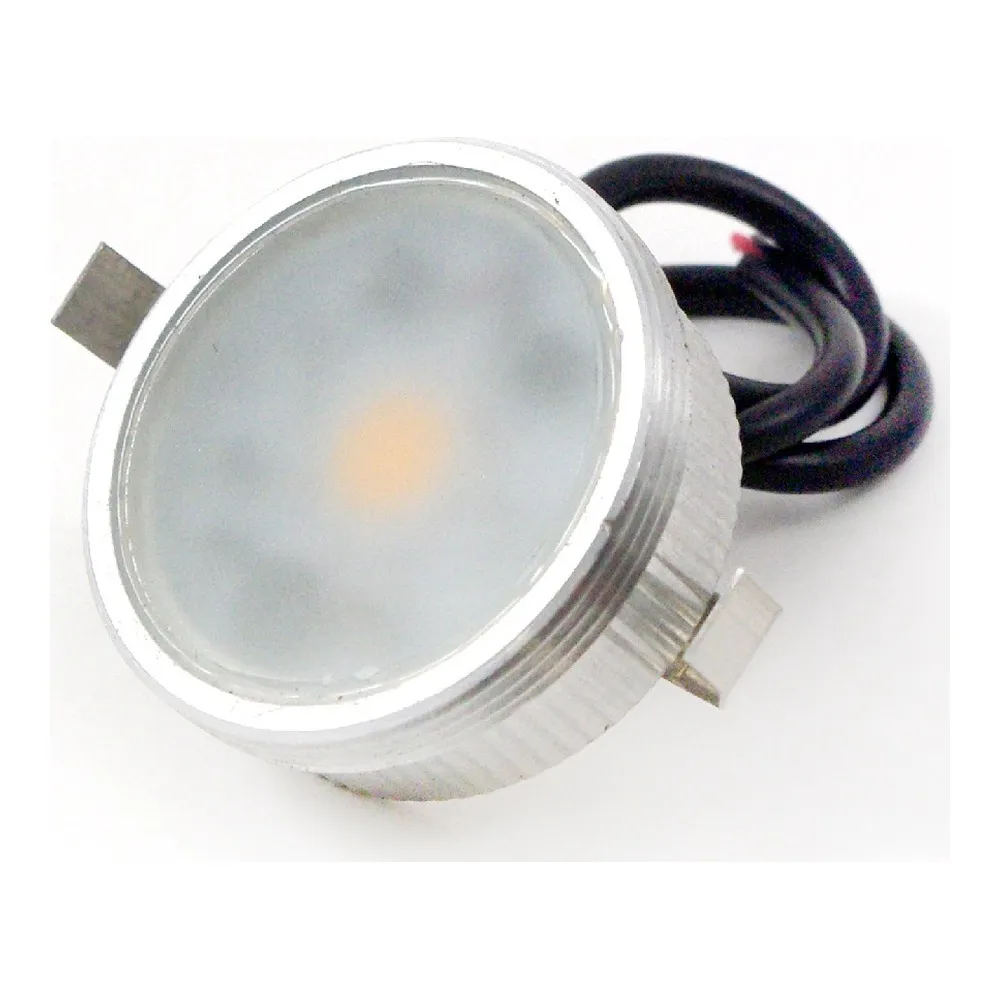
Built around a metal body, not a plastic shell
The single biggest factor in how long an LED module lasts is heat, and the RD10 answers that with a metal housing that doubles as an integrated heat sink. Thermal energy generated at the diode is drawn out through the body instead of building up around the chip, which keeps junction temperature in a healthier range. The practical payoff is better lumen maintenance over time — your light stays closer to its original brightness — and a meaningfully longer operating life than typical plastic-bodied alternatives, especially when the module is installed inside a closed cabinet, a sealed millwork pocket or a custom fixture with limited airflow. The same metal construction shrugs off vibration and rough handling during installation, which matters when a module is being pressed into a bore hole or mounted inside a fixture on a busy jobsite.
Warm, comfortable light quality
At 3000K warm white, the RD10 delivers the colour temperature most people picture when they think of comfortable residential light. Wood tones look rich, skin tones look natural, fabrics and finishes keep their character, and the overall effect is inviting rather than sterile. This is the CCT of choice for living spaces, hotel lobbies, restaurants, boutique retail and display lighting where mood is part of the product. If you are mixing the RD10 into an existing scheme, keeping every source at the same 3000K is the easiest way to avoid that patchwork look where one cabinet glows yellow and the next one glows blue.
Technical specifications
SKU: LS-RD10-4W-3K
Brand: LumenstarLED
Type: RD10 LED light engine module
Housing: metal
Input voltage: 12V DC
Power: 4W
Colour temperature: 3000K warm white
Wiring, drivers and installation
Because the RD10 is a 12V module, it needs a low-voltage LED driver or transformer sized for the total load of every module on the run — add up the wattage of each 4W engine, then choose a driver with headroom to spare. Keep the DC run lengths reasonable and use an adequate wire gauge so voltage drop does not dim the modules furthest from the driver, a classic issue on long cabinet runs. Observe polarity on the DC side, mount the module so the metal body can shed heat into the surrounding material or air gap rather than being wrapped in insulation, and plan your bore holes or mounting pockets before the millwork is finished. For switching and dimming, control is handled upstream at the driver, so choose your driver and control method together at the design stage rather than after the fact.
Where it earns its keep
Think under-cabinet task light over a kitchen counter, a soft wash inside a glass display cabinet, accent light in a pantry or walk-in closet, discreet illumination in a bathroom vanity cabinet, or the light source inside a custom-built fixture. For OEM manufacturers and lighting designers, the standardized puck form factor and consistent output mean repeatable results from one production run to the next — you design around the module once and reuse it. Its low 4W draw also makes it a realistic candidate for battery or solar-assisted systems in cabins, trailers and remote Canadian installations where every watt counts. No spec sheet, IES file or installation video is currently posted for this module; for detailed photometric data on a specific build, plan a mock-up with the driver you intend to use.