Nov 06, 2026 / By the Lumibox team / in LED Guides
LED wall sconces light an entryway, a hallway or a bedroom without asking anything of the ceiling, and the same family of fixtures comes in outdoor versions for the front door, the garage or the patio. The short answer: pick the location first (dry room, damp area or a wall exposed to rain), then the effect you want (downlight, up and down, or a narrow beam), then the colour temperature, and mount the sconce at roughly eye level so it lights the space without glare.
This guide is written for homeowners who renovate as well as contractors and property managers. It covers the types of LED wall sconces, the right sconce for the entry, hallway, staircase, bedroom and living room, mounting height, the specs to read on the product page and the wiring. The values quoted come from real product pages; everything else is a common rule of thumb to confirm with a licensed electrician.
An indoor wall sconce does not need to stand up to water, except near a sink or in a bathroom. Outside it is the opposite: the fixture lives with rain, snow, frost and sun. The IP rating on the product page is therefore the first filter. An IP54 fixture is protected against dust and splashing water; an IP65 fixture resists water jets and suits an exposed wall. The IP ratings guide explains each level.
Good news: several models are designed for both uses. The same IP65 sconce can light a vestibule inside and the side door outside, which keeps one consistent style from room to room. To compare models, start with indoor wall sconces or outdoor wall sconces, or browse every LED wall sconce in one place.
| Location | Rating to aim for | Recommended effect | Product example |
|---|---|---|---|
| Hallway, bedroom, living room | Dry location, any rating | Up and down or downlight, soft light | NEXLEDS 15W 5CCT sconce |
| Bathroom, vestibule | IP54 or better | Downlight, high CRI | ORTECH cylindrical sconce, CRI 90+ |
| Front door under a canopy | IP54 or IP65 | Downlight, wide beam | CANOLIGHT 1141, 7W, 377 lm, 98° |
| Exposed facade, garage | IP65 | Wide beam or up and down | CANOLIGHT 11W, 710 lm, 110° |
| Feature wall, column | IP54 or IP65 | Narrow beam | CANOLIGHT 2442A, 4W, 321 lm, 11° |
This is the simplest sconce: light falls toward the floor and lights the path, the lock or the steps. The CANOLIGHT 11W IP65 wall light is a good example: 710 lm, 3000K, a 110° beam, OSRAM LED chips and a die-cast aluminum and polycarbonate body. It also comes in white. From ORTECH, the square sconce with LEDs at the bottom only delivers 1000 lm from 15W, IP65, CRI 80+, dimmable.
An up and down sconce draws two lines of light on the wall, one toward the ceiling and one toward the floor. The effect is architectural and adds height to a facade or a hallway. The ORTECH square up and down sconce delivers 1000 lm split 50% up and 50% down, in 5CCT (2700K to 5000K), IP65, at 120-277V. The cylindrical version climbs to 1750 lm from 20W with CRI 90+. For a large facade, the round ARANI models range from 2x10W and 1800 lm to 2x25W and 4500 lm.
Some sconces are less about lighting a space than drawing on a wall. The CANOLIGHT 2442A concentrates 321 lm in an 11° beam to trace a sharp line on brick or a column. The 2553 sends 160 lm each side, with 15° and 78° beams. The 2542 adjusts from 30° to 130°: from a narrow stripe to a broad wash of light, for 10W and 883 lm.
Prefer to change the bulb rather than the fixture? The LUMIFARO LWL-UD5R38 up and down wall light takes a PAR38 or PAR30 bulb (not included) on an E26 socket, behind protective glass. The photocell version turns on at dusk and off at dawn, with no timer to set.
In a building, an old wall fixture is often replaced without opening the wall. Light Efficient Design offers 4 in and 9 in sconce retrofits with FlexWatt and FlexColor, set by default to 6W and 4000K, at 120-277V, with or without an occupancy sensor. The 11 in designer sconce with occupancy sensor turns the corridor on as people walk by and off when it is empty.
An entry sconce has three jobs: welcome people, light the lock and the steps, and make a visitor's face readable through the door. A downward light with a beam wide enough to cover the landing does the job without glaring at the neighbours. 3000K gives a warm welcome; 4000K gives a crisper light.
In a narrow hallway, a sconce frees up the ceiling and creates rhythm. An up and down sconce visually stretches the passage; a downlight guides your step at night. In an apartment building corridor, an occupancy sensor avoids leaving the lights on for nothing. See also LED hallway lighting.
On a staircase, place the sconce so it lights the treads without casting the shadow of the person walking down.
In a bedroom, a sconce replaces the bedside lamp and frees up the nightstand. Choose a warm, dimmable light and a switch within reach of the bed. The NEXLEDS 5CCT sconce, offered in white or black, lets you pick the colour at installation. More ideas in LED bedroom lighting.
In the living room, the sconce is ambient lighting. An up and down effect on a stone wall or fireplace adds depth; a narrow beam highlights a textured wall. Keep it on its own dimmable circuit.
A sconce on each side of the mirror lights the face from the front, without shadows under the eyes. Aim for a high CRI, such as the CRI 90+ of the ORTECH cylindrical sconces, and a protection rating suited to humidity. Near a tub or shower, ask a licensed electrician which zone and rating apply.
Mounting height depends on the room, the size of the fixture and the direction of the light. There is no single number, but a few common rules of thumb help:
For spacing in a long hallway, a good rule of thumb is to keep sconces at regular intervals, lined up with doors or frames. Keep the same height everywhere. To check the amount of light, the how many lumens per room guide gives benchmarks by use.
An LED wall sconce is compared by its numbers, not its photo. Here are the most useful ones, with values from real product pages:
| Product | Wattage | Lumens | Beam / effect | Rating |
|---|---|---|---|---|
| CANOLIGHT 2442A | 4W | 321 lm | 11°, downward | IP54 |
| CANOLIGHT 1141 | 7W | 377 lm | 98° | IP54 |
| CANOLIGHT 2542 | 10W | 883 lm | 30° to 130° | IP54 |
| CANOLIGHT OSRAM wall light | 13W | 960 lm | 128° | IP65 |
| ORTECH square up and down | 15W | 1000 lm | 50% up, 50% down | IP65 |
| ORTECH cylindrical up and down | 20W | 1750 lm | up and down, CRI 90+ | IP65 |
A wall sconce mounts on an electrical box recessed in the wall, using the supplied mounting plate. If you add a sconce where there was none, a wire has to be run and a box installed: that is a job for a licensed electrician. Electrical junction boxes are chosen by wall type (drywall, wood, concrete) and plate size.
To dim an LED sconce, the dimmer has to match its driver: TRIAC or ELV for most residential models, 0-10 V for many commercial fixtures. The LED dimmer switch guide explains how to stop flicker.
An up and down or downlight sconce, slim enough not to get in the way, at 3000K or 4000K. In a building corridor, a model with an occupancy sensor, such as the Light Efficient Design designer sconce, cuts energy use.
An entry sconce rated IP54 under a canopy, IP65 on an exposed wall, with light aimed downward. The CANOLIGHT IP65 11W, 710 lm wall light or the LUMIFARO photocell fixture are both good choices.
Yes. Several models, including the ORTECH and CANOLIGHT sconces, are designed for both indoor and outdoor use.
Yes. The sconce mounts on an electrical box in the wall. If there is no existing box, have a licensed electrician run the wiring and install one.
Only if the product page says so. The ORTECH up and down sconces are dimmable; then check that the dimmer matches the driver type.
Warm light, around 2700K to 3000K, is the most common choice in a bedroom or living room. A 5CCT model lets you choose the colour at installation.
Ready to choose? Compare all LED wall sconces and check the lumens, colour temperature and IP rating on each product page before you order.
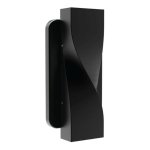 LED WALL LIGHT 110-240V,50/60HZ 11W ,OSRAM LED CHIPS DIE CAST ALUMINUM+PC ,710 LM, IP65 ,1...
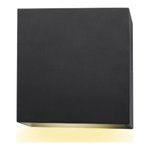 LED SQUARE WALL SCONCE 120V-277V - 5CCT (2700K - 3000K - 3500K - 4000K - 5000K) 15W - 1000...
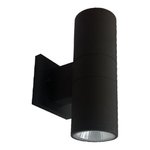 UP AND DOWN | 2X10W | 1800 LUMEN | 4000K | ROUND | V2
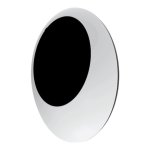 LED WALL LIGHT 110-240V AC - 13W - OSRAM LED CHIPS DIE-CAST ALUMINUM+PC BODY - 960 LM - 12...
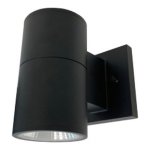 DOWN LIGHT | 10W | 900 LUMEN | 3000K | ROUND | V2
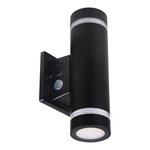 WCYL CYLINDER LIGHT, CYLINDERS, 10W/20W/30W, 3000K/4000K/5000K, 120-347V, BLACK
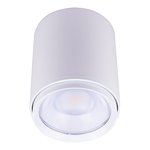 CYL CYLINDER LIGHT, CYLINDERS, 21W/28W/35W, 2700K/3000K/3500K/4000K, 120-347V, WHITE
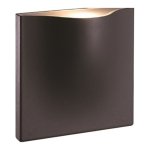 SURFACE MOUNTED WALL LIGHT 1141 - 7W - 377LM CRI 80+ - 98DEG -110-220 VAC - 3000K - IP54 -...