Nov 06, 2026 / By the Lumibox team / in LED Guides
A waterproof LED strip is not one single thing: the IP rating printed on the reel tells you exactly how much dust and water it can take, and that two-digit code is the quickest way to choose the right strip, floodlight or wall light for a bathroom, a shower, a basement or a deck. The short answer: IP20 is for dry rooms only, IP44 handles splashes, IP65 handles rain and water jets, IP67 survives a temporary dunk, and IP68 is built for continuous immersion within the limits the manufacturer states.
This guide explains how to read an IP rating, how it differs from the "damp" and "wet location" labels used in Canada, and which rating makes sense room by room. It is written for homeowners planning a renovation and for contractors and property managers who need fixtures that will last outside. Near a tub, a shower or a pool, always confirm the installation with a master electrician.
IP stands for Ingress Protection. The code is an international reference that describes how well an enclosure keeps out two things: solid particles and water. It always has two digits, and each digit is read on its own.
When one digit is replaced by an "X" (IPX4, IP6X), that property simply was not tested. A higher water digit does not always include the lower tests: when both jets and immersion matter, look for a double marking.
Here is the summary most buyers are looking for. The "typical use" column is a common reference, not a code requirement: your local rules and the product's own certification decide.
| Rating | Solids | Water | Typical use |
|---|---|---|---|
| IP20 | Fingers kept out | No protection | Dry rooms: under cabinets, coves, shelving, closets |
| IP44 | Small objects kept out | Splashes from any direction | Bathroom areas away from direct spray, covered entrances |
| IP54 | Dust-protected | Splashes from any direction | Covered porches, garages, sheltered outdoor walls |
| IP65 | Dust-tight | Low-pressure water jets | Outdoor walls, soffits, decks, rain-exposed fixtures |
| IP66 | Dust-tight | Powerful water jets | Exposed facades, wash-down areas, heavy weather |
| IP67 | Dust-tight | Temporary immersion | Strips in channels that can flood, ground-level runs, shower niches |
| IP68 | Dust-tight | Continuous immersion (manufacturer's limits) | Products designed for submersion, used only as the manufacturer specifies |
For LED strips, the rating also tells you how the strip is built. An IP20 strip is bare: the LEDs and the circuit are exposed. IP65 strips usually have a silicone or epoxy coating on top. IP67 and IP68 strips are fully sleeved or encapsulated, which makes them a little thicker and changes how you cut and seal them.
In Canada, light fixtures are also certified for the place they are installed, and that label is separate from the IP code. As a general reference:
The two systems do not always line up, and that is normal. A good example is the CANOLIGHT LED linear wall light: it is listed for wet location and carries an IP54 rating at the same time, in 12 W, 16 W, 18 W and 30 W versions with selectable 3000K, 4000K and 5000K. The wet location listing covers how the fixture is built and mounted; the IP code describes the enclosure test. When you search for wet location light fixtures, look for both, and follow the certification printed on the fixture rather than the IP number alone. A recognized Canadian certification mark (CSA or cUL, for example) is the reference an inspector will look for.
Bathrooms are where IP ratings matter most, and where rules are strictest. Away from the tub and shower, a damp-rated fixture with a splash rating (IP44 or more) is a common choice for vanity and general lighting. Inside or directly over a shower or tub enclosure, fixtures generally need to be specifically listed for that location, and recessed or strip lighting there should be planned with an electrician. For the full layered plan, see the bathroom renovation lighting guide and the LED bathroom lighting page.
For a shower niche or a waterproof LED channel in a shower, the usual approach is a sealed strip (IP67) inside an aluminum channel with a diffuser, fed by a low-voltage power supply installed outside the wet zone. The LED aluminum profiles protect the strip mechanically, but the seal still comes from the strip and its end caps.
A finished basement is usually a dry or damp location. Standard indoor strips and fixtures are fine in finished living areas, while unfinished corners, cold rooms and laundry areas benefit from damp-rated fixtures. If a basement has a history of water infiltration, avoid running strips at floor level and pick IP65 or better wherever water can reach.
A covered entrance is often damp rather than wet, but wind-driven rain and snow change that quickly in a Canadian winter. Fixtures rated IP65 or listed for wet locations are a safer choice for front doors and garage walls. The ORTECH LED square wall sconce (15 W, 1000 lumens, IP65, CRI 80+, five selectable colour temperatures from 2700K to 5000K) is designed for indoor and outdoor use and works on a porch as well as in a mudroom. Browse more models in outdoor wall sconces.
For walls that take rain directly, look for IP65 at a minimum. The LED wall packs in this range include the ORTECH wall pack with glass cover: IP65, selectable 40 W, 50 W or 60 W, selectable 3000K, 4000K or 5000K, 135 lumens per watt, 120-347 V and a built-in photocell. For yards, signs and larger areas, LED floodlights do the heavy lifting, from a compact 10 W model (800 lumens, 160° beam, 120 V AC) to high-output area lighting.
Outdoors, the strip is exposed to rain, UV and freeze-thaw cycles. IP65 handles rain on a soffit or under a deck rail. IP67 is the better pick where water can pool, such as ground-level runs, stair nosings on an open deck or a channel that may fill during a storm.
The two ratings people compare most are IP65 and IP67, and the right choice depends on where water comes from.
COB strips are a popular cob waterproof led strip choice because the continuous line of light hides the dots, even behind a thin coating. Compare models in outdoor COB LED strips.
Voltage is a separate decision from the IP rating, but it affects long outdoor runs. A 24 V strip carries light farther in one line than a 12 V strip, which means fewer feed points. A 120 V AC strip, such as the LUMENSTARLED outdoor 120 V LED strip (75 ft / 23 m, 8 W/m, 920 lumens per metre, IP65, operating range of -30°C to +45°C), plugs into line voltage without a separate driver and covers a large perimeter. See all 120 V LED strips. For the details on voltage, COB versus SMD and power supply sizing, read how to choose LED strip lights.
An IP rating is only as good as the installation. A strip leaves the factory sealed, but every cut, splice and connection is a new opening for water.
The step-by-step method for cutting, connecting and mounting strips is in the guide on how to install LED strip lights.
IP65 is water-resistant: it is dust-tight and protected against low-pressure water jets, which covers rain and splashing. It is not rated for immersion. If the strip or fixture could end up under standing water, choose IP67 or a product designed for submersion.
Away from the tub and shower, a damp-rated fixture with IP44 or better is a common choice. Inside or over a shower enclosure, the fixture generally must be listed for that location. Rules vary, so confirm with a master electrician or your municipality before installing.
A damp location sees humidity and condensation but no direct water, such as many bathrooms and covered porches. A wet location is exposed to rain, splashing or running water. These listings come from the fixture's Canadian certification and are separate from the IP code.
Yes, if it is rated for it. Look for IP65 or IP67, an outdoor operating temperature range on the spec sheet, sealed end caps and a power supply installed in a dry spot. Strips built for outdoor use, such as the 120 V model with an operating range of -30°C to +45°C, are designed for Canadian seasons.
Yes. Many outdoor strips come in 3000K warm white as well as 4000K and 5000K, and IP67 RGB strips exist for colour effects.
Not unless the manufacturer specifically designs and certifies it for underwater pool use. Pools and spas follow their own electrical rules, with dedicated fixtures and protection. Treat any pool project as a job for a master electrician.
Ready to match the rating to your project? Start with outdoor LED strips for decks, soffits and gardens, then pick wall lights and floodlights rated for the spot where they will live.
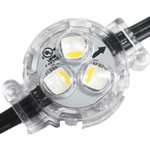 AURA365 RGBW PERMANENT ARCHITECTURAL LIGHTING - 24V - IP65 - 78 LM PER MODULE - 1M (39 3/8...
 OUTDOOR - 24V DC - RGB LED TAPE - 10M (32.8') - 2.2W/FT (7.2W/M) - 9 RGB LEDS/FT - DIMMABL...
 LED STRIP 9.6W/M 24V 48W 30K IP66
 LED STRIP 4.8W/M 24V 24W 30K IP66
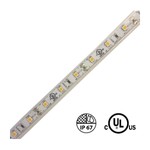 OUTDOOR - 12V DC - 3528 LED TAPE - 5M (16.4') - 1.5W/FT (4.8W/M) - 60 LEDS/M - CRI 90 - DI...
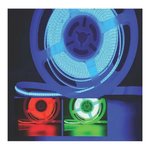 COB STRIP LIGHT 630LED/M 10MMPCB WIDTH 9W/M 24VDC 5M/ROLL IP67 RGB
 OUTDOOR - 24V DC - COB LED TAPE LIGHT - 5M (16.4') - 3W/FT (10W/M) - 480 LEDS/M - CRI 90 -...
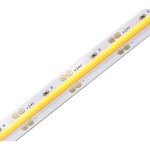 OUTDOOR - 12V DC - COB LED TAPE LIGHT - 5M (16.4') - 5W/M (1.5W/FT) - 320 LEDS/M - CRI 90...