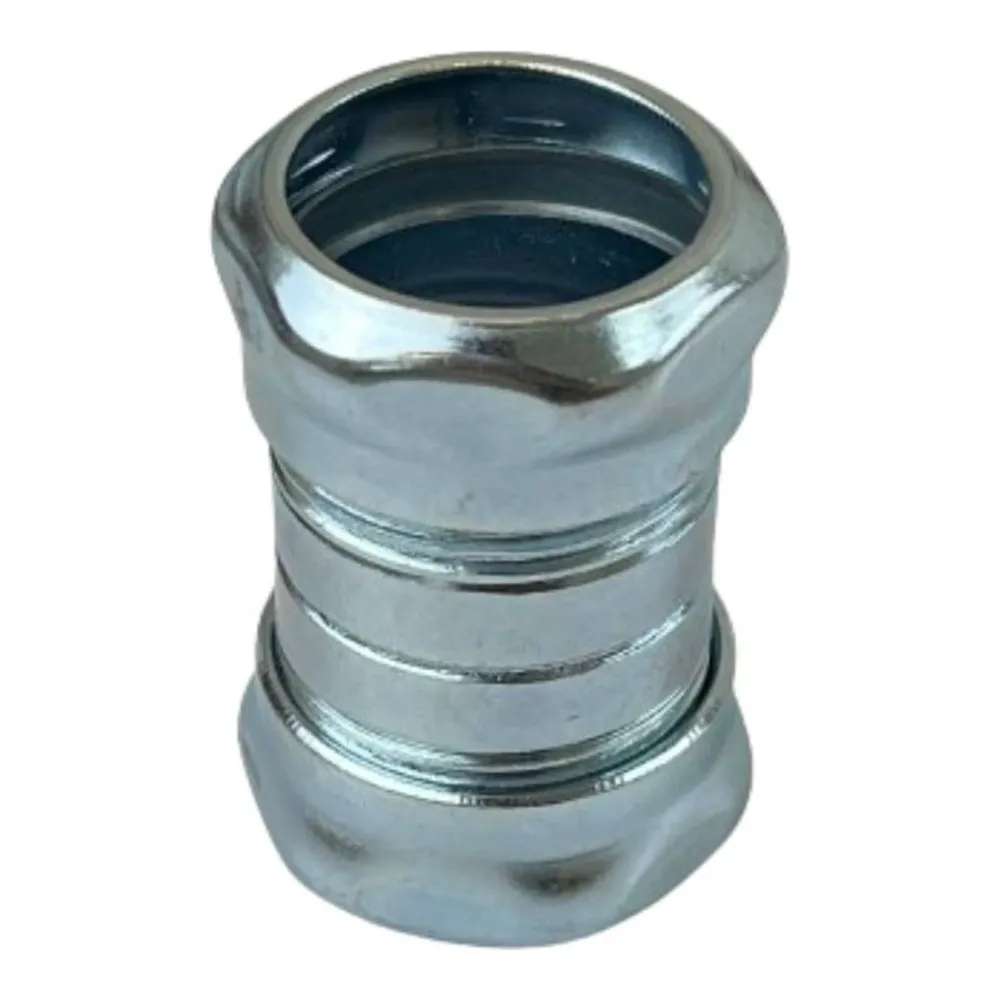
Description and specifications – EMT-CMCP-S125
What an EMT compression coupling does
EMT (electrical metallic tubing) comes in straight lengths, so long runs need a way to join one piece to the next. A compression coupling is that link: a short steel body with a compression nut and ring on each end. Each tube end slides into the coupling, and tightening the nut squeezes the ring onto the tubing, locking it in place. Model EMT-CMCP-S125 is sized for 1 1/4" EMT, so it is meant to be paired with tubing and fittings of the same trade size.
Construction
The fitting is made of galvanized steel. Steel gives the coupling the rigidity to hold two lengths of conduit perfectly aligned and to resist the pull and vibration of a building over the years. The steel-to-steel joint also keeps the metal conduit system continuous from one length to the next, an important point when the conduit is part of the grounding path. Compared with set-screw couplings, the compression style grips all the way around the tubing, a design many electricians prefer for a firmer joint.
Installation tips
Cut the EMT square and ream the inside edge so no burr can damage the wire insulation. Loosen the nuts, push each tube end fully into the coupling, then tighten the nuts with a wrench or pliers until snug. No threading, soldering or special tools are needed. Support the conduit on both sides of the joint as required by the electrical code, and always follow the Canadian Electrical Code and your local inspection rules for the location and the type of installation.
Where it is used
The 1 1/4" size is common for feeders and for runs that carry several circuits at once. Typical examples: a run from the main panel to a sub-panel in a detached garage, exposed conduit along the walls of a workshop or mechanical room, wiring to a row of LED high bays in a warehouse, or conduit above a drop ceiling in an office or a store under renovation. ARANI offers the same compression couplings in sizes from 1/2" to 2", as well as set-screw couplings and elbows, so a whole project can be built with matching fittings.
Technical specifications and documentation
Model: EMT-CMCP-S125
Type: EMT compression coupling
Size: 1 1/4"
Material: galvanized steel
The spec sheet with the full table of sizes is available in the Documentation tab of this page.