Nov 06, 2026 / By the Lumibox team / in LED Guides
LED landscape lighting turns a dark yard into a space you can use, admire and walk through safely after sunset. A good plan lights the path to the door, picks out a tree or a stone wall, marks every step of the deck and keeps glare out of your neighbours' windows. Most of it runs on a low voltage system: compact fixtures, a transformer plugged into an outdoor outlet and a buried cable that a homeowner can lay without opening a wall.
This guide is for homeowners planning a garden or a new deck, and for contractors and property managers who light walkways, entrances and courtyards. It explains the fixture types, the difference between 12 V, 24 V and 120 V, the specs worth reading on a product sheet and how to plan the wiring. Every example comes from the LED landscape lighting collection, so you can go from idea to parts list in one sitting.
Before choosing fixtures, decide what each zone of the yard needs. Outdoor lighting works best in layers, and each layer calls for a different kind of fixture.
Directional fixtures are the workhorses of accent lighting. Staked in the soil or mounted on a surface, they aim a beam at a tree trunk, a hedge or a section of wall. The SCOOP landscape light is a good example: a scoop-style directional fixture that runs on a 12-24 V low voltage system and works for gardens, walkways and patios.
A well light sits flush with the ground and throws light upward. Because nothing sticks out, it suits lawns, gravel beds and hardscape where a mower or a foot could hit a staked fixture. The NEXLEDS RGBCW landscape well light adds full colour plus a selectable white, so the same fixture can graze a tree in warm white most of the year and switch to colour for a party or a holiday. NEXLEDS also offers an RGBW mini well light for tighter spots.
Deck and step lights are recessed into stair risers, deck boards, fascia or retaining walls. They are the single most useful safety fixture outdoors. The deck and step lights collection covers several formats:
Bollards are short posts that light a walkway or driveway from knee or hip height. They suit long paths and commercial entrances where you want a clear, repeated rhythm of light. Browse LED bollard lights for posts, and plan bases and mounting hardware at the same time.
Solar fixtures charge during the day and switch on at dusk with no wiring at all. The Tulum solar lights, offered in 15 in and 19 in sizes, act as decorative lanterns on a patio or along a garden path. Solar is ideal for spots far from an outlet or for renters. For guaranteed light every night in every season, a wired low voltage system remains the more dependable choice. See the full range of LED solar lights.
Stakes, mounting bases, trims and connectors finish the job. The landscape accessories category groups those parts, such as the LUMENSTARLED brick light trims that dress a recessed wall light set in masonry.
Most residential landscape lighting runs at low voltage. A transformer or LED power supply converts household current to 12 V or 24 V, and the fixtures connect to a cable that can be buried shallow in a garden bed. Line voltage (120 V) fixtures connect straight to household wiring in a junction box. Both have a place.
| System | Typical use | Examples from the catalogue |
|---|---|---|
| 12 V | Deck boards, stair risers, garden beds, DIY projects | LUMENSTARLED M1, M2, MX-1; RT05 low voltage (12V, 2W or 2.2W); 12V AC/DC G4 half moon step light |
| 12-24 V AC/DC | Fixtures that accept either supply, handy when adding to an existing system | SCOOP landscape light; CANOLIGHT 3W and 3.5W deck lights |
| 24 V DC | Longer runs and step lights fed by a DC power supply | CANOLIGHT square and round step lights (3W) |
| 120 V | Step lights wired into a wall during construction or renovation | LUMENSTARLED RT05 high voltage (2W), RD05 (3W), RT05 motion sensor |
A simple rule of thumb: if the fixture lives in the soil, in a deck board or anywhere you want to work without an electrician, choose low voltage. If it lives in a wall already fed by household wiring, a 120 V step light engine avoids a separate transformer. In every case, follow local electrical code and use a licensed electrician for any 120 V connection.
One more point: match the supply to the fixture. A 12 V AC transformer and a 24 V DC power supply are not interchangeable. Check the label on each fixture, and pick the right unit from LED power supplies and drivers.
Outdoors, the rating matters more than anything else. A fixture rated for wet locations can take rain and snow directly. A damp location rating is meant for covered spots such as a porch ceiling or a sheltered stair, not for an exposed deck. An IP65 rating, like on the CANOLIGHT deck lights, means the fixture is dust tight and resists water jets. For anything in the ground or in a deck board facing the sky, choose wet location or a strong IP rating.
Warm white (2700K to 3000K) flatters wood, stone, brick and foliage and keeps a yard feeling calm. Neutral white (4000K) looks crisper and suits modern architecture or commercial entrances. Keep one colour temperature per zone so the yard looks deliberate, not patchy.
Outdoor fixtures need far less light than you might think, because the eye adapts to the dark. Step lights in the catalogue run from 0.5W to 3W, and the CANOLIGHT deck lights deliver 110 to 120 lm. That is enough to mark a step without glare. Save higher outputs for accent lighting on tall trees or façades.
A narrow beam such as the 55° of the CANOLIGHT deck lights keeps light where it belongs. Dimming lets you fine-tune the mood; the CANOLIGHT square step lights are dimmable and the round version is TRIAC dimmable. Pair dimmable fixtures with a compatible LED dimmer.
If you are also adding strip lighting under a deck rail or along a step nosing, the same logic of supply sizing applies. The guide how to choose LED strip lights covers 12 V versus 24 V and power supply sizing in more detail.
At home, landscape lighting usually starts at the deck and the front walk, then grows into the garden. Ideas for those projects are grouped on the LED deck lighting and LED driveway lighting pages. Warm 2700K to 3000K step lights and a few uplights on trees are often all a property needs.
For condos, offices, retail plazas and institutions, the priorities shift to safe circulation, durable fixtures and easy maintenance. Bollards along walkways, wet-location step lights in exterior stairs and flush well lights in planted islands deliver a clean, consistent look with little upkeep. A 4000K colour temperature is a common choice where the lighting must match the building's architectural lighting.
For most residential projects, low voltage landscape lighting at 12 V or 24 V is the easiest and safest choice: the cable can run through a garden bed and fixtures can be added or moved later. Line voltage step light engines at 120 V make sense when the fixture is built into a wall already wired with household current.
Yes. Low voltage fixtures need a transformer or LED power supply that converts household current to 12 V or 24 V. Match the output type (AC or DC) and voltage to the fixture label, and size it above the total wattage of the run.
Fixtures rated for wet locations or carrying a strong IP rating such as IP65 are built for rain and snow. Damp-location fixtures belong under cover. Use waterproof connectors and keep fixtures where snow removal will not hit them.
Bollard accessories are the bases, anchors and mounting parts that secure a bollard to concrete or soil. You will find them under bollard accessories, next to the bollard posts themselves.
Solar lights are perfect for decorative accents and spots far from power, with zero wiring. Their output depends on the sun they received that day, so for steps and main walkways, a wired low voltage system gives more consistent light.
Ready to light up the yard? Start with the LED landscape lighting collection, add a step light for every stair, then finish with the right supply and mounting parts.
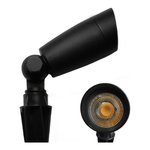 LED LANDSCAPE UPLIGHT WITH STAKE, 12V AC/DC, 6W, 45°, OUTDOOR RATED, 36" (90CM) 27K
 SCOOP LANDSCAPE LIGHTING (12-24V)
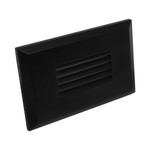 RT05 SCREWLESS LOUVER TRIM FOR LIGHT ENGINE RT05HV & RT05LV, BLACK
 SQUARE STEP LIGHT 3W/24VDC DIA 50X50X27MM - SMD3535 - 80LM - DIMMABLE WET LOCATION 3000K B...
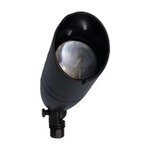 LANDSCAPE LED SPOT LIGHT 7W - 12-24 V AC/DC - BEAM ANGLE 30° - IP65 - RGBCW APPLICABLE W...
 2 INCHES LED IN-GROUND LIGHT 3W 12-24VDC/9-17VAC 3000K IP67 250LM 30D BEAM ANGLE STAINLESS...
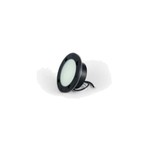 RD05 HIGH VOLTAGE ROUND STEP LIGHT ENGINE - 120V - 3W - FITS: OCTAGON/ROUND JUNCTION BOX -...
 RGBW LANDSCAPE MINI WELL LIGHT