Nov 06, 2026 / By the Lumibox team / in LED Guides
A 3CCT LED light is one fixture that offers three colour temperatures, chosen with a small switch, so you pick warm, neutral or cool white on site instead of ordering three different products. A 5CCT model does the same with five settings, and a selectable wattage (or "adjustable wattage") model lets you choose how much power, and therefore how much light, the fixture delivers. In short: you buy one fixture and set it for the room.
This guide explains what 3CCT, 5CCT and selectable wattage really mean, where the switch is, how to read a product code, and who gains the most from these fixtures: homeowners, electricians, contractors and property managers. You will find them across our recessed lighting, LED panels and LED linear fixtures collections.
CCT stands for correlated colour temperature. It describes the colour of white light and is measured in kelvins (K). Lower numbers look warm and slightly yellow, like a classic incandescent bulb. Higher numbers look crisp and bluish-white, closer to daylight.
A fixed-CCT fixture comes out of the box at one value, for example 3000K or 4000K. A 3CCT fixture carries three values on the same light engine and a selector that tells the driver which one to use. A 5CCT fixture extends the range to five values. The light does not change colour by itself; you set it once, usually at installation, and it stays there.
The right choice depends on how sure you are of the look you want and how many different rooms you are lighting. The table below sums up the main differences, using real colour ranges from fixtures in our catalogue.
| Type | Typical settings | Example | Best for |
|---|---|---|---|
| Fixed CCT | One value (e.g. 3000K or 4000K) | Linear blade lights sold in 3000K or 4000K | Projects where the colour is already decided |
| 3CCT | 3000K / 3500K / 4000K or 3500K / 4000K / 5000K | CSC LED AL architectural linear, CSC LED PLS panel | Commercial jobs, offices, basements, mixed-use buildings |
| 5CCT | 2700K / 3000K / 3500K / 4000K / 5000K | CANOLIGHT 3-inch and 3.5-inch modular downlights | Homes, renovations, rooms where the mood matters |
Most 3CCT fixtures are built around the neutral-to-cool part of the scale. The CSC LED PLS standard panel light offers 3500K, 4000K and 5000K, which covers almost every office, classroom, store and utility room. The CSC LED AL2-D-20W-3CCT-UD architectural linear uses 3000K, 3500K and 4000K, a range that works well where a commercial space meets a softer, more residential look. If you never plan to go below 3000K, a 3CCT fixture gives you all the flexibility you need.
5CCT shines in homes because it reaches down to 2700K, the warmest common setting. The CANOLIGHT 3-inch modular LED downlight (9W, 800 lm, CRI 90+, 40° beam) and the CANOLIGHT 3.5-inch modular recessed fixture (12W, 1000 lm, CRI 90+, 40° beam) both switch between 2700K, 3000K, 3500K, 4000K and 5000K. You can run the same pot light in the bedroom at 2700K, in the kitchen at 3000K and in the laundry room at 4000K, all from one model. Browse more compact options in our 3-4 inch downlights.
Selectable wattage works the same way as selectable CCT, but for brightness. The fixture offers two or three power settings, and each setting delivers a different amount of light. A lower setting draws less power and gives fewer lumens; a higher setting gives more light for a larger or taller room.
A good example is the CSC LED PLS panel, sold as 30W/40W/50W with 3500K/4000K/5000K. The same panel can be set at 30W for a small office, or at 50W where the ceiling is higher or the work more detailed. Other fixtures in our catalogue combine both features too, such as the ORTECH 2x2 commercial troffer (TF-2x2-3CCT+W), the NEXLEDS 8 ft slim linear strip and the Light Efficient Design 2 ft base linear strip light.
Not sure how much light a room needs? Our guide How Many Lumens Per Room? gives room-by-room reference points.
On most selectable fixtures, the selector is a small slide switch or dial. Depending on the design, it sits on the driver or junction box of a recessed downlight, on the back of a panel, or inside the housing of a linear fixture. A few models change setting through a remote or a wall control instead. The product sheet and the label on the fixture show which position matches which value.
The CCT switch and the dimmer are two separate things. The switch sets the colour; the dimmer sets the brightness within that colour. A dimmable 3CCT or 5CCT fixture still needs a compatible dimmer. Read our LED dimmer switch guide to match TRIAC, ELV and 0-10 V controls to your fixtures.
Many shoppers search by product code, and the code often tells you what the fixture can do. Here is how to read the codes you will see most often:
The same logic applies to high bays, floodlights and strip lights: a code ending in 3P-3CCT tells you the fixture offers three power settings and three colour temperatures.
You do not have to guess the colour from a photo on a screen. Install the light, see it in your own room, and adjust. A 5CCT pot light is ideal in open-concept spaces where the kitchen, dining room and living room share a ceiling. See our guide How Many Pot Lights Do I Need? to plan the layout.
One model covers several needs, so there are fewer products to order, carry in the truck and return. If the client changes their mind about warm or cool white after the job, the fix takes minutes instead of a new order.
Standardizing on one 3CCT panel or linear fixture across a building simplifies maintenance and spare parts. Offices can run at 4000K, storage at 5000K and a reception area at 3500K, all with the same fixture. Panel owners can read our LED panel light guide to choose between 2x2, 1x4 and 2x4 formats.
3CCT means the fixture offers three selectable colour temperatures, set by a switch on the fixture or its driver. Typical ranges are 3000K/3500K/4000K or 3500K/4000K/5000K.
A 3CCT fixture offers three colour temperatures and a 5CCT fixture offers five. 5CCT models such as the CANOLIGHT modular downlights cover 2700K to 5000K, which adds the warmest settings that homes often prefer.
Yes. A 5CCT pot light lets you use one model throughout the home and set each room separately, from 2700K in bedrooms to 4000K or 5000K in a garage or laundry room. Just keep the same setting within each room.
Yes, as long as you can reach the switch. Turn the power off first. On recessed downlights, the selector is often on the driver box, which can usually be reached through the ceiling opening.
Yes. Compact round downlights with selectable CCT are listed in our 3-4 inch downlights collection. Compare the wattage, lumens and colour range on each product page before you order.
A lower wattage setting draws less power and gives less light. Choosing the lowest setting that still lights the room well is a simple way to keep consumption down.
Ready to choose? Explore selectable colour temperature and wattage fixtures in our recessed lighting, LED panels and LED linear fixtures collections, and set each one exactly the way your space needs it.
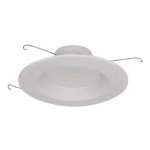 6" RETROFIT RECESSED LED DOWNLIGHT, 15W, 1000LMN, 5CCT (2700K,3000K,3500K,4000K,5000K) WHI...
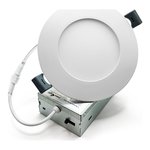 4 INCHES SMD DOWNLIGHT 9W - 90-130 V AC - IP20 - UP TO 800LM - CRI 85+ - 5CCT - 120° - WHI...
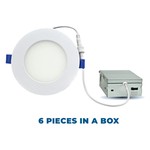 4" SLIM DISC LED FIXTURE. 5CCT (2700/3000/3500/4000/5000K) , 10WATTS, 900LMN, CRI 90, FT6...
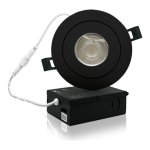 3.5 INCHES RECESSED LED GIMBAL MULTI DIRECTION 8W - 90-130 V AC - WET LOCATION IC-RATED -...
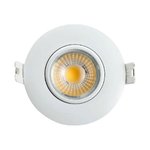 120V AC - 8W - 5CCT - 27K / 3K / 35K / 4K / 5K - 3" GIMBAL DOWNLIGHT - WET LOCATION RATE -...
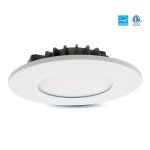 4-INCH LED RECESSED FIXTURE 9W - 5CCT (2700K - 3000K - 3500K - 4000K - 5000K) - 715 LM - 1...
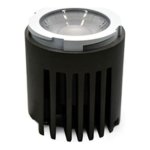 3-INCH MODULAR LED DOWNLIGHT - 9W - 5CCT(2700K-3000K-3500K-4000K-5000K) - BEAM ANGLE 40°...
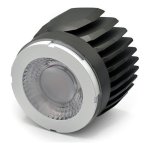 3.5-INCH MODULAR LED RECESSED FIXTURE - 12W - 5CCT (2700K-3000K-3500K-4000K-5000K) BEAM AN...