Nov 06, 2026 / By the Lumibox team / in LED Guides
DLC Standard and DLC Premium are the two tiers of the DesignLights Consortium Qualified Products List, and the short answer is this: both mean an LED fixture was tested and accepted for energy performance, while DLC Premium means it cleared a stricter bar, mainly higher efficacy (more lumens per watt) and tighter quality requirements. Neither tier is a safety approval. When a commercial specification asks for a "DLC listed" fixture, a Standard product usually qualifies. When it asks for DLC Premium, only a Premium listing will do.
This guide explains what the DLC listing actually guarantees, how to read efficacy in lm/W, why engineers, property managers and contractors write DLC into commercial specs, and how to check the tier of a fixture before you order it. It is written for electricians and buyers working on warehouses, offices, shops and parking areas, and for homeowners who see "DLC Premium" on a garage light and wonder whether it matters.
The DesignLights Consortium is a non-profit organization that publishes performance requirements for commercial LED lighting. Manufacturers submit test reports from qualified laboratories. When a product meets the requirements, it receives a product ID and appears on the Qualified Products List, often called the QPL. Both tiers follow the same structure, but Premium raises the thresholds.
| Point | DLC Standard | DLC Premium | Not listed |
|---|---|---|---|
| Efficacy (lm/W) | Meets the baseline for its category | Meets a higher threshold for its category | Not independently verified |
| Lumen maintenance and colour quality | Reviewed against the requirements | Reviewed against stricter requirements | Manufacturer's claim only |
| Public product ID on the QPL | Yes | Yes | No |
| Accepted when a spec says "DLC listed" | Usually | Yes | No |
| Accepted when a spec says "DLC Premium" | No | Yes | No |
| Replaces a cUL or CSA safety mark | No | No | No |
In practice, Premium is the tier to pick when the owner wants the most efficient fixture in its class, or when the tender names it. Standard remains a solid, verified choice for many troffers, wraps and panels where the spec simply asks for a listed product.
A DLC listing tells you that independent test data was reviewed for a specific product and configuration. The review looks at things a buyer cannot judge from a box or a showroom: how much light the fixture really delivers for the power it draws, how well it holds its output over time, and whether its colour rendering and colour consistency stay within set limits.
The listing is public. An engineer, an inspector or a building owner can look up the product ID and confirm the claim without taking anyone's word for it.
DLC is about performance, not electrical safety. A fixture sold and installed in Canada still needs a recognized safety mark such as cUL or CSA, and that is a separate approval with its own testing. DLC does not judge how a fixture looks, how much glare it will create in your particular room, or whether its beam pattern suits your layout.
It also does not mean that every wattage or colour setting of a product family is covered. The listing applies to the models and configurations named on the QPL. That point matters with today's selectable fixtures. The CSC LED VT2 vapour tight fixture, for example, carries two DLC product IDs, S-8DN5T3 and S-R4CFLO, across its 15 W, 20 W and 25 W settings. When a model is offered in several wattages and colour temperatures, confirm that the setting you plan to use is part of the listing.
Efficacy is the light output in lumens divided by the input power in watts. It is written lm/W, and it is the clearest way to compare two fixtures that do the same job. A higher figure means more light for each watt you pay for, every hour the fixture is on.
Wattage on its own says very little. Two 40 W troffers can produce noticeably different amounts of light, and a lower-wattage Premium fixture may light a room as well as a higher-wattage unlisted one. That is why commercial specs talk about lumens and lm/W rather than watts, and why the DLC tiers are built around efficacy thresholds that vary by fixture category. A high bay, a wall pack and a troffer are each judged against the requirements for their own category, not against one another.
When you compare spec sheets, keep three habits:
To turn a lumen target into a fixture count for a warehouse or shop, the high bay lighting calculator is a good starting point. Our guide on LED lighting ROI for Canadian businesses explains how efficiency adds up over the life of a project.
On a residential job, a DLC listing is a nice bonus. On a commercial job, it is often a line in the specification that the electrician cannot skip. Owners and engineers write it in for a few practical reasons.
When an electrical contractor proposes a substitute fixture, the engineer needs a quick, fair way to judge whether it is equivalent. A DLC listing, and especially its tier, gives both sides a common reference. "DLC Premium or approved equal" is a common way to keep bids comparable without naming a single manufacturer.
Owners who track energy use across several buildings, or who aim for green building targets, want fixtures whose efficiency is documented by a third party. Energy codes and building performance standards are general reference points here. Requirements vary by province and municipality, so check with a master electrician or your municipality for the rules that apply to your building.
Lumen maintenance and colour consistency are reviewed as part of the listing. For a property manager who replaces fixtures one floor at a time, that means fewer mismatched whites and fewer areas that grow dim long before the rest of the building.
For the bigger picture on planning commercial work, read our commercial LED lighting guide for contractors, electricians and property managers.
Here are fixtures from the catalogue that carry a DLC tier in their name, with the values from their product listings.
| Fixture | Type | Wattage | Colour temperature | Voltage | DLC tier |
|---|---|---|---|---|---|
| CSC LED PLP Premium Panel Light | 2x4 panel | 30 W / 40 W / 50 W | 3000 K / 3500 K / 4000 K | 120-347 V | Premium |
| CSC LED VOL Volumetric Troffer, 2x4 | Troffer | 20 W / 35 W / 40 W | Selectable | 120-347 V | Standard |
| CSC LED WR Wrap Fixture | Linear wrap | 24 W / 27 W / 30 W / 35 W | 3500 K / 4000 K / 5000 K | 120-347 V | Standard |
| CSC LED VT Vapour Tight | Vapour tight | 150 W | 3500 K / 4000 K / 5000 K | 120-347 V | Premium |
| CSC LED CWPS Slim Wall Pack | Wall pack | 80 W / 100 W / 120 W | 3000 K / 4000 K / 5000 K | 120-347 V | Premium |
| CSC LED MWP04 Mini Wall Pack | Wall pack | 10 W / 15 W / 20 W | 3000 K / 4000 K / 5000 K | 120-347 V | Premium |
One brand can offer both tiers: the tier belongs to the listed model, not to the brand.
Offices, schools and clinics are where DLC shows up most often in specs. The CSC LED PLP Premium panel light is a 2x4 panel listed at the Premium tier, with selectable wattage and colour temperature. Standard-tier troffers such as the VOL series remain a sensible choice where the spec only asks for a listed fixture. Browse all LED panels, and if you are still choosing a size, our LED panel guide for 2x2, 1x4 and 2x4 covers ceiling types and 0-10 V dimming.
Corridors, storage rooms, laundry rooms and parking areas call for LED linear fixtures. The CSC LED WR wrap fixture is DLC Standard. The CSC LED VT vapour tight 150 W is DLC Premium and sealed against moisture, dust and debris, which suits garages, workshops and covered outdoor spaces.
Warehouses, gyms and shops with tall ceilings rely on UFO LED high bays. In this category, efficacy has a large effect on the energy bill, because the fixtures draw more power and often run long hours. Check the DLC tier on each high bay listing, and use optic lenses and reflectors to put the light where it is needed rather than adding wattage.
Building perimeters, loading docks and entrances use LED wall packs, often on dusk-to-dawn schedules. The CSC LED CWPS slim wall pack is DLC Premium at 80 W, 100 W and 120 W, and the smaller MWP04 covers doors and walkways at 10 W to 20 W.
Strictly speaking, DLC lists products rather than certifying them. A "DLC certified" or "DLC listed" fixture appears on the DesignLights Consortium Qualified Products List after its test data was reviewed against the performance requirements for its category.
Premium meets stricter requirements, mainly higher efficacy, so it uses less power for the same light. Standard is still a verified, efficient product. Choose Premium when the spec requires it, or when long operating hours make every lumen per watt count.
No. cUL and CSA marks deal with electrical and fire safety. DLC deals with energy performance. A commercial fixture in Canada needs a recognized safety mark, and the project spec may also call for DLC on top of it.
It depends on the category, because a wall pack, a troffer and a high bay are judged against different thresholds. The simplest test is to compare fixtures of the same type at the same setting, then check their tier on the DLC list.
No. DLC was built for commercial lighting. In a garage or a workshop, a DLC listing is still a useful sign of verified efficiency, but nothing requires it.
Ready to compare? Start with the LED panels and LED linear fixtures, then move on to high bays and wall packs, and look for the DLC tier in each product name and spec sheet.
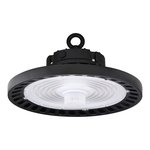 HB7C HIGH BAY, HIGH BAYS, 100W, 5000K, 120-277V, BLACK, DLC PREMIUM PLKEQLGNDF06
 VIVID UFO - 15W - 1500LM - 30K - 25,000HRS - E26 - DIMMABLE
 90W OPEN RATED HIGH BAY RETROFIT - REPLACES UP TO 250W HID - EX39 - 5000K 220-347V - LED-8...
 270W ENCLOSED RATED HIGH BAY RETROFIT - REPLACES UP TO 1000W HID - EX39 - 5000K - HIGH VOL...
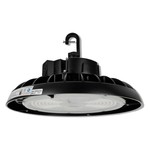 ROUND HIGHBAY | CCT & WATTAGE VARIABLE | 150-200-240W | 34800 MAX LUMENS | 120-347V | V5
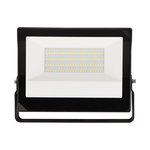 SSL-MFL2 - MINI FLOOD - 60M - SELECTABLE (60-50-30W) (7800LM) - SELECTABLE (30-40-50K) - 1...
 95W ENCLOSED RATED HIGH BAY RETROFIT - REPLACES UP TO 250W HID - EX39 - 3000K/4000K/5000K...
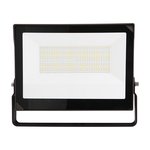 SSL-MFL2 - MINI FLOOD - 100L SELECTABLE (100-80-70W) (13200LM) - SELECTABLE (30-40-50K) -...