LED landscape lighting turns a yard, a driveway or a storefront into a space you can use after dark. Low voltage landscape lighting marks the path to the door, washes a stone wall with warm light, outlines the deck stairs and keeps a parking area readable for the cameras. This category gathers 167 fixtures and accessories built for the Canadian outdoors: path lights, stake spotlights, in-ground well lights, deck and step lights, hardscape and brick lights, plus the connectors and housings that hold the system together. Most run on 12 V or 12-24 V low voltage; a smaller group runs on 120 V for stairs and entrances wired by an electrician. Homeowners, landscapers, electricians and property managers find their landscape LED lights here, in one place.
Types of LED landscape lights
12 V low voltage or 120 V?
Most of this category is low voltage landscape lighting. A transformer on an outdoor receptacle steps 120 V down to 12 V, or 12-24 V AC/DC on the garden lights and spotlights that accept both. The cable is safe to touch, goes under mulch or in a shallow trench rather than in conduit, and fixtures move as the garden grows. Many 12 V garden lights here are also dimmable.
Two rules govern a 12 V layout. Transformer capacity: add up the wattage of every fixture and keep the total at or below about 80 % of the transformer's rating, the installers' rule of thumb. Voltage drop: the longer and thinner the cable, the less voltage reaches the last fixture, and the dimmer it gets. The answers are heavier cable (the connectors here accept up to 12 gauge wire), shorter runs leaving the transformer in a hub or T layout rather than one long chain, and 12-24 V fixtures that tolerate the swing.
120 V fixtures skip the transformer and suit permanent step lighting on concrete stairs, an entrance or a commercial walkway tied to the building's circuits. In Quebec and across Canada, 120 V outdoor wiring is the job of a licensed electrician under the Canadian Electrical Code (CSA C22.1); the 120 V step light engines here fit standard junction boxes.
IP65, IP67 and the Quebec winter
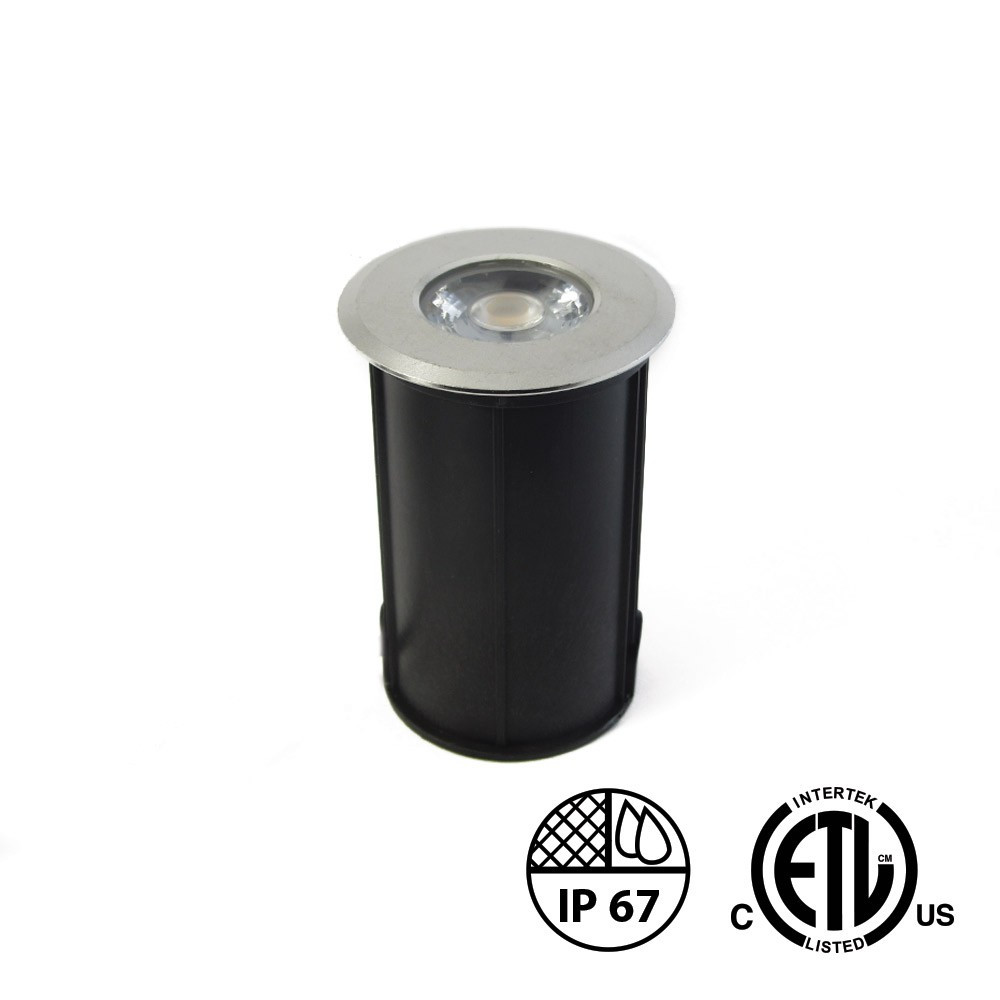
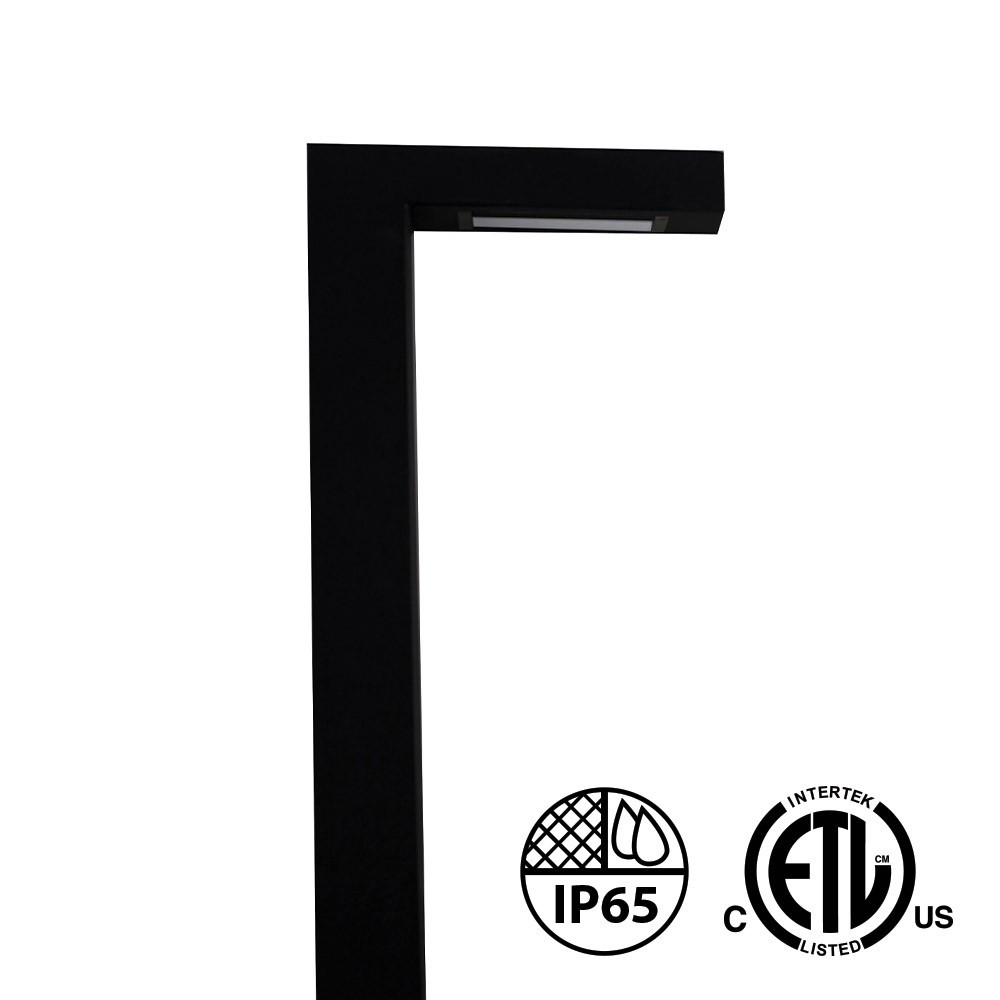
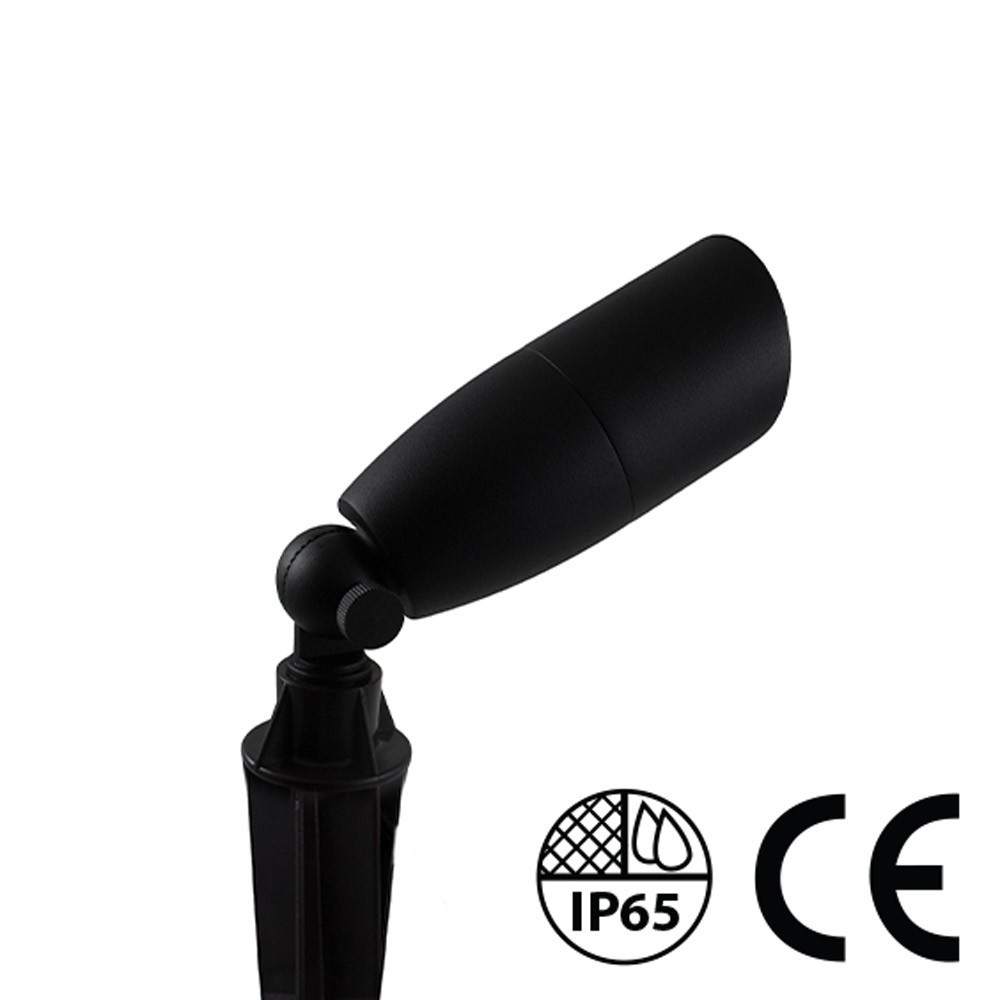
An outdoor fixture lives through freeze-thaw cycles, snow load, road salt and the spring melt. The IP code tells you how it will cope. IP65 fixtures are dust-tight and resist water jets: right for path lights, stake spotlights and deck lights that see rain and snow but not standing water. IP67 fixtures survive temporary immersion: the rating for in-ground and well lights, which sit in puddles and under snowbanks. The underwater housings and the outdoor junction box here are IP68. Check the materials too: stainless steel 304 bodies and sealed ABS enclosures resist de-icing salt far better than painted steel.
Colour temperature by use
Keep one colour temperature per view.
Plan the lighting in layers
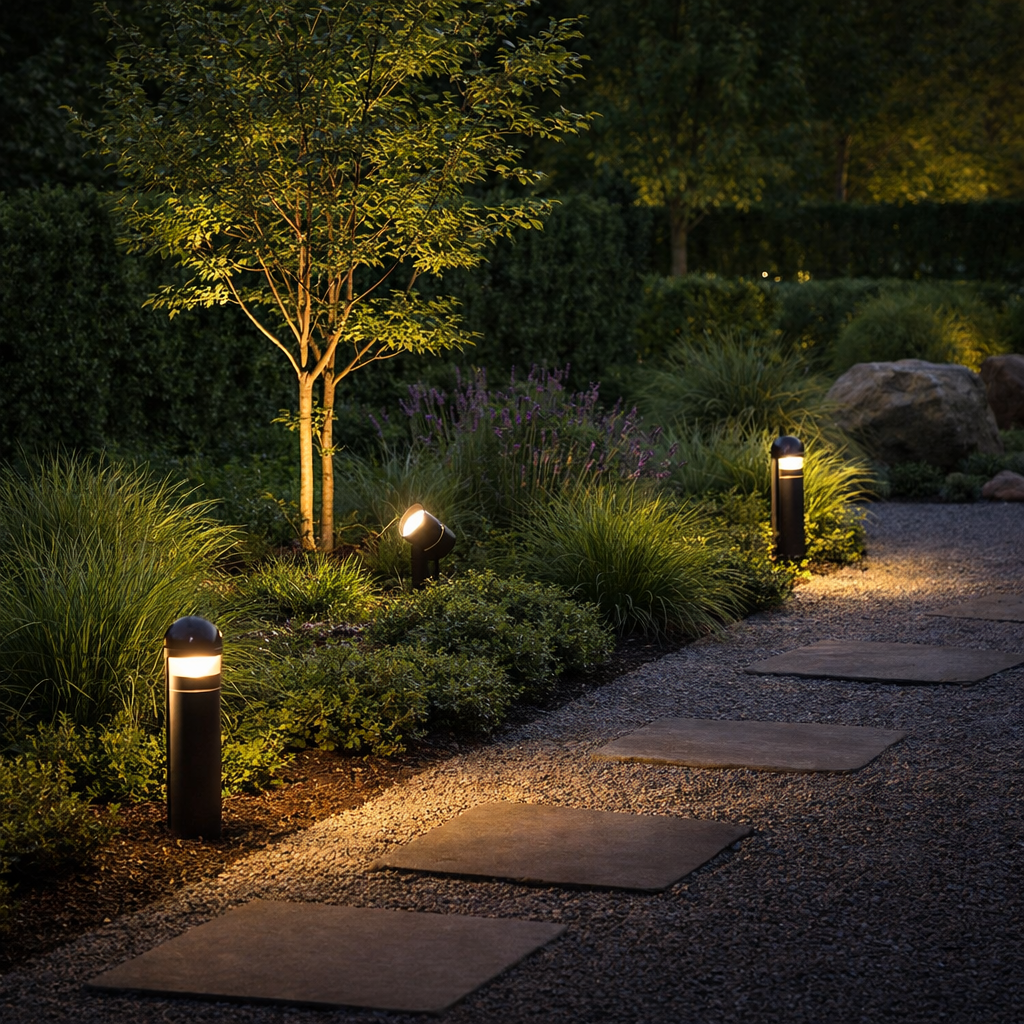
A good plan stacks three layers. Ambient: path lights, bollards and soft wall washes, 2700 K to 3000 K at low wattage. Accent: an uplight on a feature tree, grazing light on a stone wall, a well light under a sculpture, with narrower beams. Safety: a step light on every riser, a brighter 4000 K fixture at the parking spot or service door. Count the fixtures, add up the watts, and size the transformer from that number.
Accessories that complete the system
Brands in this category
LUMENSTARLED covers the 12 V and 120 V deck, step, hardscape and in-ground program, with modular housings, trims and light engines. CANOLIGHT brings the 12-24 V AC/DC garden lights, stake spotlights, deck lights and stainless steel in-ground lights, many in 3CCT or 5CCT, IP65 to IP67. ORTECH supplies compact 1 W and 2.5 W step lights in round, square and micro formats, in white, black and satin nickel, at 3000 K or 5000 K. Every product page lists the real specifications.
Ready to light the yard?
Browse the full LED landscape lighting selection, filter by voltage, colour temperature or brand, and build the system fixture by fixture. Landscapers and electricians can plan a complete layout from this one category and order their landscape lighting Canada-wide.
FAQ
How many LED lights can I put on one transformer?
Add the wattage of every fixture and keep the total at or below about 80 % of the transformer's rated capacity. With LED fixtures at 1 W to 7 W each, the real limit is usually voltage drop on long cable, not the transformer.
Should I choose 12 V or 120 V landscape lighting?
12 V (or 12-24 V) for anything in the garden: safe to handle, easy to extend, no conduit. 120 V for permanent step lights on concrete stairs or an entrance tied into the building's wiring, installed by a licensed electrician.
Can I bury low voltage landscape cable?
Yes. Direct-burial low voltage cable is made for it. The Canadian Electrical Code sets the minimum cover depth; many installers run it along bed edges under mulch where it stays reachable. Keep splices inside waterproof connectors or an IP68 junction box.
What colour temperature is best for a garden?
2700 K to 3000 K. Warm white makes plants, wood and stone look natural and welcoming. Keep 4000 K for security and parking areas, and do not mix the two in the same view.
Will LED landscape lights survive a Canadian winter?
IP65 handles rain and snow; IP67 handles temporary immersion, which is what in-ground lights see during a thaw. Stainless steel 304 bodies resist de-icing salt.
What is the difference between a well light and a step light?
A well light sits flush in the ground and aims up at a tree, wall or facade. A step light is recessed in a riser or a wall and aims down at the tread. Both come in 12 V; step lights also in 120 V.