Nov 06, 2026 / By the Lumibox team / in LED Guides
An E26 socket is the standard screw-in base found in most lamps, ceiling fixtures and porch lights in Canadian homes, and it is the first thing to check before you buy an LED bulb. The base decides whether a bulb fits. The shape decides how the light spreads. The specs on the box decide whether you will like the result.
This guide covers the bases and shapes you will meet most often: E26, E12, EX39, GU10, MR16, GU24, G9, plus the A19, A21, BR30 and PAR16, PAR20, PAR30 and PAR38 formats. It is written for homeowners replacing a few bulbs and for contractors and property managers converting a whole building. Once you know your base and your shape, browse the full range of LED bulbs with confidence.
The letter and number on a bulb base follow a simple logic. The "E" stands for Edison, the inventor of the screw base. The number is the diameter of the threaded part in millimetres, so an E26 base is a medium screw base about 26 millimetres wide. In North America, it is the default socket in lamps, pendants and older recessed cans.
Two other letters show up on packaging. "G" means the bulb uses pins instead of threads, and "U" describes a U-shaped or twist-lock pin design. The number after the letters is the spacing between the pins, also in millimetres. That is why a GU10 has pins 10 millimetres apart and an MR16 usually carries a GU5.3 base. Not sure what you have? The base is almost always printed on the old bulb.
The E26 socket covers most of the bulbs you buy for a home. Everyday shapes such as the A19 use it, but so do reflector bulbs and even large commercial retrofits. The ORTECH A19 LED bulb 9W 800 lm 3000K is a typical example: a standard medium base, 120 V and a 220 degree beam angle for even, all-around light. A 5000K version suits garages and work areas.
The E26 base is also used for decorative bulbs. The LUMENSTARLED S11 decorative bulb is a 1W, 2700K E26 lamp with a clear glass globe, ETL approved, for string lights, signs and accent fixtures. For globe, candle and vintage styles, see the globe and decorative LED bulbs.
The E12 is the narrow screw base used in chandeliers and decorative wall sconces. It looks like a slimmer E26 and does not screw into a medium socket. Check this one before ordering: many chandeliers that look standard actually take candelabra bulbs.
The mogul base is the large screw base used in older high-intensity discharge (HID) fixtures. The quickest commercial LED upgrade is often a retrofit lamp that screws into the existing socket. The Light Efficient Design 45W parking garage retrofit, for instance, uses an EX39 base, runs on 347V and is rated to replace up to 250W HID. Browse these lamps in corn and HID retrofit bulbs.
A GU10 bulb has two short pins with wider tips. You push it in and turn it a quarter turn to lock it. GU10 bulbs normally run directly on household line voltage, with no transformer in the fixture. They are common in track heads, gimbal pot lights, range hood lights and accent fixtures. The TUROLIGHT GU10 LED bulb 6.5W 4000K is a direct replacement for a halogen GU10 spotlight, with a neutral white that suits kitchens, bathrooms and display areas.
An MR16 looks very much like a GU10 from the front, but its base is different: two thin, straight pins, usually a GU5.3. Traditionally, MR16 lamps run on 12 V through a transformer in the fixture. With LED MR16 bulbs, make sure the transformer is LED-compatible, or flicker can follow. The TUROLIGHT MR16 7W 4000K LED bulb replaces halogen spot lamps in recessed, track and accent fixtures.
GU24 uses two pins with small feet, inserted and turned like a GU10 but with a wider spacing. It is found in fixtures designed for energy-efficient lamps, precisely because a screw-in incandescent bulb cannot go there. A GU24 socket takes a GU24 LED bulb and nothing else.
A G9 is a small capsule with two looped pins that push straight in, used in pendants, chandeliers, vanity lights and compact sconces. The LUMENSTARLED G9 LED bulb is a 3W, 120V capsule offered in 3000K, 4000K and 6000K, replacing the hot halogen G9. T10 bulbs use a wedge base and are common in landscape and cabinet lighting on low-voltage systems, such as the LUMENSTARLED 12V DC T10 with 18 LEDs at 3000K.
The base tells you whether a bulb fits; the shape code tells you how it looks and where it sends its light. The letters describe the profile, and the number is the diameter at the widest point, in eighths of an inch. The bigger the number, the bigger the bulb.
| Shape | Light pattern | Typical use | Example from the catalogue |
|---|---|---|---|
| A19 / A21 | Wide, all-around | Lamps, pendants, ceiling fixtures | A19 9W, 800 lm, 220 degree beam |
| BR20 / BR30 | Soft, wide flood | Recessed cans, living rooms, hallways | BR20 6W, 500 lm, 120 degree beam |
| PAR20 / PAR30 / PAR38 | Controlled, directional beam | Track, recessed accent, outdoor flood | PAR30 COB 11W, 800 lm, dimmable |
| MR16 / GU10 | Narrow spot | Display, artwork, accent | GU10 6.5W 4000K |
The A19 is the classic household bulb shape on an E26 base; the A21 is the larger version for fixtures that have room for it and need more light. Shop both in the A19, A21 and E26 LED bulbs category. The TUROLIGHT LED A19 9W 5CCT is dimmable and lets you pick among five colour temperatures with one bulb. For cabins, boats and solar setups, LUMENSTARLED makes a low-voltage A19 style bulb that runs on 10-30V DC at 7W, 3000K.
BR stands for bulged reflector: a frosted, rounded face and a wide beam that washes a room evenly, long the standard in pot lights. The ORTECH BR20 dimmable LED bulb is a 6W, 500 lm, 3000K lamp with a 120 degree beam and ENERGY STAR listing. BR30 is the larger size for the common residential can.
PAR means parabolic aluminized reflector. The beam is tighter and more controlled than a BR, so PAR bulbs light a counter, a painting, a facade or a driveway. PAR16 and PAR20 suit track and small housings, PAR30 suits kitchen pot lights, and PAR38 is the large flood, often used outdoors. The ORTECH PAR30 LED COB 11W 800 lm 3000K dimmable uses a COB chip for a smooth beam without multiple shadows. For darker trims, the TUROLIGHT PAR20 7W 5CCT comes in a black finish. All these spotlights are grouped under PAR, GU10 and MR16 LED bulbs.
With LED, watts only tell you how much power the bulb draws; lumens tell you how much light you get. The ORTECH A19 9W and the ORTECH PAR30 COB 11W both deliver 800 lm, but one spreads it everywhere and the other aims it. To plan a whole room, our guide how many lumens per room gives a room-by-room method.
In commercial retrofits, the comparison is usually against the old HID lamp. A few examples from the Light Efficient Design range:
Read the instructions before installing a retrofit in an HID fixture: some lamps require the ballast to be bypassed, a job for a qualified electrician.
Not every LED bulb is dimmable, and a non-dimmable bulb on a dimmer can flicker or buzz. A dimmable bulb still needs a compatible dimmer: most residential LED dimmers are TRIAC (leading edge) or ELV (trailing edge), and the bulb's documentation tells you which one suits it. Pick a matching model among the LED dimmers. Dimmable examples include the TUROLIGHT Pure Vision A19 9W 800 lm and the Light Efficient Design 30W recessed/PAR retrofit, an E26 lamp at 5000K and 120V for larger cans.
Household sockets run on 120V. Commercial buildings often use 277V or 347V circuits, so commercial retrofits are labelled 120-277V or 347V. Low voltage is a separate world: MR16 and T10 bulbs on 12V, and DC bulbs for off-grid buildings. A bulb that fits the socket but not the voltage will not work, or will not last.
2700K and 3000K give a warm glow for living rooms and bedrooms. 4000K is a neutral white popular in kitchens, bathrooms and offices. 5000K and above is a crisp white for garages, warehouses and outdoor areas. Selectable (5CCT) bulbs let you decide after installation. Replacing bulbs in recessed cans? Our guide on pot lights vs recessed lights helps you decide when a retrofit bulb is enough.
An E26 socket is the medium screw base used in most North American light fixtures, also called a standard base. "E" stands for Edison and 26 is the diameter of the thread in millimetres. The smaller candelabra base is E12; the large mogul base is EX39.
Not directly. An MR16 uses a pin base, usually GU5.3, and generally runs on 12V. If your fixture has an E26 socket and you want a spotlight look, choose a PAR16 or PAR20 bulb with an E26 base instead.
GU10 bulbs are normally designed for household line voltage, without a transformer. The 12V spotlight is the MR16 on a GU5.3 base. The two look alike from the front, so always compare the pins.
A 4000K GU10 gives a neutral white for kitchens, bathrooms, track lighting and displays. The TUROLIGHT GU10 6.5W 4000K is a direct replacement for halogen GU10 spotlights. Check whether your fixture is on a dimmer before choosing.
BR30 is a soft, wide flood for general lighting in recessed cans. PAR30 has a tighter beam for accent and task lighting. PAR38 is the larger PAR size, often used for outdoor floodlighting. All three commonly use an E26 base.
Know your base, then match the shape, the voltage and the light you want. Start with the A19 and A21 LED bulbs for everyday sockets, the PAR, GU10 and MR16 spotlights for directional light, or the whole LED bulb catalogue.
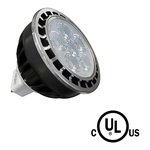 MR16 LED BULB FOR OUTDOOR FIXTURE - 12V - 24V AC/DC - 5W - GU5.3 BASE - 45DEG BEAM ANGLE -...
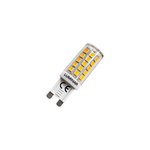 120V - 3W - 6000K G9 LED BULB
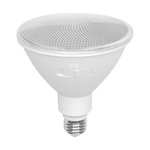 PAR38 16W 5CCT WHITE LED BULB
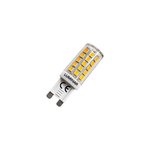 120V - 3W - 3000K G9 LED BULB
 45W POST TOP RETROFIT, REPLACES UP TO 250W HID, E26, 5700K 347V -LED-8024E57C-A
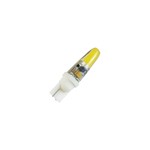 T10 LED COB BULB - 12V AC/DC - 2W -3K
 ELEC BALLAST - G24Q RETROFIT - HORIZONTAL MTN ORIENTATION - 2700K ELECTRONIC BALLAST ONLY...
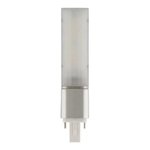 7W G23-2 RETROFIT, HORIZONTAL MTN ORIENTATION, 2700K 120-277V - GENERATION 2 - LED-7311-27...