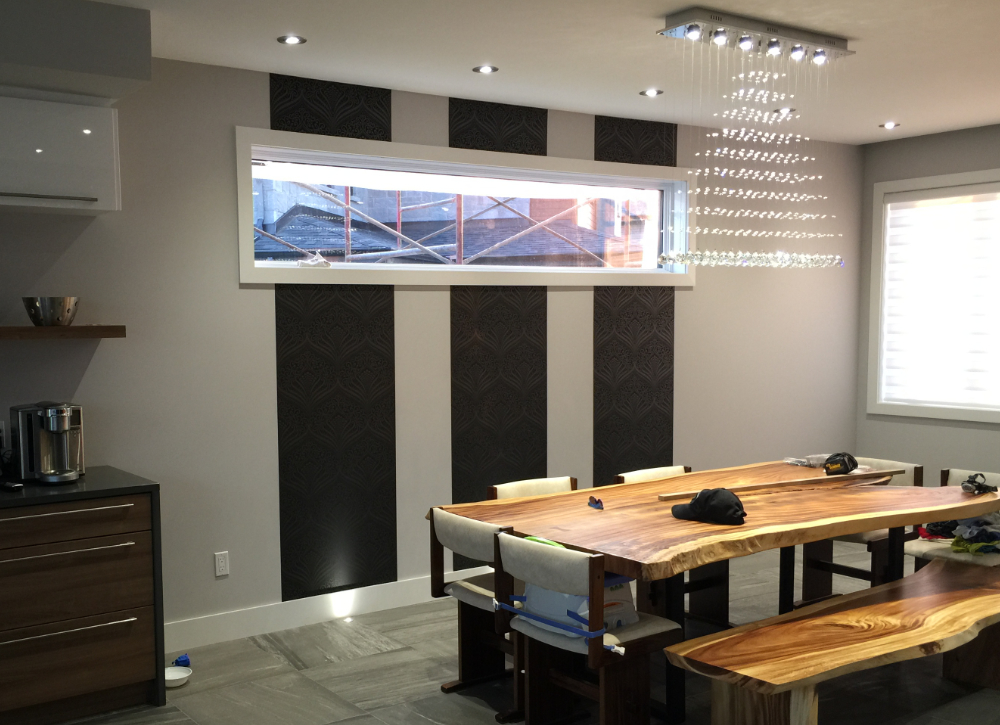
L'éclairage LED pour salle à manger transforme complètement l'ambiance et la fonctionnalité de cet espace central de votre demeure. Plus qu'un simple luminaire, l'éclairage de la salle à manger crée une atmosphère chaleureuse pour les repas en famille et les réceptions. Les solutions LED modernes offrent une flexibilité inégalée avec des options de gradation, des températures de couleur ajustables et une efficacité énergétique exceptionnelle. Les manufacturiers comme Paris Mirror et Canolight proposent des designs innovants qui marient esthétique contemporaine et performance technique supérieure.
La salle à manger québécoise moderne nécessite un éclairage polyvalent qui s'adapte aux différents moments de la journée. Du petit-déjeuner matinal aux soupers intimes, les luminaires LED offrent la versatilité requise pour créer l'ambiance parfaite. Les systèmes d'éclairage intelligent permettent maintenant de programmer différents scénarios lumineux, passant d'un éclairage fonctionnel pour les devoirs des enfants à une lumière tamisée pour les occasions spéciales.
Pour une salle à manger résidentielle, la température de couleur idéale se situe entre 2700K et 3000K, créant une lumière blanc chaud qui favorise la convivialité. Un IRC de 90+ est essentiel pour rendre justice aux couleurs des aliments et créer une atmosphère accueillante. Les manufacturiers comme NexLeds et Lumifaro offrent des produits avec un IRC de 95+, garantissant une reproduction des couleurs exceptionnelle.
L'intensité lumineuse recommandée pour une salle à manger varie entre 3000 et 6000 lumens selon la superficie. Pour une pièce standard de 12 x 14 pieds, un luminaire principal de 4000 lumens combiné à un éclairage d'appoint créera des conditions optimales. Les indices de protection IP44 suffisent pour les installations intérieures standards, tandis que les espaces près des fenêtres ouvertes pourraient bénéficier d'un indice IP65 pour résister à l'humidité occasionnelle.
La compatibilité avec les gradateurs certifiés CSA est cruciale pour ajuster l'ambiance. Les produits modernes offrent une gradation fluide de 100% à 10% sans scintillement, permettant une transition harmonieuse entre différentes intensités lumineuses selon les besoins.
Les suspensions LED demeurent le choix privilégié au-dessus de la table à manger. Les designs de Turolight et LumenstarLED proposent des hauteurs ajustables, idéalement positionnées entre 30 et 36 pouces au-dessus de la surface de la table. Les lustres LED modernes intègrent souvent plusieurs sources lumineuses pour une distribution uniforme de la lumière.
L'éclairage encastré complète parfaitement le luminaire principal, créant des zones lumineuses périphériques. Les encastrés de 4 à 6 pouces avec optiques ajustables permettent de diriger la lumière vers les œuvres d'art ou les buffets. Les rails d'éclairage offrent une flexibilité maximale pour repositionner les projecteurs selon l'aménagement.
Les appliques murales LED ajoutent une dimension décorative tout en fournissant un éclairage d'ambiance. Positionnées à environ 66 pouces du plancher, elles créent des jeux d'ombres intéressants et éliminent les zones sombres. Les lampes sur pied avec technologie LED complètent l'ensemble pour les coins lecture ou les espaces adjacents.
Au Québec, où les tarifs d'Hydro-Québec augmentent régulièrement, l'éclairage LED représente des économies substantielles. Une salle à manger équipée de LED consomme jusqu'à 85% moins d'énergie que l'éclairage halogène traditionnel. Les produits de CSC LED et Speclite sont conçus pour performer dans les conditions climatiques canadiennes, maintenant leur efficacité même lors des variations de température causées par notre climat nordique.
La durée de vie prolongée des LED, souvent supérieure à 50 000 heures, réduit considérablement les coûts de maintenance. Dans le contexte québécois où l'accessibilité peut être compromise durant l'hiver, cette fiabilité représente un avantage considérable. Les installations doivent respecter le Code canadien de l'électricité, notamment pour les circuits de gradation et la mise à la terre appropriée.
L'éclairage en couches reste la stratégie optimale pour les salles à manger modernes. Combinez l'éclairage général, l'éclairage de tâche et l'éclairage d'accentuation pour créer une atmosphère dynamique. Les experts de LEDCO et Arani recommandent d'installer des circuits séparés pour chaque type d'éclairage, permettant un contrôle indépendant.
Pour les tables rectangulaires, privilégiez les luminaires linéaires ou multiples suspensions alignées. Les tables rondes bénéficient d'un luminaire central unique. L'intégration de la technologie intelligente permet la programmation de scènes lumineuses préétablies, simplifiant l'ajustement de l'ambiance. Les produits de LED LLC et Ortech offrent des options de contrôle avancées compatibles avec les systèmes domotiques populaires.